

Commentary
Alper Coşkun, Garo Paylan
{
  "authors": [
    "Garo Paylan"
  ],
  "type": "commentary",
  "blog": "Emissary",
  "centerAffiliationAll": "dc",
  "centers": [
    "Carnegie Endowment for International Peace"
  ],
  "collections": [
    "Transatlantic Cooperation",
    "European Politics"
  ],
  "englishNewsletterAll": "ctw",
  "nonEnglishNewsletterAll": "",
  "primaryCenter": "Carnegie Endowment for International Peace",
  "programAffiliation": "EP",
  "programs": [
    "Europe"
  ],
  "projects": [],
  "regions": [
    "Armenia",
    "Azerbaijan",
    "Türkiye",
    "United States"
  ],
  "topics": [
    "Foreign Policy",
    "Security"
  ]
}
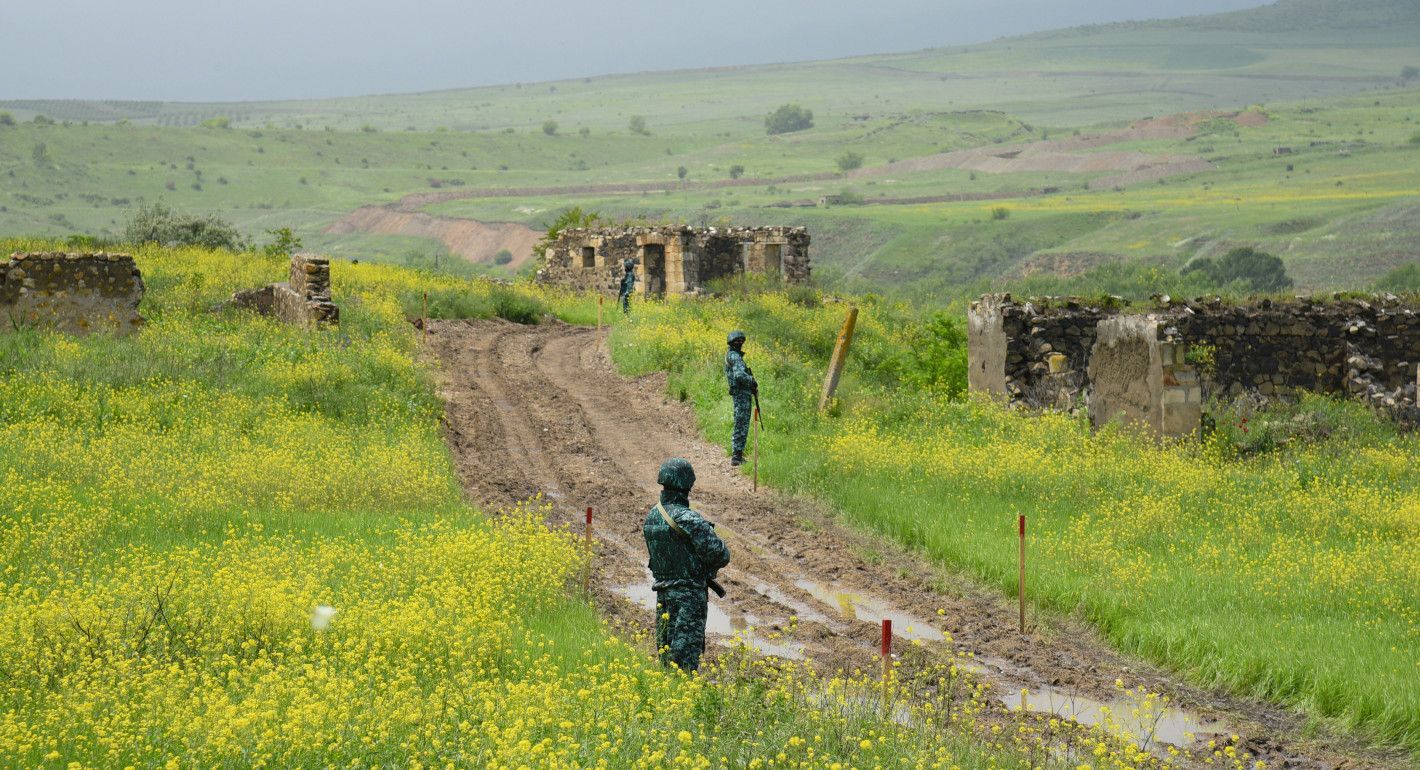
Azerbaijani border guards in one of the villages Armenia recently returned to Azerbaijani control. (Photo by AFP via Getty Images)
The deal would be a geopolitical game-changer.
From the Middle East to Europe’s borderlands, wars and great power rivalries have upended decades of world order. Ukraine, Sudan, and Gaza are grappling with violence, famine, and grim death tolls. But one small corner of the world has a fleeting opportunity to buck this trend of geopolitical tumult and forge a resolution to a decades-long conflict.
The South Caucasus is a mountainous region on the edge of Eastern Europe where Armenia and Azerbaijan have for almost forty years been locked in an intermittent, bloody conflict. The fighting has killed tens of thousands of people and made refugees of hundreds of thousands more. The Caucasus has also historically fallen squarely into Russia’s sphere of influence. Now it seems to benefit from Russia’s distraction in Ukraine. Recently, the two historic rivals quietly began bilateral talks to put an end to the fighting. After multiple failed attempts at peacemaking, a bittersweet truce seems to be within reach.
For this to happen, U.S. President Joe Biden’s administration needs to use the next few months to intensify its support for the negotiations. It should aim for a breakthrough ahead of November’s COP29 summit in Baku, when Azerbaijan will be keen to boost its global image. Not only would this be a diplomatic win for the U.S. president, it also could be an opportunity to strengthen ties with a difficult NATO ally: Türkiye. Such a deal would be a geopolitical game-changer.
The origins of the Armenia-Azerbaijan conflict date back to the collapse of the Soviet Union, when the two former republics fought bitter wars that led to atrocities and mass displacement. In the 1990s, Armenians gained control of parts of Azerbaijan, but eventually the balance of power shifted. In a war in 2020, Baku reclaimed much of its former territory. Last year, Azerbaijan moved against the self-governing enclave of Nagorno-Karabakh, forcing over 100,000 Armenians to leave their ancient homeland.
Despite the tragic humanitarian toll, the two sides have resumed talks and sketched out the contours of a peace deal. A comprehensive treaty would require border delineation, recognition of each other’s territorial integrity, and assurances of the right to transit through those territories. As a first step, Armenia, though facing growing domestic opposition, returned four abandoned border villages to Azerbaijan in May.
For Yerevan, peace is a matter of survival, not just diplomacy. The small nation of 3 million is squeezed between Azerbaijan, Iran, and Türkiye, and relations with its traditional benefactor, Russia, are at an all-time low. Since Russia invaded Ukraine in February 2022, Yerevan has steadily been lurching toward the West, stoking Moscow’s ire. It has ratified the International Criminal Court’s Rome Statute and frozen its ties with the Russia-backed Collective Security Treaty Organization. Armenia’s democratically elected government, led by Nikol Pashinyan, is anathema to Russia’s preferred model of governance. In both the 2020 and 2023 wars, Russian peacekeepers in the region stood by as Azerbaijan’s tanks and drones decimated the Armenian military. The Kremlin would almost certainly welcome another war between Armenia and Azerbaijan that could lead to the overthrow of the government in Yerevan.
Meanwhile, Azerbaijan has been dragging its feet in peace talks, in part because the country’s autocratic leader, Ilham Aliyev, knows time and geopolitics are on his side. Since the outbreak of the war in Ukraine, Baku has become an important energy supplier to Europe while maintaining good relations with Moscow. Flush with oil money, Azerbaijan has built military alliances with Türkiye and Israel. This geopolitical fortune has emboldened Aliyev, who has been using a maximalist narrative toward his neighbor, even referring to parts of Armenia as “Western Azerbaijan.” Lately, he has been demanding Armenia change its constitution to eliminate any reference to Nagorno-Karabakh.
Aliyev is weighing what he would gain or lose by signing a peace deal now. There are many variables at play that could affect his ability to carry out further aggression against Armenia, not least of which is the U.S. election in November. Washington should warn Aliyev against any further military action and emphasize that he will build an important legacy and economic benefits for his country if he signs the deal now.
Western diplomacy can help to break through these obstacles and push forward these peace talks in several ways.
One stumbling block in the talks is the Azeri demand for a land bridge through Armenia with unhindered access, connecting Azerbaijan to its exclave Nakhchivan (and ultimately to Türkiye). Armenia has agreed to open trade routes for the whole region—a proposal called “crossroads of peace”—but demands recognition of its sovereignty and reciprocity from Azerbaijan. U.S. and European technology and development assistance could help provide expedited border inspection and access—a key factor in the negotiations.
The United States should also lean on its relationship with Türkiye, with the hope that this often-troublesome NATO ally would nonetheless be a counterweight to Russia. Türkiye’s mercurial president, Recep Tayyip Erdoğan, is close to Aliyev, and he has repeatedly said he is willing to normalize relations with Armenia and open the Turkish-Armenian border, which has been sealed for nearly a century. Erdoğan understands that peace would offer economic and political benefits for his country at the expense of Russian influence. Biden should test Erdoğan’s resolve when he comes to Washington for the NATO summit, requesting that he use his influence over Aliyev to finalize the deal. This would be a win for all parties involved: Erdoğan would get to play the much-coveted role of global peacemaker, Biden would help bring about a long-sought agreement between Azerbaijan and Armenia, and Yerevan and Baku would finally be able to enjoy the economic and security dividends of peace. Plus, Türkiye’s support would strengthen any deal and counter accusations that the peace was externally imposed.
As an Armenian from Türkiye, I know that times of geopolitical shuffling have been perilous for my people. To bring an end to the cycles of retribution and great power overreach that have long plagued the South Caucasus, Azerbaijan and Armenia need to forge economic interdependence and a durable peace, creating a regional architecture that stretches toward Türkiye and Europe. This would not only strengthen the resilience of Armenian democracy against the pull of Russian-backed autocracy but would also reintegrate this long-neglected region into the global economy. It might even pave the way to Turkish-Armenian normalization.
On a recent visit to Yerevan, U.S. Assistant Secretary of State James O’Brien talked about a “once-in-a-generation opportunity to build a trade route from Central Asia across to the Mediterranean that can only come if there is a peace between Armenia and Azerbaijan.” He is right. Armenia and Azerbaijan have never been so close to achieving this goal. They can now create a regional order that can be the cornerstone of a new silk road from Europe to the Indo-Pacific. The United States needs to help push this agreement over the finish line.
Understand the world with the latest from our scholars around the world.

Visiting Scholar, Europe Program
Garo Paylan is a visiting scholar with the Europe Program at the Carnegie Endowment for International Peace in Washington, DC. His research focuses on the South Caucasus and Türkiye.
Recent Work

Alper Coşkun, Garo Paylan
Garo Paylan
Carnegie does not take institutional positions on public policy issues; the views represented herein are those of the author(s) and do not necessarily reflect the views of Carnegie, its staff, or its trustees.
Why Pakistan, Saudi Arabia, and Turkey are joining forces on regional security.

Alper Coşkun, Amr Hamzawy

Despite public disputes over trade and immigration, the strategic partnership’s foundations remain sturdy.

Sameer Lalwani
It signals a new era of tech diffusion and warfare.

Steve Feldstein

Despite its flop at the box office, the film raises important questions for the climate community to answer.

Leonardo Martinez-Diaz
The acknowledgment has sparked fears of a new arms race with China and Russia.

Chris O’Meara