

Commentary
The real test may come after the leaders leave the room.
- +1
Sheena Chestnut Greitens, Oriana Skylar Mastro, Yukon Huang, …
{
  "authors": [
    "Thomas Carothers",
    "McKenzie Carrier"
  ],
  "type": "commentary",
  "blog": "Emissary",
  "centerAffiliationAll": "dc",
  "centers": [
    "Carnegie Endowment for International Peace"
  ],
  "collections": [
    "Global Democracy"
  ],
  "englishNewsletterAll": "democracy",
  "nonEnglishNewsletterAll": "",
  "primaryCenter": "Carnegie Endowment for International Peace",
  "programAffiliation": "DCG",
  "programs": [
    "Democracy, Conflict, and Governance"
  ],
  "projects": [],
  "regions": [
    "United States",
    "France",
    "Argentina",
    "Bangladesh",
    "Indonesia",
    "Kenya",
    "Syria"
  ],
  "topics": [
    "Democracy",
    "Domestic Politics",
    "Civil Society"
  ]
}

Photos by Getty Images
A guide to diagnosing the trajectory of democracy around the world in 2026.
During the past several years, the trajectory of global democracy has been hovering uncertainly between two paths. On one side, many countries continue to backslide. At the same time, a small but growing number appear to have started on paths of potential democratic recovery and renewal.
Looking at the world in late 2025, we see this uneasy dualism embodied in ten pivotal cases. In the first group, five democracies are facing serious new pressures, including political tremors and troubling signs of erosion. The five countries in the second group have recently experienced or are in the thick of significant anti-authoritarian or pro-democratic ferment—some of which has led to meaningful political openings, and some resulting in a political standoff between the contending sides but where opposition continues to grow against anti-democratic leadership.
Taking the measure of these ten cases provides a guide to assessing the broader chances of retreat or advance for democracy globally in the year ahead.
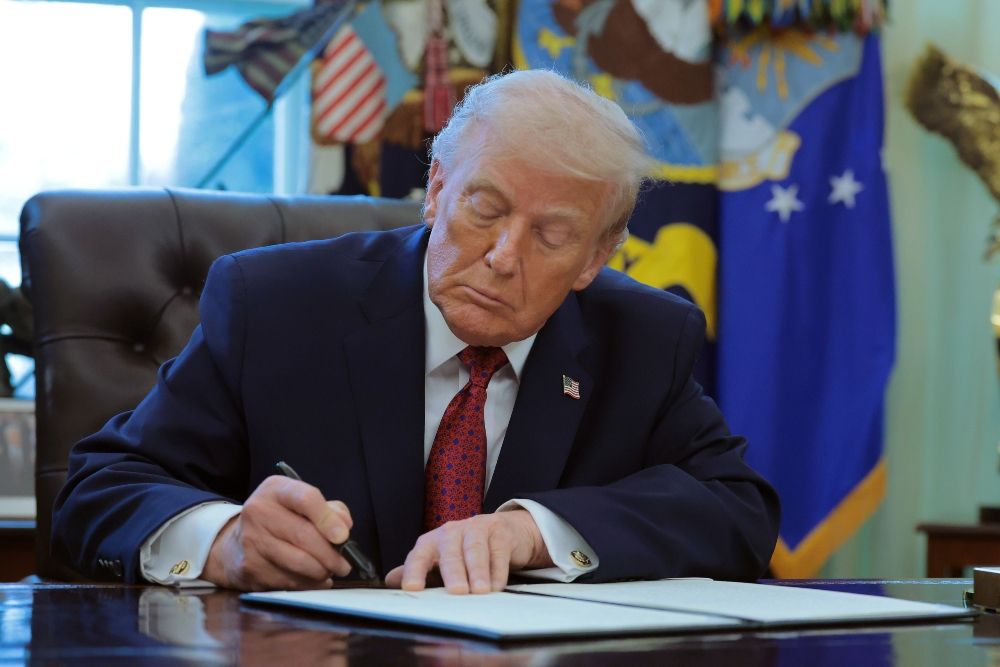
Trump signs an executive order in the Oval Office on December 15, 2025. (Photo by Anna Moneymaker/Getty Images)
The most globally influential country in this category is, of course, the United States. President Donald Trump and his team are strenuously reshaping the U.S. political system in a less democratic mold by amassing unprecedented presidential power, politicizing core institutions of law enforcement and justice, and fighting judicial, congressional, and state governmental efforts to limit the president’s power. In addition, they are weakening nonpartisanship in election administration and intimidating, punishing, or otherwise curbing the free press, civic activists, law firms, individual opposition voices, and others. Protests have flared multiple times in recent months in response to Trump’s actions, and increasing political violence has ratcheted up tensions in an already strained political system.
Observers and analysts are hotly debating how much U.S. democratic erosion has already occurred and how far it will go during the rest of the Trump presidency. Some argue the United States has already descended into “competitive authoritarianism,” while others hold that democratic norms and institutions, though under serious pressure, are so far largely intact. Beyond the domestic democratic implications of Trump’s actions, powerful demonstration effects of his illiberal methods are radiating out around the world. The U.S. midterm elections in November 2026—both in how they are conducted and in what direction they point the country—will be a critical test of how much resilience U.S. democracy is showing in the face of all that it experienced in Trump’s first year.
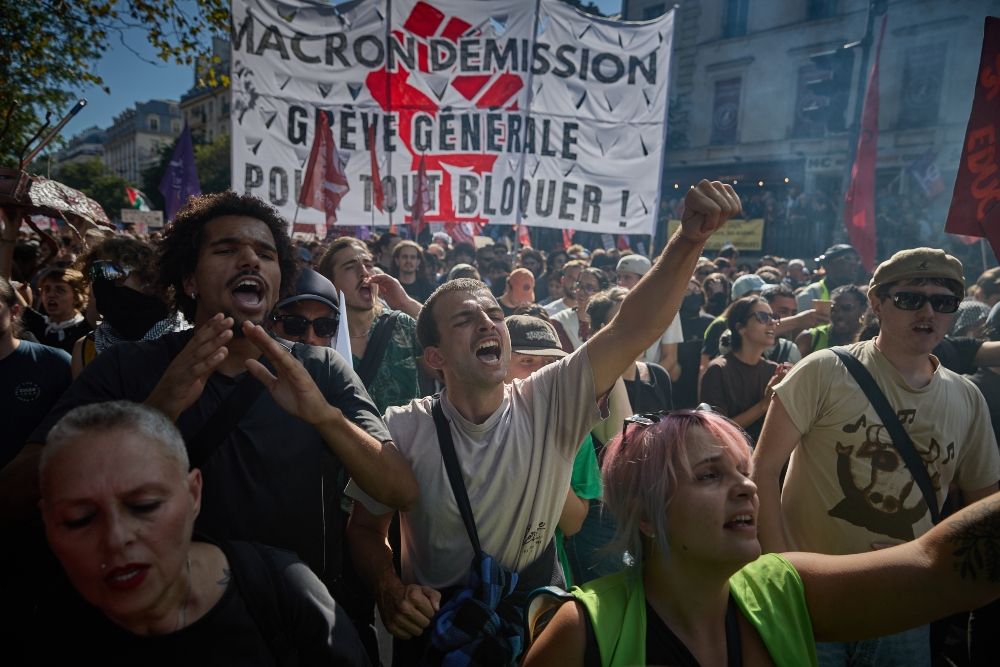
Protesters demonstrate against budget reforms on September 18, 2025, in Paris. (Photo by Kiran Ridley/Getty Images)
Accumulated socioeconomic problems, including seemingly intractable budgetary pressures, are fueling severe political polarization and bitter public disillusionment with political elites and institutions in France. The country finds itself mired in political dysfunction, cycling through five prime ministers in the past two years and unable to move out of partisan gridlock. President Emmanuel Macron, whose term runs until 2027, is flailing, suffering from extremely low popularity and dealing from a political hand bereft of any major remaining cards. This situation is weakening French public support for democracy. According to Le Monde, “42% of people under 35 think that another system [beside democracy] would be at least as good.”
Here too, commentators differ on whether democracy itself is fundamentally at risk. In one camp are those who worry that gridlock will lead to a surge and eventual political takeover by the far right led by the National Rally, and that once in power, the National Rally will demonstrate anti-democratic tendencies akin to those of the right in Hungary or the United States. Others, while agreeing that the gridlock reflects serious democratic decay, believe that the risk is persistent governance dysfunction more than democratic erosion.
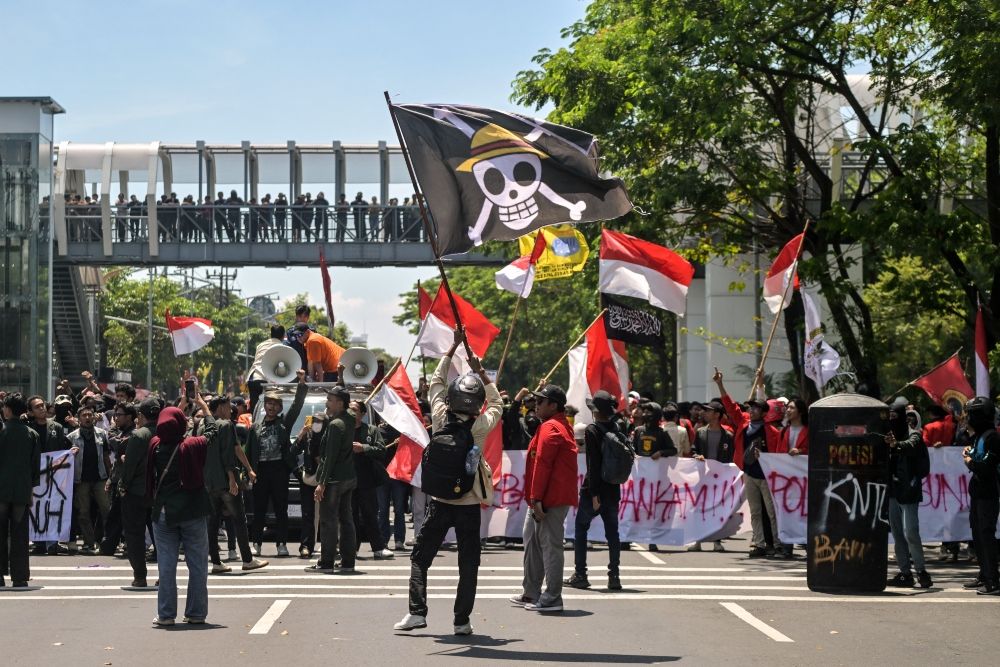
Demonstrators in Indonesia in August 2025. (Photo by Juni Kriswanto/AFP via Getty Images)
Since assuming power in 2024, President Prabowo Subianto has exacerbated what was already an incipient erosion of Indonesian democracy. He has done so by expanding the military’s influence over the country’s governance, deploying intimidation tactics and digital repression to constrain critical press, and shrinking civic space through violent crackdowns and the criminalization of protest.
His actions have been met by waves of demonstrations. Since the beginning of the year, students have mobilized repeatedly in response to multiple grievances, including budget cuts, the expanded presence of the armed forces in public positions, and a dramatic rise in property taxes in a region of Central Java. In late August, after a delivery motorcycle driver was hit and killed by a police vehicle during protests over a controversial pay raise for Indonesian lawmakers, protests ballooned across the country. The demonstrations drew strength from simmering public frustration over corruption, austerity measures, economic inequality, and police brutality. Security forces clashed with the protesters, resulting in several more fatalities.
Amid the mobilization, Prabowo sought to delegitimize the protesters, labeling them as “treasonous” and claiming that foreign influences were behind the protests. To assuage public anger, he also agreed to minor reforms, including promises to investigate the instances of police violence. But many of the public demands, outlined by protesters in a list titled “17+8,” have yet to be met, and unemployment levels and economic inequality continue to be major grievances within Indonesia. How this cycle of erosion and protest will evolve, and how far Prabowo will go in taking apart basic elements of Indonesian democracy, are major question marks ahead.
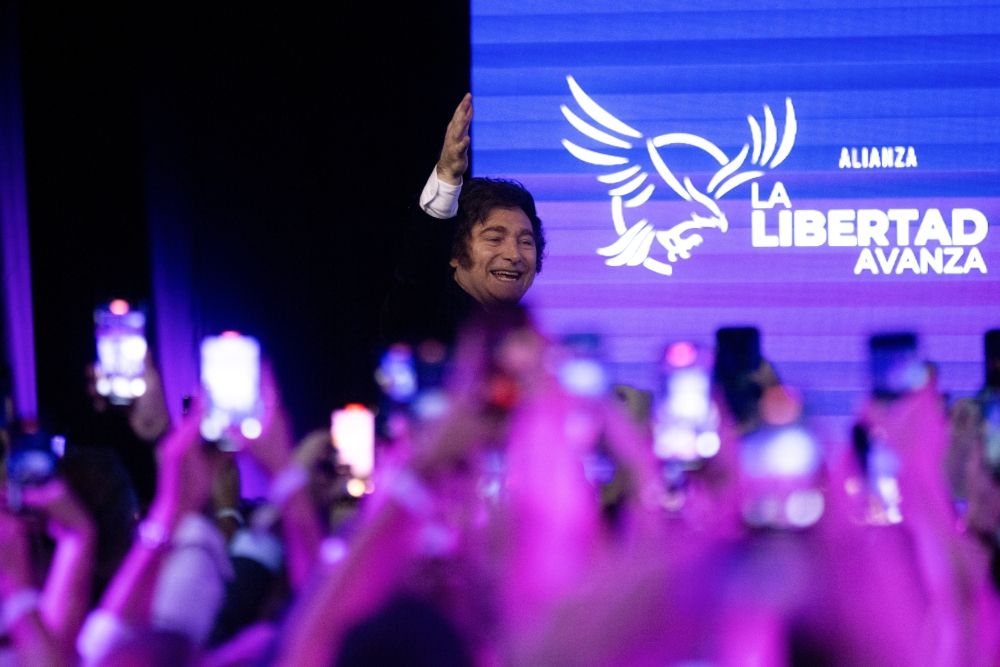
Milei greets supporters following midterm elections on October 26, 2025, in Buenos Aires. (Photo by Tomas Cuesta/Getty Images)
Argentina’s democracy is at an unusually complicated and fraught juncture. Since assuming power in 2023, President Javier Milei has driven forward far-reaching economic reforms aimed at breaking the country’s long pattern of stagnation, unsustainable deficits, and statism. His supporters argue that these reforms must continue and succeed if Argentine democracy is to survive long-term. Yet Milei’s leadership has illiberal, and sometimes openly anti-democratic, elements—including violent crackdowns on public protests and repression of media freedom that his opponents and some outside observers believe constitute a threat to Argentine democracy.
The country’s democratic path faces two critical questions. One is whether Milei’s economic program will succeed in forging a new, sustainable path of economic growth. This will depend in no small part on whether he can translate his success in the country’s October 2025 midterm elections into sustained support in the face of the inevitable continued disruption and austerity that his program entails. At the same time, whether he goes further down an illiberal or even openly anti-democratic path, especially if public support for his economic program starts to fade, is a different but equally determinative question for the future of the country’s democracy.
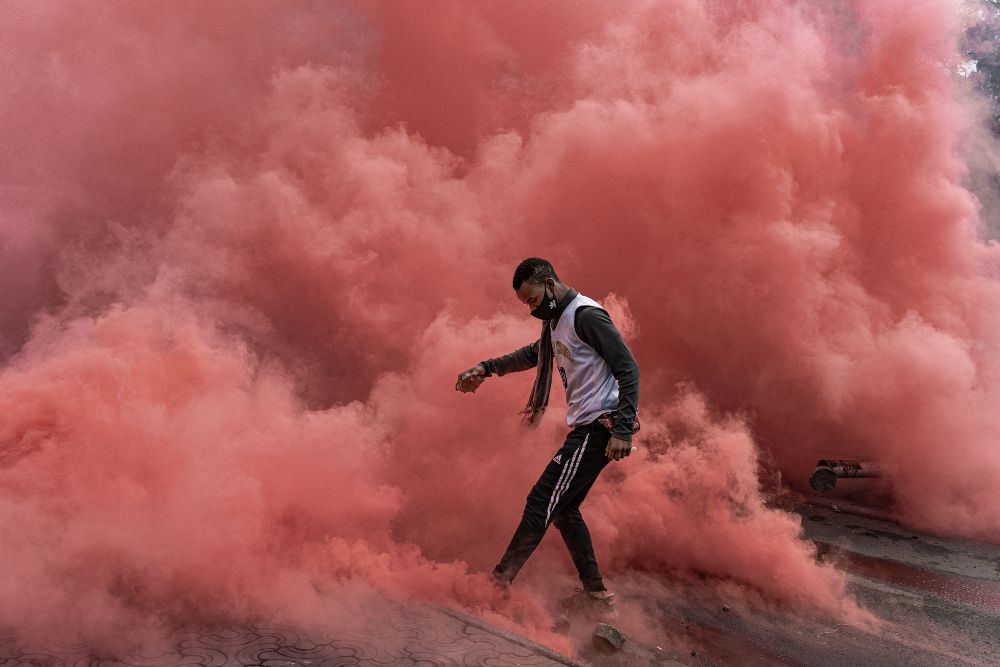
A protester during the Gen Z demonstrations in Nairobi in June. (Photo by Michel Lunanga/Getty Images)
Kenyan democracy has been rattled during the past year and a half by violent governmental crackdowns on young people demonstrating against high taxes, the cost of living, elevated unemployment, and governmental corruption. President William Ruto has demonstrated what observers worry is an increasing intolerance of dissent and a political rigidity that prevents meaningful engagement from the public or opponents. He has responded to growing opposition with a heavy hand, dubbing the youth protesters as “terrorists,” restricting internet access, and deploying anti-terror laws to levy charges against critics and dissenters. As unrest has swelled, the violent response of Ruto’s forces has exacerbated economic tensions, delaying possible financial reforms and deterring external investments.
Kenya remains one of Africa’s most important democracies, yet the trajectory of Ruto’s leadership may imperil this reality. The November 2025 by-elections—which saw low voter turnout, violence, and allegations of bribery—highlighted the strain that Kenya’s democratic process is already under. With national elections coming in 2027, next year will be a crucial test for whether Ruto will harden his authoritarian tactics to retain control, or whether political and public opposition can tilt the balance of power in the direction of preserving democratic governance.
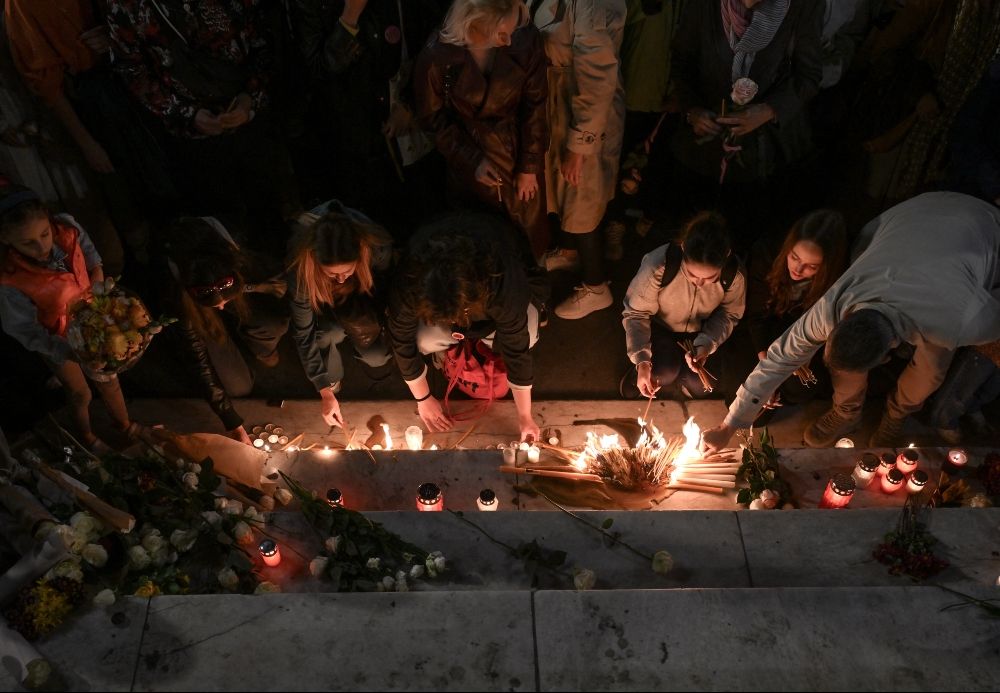
Mourners mark the anniversary of the Novi Sad tragedy in Belgrade on November 1, 2025. (Photo by Oliver Bunic/AFP via Getty Images)
During the past year, Serbian youth have led sustained anti-government protests. While President Aleksandar Vučić has faced significant demonstrations periodically since coming to power in 2012, the current wave constitutes the most serious challenge yet to his illiberal grip on power.
The protests began in November 2024 when the Novi Sad railway station collapsed and killed sixteen people. Since then, the demonstrations have morphed into a broad movement calling for an end to governmental corruption and repression. Protests have rippled across the country and attracted significant public support. In response, Vučić has employed autocratic tactics to stymie dissent—including harassment of protesters, arrests, surveillance, and censorship of the media.
The protest movement is calling for early elections, with the hope of ousting Vučić’s party from power. In early November 2025, after tens of thousands of Serbs took to the streets, Vučić seemed to cede to these demands, offering “to bring forward parliamentary elections due in two years.” However, whether he will follow through and, if so, whether such elections will meaningfully alter the trajectory of Serbian politics remains unclear. If elections are not moved up, the main questions for 2026 will be what happens to the protest wave and whether Vučić further hardens his authoritarian tactics.
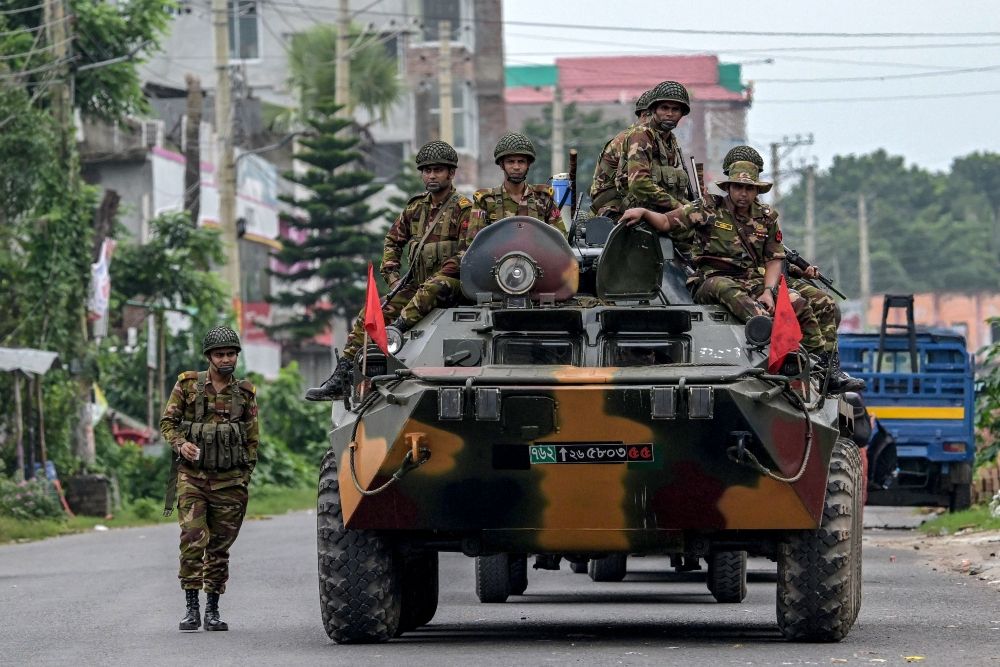
Bangladeshi army personnel patrol in Gopalganj on July 17, 2025. (Photo by Munir Uz Zaman/AFP via Getty Images)
Student-led protests tore through Bangladesh in July 2024 over an unpopular governmental job quota system. When the regime responded with violence, the protests escalated into nationwide public unrest, spurred by anger about inequity and corruption in a political system that had become close to fully authoritarian during Prime Minister Sheikh Hasina’s fifteen years in power. As violence spiraled, with an estimated 1,400 demonstrators killed, the protests drove Hasina out of power. The public led the process to form an interim government that has been led by renowned economist Muhammad Yunus and backed by the military.
However, in the intervening year, political progress has been elusive. The interim government has been slow to fulfill promised reforms. Politics remain deeply polarized, and opposition actors retain powerful roles within ministries. The military continues to hold significant power. Continued instances of political violence and extrajudicial killings by security forces are still a concern. Corruption and a weak economy remain major complaints among the youth, who continue to mobilize with their demands.
Opposition to the interim government has grown, led by former Prime Minister Hasina’s Awami League party. In May, Yunus’s administration barred the Awami League from participating in the upcoming February 2026 national elections, drawing criticism from onlookers concerned about the fairness of the elections and leading Hasina to call for an electoral boycott. Since mid-November, when Hasina was sentenced to death for her violent crackdown on student protests, the Awami League has spearheaded mass protests and shutdowns, demanding the interim government’s resignation and the reversal of Hasina’s sentence.
Yunus has promised to turn power over to the 2026 electoral winner to form a new government. Many are hopeful that this elected government will be better able to enact the reforms that the Bangladeshi public demands. However, the democratic nature of the upcoming elections, the growing resistance movement to the interim government, and the subsequent efficacy of pro-democracy reforms by the new regime will be hard tests for Bangladesh’s potential re-democratization moving forward.
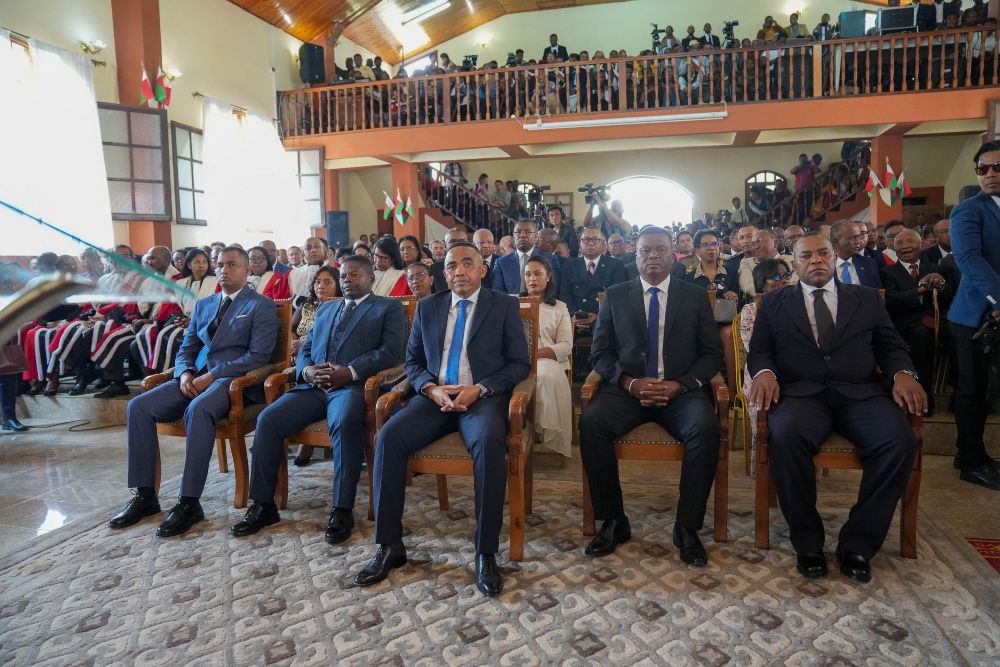
Randrianirina at his swearing-in ceremony in Antananarivo on October 17, 2025. (Photo by Mamyrael/AFP via Getty Images)
In September 2025, Madagascar’s youth mobilized in response to water and power outages in the country, as well as by broader concerns about elite corruption and the high cost of living. The protests intensified over the ensuing weeks, as demonstrators and security forces clashed violently. President Andry Rajoelina attempted to satisfy the protesters’ demands by dismissing his prime minister, dissolving the government, and promising to initiate reforms. However, the youth protesters continued to hold demonstrations, demanding his resignation.
In mid-October, an elite unit of the Madagascar military—the Army Corps of Administrative and Technical Personnel and Services—turned on the regime, joining the protesters and taking control of the military apparatus. Rajoelina fled the country, and Colonel Michael Randrianirina took control. He announced the creation of a transitional government under his leadership and suspended the Constitution.
Randrianirina has promised to form an elected, civilian government within the next two years. However, concerns remain about the true political intentions of this militarized government. The African Union suspended Madagascar’s membership after the military takeover, the UN has issued statements calling for the restoration of constitutional order, and several Malagasy youth leaders have called the transition a “remix of the old system.” Whether Madagascar’s new military government will effectively lead a transition toward democratic governance is cause for doubt and concern, especially in the context of the broader proliferation of military-led governments on the continent.
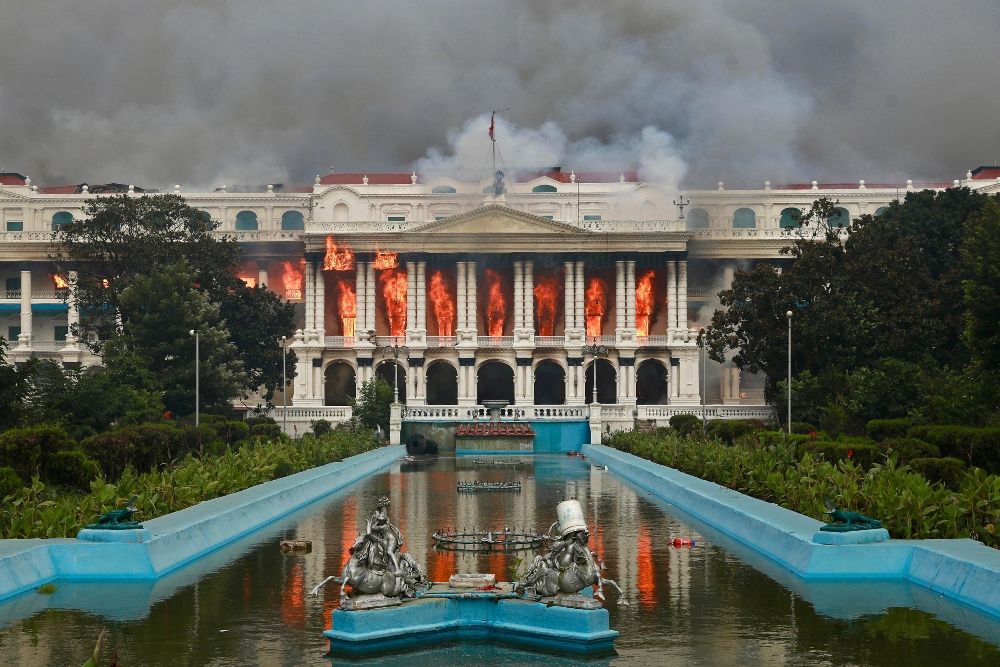
The Singha Durbar, the Nepali government’s main administrative building, burns in Kathmandu on September 9, 2025. (Photo by Prabin Ranabhat/AFP via Getty Images)
In September 2025, youth-led protests erupted in Nepal in response to the regime’s decision to ban many social media apps. The mobilization built upon existing public discontent with low employment rates and widespread governmental corruption and nepotism. After the government responded with violence, protests surged. The protesters set government buildings on fire, ousted the prime minister, and elected an interim prime minister—former chief justice Sushila Karki—via a Discord chat room vote.
Elections for a new government are set for March 2026. That timing has been met with pushback from several traditional political parties, which criticize the fact that the vote will mean replacing members of the legislature midway through their terms. Onlookers are also concerned that Nepal will struggle to administer the election effectively. They point to the damaged public buildings, the lack of poll materials and security, and the need for parliamentary-appointed election officials when there is no parliament to elect them.
If Nepal successfully gets through the elections and forms a new government, it will then face the challenge of putting into place the anti-corruption and economic reforms demanded by the public. Given its fragile institutions and still-roiling political landscape, this will put Nepalese democracy fully to the test.
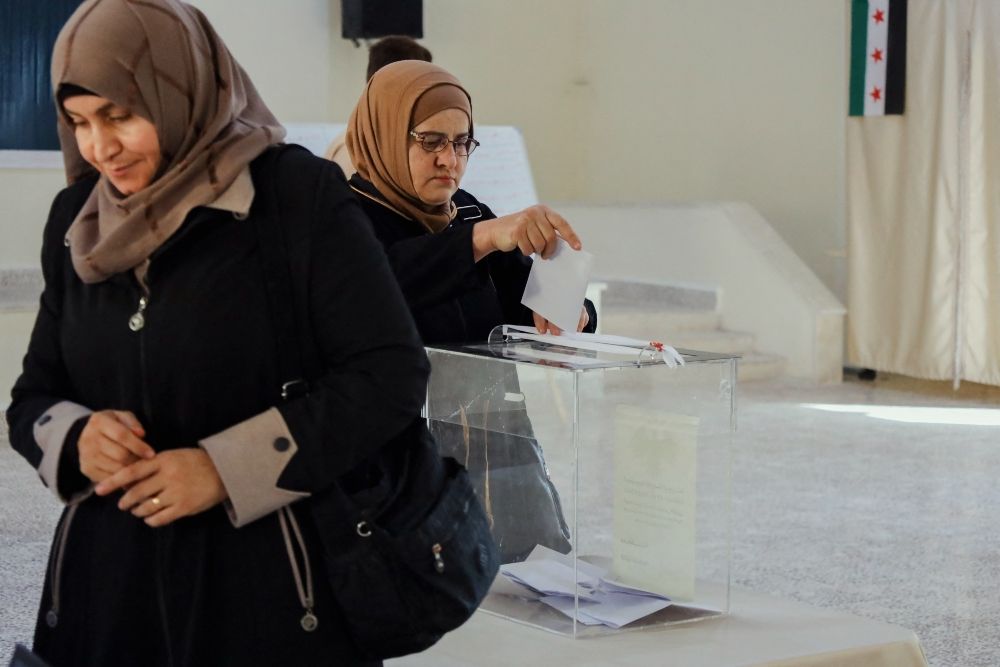
A voter at a polling station in Ariha, Syria, on October 5, 2025. (Photo by Omar Albaw/Middle East Images/AFP via Getty Images)
After Bashar al-Assad’s regime fell to the Hay’at Tahrir al-Sham (HTS) opposition in December 2024, HTS leader Ahmad al-Sharaa promised to form an inclusive transitional government that would ultimately cede authority to an elected government. His transitional government created a national dialogue, established a provisional parliament, held parliamentary elections, and drafted a Constitutional Declaration, with provisions that mandated a five-year transition period. A recently released Afrobarometer survey of Syrians indicates that 81 percent have confidence in al-Sharaa and 73 percent feel they now enjoy freedom of speech and freedom of the press.
Yet some onlookers have expressed concern that the new system vests al-Sharaa with significant executive power and influence over judicial and parliamentary processes. More broadly, profound challenges to this political opening remain, rooted in enduring deep sociopolitical and ethnic divisions and the powerful legacy of decades of harsh authoritarianism. The transitional government is still grappling for control over contested regions, with ongoing conflict among Turkish, Kurdish, and al-Sharaa’s forces in the north, and Israeli occupation backed by Druze separatists in the south. Attacks from both Assad loyalists and HTS-affiliated paramilitary groups on minority religious groups continue to occur.
In October, parliamentary elections were marked by the exclusion of contested regions, underrepresentation for women and minorities, and the use of electoral “voter bodies” rather than a direct vote. The lack of minority representation within al-Sharaa’s mostly loyalist government has also raised concerns, particularly among the Alawites, Druze, Christians, and Kurds. Local governance remains stifled. Syria’s infrastructure and productive sectors are in a weakened state, yet the government has not created a plan for economic reconstruction. In short, the trajectory of this potentially historic political turn toward pluralism and stability remains deeply uncertain.
These ten cases are not an exhaustive list of all the places where threats to democracy are intensifying or democratic openings are occurring. But together, they illuminate several key questions at the core of global democracy’s current pivotal moment: Where and when will protest, mobilization, and other forms of pushback succeed in limiting leaders bent on amassing political power? Can elections that are held in the midst of backsliding processes hold up in the face of governmental efforts to constrain political freedoms and override checks on power? Can reformist governments that emerge when citizens succeed in driving out undemocratic leaders create genuine new shoots of democracy and avoid reproducing prior patterns of repression or dysfunction? In their diversity of geography, size, and sociocultural makeup, these cases constitute a representative and telling snapshot. Their course over the year ahead will say much about the overall global democratic trajectory.

Harvey V. Fineberg Chair for Democracy Studies; Senior Fellow, Democracy, Conflict, and Governance Program
Thomas Carothers, a senior fellow in the Carnegie Endowment for International Peace’s Democracy, Conflict, and Governance Program, is a leading expert on comparative democratization and international support for democracy.

Former Research Assistant, Democracy, Conflict, and Governance Program
McKenzie Carrier was a research assistant in the Democracy, Conflict and Governance Program.
Carnegie does not take institutional positions on public policy issues; the views represented herein are those of the author(s) and do not necessarily reflect the views of Carnegie, its staff, or its trustees.
The real test may come after the leaders leave the room.


Sheena Chestnut Greitens, Oriana Skylar Mastro, Yukon Huang, …
Why governance of rapidly evolving technology will be distributed and complex.


Stewart Patrick, Scott Singer

It should address the shortcomings of previous crisis communication efforts and adapt to the demands of frontier AI.

Lucy Luo
Washington’s decision to support some UN functions while letting others wither is pulling the organization apart at the seams.
Stewart Patrick, Theodore Zaritsky
AI capabilities are moving fast. Most institutions—including governments—can’t keep up.

Anton Leicht, Scott Singer