

Paper
Christopher Shell
{
  "authors": [
    "Christopher Shell"
  ],
  "type": "commentary",
  "blog": "Emissary",
  "centerAffiliationAll": "dc",
  "centers": [
    "Carnegie Endowment for International Peace"
  ],
  "englishNewsletterAll": "americanStatecraft",
  "nonEnglishNewsletterAll": "",
  "primaryCenter": "Carnegie Endowment for International Peace",
  "programAffiliation": "ASP",
  "programs": [
    "American Statecraft"
  ],
  "projects": [],
  "regions": [
    "Haiti",
    "United States"
  ],
  "topics": [
    "Security",
    "Foreign Policy",
    "Military"
  ]
}
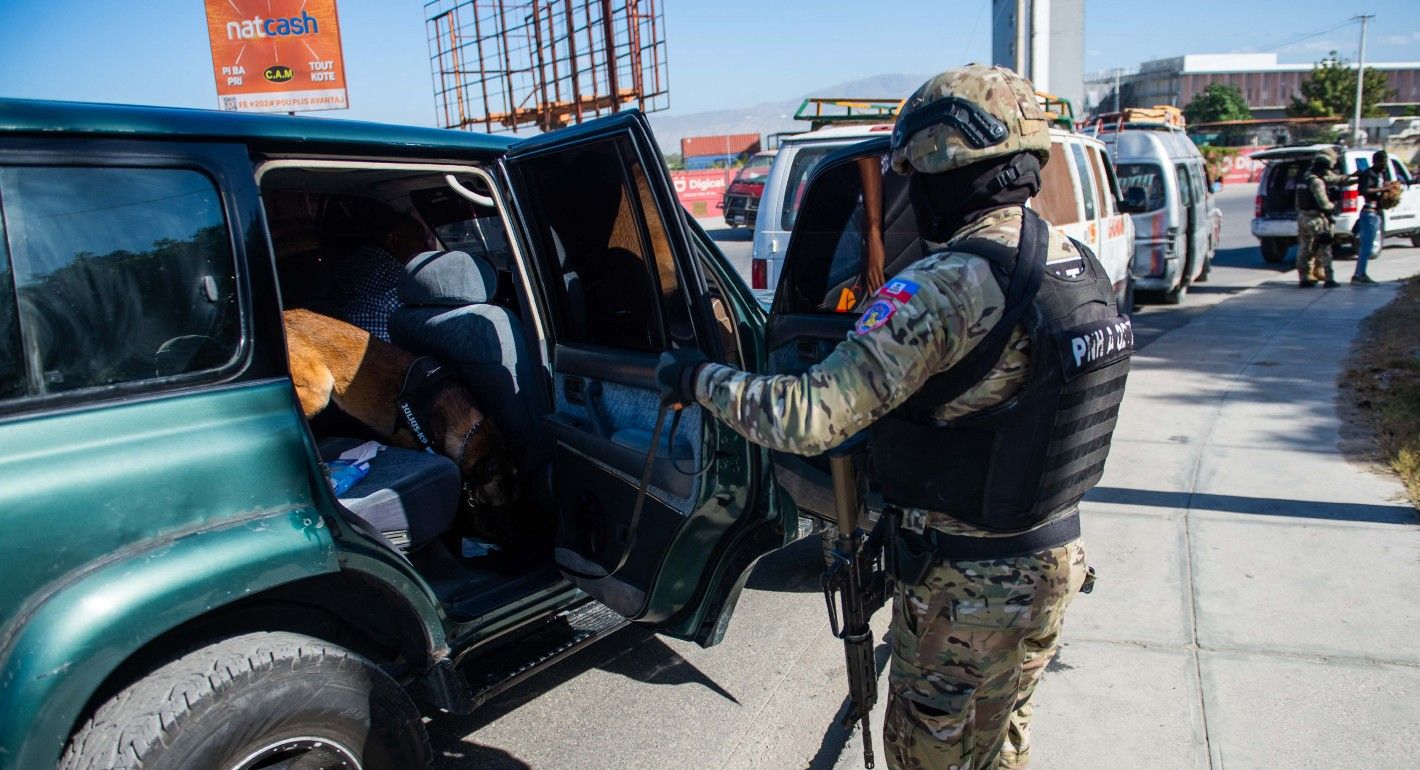
Police patrol near Toussaint Louverture International Airport in Port-au-Prince in February. (Photo by Clarens Siffroy/AFP via Getty Images)
Perhaps the most consequential contribution the international community can make is not an enlarged foreign military footprint, but equipping Haitian institutions to manage their own security.
Upon landing at Cap-Haïtien International Airport in mid-November, my flight was met by customs officials who meticulously searched every pocket of every passenger’s bags. In later interviews with security professionals, I learned that they were looking for prohibited electronic devices, namely drones—which well-armed and financed criminal groups have sought to acquire ever since the Haitian government began using them in anti-gang operations.
What struck me was not simply the thoroughness of the search but also what it said about the Haitian state’s current reality. With limited resources and personnel, and large swaths of the country beyond the reach of regular policing, authorities are concentrating their efforts where they still can—at ports of entry, to intercept high-impact threats that could further empower criminal groups.
The airport interaction revealed two truths. First, Haiti’s struggle is not only with armed gangs but also with a state stretched beyond its limits—in policing, maritime patrols, border security, and basic social services. Second, perhaps the most consequential contribution the United States, and the broader international community, can make is not an enlarged foreign military footprint, but equipping Haitian institutions to manage their own security.
Following the assassination of president Jovenel Moïse in 2021, U.S. policymakers had no good policy options to address Haiti’s acute unrest. Doing nothing was equally untenable, as complete state collapse in Haiti would pose serious risks to U.S. national security.
Haiti has historically served as a tertiary drug shipment hub for criminal networks—estimates suggest that roughly 10 percent of cocaine entering the United States passes through Haiti. But recent UN reporting indicates that the growing influence of the gangs and weakening of state capacity has made Haiti increasingly attractive as a launch point for drug flows moving from South America into the United States.
What’s more, the humanitarian crisis driven by gang activity has not only intensified internal displacement but has also accelerated irregular outward migration to Haiti’s neighbors, namely the Dominican Republic, Turks and Caicos, and the Bahamas, as well as the United States. Haiti is the most populous nation in the Caribbean, and its criminal groups perpetrate widespread violence against civilians. If the state were to fall fully into the hands of gangs, irregular migration flows to the United States likely would skyrocket, at a time when current migration flows already carry significant social and political strain in American domestic politics. The expanding reach of Haiti’s gangs cannot be ignored by U.S. policymakers without real risk.
This reality led president Joe Biden’s administration, in 2023, to support a UN resolution authorizing a Kenyan-led Multinational Security Support mission aimed at restoring government control in Haiti. The mission, however, encountered significant obstacles: It never met its target of 2,500 personnel on the ground, and it suffered from chronic underfunding and logistical challenges. In addition, Kenyan police officers often found themselves outgunned by the gangs.
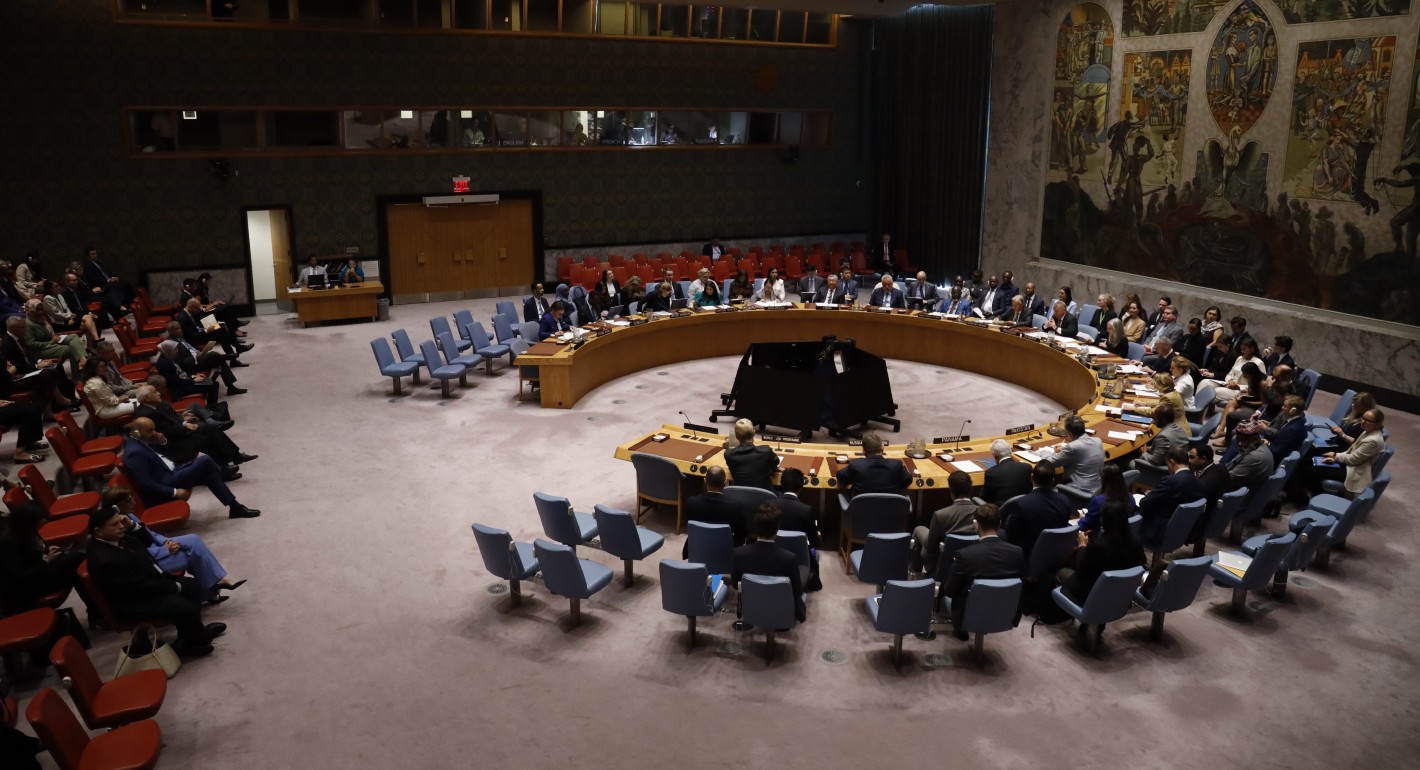
President Donald Trump’s administration has picked up where the Biden team left off. It supported a new Gang Suppression Force (GSF), approved by the UN Security Council on September 30, and increased the authorized manpower to roughly 5,500 personnel, which now includes both police and military units.
Still, significant questions remain about the mission’s viability—especially given the international community’s anemic response to the Biden administration’s requests for material and financial support. (The United States and Canada were the largest contributors to the MSS.) Observers have raised concerns that the GSF, which was approved for a one-year mandate, may provide short-term relief, but that without meaningful investment in Haiti’s state capacity, the cycle of violence could return once the international force departs. State capacity—particularly in maritime policing, border enforcement, and customs security—must remain part of the conversation. Concerns I heard from Haitian interlocuters mirror those expressed by observers in Washington: Without sustained resources, clear strategy, and long-term investment in Haitian state capacity, external interventions tend to fall short.
In addition to staffing an international force, the funds could be used to build out the Haitian military and train the Haitian National Police (HNP), along with subsidizing their salaries. The funds could also be earmarked for purchasing high-tech airport and port scanners, patrol boats, and maritime enforcement technology.
My conversations with Haitian security professionals revealed some recent successes that show that some state functions endure and can be built upon. For example, the thirty-fifth HNP class will soon graduate with 892 new officers who will join beleaguered units in the field. In addition, customs officers seized a large number of weapons hidden in shipping containers arriving in Cap-Haïtien in April 2024, and they executed the largest drug bust in thirty years near Tortuga in July.
But these successes also underscore the scale of the weapons and drug problem Haiti confronts. The reconstituted Haitian military, which was defunct for more than two decades, remains threadbare due to poor funding and personnel shortages. This leaves the HNP with the tasks of urban policing, rural patrols, border security, and maritime operations—a tall order for a force of roughly 9,000 officers policing a nation of 11 million.
The scale of this problem cannot be dealt with by addressing only short-term security needs, as was custom in previous international peacekeeping missions deployed to Haiti. Any peacekeeping mission to Haiti with potential for success must operate on a dual track that provides security support for immediate challenges and helps build Haiti’s capacity to cope with these issues in the long term.
But Haiti’s crisis is not solely structural; it is also psychological. One interlocutor told me, as we drank coffee overlooking the harbor where weapons were seized a year earlier, that deep public discontent stems from the belief that Haitian leaders and the government do not have the best interests of the masses in mind and instead serve foreign interests.
This perception carries real weight, especially in a landscape crowded with private military contractors, a growing contingent of international police units, and the Haitian government’s introduction of sophisticated technologies that have already reportedly taken the lives of innocent civilians. Even genuine progress against the gangs could be overshadowed by an expanded foreign footprint, inflaming public sentiment against international coalitions and strengthening gangs’ antiestablishment narratives.
There is no quick or painless solution to a crisis that now feels entrenched. Foreign interventions—past and present—have been marked by complications and unintended consequences. A more sustainable approach for the international community, particularly the United States, may be to focus on what it can realistically influence: stemming the flow of U.S.-sourced firearms into Haiti and equipping the Haitian state to reclaim its own security. Searching for drones in arriving airline passengers’ luggage and seizing firearms in incoming shipping containers is a good start.
Former Fellow, American Statecraft Program
Christopher Shell was a fellow in the American Statecraft Program at Carnegie Endowment for International Peace.
Recent Work
Christopher Shell
Christopher Shell
Carnegie does not take institutional positions on public policy issues; the views represented herein are those of the author(s) and do not necessarily reflect the views of Carnegie, its staff, or its trustees.

It should address the shortcomings of previous crisis communication efforts and adapt to the demands of frontier AI.

Lucy Luo
Washington’s decision to support some UN functions while letting others wither is pulling the organization apart at the seams.

Stewart Patrick, Theodore Zaritsky
AI capabilities are moving fast. Most institutions—including governments—can’t keep up.


Anton Leicht, Scott Singer
They face an uphill climb, but they could draw on a strategy that other diplomats have used in the past.


Shana Tabak, Alejandro Martin Rodriguez

The books, podcasts, and films that explain the world it made.

Andrew Leber