

Commentary
It should address the shortcomings of previous crisis communication efforts and adapt to the demands of frontier AI.
Lucy Luo
{
  "authors": [
    "Jeffrey Prescott"
  ],
  "type": "commentary",
  "blog": "Emissary",
  "centerAffiliationAll": "dc",
  "centers": [
    "Carnegie Endowment for International Peace"
  ],
  "englishNewsletterAll": "americanStatecraft",
  "nonEnglishNewsletterAll": "",
  "primaryCenter": "Carnegie Endowment for International Peace",
  "programAffiliation": "ASP",
  "programs": [
    "American Statecraft"
  ],
  "projects": [],
  "regions": [
    "United States",
    "China"
  ],
  "topics": [
    "Foreign Policy"
  ]
}
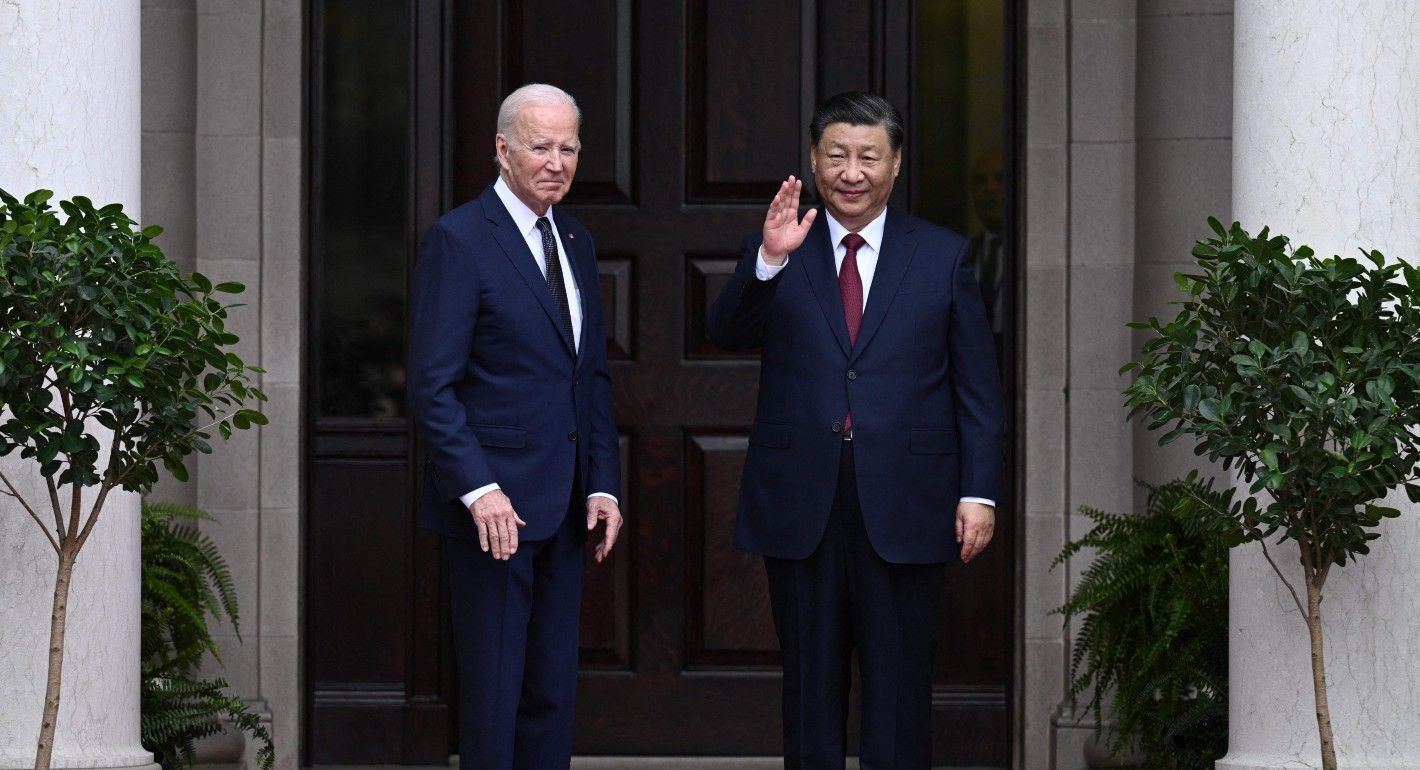
Biden and Xi meet in California on November 15, 2023. (Photo by Brendan Smialowski/AFP via Getty Images)
A new study found that a combination of policy and diplomatic focus contributed to a dramatic shift in fentanyl-related overdose deaths.
One of the most frustrating aspects of foreign policymaking is the difficulty of proving results. Even when a president identifies a significant priority and tasks his national security team with a plan, it is almost always easier to generate diplomatic engagement than to demonstrate real impact. A White House will dutifully run a National Security Council “interagency process,” generate a fact sheet touting a summit or high-level meeting, and follow with a press release, but the reality is that it is much easier to measure outputs than outcomes, let alone quantify how those outcomes affect matters of life and death for Americans.
That is what makes a recent study tracing a sharp decline in American fentanyl deaths back to policy changes in China so remarkable. According to a January 8 peer-reviewed article in Science, new evidence suggests that a major disruption in the illegal fentanyl trade explains the sudden reversal in overdose deaths from fentanyl in the United States starting in 2023.
Beginning in 2021, President Joe Biden’s administration undertook a major policy effort to address the fentanyl crisis, including through diplomacy with China designed to interrupt the supply of critical precursor chemicals that fuel the illegal synthetic drug trade. Biden had promised, in his presidential campaign, to focus on opioid overdose deaths, and made combating the epidemic the first plank of his “unity agenda” in his first State of the Union address. But the response to the COVID-19 pandemic and related economic crisis took priority, particularly in early interactions with China.
Biden’s administration shifted gears significantly in 2023, ramping up pressure in a series of high-profile law enforcement and sanctions actions to target Chinese and Mexican networks associated with the fentanyl trade. It also took new diplomatic steps, including with Mexico, to build global support for the campaign. Crucially, this included high-level diplomacy with China, driven out of the White House and working across the executive branch, that used this pressure to make concrete asks of China and ultimately strike a deal. That agreement included resuming law enforcement cooperation and taking action against the synthetic drug trade, particularly on producers of precursor chemicals and manufacturing equipment. This culminated in a summit between Biden and Chinese President Xi Jinping in November 2023, which brought months of quiet work in diplomatic channels to leader-level prominence.
As a member of the National Security Council’s deputies committee, I had a front-row seat for the deliberations that set these actions into motion. Did they work? The new research found a remarkable convergence between the start of the sharp decline in U.S. overdose deaths in 2023 with evidence pointing to a sudden “shock” to the fentanyl supply chain. The data include a notable decrease in purity in seized fentanyl and a decline in seizures, both signs of a supply break, along with a novel analysis of publicly available Reddit user data that also points to a spike in online complaints about fentanyl availability and quality in the same timeframe. In other words, just as U.S. diplomacy was compelling China to crack down on fentanyl precursors, the U.S. market suffered a fentanyl supply crunch. The impact on U.S. public health is clear: By May 2025, the Centers for Disease Control and Prevention was reporting a 24 percent decline in overdose deaths from October 2023 to September 2024—the first sudden shift since the crisis began fifteen years ago.
To be sure, scientific research on public policy impact is inherently difficult, and there are caveats. The researchers note that by the time Biden met with Xi in late 2023, overdose deaths had already begun their descent. But the summit didn’t initiate this work; rather it marked a milestone following months of diplomatic efforts with China that had already begun to bear fruit. Improvements in treatment and overdose prevention—additional Biden-era policy interventions—or other factors may have had an impact. Yet fentanyl deaths began to fall at the same time in Canada, further reinforcing that the key factor was a decline in the supply of precursors rather than a change in enforcement practices, medical advances, or other factors. The fentanyl trade differs between the two countries, but the source of precursors does not. The bottom line seems clear: This combination of policy and diplomatic focus contributed to a dramatic, sudden shift in trajectory on overdose deaths—effectively saving thousands of American lives.
If imitation is the sincerest form of flattery, then President Donald Trump’s administration admires the Biden approach, announcing a deal following a Trump meeting with Xi in late 2025 that China promised to “stop the shipment of certain designated chemicals” to the United States to squeeze the fentanyl supply chain. Though details are scarce, this seems like a pledge to continue what China was doing thanks to Biden’s pressure.
While it is likely that Xi got the better of Trump in that interaction, this new research suggests the trend line on overdose deaths will be an important measure of diplomatic success. Preliminary data from late 2025 is mixed: Although the overall national decline continues, reversals in some key states may put that trajectory in doubt. With the Trump counternarcotic approach wildly shifting from implausible (and illegal) boat strikes in the Caribbean to an entirely different focus, following the evidence will be more important than ever.

Senior Fellow, American Statecraft Program
Jeffrey Prescott is a senior fellow in the American Statecraft Program at the Carnegie Endowment for International Peace.
Carnegie does not take institutional positions on public policy issues; the views represented herein are those of the author(s) and do not necessarily reflect the views of Carnegie, its staff, or its trustees.

It should address the shortcomings of previous crisis communication efforts and adapt to the demands of frontier AI.

Lucy Luo

Washington’s decision to support some UN functions while letting others wither is pulling the organization apart at the seams.

Stewart Patrick, Theodore Zaritsky

AI capabilities are moving fast. Most institutions—including governments—can’t keep up.


Anton Leicht, Scott Singer

The books, podcasts, and films that explain the world it made.

Andrew Leber

U.S. trading partners in Asia are closely watching the dispute for signs of how it may affect their own interests.

Barbara Weisel