

Paper
Batteries are essential technologies for twenty-first-century growth, security, and energy—and they cut to the core of geopolitical ambitions for high-tech strategic autonomy.
{
  "authors": [
    "Milo McBride"
  ],
  "type": "questionAnswer",
  "blog": "Emissary",
  "centerAffiliationAll": "dc",
  "centers": [
    "Carnegie Endowment for International Peace"
  ],
  "englishNewsletterAll": "ctw",
  "nonEnglishNewsletterAll": "",
  "programAffiliation": "SCP",
  "programs": [
    "Sustainability, Climate, and Geopolitics"
  ],
  "regions": [
    "China",
    "United States",
    "South Korea",
    "Europe",
    "Japan"
  ],
  "topics": [
    "Technology",
    "Energy"
  ]
}
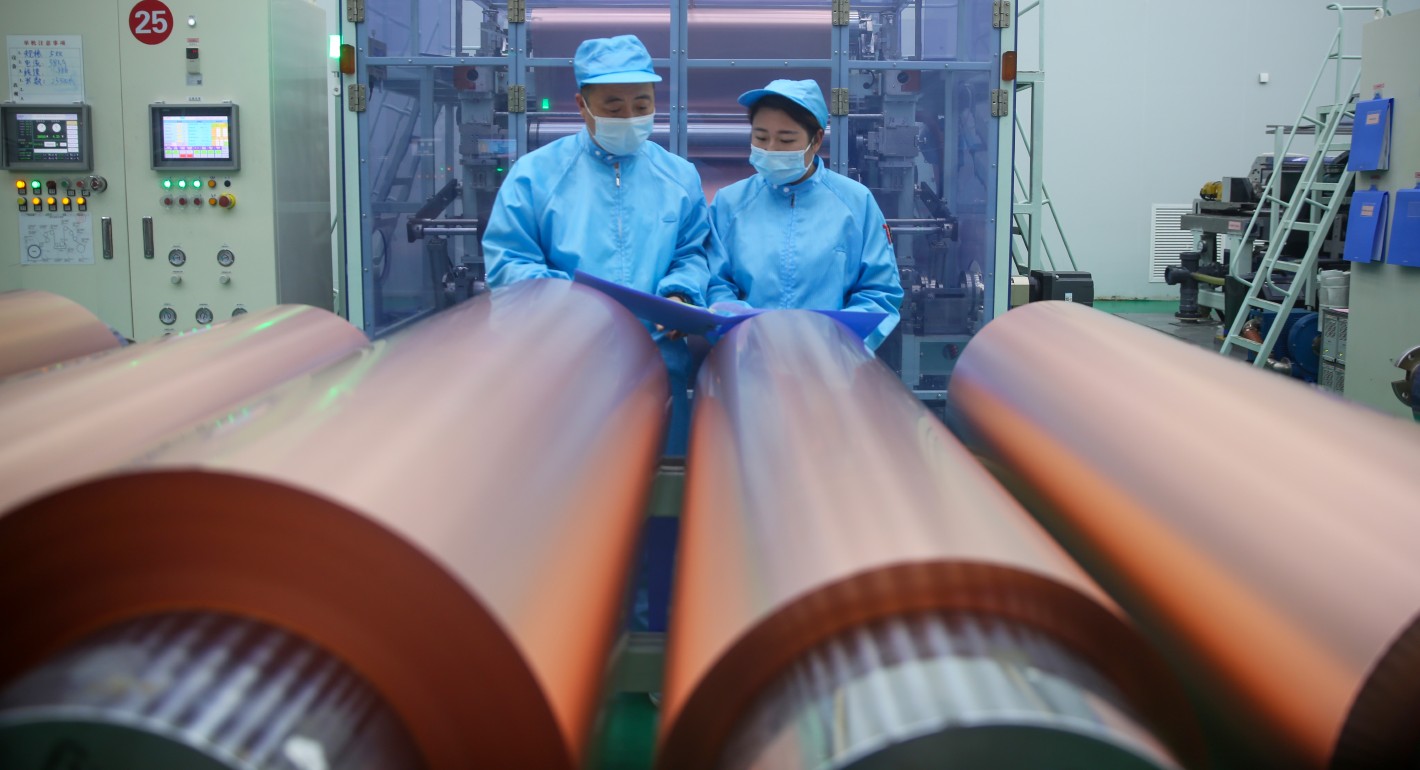
The production line for high-end lithium-ion battery copper foil in 2026. (Photo by Sun Meng/VCG via Getty Images)
Over the past decade, China has moved from marginal player to major producer of all things batteries. The United States, Europe, and others are aiming to balance the market.
Why are batteries having a geopolitical moment?
Lithium-ion batteries have emerged as strategic technologies core to twenty-first-century energy, transport, defense, and tech markets. They will define the future competitiveness of the automobile industry, the durability of drones and advanced robots, and the resilience of data centers to absorb massive, steady loads of electricity. For countries aiming to grow these high-tech sectors, having an indigenized battery industry is a priority.
Beyond their applications, batteries also demand significant quantities of critical minerals such as lithium, cobalt, and graphite, which have become key to great power rivalry and the focal point of a new resource.
How is China a factor?
China is the factor. Over the past decade, China has gone from a marginal player to the dominant producer of all things batteries. Chinese firms produce about 80 percent of the world’s batteries and somewhere between 60 percent and 90 percent of refined battery materials—as well as vast quantities of subcomponents and factory machinery. By 2030, China alone could produce the entire global demand for batteries. What’s more, Chinese firms are leading in innovation: They hold about 70 percent of the world’s battery patents, and they are racing ahead on next-generation battery technologies that offer higher performance or require fewer minerals.
In recent years, the Chinese government has begun to weaponize its strength across battery supply chains, largely in response to U.S. export restrictions on semiconductor technology. China’s first move was to withhold exports of graphite, the largest per-mass component in the battery. Recently, the government escalated with restrictions on the machinery to process lithium and produce the latest generation of batteries outside mainland China. These moves signal a clear policy goal to preserve China’s technological lead and industrial prestige at all costs.
You get into the nitty-gritty of different types of batteries and how they’re made (and by whom). What would you want someone with only very minimal battery knowledge to understand about this discussion?
Batteries are hypercomplex technologies. Western policymakers have often treated battery manufacturing like traditional heavy assembly—perhaps akin to making steel—when, in reality, it is much closer to semiconductor fabrication. It’s an industry that requires high precision and deep operational know-how, rather than simple assembly-line labor.
Making a battery starts with blending processed minerals into a slurry that is then pasted as hair-thin sheets onto copper or aluminum foils. From there, they are rolled, compressed, and then dried to remove certain elements before being cut into cell architectures (like a roll or a pouch). I should humbly note that this is a simplified version of a far more demanding and complicated process. For example, certain steps require hypercontrolled “cleanrooms” that are free of moisture or dust.
The corporate goal of these so-called gigafactories is to produce mass quantities of batteries with negligible errors at blistering speeds—sometimes in a matter of seconds. Some of these facilities span many kilometers, and the most state-of-the-art facilities are highly automated.
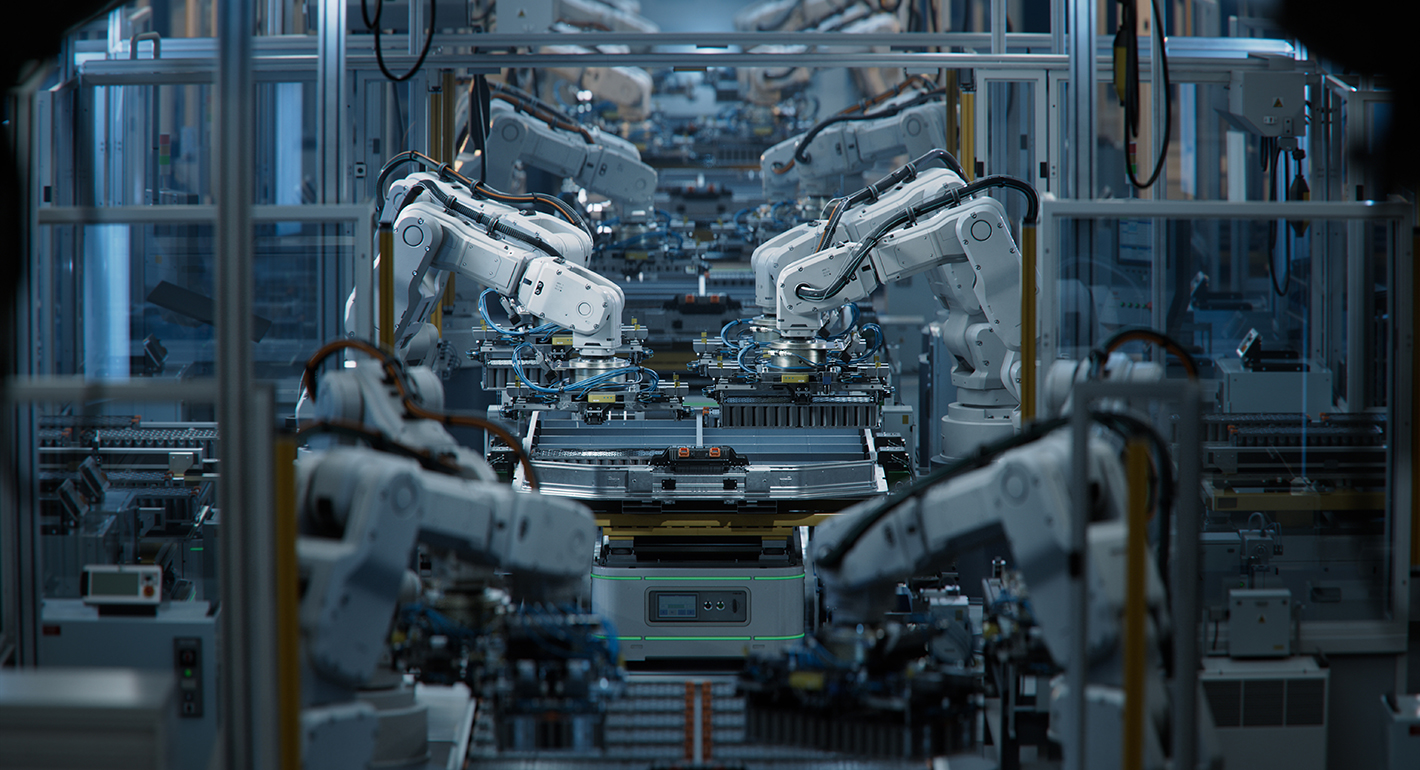
Batteries are essential technologies for twenty-first-century growth, security, and energy—and they cut to the core of geopolitical ambitions for high-tech strategic autonomy.
What would “more balanced battery markets” look like?
A more balanced scenario involves deeper industrial integration and supply chain coordination between the United States, Europe, South Korea, and Japan, as well as potentially India and Canada. China will still retain a significant market lead—that is an unavoidable reality—but a balanced approach prevents total monopoly by strengthening non-Chinese competitors.
Integration and coordination are especially crucial for Korean battery manufacturers, which hold a strong second place that is at risk of slipping. South Korean firms are a technology behind their Chinese competitors, and they require access to other countries’ markets in order to compete with China’s domestic economies of scale, because South Korea alone is too small to compete at the scale of the Chinese market. America’s U-turn on electric vehicles did not help this momentum in the slightest, and the European market is being increasingly cornered by Chinese firms, although Korean companies do have a notable foothold.
For large demand centers such as the United States and Europe, governments might welcome—perhaps incentivize—joint ventures between local startups and Korean giants with the prowess to scale up. One of the findings of my report is that the United States and Europe have notable battery innovation but struggle to bring these technologies to market. This is precisely why collaborating with Korean companies and the remaining Japanese firms is so essential. (Japanese firms once led this market but have fallen increasingly behind to a third-place slot.)
Furthermore, although the United States and Europe have built out battery cell factories, which produce the final-stage product, they remain severely exposed in midstream products known as active materials, which are composed of critical minerals. It’s a massive choke point because of Chinese industrial capacity, underinvestment in diversification, and an incomplete policy agenda—and it should be the next priority for governments. Western policymakers should consider supporting Asian firms—including Chinese firms—to scale these up through joint ventures. They should also look to India and Canada as potential suppliers for the most precarious input, known as battery anodes. These parts store the energy in their graphite-based structures, and graphite is the most China-dominated of the battery metals.
What do you see as the biggest challenges to implementation?
The challenges are significant and range from the technical to the geopolitical.
On a technical level, onshoring or friendshoring these supply chains will incur costs. Chinese economies of scale and cost differentials mean that Chinese factories can make batteries 20 percent to 50 percent cheaper than others, depending on the site and battery type. That said, the costs of production will come down over time, once factories can operate at higher capacity and know-how is absorbed. Policymakers might consider supporting measures for the notoriously difficult ramp-up period while a factory grows into maturity.
Globally, erratic policy in Washington is concerning to legacy allies and partners and is causing fragmentation. Many still want to find a way to work with the United States, but others are hedging, including with China. Developing a diversified industrial base is a sound long-term strategy, but it is a complex task when countries lack confidence in this changing world order.
Lastly, Western policymakers face tough trade-offs in defining what counts as “domestic” production. Does a Korean battery factory operated with an American car company count as “made in the USA,” or does the factory ownership have to be 100 percent U.S.-based? This is a critical challenge for Europe, which bet big on a couple of its battery startups that lacked experience and are now bankrupt or struggling to survive. As they crumble, Chinese firms are racing to establish themselves in the European market without any joint ventures. Difficult political choices will need to be made about what “de-risking” genuinely looks like.
What made you interested in this project?
I’m interested in advanced energy technologies that are essential to decarbonization but also have important security dividends. I’m also fascinated by technologies with massive potential for breakthrough innovations that could rapidly alter their applications or place in geopolitics. Batteries are one of the clearest examples of this type of technology. For example, the report finds that sodium-ion batteries are on the cusp of widespread commercialization, which could significantly reduce the scale of demand for some minerals in future decades. This will not just benefit the environment, but also countries struggling to diversify some of the more precarious rocks like cobalt or graphite.
In a historical context, we are in the very early days of the battery revolution, and their importance to frontier technologies cannot be overstated. Nuclear power plants have been running for seventy-five years, while the first commercial electric vehicle was deployed in 2010 and battery storage on the power grid in 2017—both nascent developments. Some of the new battery technology being developed in labs is vastly more powerful than what we are using today and could have important implications for how humans move around in the future.
Read the author’s full report here.
The latest from Carnegie scholars on the world’s most pressing challenges, delivered to your inbox.

Fellow, Sustainability, Climate, and Geopolitics Program
Milo McBride is a fellow in the Sustainability, Climate, and Geopolitics Program at the Carnegie Endowment for International Peace.
Recent Work



Herbert Crowther, Darcie Draudt-Véjares, Walter James, …

Daevan Mangalmurti, Debbra Goh, Milo McBride
Carnegie does not take institutional positions on public policy issues; the views represented herein are those of the author(s) and do not necessarily reflect the views of Carnegie, its staff, or its trustees.
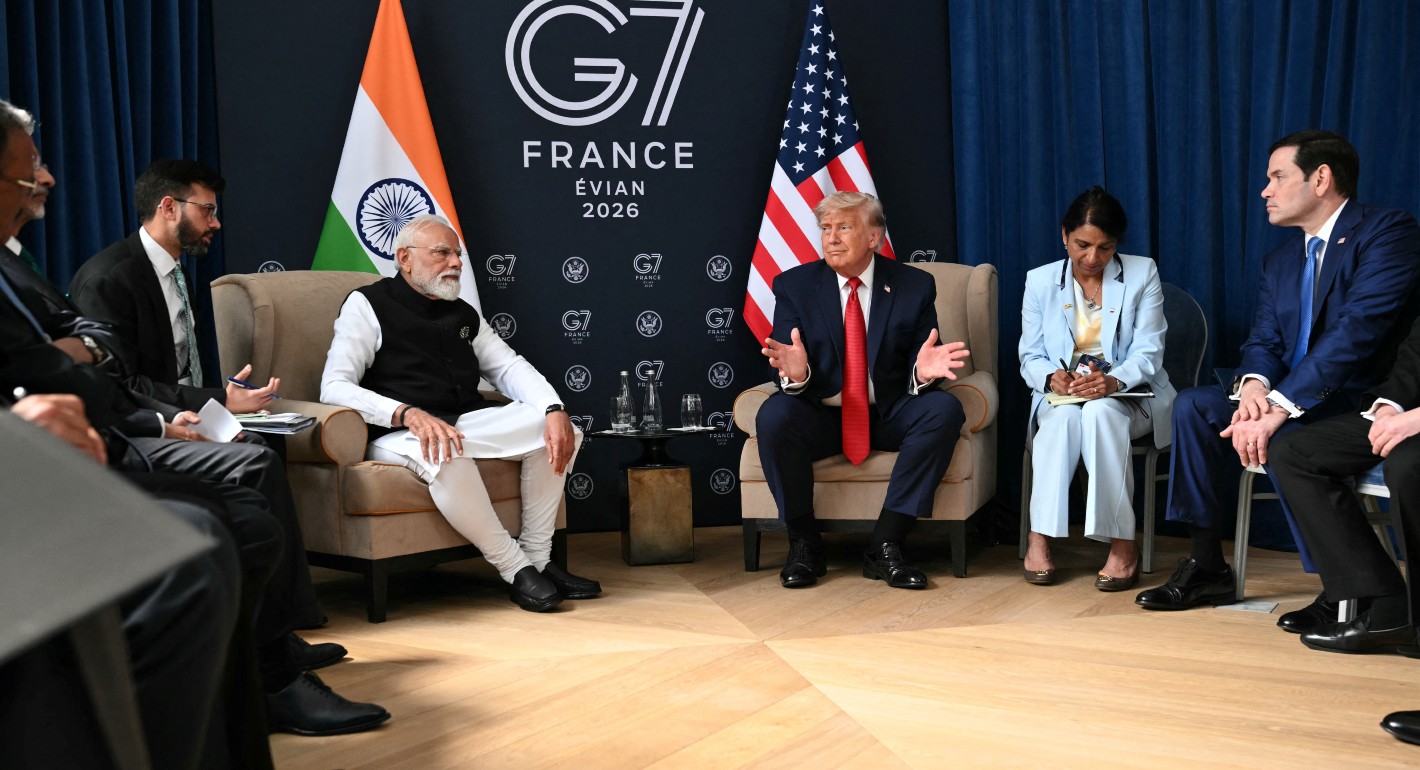
Despite public disputes over trade and immigration, the strategic partnership’s foundations remain sturdy.

Sameer Lalwani
It signals a new era of tech diffusion and warfare.

Steve Feldstein

The acknowledgment has sparked fears of a new arms race with China and Russia.

Chris O’Meara

The summit may be remembered as a fatal blunder, when Washington, Beijing, and the AI industry collectively chose ceremony over action.

Jeffrey Prescott
Why governance of rapidly evolving technology will be distributed and complex.


Stewart Patrick, Scott Singer