

Paper
U.S. and Australian defense strategies, while closely aligned, are not identical. Investing effort across resources, relationships, and resilience will facilitate more coherence.
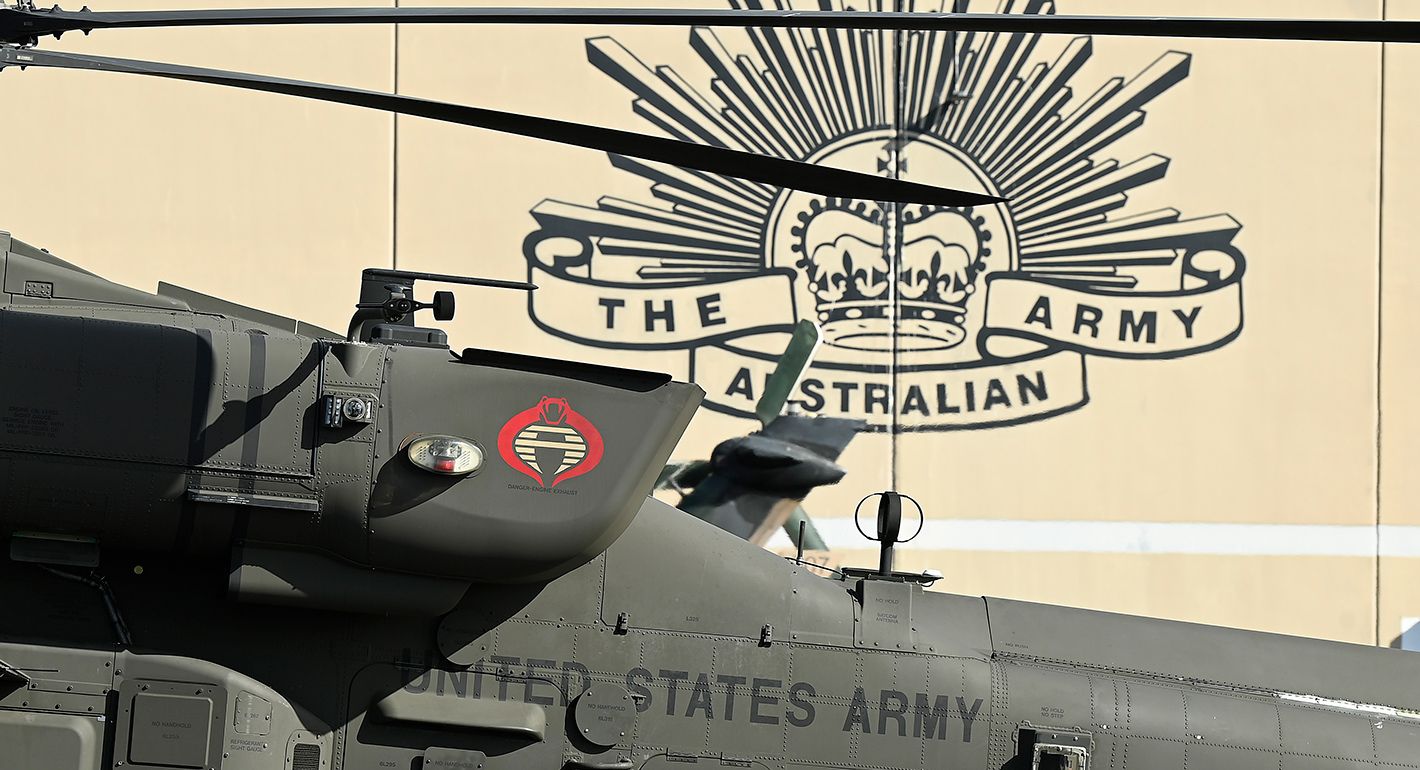
Too many people in Washington and Canberra presume that the strategic challenge from China alone will make defense coordination within the alliance easy. The reality is that it could sharpen contradictions around the kind of operational planning that will be needed to enhance deterrence. Australian and American defense strategies, while closely aligned, are not identical. To build the alliance will require aligning resources, building complementary regional relationships, and investing in resilience.
The United States and Australia face a turbulent world: geopolitical turbulence from war in Europe and especially the rise of Chinese power in the Indo-Pacific; economic turbulence from price shocks and a global economy that only recently emerged from a once-in-a-century pandemic; and technological turbulence from disruptive innovations that hold both promise and peril.
Such challenges are best faced together—and then faced jointly with other regional and global democracies. Canberra and Washington have an unparalleled opportunity to fashion broader, stronger, and multilayered partnerships.
But this, in turn, will require self-reflection, not just cheerleading. And that means undertaking an intellectually honest appraisal of the promises and challenges inherent to the alliance.
The inauguration of a new U.S. administration under President Donald J. Trump and an impending election in Australia in 2025 offer the opportunity to do so. Too many people in both capitals presume that the strategic challenge from China alone will make defense coordination easy. The reality is that it could sharpen contradictions around the kind of operational planning that will be needed to enhance deterrence. As Matthew Sussex and Peter Tesch argue in their chapter of this volume, Australian and American defense strategies, while closely aligned, are not identical. The two allies will need to align resources, build complementary regional relationships, and invest in resilience.
The good news is that the alliance enjoys broad public support in both countries and is wholly bipartisan.
In Australia, the Labor Party can claim ownership by looking back to prime minister John Curtin’s December 1941 declaration that Australia “looks to America,” which ushered in eighty years of shared history and deepening collaboration. For its part, Australia’s Liberals and Nationals can look to the ANZUS alliance, signed by prime minister Robert Menzies in September 1951.
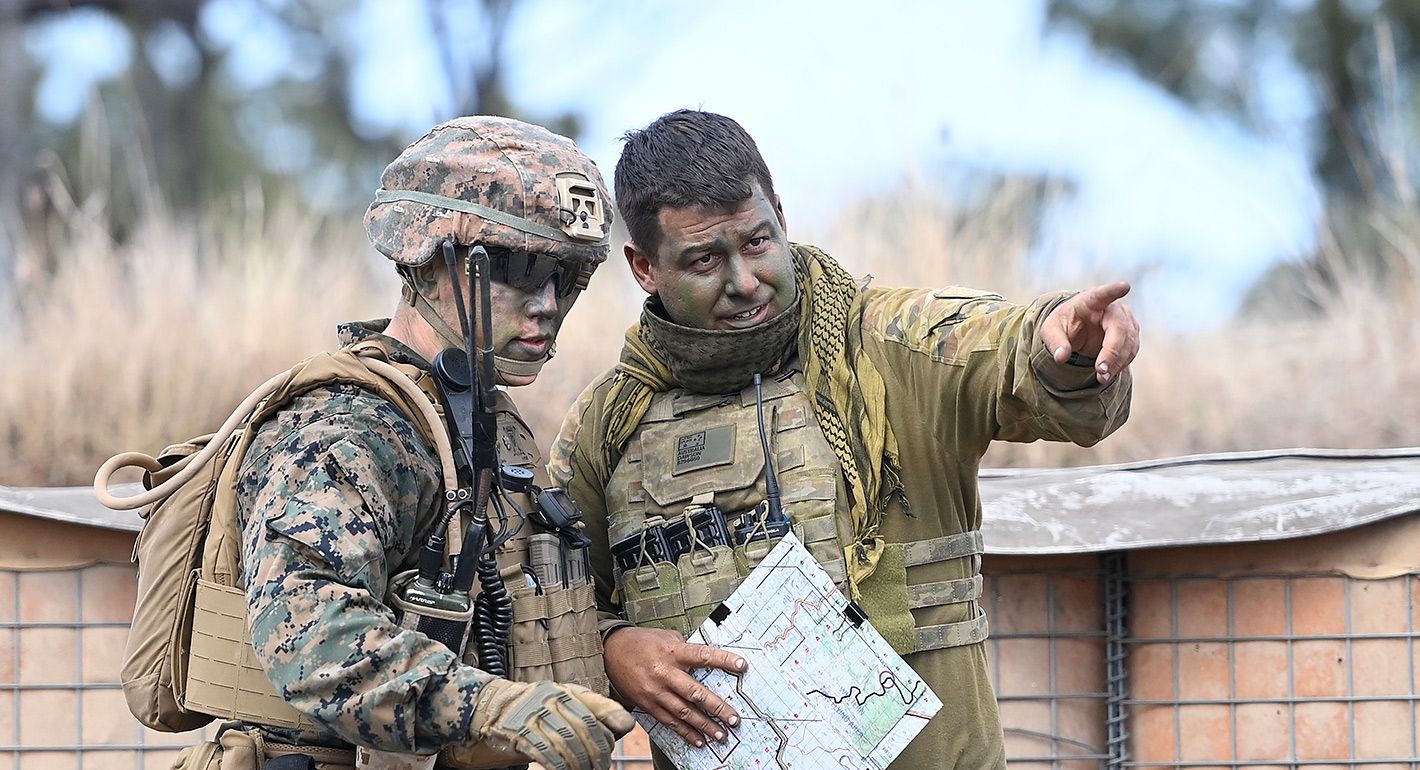
American investment in the alliance is similarly bipartisan, reinforced by presidents of both parties since Franklin D. Roosevelt and reinvigorated in recent years through bipartisan Congressional support for the AUKUS security partnership, a host of force posture initiatives, including the Marine Rotational Force-Darwin and Submarine Rotational Force-West, and associated technology sharing agreements.
But the bad news, from my perspective, is that Australian and American defense planners have yet to fully confront some thorny operational questions. This volume of papers is dedicated to that end.
For one, Washington and Canberra have a storied history of sending their forces into combat and then fighting shoulder to shoulder, beginning with the 1918 battle of Hamel where U.S. forces served under an Australian commander, General Sir John Monash. But they have very little history divvying up roles and missions in the manner that will be required for deterrence, defense, and ultimately warfighting in the context of high-intensity conflict in the Indo-Pacific. As my former Carnegie colleague Ashley Townshend once put it, the two sides are at risk of significant “expectation gaps.”
For Washington (and by extension, the Indo-Pacific Command in Hawaii), a core issue is how to integrate both Australian and U.S. forces rotating through Australia into U.S. war plans and warfighting. But for Canberra, this whole question of integration poses a political problem: no matter which party leads the government, pre-commitment is both a sovereign and political challenge for Australia.
To be effective, therefore, both countries need to undertake difficult reforms, forge new modes of cooperation, harmonize outdated regulations, better align national strategies, address acute Australian sovereignty concerns and associated questions around risk thresholds, and develop accelerated solutions to enduring alliance management challenges.
And given the loss of strategic warning time, reforming the alliance is now an urgent priority. It has assumed added momentum following Australia’s 2023 Defence Strategic Review and 2024 National Defence Strategy.
This volume is dedicated to that goal. The five papers that follow aim not just to admire the defense challenge that the alliance faces but to deliver innovative prescriptions in four key areas:
The first is regional defense strategy. We asked two experienced Australian strategists, Matthew Sussex and Peter Tesch, to address how Canberra and Washington should align their regional defense strategies to advance shared military objectives effectively. What should be done to manage differently weighted strategic priorities and interests?
Sussex and Tesch note the flawed assumption that U.S. and Australian strategic preferences are somehow synonymous. They make clear that Australian decisionmakers do not outsource sovereign choices over where, how, and when military assets might be utilized. Their detailed prescriptions turn on “aligning for effect” by suggesting an array of practical steps to invest across resources, relationships, and resilience.
U.S. and Australian defense strategies, while closely aligned, are not identical. Investing effort across resources, relationships, and resilience will facilitate more coherence.
The second area involves force posture and structure, two topics that Stephan Frühling tackles head-on. One big question is how the alliance can balance sovereignty concerns and strategic risk thresholds with the imperative to operate in more combined ways. Another is the extent to which combined operations should drive U.S. and Australian force design and posture choices.
Frühling notes that a confluence of factors has made Australia less reluctant to increase the scope for U.S. forces to operate in and from Australian territory, but argues that U.S. and Australian national defense postures are not yet in closer alignment. Frühling, too, offers detailed prescriptions that reflect Australia’s current policy realities.

A confluence of factors has made Australia less reluctant to increase the scope for U.S. forces to operate in and from Australian territory, but U.S. and Australian national defense postures are not yet in closer alignment. Practical steps are needed that reflect Australia’s current policy realities.
The third area is defense industrial integration, a broad area tackled by Jennifer Jackett. Her paper asks how the alliance can advance export control reforms, technology and intellectual property transfers, rapid acquisition and certification processes, information sharing, and other efforts at two-way industrial cooperation.
There has been an array of new initiatives, such as Australia’s Guided Weapons and Explosive Ordnance plan (GWEO); AUKUS Pillar 2, which focuses on technology sharing; the National Technology and Industrial Base Plus (NTIB+); and SciFire, the joint U.S.-Australian Southern Cross Integrated Flight Research Experiment, directed at developing a solid-rocket-boosted, air-breathing, hypersonic conventionally armed cruise missile. Jackett builds on these by offering very specific recommendations to address resource constraints and nearer-term strategic risks.
She calls for an even closer‑knit approach to collaboration between strategists, war fighters, innovators, and investors from the United States and Australia to foster technology development and make better use of capabilities that already exist.
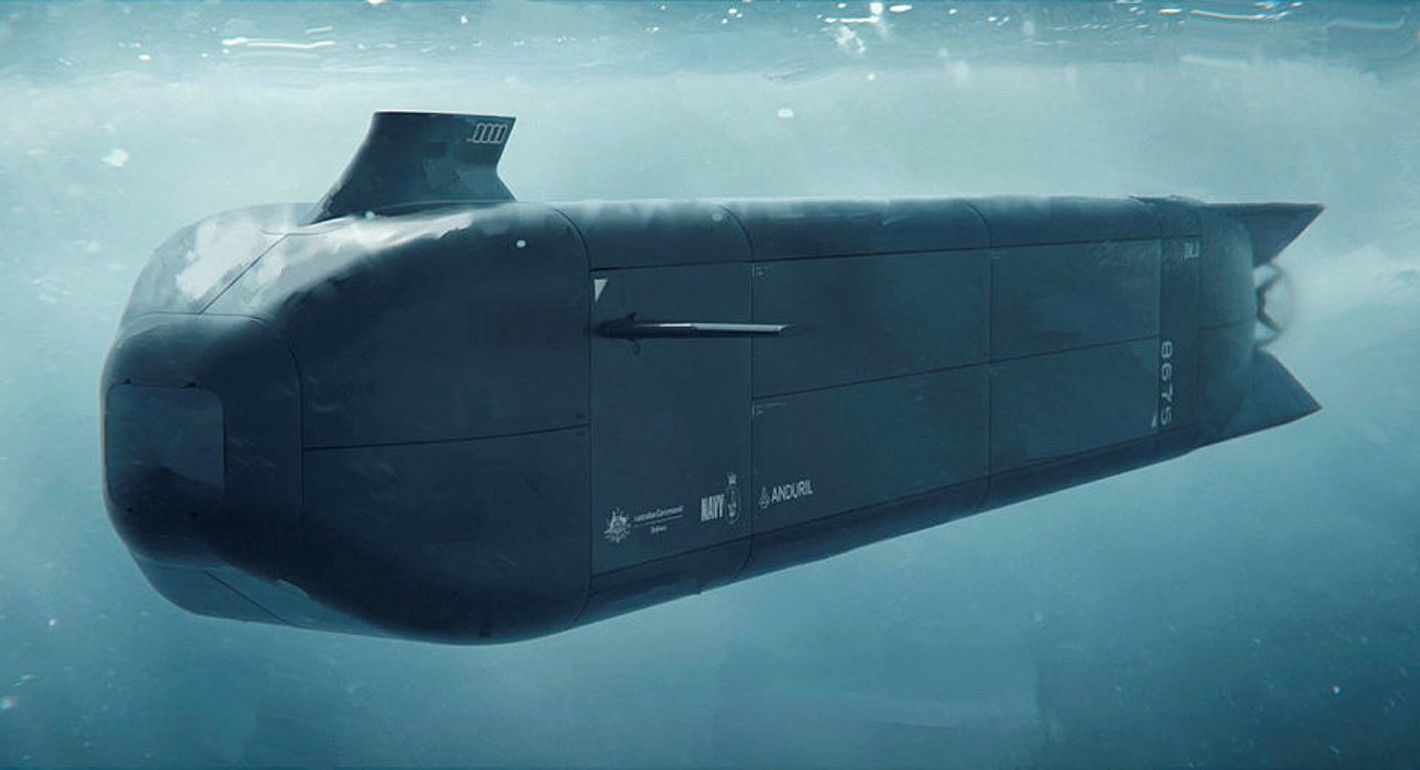
Maintaining an edge in defense science and technology is one part of the U.S. and Australian strategy to deter war or increase the likelihood of victory in war.
The fourth area is alliance roles and missions. Two authors separately tackle the question of how Canberra and Washington can develop and leverage complementarities in existing and future forces to advance collective defense. These two papers also ask what modular inputs Australia should pursue—including logistics, enablers, and strike—to support the alliance in key operational scenarios.
Stacie Pettyjohn lays out three hypothetical scenarios of Chinese aggression as a test to propose specific ways that the United States and Australia could strengthen their collective response:
(1) a full-scale invasion of Taiwan at some unspecified date in the future,
(2) an attack on Second Thomas Shoal in the near term, and
(3) gray zone coercion against Australian forces in the Coral Sea in the late 2020s.
She uses these scenarios to help identify roles and missions that American and Australian forces would undertake, and then move toward a division of labor.
Courtney Stewart calls for Australia and the United States to assemble and lead a coalitional combined joint deterrence force in the Indo-Pacific. This innovative coalition would seek to leverage existing collective deterrence cooperation with allies like Japan. Stewart draws on lessons learned from two existing multinational forces, the UK-led Joint Expeditionary Force and the U.S.-led Combined Maritime Forces.
China’s expanding military strength poses serious questions for the United States, Australia, and their allies. The increasing assertiveness in the region by China necessitates serious preparation on the part of Washington and Canberra in the advent of Chinese coercive action. This paper lays out three hypothetical scenarios of Chinese aggression and proposes ways the U.S. and Australia can strengthen their collective response.
Evolving security architecture in the Indo-Pacific reflects a growing desire for collective approaches. Yet, this diffuse framework lacks the structural coherence required to fully integrate disparate components into a cohesive, coordinated, and integrated combined deterrence force.
Ultimately, theU.S.-Australia alliance has a crucial distinction that every other American partnership or connection in the Indo-Pacific lacks. Bluntly put, Australia, more than any other country, is best positioned—by shared history, interests, values, and impulses—to join the United States as the first mover in fashioning solutions to real-world challenges. This includes deterrence and defense amid the prospect of high-intensity conflict in the Indo-Pacific.
This volume of exciting and innovative papers—and the larger Carnegie project from which it emanated—seeks to advance an agenda for action that reflects the power of partnership, and an alliance fit for purpose in this challenging new era.
Carnegie does not take institutional positions on public policy issues; the views represented herein are those of the author(s) and do not necessarily reflect the views of Carnegie, its staff, or its trustees.

In return for a trade deal and the release of political prisoners, the United States has lifted sanctions on Belarus, breaking the previous Western policy consensus. Should Europeans follow suit, using their leverage to extract concessions from Lukashenko, or continue to isolate a key Kremlin ally?

Thomas de Waal, ed.
As European leadership prepares for the sixteenth EU-India Summit, both sides must reckon with trade-offs in order to secure a mutually beneficial Free Trade Agreement.

Dinakar Peri
Carnegie scholars examine the crucial elements of a document that’s radically different than its predecessors.



James M. Acton, Saskia Brechenmacher, Cecily Brewer, …

The hyper-personalized new version of global sphere-of-influence politics that Donald Trump wants will fail, as it did for Russia. In the meantime, Europe must still deal with a disruptive former ally determined to break the rules.
Thomas de Waal

Between Greenland and U.S. interference in Europe’s democracies, transatlantic relations risk rising to an unprecedented level of crisis. Amid continued arguments on how Brussels should react, tough times lie ahead for European leaders.

Marc Pierini