

Commentary
When democracies and autocracies are seen as interchangeable targets, the language of democracy becomes hollow, and the incentives for democratic governance erode.
Sarah Yerkes, Amr Hamzawy
{
  "authors": [
    "C. Raja Mohan"
  ],
  "type": "legacyinthemedia",
  "centerAffiliationAll": "",
  "centers": [
    "Carnegie Endowment for International Peace",
    "Carnegie India"
  ],
  "collections": [],
  "englishNewsletterAll": "",
  "nonEnglishNewsletterAll": "",
  "primaryCenter": "Carnegie India",
  "programAffiliation": "",
  "programs": [
    "South Asia"
  ],
  "projects": [],
  "regions": [
    "Asia",
    "South Asia",
    "India",
    "East Asia",
    "China"
  ],
  "topics": [
    "Foreign Policy",
    "Economy"
  ]
}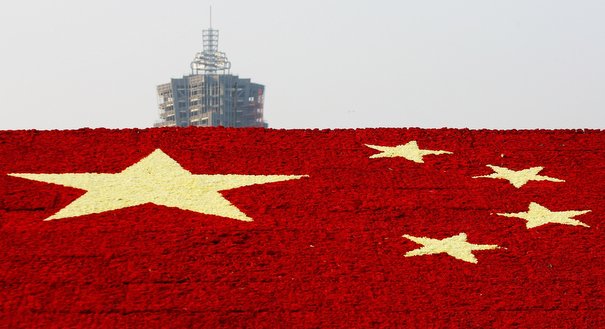
A rising China and the anti-India resentments of Kathmandu’s hill elite have the potential to neutralize, over the longer term, some of Delhi’s natural strategic advantages in Nepal.
Source: Indian Express
As Beijing serenades Nepal’s Prime Minister K P Oli in China this week, should New Delhi be concerned about the expanding partnership between our two northern neighbours? Geography and kinship tie India and Nepal in an inextricable but not necessarily happy relationship. A rising China and the anti-India resentments of Kathmandu’s hill elite, however, have the potential to neutralise, over the longer term, some of Delhi’s natural strategic advantages in Nepal.
Realists in India can’t object to a good neighbourly relationship between Nepal and China. Pragmatists in Beijing know the dangers of moving too far and too fast and provoking an Indian reaction. But miscalculations and misperceptions often generate outcomes no one wants. For his part, Oli made a political gesture to India by visiting Delhi before heading out to Beijing. That significant differences remain, especially on the question of Madhesi rights in Nepal, was reflected in the inability of the two sides to issue a joint statement at the end of Oli’s visit last month. If India-Nepal relations are never too tidy, Beijing-Kathmandu ties are rich in their affirmation of high principle.Beijing revels in extending strong support to Nepal’s territorial sovereignty. If Delhi claims a “special relationship” with Kathmandu, Beijing tends to emphasise “equality and non-intervention” in its engagement with Nepal. Underlying that rhetoric is the proposition that Beijing can’t accept any claim that the subcontinent is Delhi’s exclusive sphere of influence.
As a writer in China’s Global Times put it in the paper’s Monday edition, “New Delhi should wake up to the fact that Nepal is a sovereign country, not a vassal of India”. The commentator was a lot less harsh in stating that the only sound choice for Nepal is in maintaining good relations with both China and India. “Instead of being forced into becoming a strategic barrier against China,” Global Times concluded, “Nepal should be better treated and act as a bridge between Beijing and New Delhi”.
Few in Delhi would quibble with the idea of Nepal as India’s bridge to Tibet and China. Any sensible strategy in Kathmandu would leverage its location between the world’s two fast-growing economies to bring prosperity to its people. As Delhi enthusiastically welcomes Chinese investments, it can hardly protest against a similar trend in Nepal and the rest of the subcontinent. Cynics in Delhi, however, would insist that the Sino-Indian dynamic in Nepal will always remain a zero-sum game. Their counterparts in Kathmandu find it hard to move away from the tradition playing the China card against India.
For the record, Kathmandu says Oli’s trip to Beijing is not aimed at balancing India. Yet, there’s no avoiding the sense that Oli’s “special mission” to China is less about becoming a bridge between its giant neighbours. Its focus is on reducing the current dependence on India by strengthening ties with China. The political justification for this has come from the horrible impact of the Madhesi protests on fuel and other essential supplies from India.
While Oli and his hosts didn’t sign a much-anticipated agreement on petroleum supplies, Beijing has agreed to assist Nepal in the exploration of hydrocarbon resources and expand the use of solar energy. The two sides also signed a landmark transit agreement that will allow Nepal to use Chinese ports to import goods from third countries.
Like many other neighbours of India, Nepal too has welcomed Chinese initiatives on connectivity grouped under the grand project called “One Belt, One Road”.
During his talks with the Chinese leadership on Monday, Oli reportedly asked China to extend its Tibet railway into Nepal and also build an intercity railway system within Nepal. Beijing agreed to consider both requests. China’s interest in connectivity with Nepal goes back to the early 1960s. What we see today is a dramatic expansion of the Chinese economic engagement and infrastructure-building in Nepal. While economic geography continues to be weighted towards the southern slopes of the Himalayas, the rise of China has begun to exert a powerful pull to the north.
China has also reportedly offered to upgrade the 1960 peace and friendship treaty with Nepal. But China is nowhere ready to match the kind of benefits — free movement across borders and national treatment — that the 1950 friendship treaty with Delhi confers on Kathmandu. Yet, for many in Kathmandu, the 1950 treaty with Delhi is a symbol of “Indian hegemony” and any treaty with Beijing is about expanding Nepal’s “strategic autonomy”. Delhi’s problem then is less about coping with China’s grand strategy than overcoming the entrenched distrust of India in Kathmandu and bringing greater purpose to economic engagement with Nepal.
In the end, Delhi too has a China card that it refuses to play. India might have a better influence on the outcomes in Nepal if it invites Beijing to restore and modernise the historic connectivity between the Gangetic plains and the Tibet region. Delhi has a bigger interest than some in Kathmandu in turning Nepal into India’s bridge with China.
Carnegie does not take institutional positions on public policy issues; the views represented herein are those of the author(s) and do not necessarily reflect the views of Carnegie, its staff, or its trustees.

When democracies and autocracies are seen as interchangeable targets, the language of democracy becomes hollow, and the incentives for democratic governance erode.


Sarah Yerkes, Amr Hamzawy

German manufacturing firms in Africa add value, jobs, and skills, while benefiting from demand and a diversification of trade and investment partners. It is in the interest of both African economies and Germany to deepen economic relations.
Hannah Grupp, Paul M. Lubeck
Unexpectedly, Trump’s America appears to have replaced Putin’s Russia’s as the world’s biggest disruptor.

Alexander Baunov
And how they can respond.



Sophia Besch, Steve Feldstein, Stewart Patrick, …
They cannot return to the comforts of asymmetric reliance, dressed up as partnership.
Sophia Besch