

Research
- +11
Frances Z. Brown, Nate Reynolds, Priyal Singh, …
{
  "authors": [
    "Frederic Wehrey"
  ],
  "type": "commentary",
  "centerAffiliationAll": "dc",
  "centers": [
    "Carnegie Endowment for International Peace",
    "Malcolm H. Kerr Carnegie Middle East Center"
  ],
  "collections": [],
  "englishNewsletterAll": "menaTransitions",
  "nonEnglishNewsletterAll": "",
  "primaryCenter": "Carnegie Endowment for International Peace",
  "programAffiliation": "MEP",
  "programs": [
    "Middle East"
  ],
  "projects": [],
  "regions": [
    "North America",
    "United States",
    "North Africa",
    "Libya"
  ],
  "topics": [
    "Political Reform",
    "Foreign Policy"
  ]
}
Source: Getty
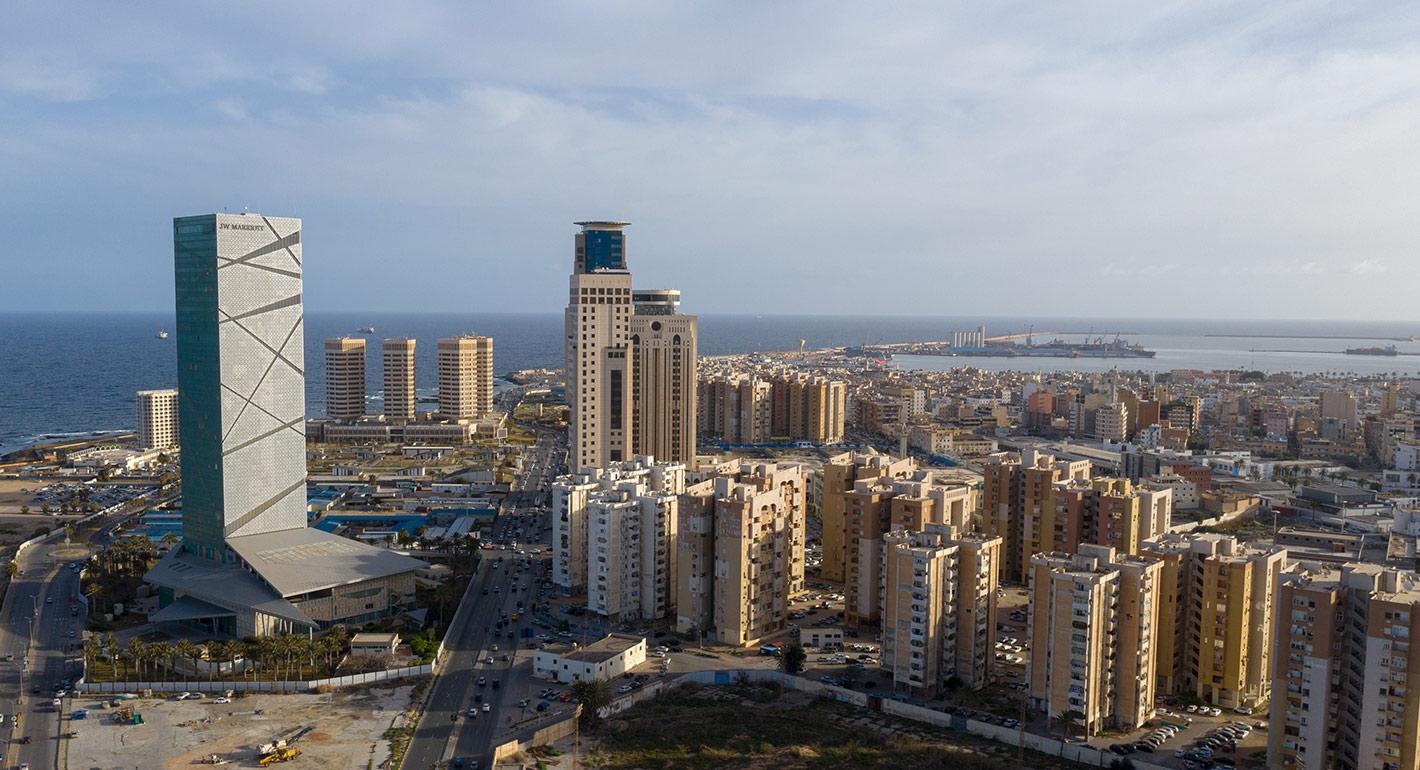
Recent diplomatic progress offers Libya an uncertain but real chance at better days ahead. Modest U.S. support could improve the chances that this opening succeeds.
After years of fighting and upheaval, Libya may again finally have a tenuous opening to a more stable future. The Second Berlin Conference on Libya, held on June 23, 2021, is an important milestone on Libya’s path out of years of civil war and political gridlock. Convened by the German government and the UN, the international talks were focused on implementing the terms of a UN-negotiated peace agreement reached last year by seventy-five Libyan delegates, the Libyan Political Dialogue Forum. One key output from Berlin by Libyan and international attendees was a renewed commitment to hold national elections in late December 2021 to replace an interim government in Tripoli led by Prime Minister Abdel Hamid Dabaiba. Another one was an affirmation that foreign military forces in the country, especially Turkish- and Russian-affiliated mercenaries, need to depart. That said, Ankara has introduced a “reservation” in the text of the final communique that its military forces were excluded, since they were there at the invitation of the government in Tripoli.
There is cause for limited optimism. Unlike during the First Berlin Conference in January 2020, Libya is not in a state of open war. Outside meddlers have tactically shifted from overt military intervention to behind-the-scenes maneuvering. And (in contrast to former president Donald Trump’s endorsement of eastern-based warlord Khalifa Haftar and his foreign backers) the United States under President Joe Biden is displaying more principled and even-handed leadership. But pitfalls remain, and the risk of renewed conflict is still high.
The dangers of another false start are far from moot. Libya’s recent history since the 2011 downfall of dictator Muammar Qadhafi is replete with examples of internationally backed political processes that have either produced greater polarization or collapsed into war. Consider the July 2012 elections for Libya’s national legislature (the General National Congress), the 2014 elections for a follow-on body (the House of Representatives), and the 2015 UN-brokered peace agreement in the Moroccan town of Skhirat, which was supposed to end a previous round of the civil war but really only produced an interregnum.
The international fixation on elections as a salve for Libya’s divisions and the deferral, by Libyan elites and their foreign backers, of inclusive security-sector reform in favor of bilateral training obscure a looming struggle for primacy by opposing armed groups. Internal tensions and conflicts are rising among armed groups in western Libya, to say nothing of these groups’ ongoing rivalry with Haftar’s eastern-based, self-styled Libyan Arab Armed Forces (LAAF). Personnel on both sides now receive state funding from Libya’s oil wealth. The country’s planned December elections (if they happen) are unlikely to be fair and transparent across the country given widespread insecurity. Similarly, long-standing patterns of cronyism and patronage, evident in past elections, will create new winners and losers among the country’s political elites and armed groups, with new coalitions of the latter forming to obstruct the postelection transition or, worse, start a new war.
Given these risks, the United States and the rest of the international community need to devote more attention to helping shepherd a detailed, actionable, locally owned road map for Libya’s security sector so as to both manage the fraught election period and stave off the coming postelection instability. The past omission of such international follow-through on addressing “militia menace,” as I detailed in a Foreign Affairs article just after the country’s then-lauded 2012 legislative elections, contributed to the politicization of Libyan armed groups, enabled their involvement in widespread human rights abuses, and led to civil war in 2014.
To avoid a repeat of past failures, the United States, working with its partners in Europe and the UN, needs to shape the conditions for postelection security-sector reform in Libya while institutionalizing the governing precepts of elected civilian oversight, accountability, respect for human rights, and rule of law. A unified executive authority is a necessary precondition, but there are other initiatives on the security track that can occur in parallel. The absence of these steps, even if they do not lead to another war, will most certainly push the country toward a de facto partition.
A first step is continuing deescalation and demilitarization within Libya’s frontline central region, along the Sirte-Jufra axis. Greater U.S. diplomatic engagement with Russia and Turkey could lead to a phased, responsible redeployment and eventual withdrawal of their forces in a way that would not trigger renewed fighting by Libyans. Here, more sustained U.S. pressure on the UAE is vital: the Emiratis have been a key military backer of Haftar, have flown armed drones on his behalf, and are still allegedly paying the salaries of thousands of Russian mercenaries from the so-called Wagner Group as well as Syrian and Sudanese fighters who’ve ensured his staying power on the Libyan landscape. Yet Abu Dhabi’s interference in Libya has often escaped U.S. scrutiny.
Similarly, continued U.S. support for disengagement and the implementation of a ceasefire under the auspices of Libyan military officers from the two rival camps—the so-called 5+5 Joint Military Commission—can serve as a useful confidence-building mechanism. But this effort, while important, will not serve as the foundation for a unified security architecture for Libya, especially since the commission does not speak for the plethora of armed groups across the country. That foundation needs to be built through a broader, whole-of-government approach to human-centered security at the local level, an approach that involves empowering civil society, bolstering formal security providers like municipal police, and repairing the country’s broken justice system.
To shape the prospects for talks and unification between eastern and western forces, the United States should urge Russia, Egypt, and the United Arab Emirates (UAE)—the longtime foreign backers of Haftar’s family clique atop the LAAF’s hierarchy—to begin planning the transition to an LAAF that is led by another figure or coalition, one that would be more politically acceptable to armed groups and elites in western Libya. Many of these factions were burned by Haftar’s surprise attack on Tripoli in April 2019 precisely as UN-brokered talks were underway; for many of them, accepting the eastern-based commander into a power-sharing arrangement would be tantamount to political suicide. More importantly, though, the aging Haftar has repeatedly shown no real interest in actually sharing power—a fact that should make Washington finally disavow any support for him as a counterterrorism partner.
In tandem, the United States should redouble its long-standing technocratic and diplomatic efforts to reform and unify Libya’s banking sector, stop the siphoning off of state funds by armed groups, and (as it has done in the past) help insulate the oil sector from factional contestation. Such efforts are especially important for lessening the power of the more predatory armed groups who hold sway in and around the capital and also the LAAF.
Many of these U.S. actions depend on Biden making Libya more of a foreign policy priority, following through on the agreements of the Second Berlin Conference, and avoiding the temptation to turn U.S. attention away from Libya, if and when an election is held—which would mean repeating Obama’s mistake of disengagement following the 2012 legislative elections.
This doesn’t imply that the United States will own Libya, so to speak. Libyans are ultimately responsible for navigating a way out of their impasse and, given their proximity, European leaders can and must do more. But even a modest U.S. investment, signaled by more sustained in-person contact by U.S. diplomats with Libya’s fresh political leadership and the country’s energetic but beleaguered civil society, can make a difference. Doing that effectively would require yet another long-overdue act of American will in Libya, something that security conditions have finally permitted: the reopening of the U.S. embassy in Tripoli, which has been for over half a decade.

Senior Fellow, Middle East Program
Frederic Wehrey is a senior fellow in the Middle East Program at the Carnegie Endowment for International Peace, where his research focuses on governance, conflict, and security in Libya, North Africa, and the Persian Gulf.
Recent Work

Frances Z. Brown, Nate Reynolds, Priyal Singh, …
Charles H. Johnson, Frederic Wehrey
Carnegie does not take institutional positions on public policy issues; the views represented herein are those of the author(s) and do not necessarily reflect the views of Carnegie, its staff, or its trustees.
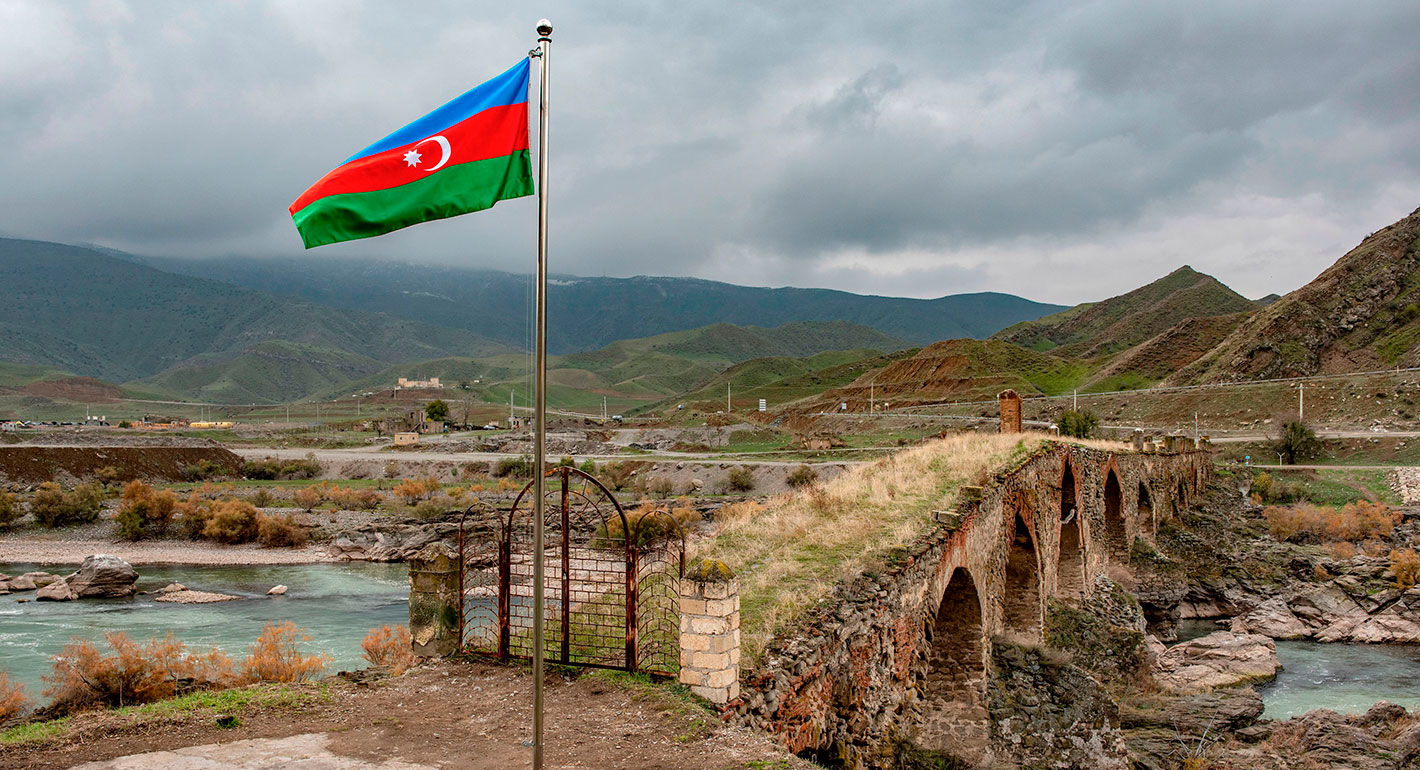
In an interview, Sergei Melkonian discusses Armenia’s and Azerbaijan’s careful balancing act among the United States, Israel, and Iran.

Armenak Tokmajyan
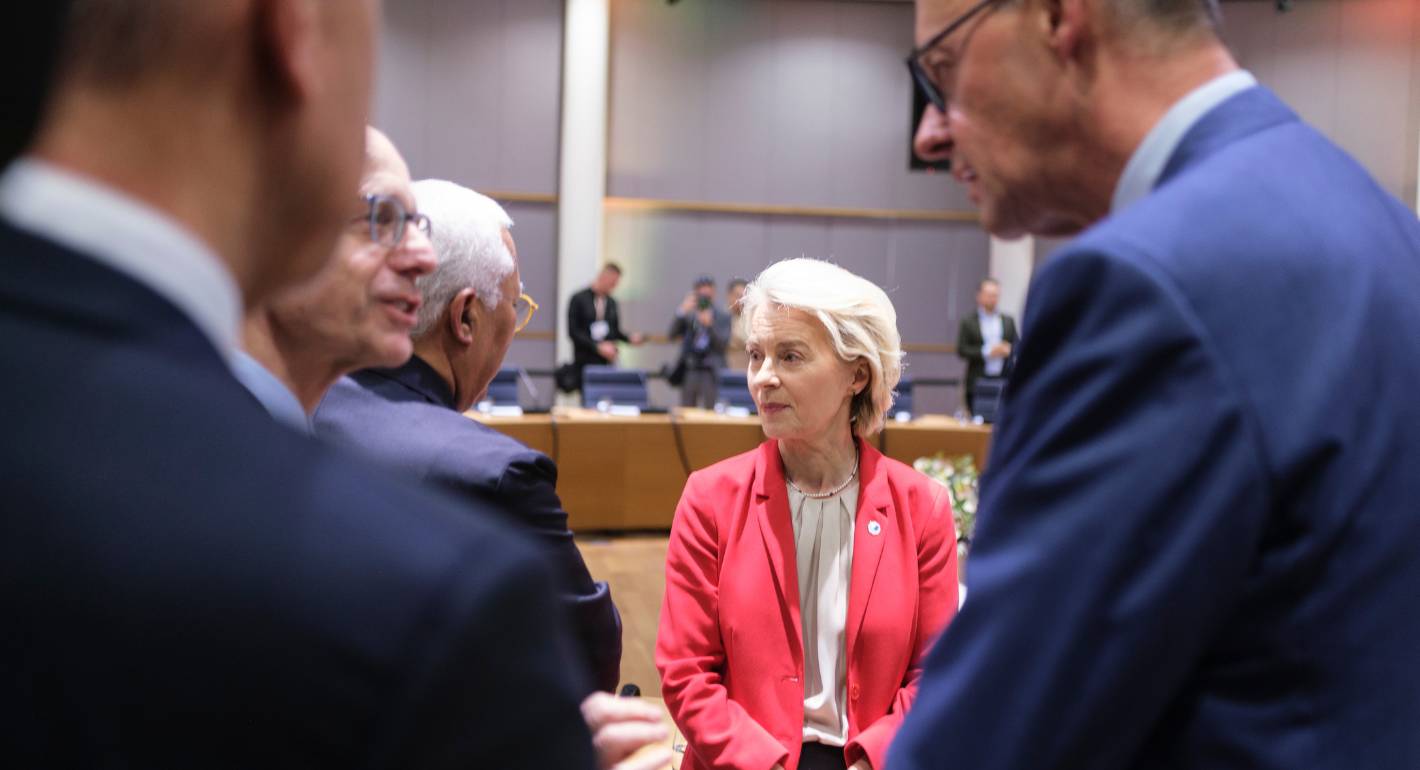
The war in Iran proves the United States is now a destabilizing actor for Europe and the Arab Gulf. From protect their economies and energy supplies to safeguarding their territorial integrity, both regions have much to gain from forming a new kind of partnership together.

Rym Momtaz
The current U.S. indifference to human rights means Astana no longer has any incentive to refuse extradition requests from its authoritarian neighbors—including Russia.

Temur Umarov
The conflict is threatening stability in Armenia and Azerbaijan.

Zaur Shiriyev
In an interview, Kheder Khaddour explains that Damascus is trying to stabilize its borders, but avoiding war isn’t guaranteed.

Michael Young