Mauritania, an often-ignored country in the western periphery of the Arab world, surprised observers two years ago by undertaking one of the most forthcoming advances toward democracy in the region. Democratic reforms came as a result of a 2005 bloodless military coup led by Colonel Ely Ould Muhammad Vall. Vall demonstrated enlightened leadership by pledging to restore democracy and ensure a constitutional transfer of power through free and fair elections. A swift political transition process culminated in credible legislative and presidential elections. President Sidi Muhammad Ould el-Sheikh Abdullahi, an independent, formerly exiled economist who served in previous cabinets, was elected in March 2007 in the country’s first peaceful transfer of power. Abdullahi pledged to fight corruption, guarantee freedom of speech, alleviate poverty, eliminate slavery, and promote justice and national reconciliation.
The new government has taken some positive political steps, including passing a law that criminalizes slavery, requiring senior officials to declare their assets, and requiring 20 percent female representation in electoral lists. Freedom of speech and the press have also registered significant improvements. Mauritania ranked fiftieth out of 169 countries in Reporters without Borders’ Press Freedom Index 2007, the highest among Arab countries.
Consolidation and progress toward democracy in Mauritania, however, depend on the government’s ability to address its people’s most pressing concerns, namely poverty and unemployment. Progress on those fronts has been slow and signs of strain are already apparent. In what the opposition called a “revolution of the hungry,” thousands took to the streets in the Eastern impoverished regions in early November to protest sharp increases in the prices of basic food staples, electricity, and fuel. At least two people were killed after police forces used violence to disperse the protestors. In October, a coalition of five opposition parties led by Ahmed Ould Daddah, president of the Coalition of Democratic Forces, staged a mass protest in the capital Nouakchott and called for the government’s resignation, citing “ineffectiveness” and “lack of serious efforts to improve people’s lives.” Recent unpopular initiatives—such as the privatization of the National Industrial and Mining Company and plans by political and military elites close to the president to establish a political party—added to the tensions.
Despite a spike in economic growth with the start of oil production, Mauritania continues to struggle with deeply-entrenched socio-economic challenges. Over 46 percent of the population lives below the poverty line. High unemployment, high food prices, scarcity of water, insufficient road networks and public transportation, and poor healthcare and education services are among the main problems.
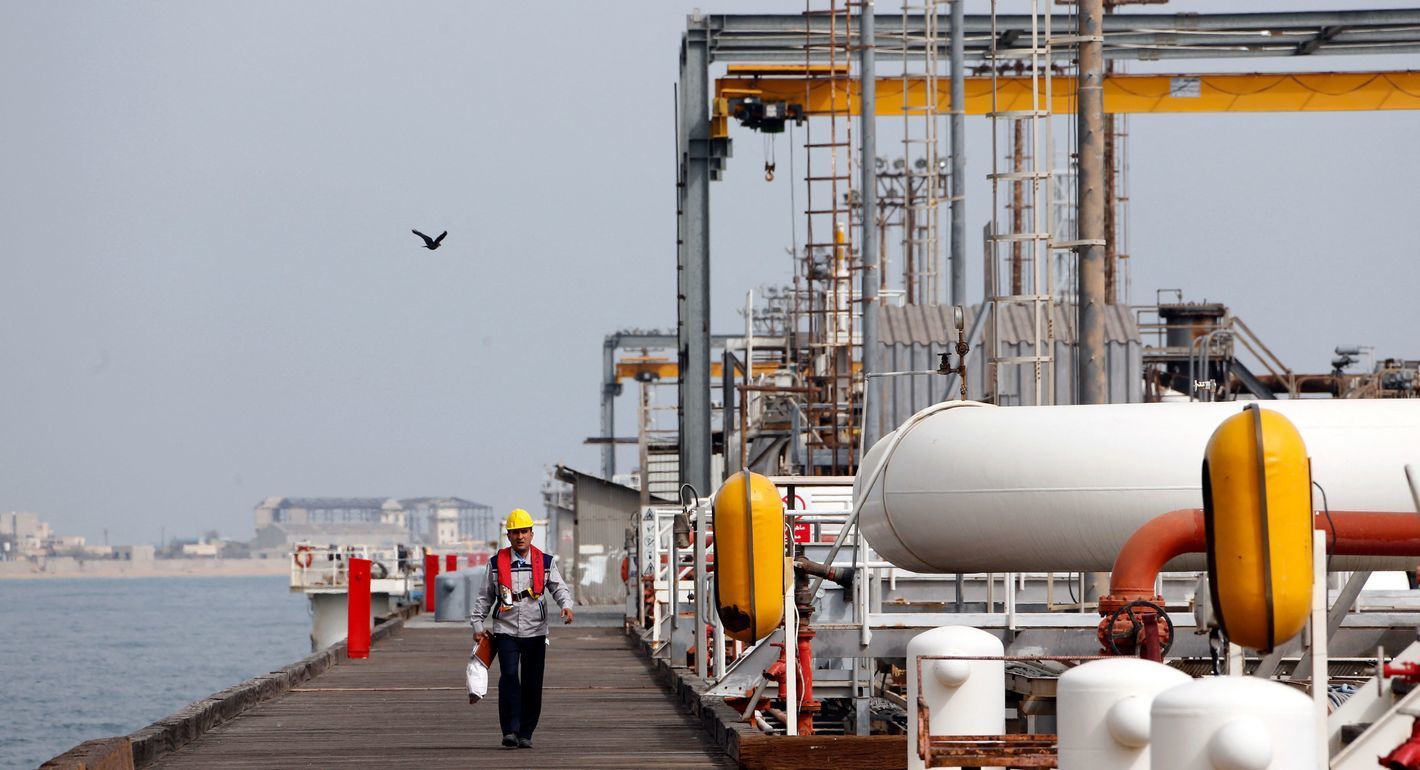
The government, which inherited a troubled, corruption-ridden economy, has placed high hopes on the recent discovery of oil. Mauritania began oil production in February 2006, but output is so far lower than expected. The Chinguetti field is currently producing around 20,000 barrels per day, versus a projected 75,000 barrels. Lower production levels also afflict the fishing industry, and agricultural production is vulnerable because of unstable weather conditions. Manufacturing industries also suffer due to unreliable power supplies. While oil-driven economic growth in 2006 was 11.7 percent, non-oil GDP growth was only 4.1 percent, marking a decline from the 2005 rate of 5.4 percent. According to the World Bank, Mauritania’s income per capita in 2006 was only $740, while the inflation rate was 29.8 percent.
Yet a further challenge to democratic consolidation in Mauritania are the socio-economic divisions arising from the country’s complex ethnic composition, which includes Arab White Moores (Bidan), former Black Moore slaves (Harratin), and Afro-Mauritanians. Despite the president’s pledge to promote national unity and equality, the country’s African population continues to suffer from a historically disadvantaged socio-economic position exacerbated by the continuation of slavery practices, illiteracy, and weak central government institutions. Furthermore, an estimated 25,000 Afro-Mauritanian refugees displaced after a wave of ethnic violence in 1989 remain in Senegal and Mali. The return of the refugees has faltered in the past two years mainly due to lack of sufficient funds. The government’s November 22 announcement that it is allocating nearly $8 million to ensure the refugees’ safe return and reintegration may signal that some sort of breakthrough has been reached
In the midst of this sobering overall situation, one ray of hope lies in the fact that government efforts to obtain external economic development aid are showing signs of success. In March-July 2007, the World Bank endorsed a new Country Assistance Strategy for Mauritania and approved a total of $1.14 billion in credits and grants to support various economic reform and infrastructure development projects. In FY 2008, U.S. economic aid to Mauritania will be $5.23 million. And in a Consultative Group Meeting in Paris December 4-6, the Mauritanian government succeeded in securing $2.1 billion dollars in additional aid for its 2008-2010 investment program from Saudi Arabia, Kuwait, and various European countries and development organizations.
Salma Waheedi is Assistant Editor of the Arab Reform Bulletin.