Displacement-based Discrimination Impeding Access to Personal Documents
Ten years after the launch of Operation Dignity, the Eastern Province in Libya continues to host a significant number of internally displaced persons (IDP) communities.
Link Copied
By Abdulrahman Zayed
Published on Sep 16, 2024
The UN Independent Fact-Finding Mission on Libya reports that the majority of displaced communities in the country originated from Benghazi between 2014 and 2017 due to the ongoing conflict at the time. While some internally displaced persons (IDPs) have managed to return to their hometowns, many still face significant obstacles in returning to Benghazi and Derna, primarily due to the fear of persecution or reprisals from the ruling militias.
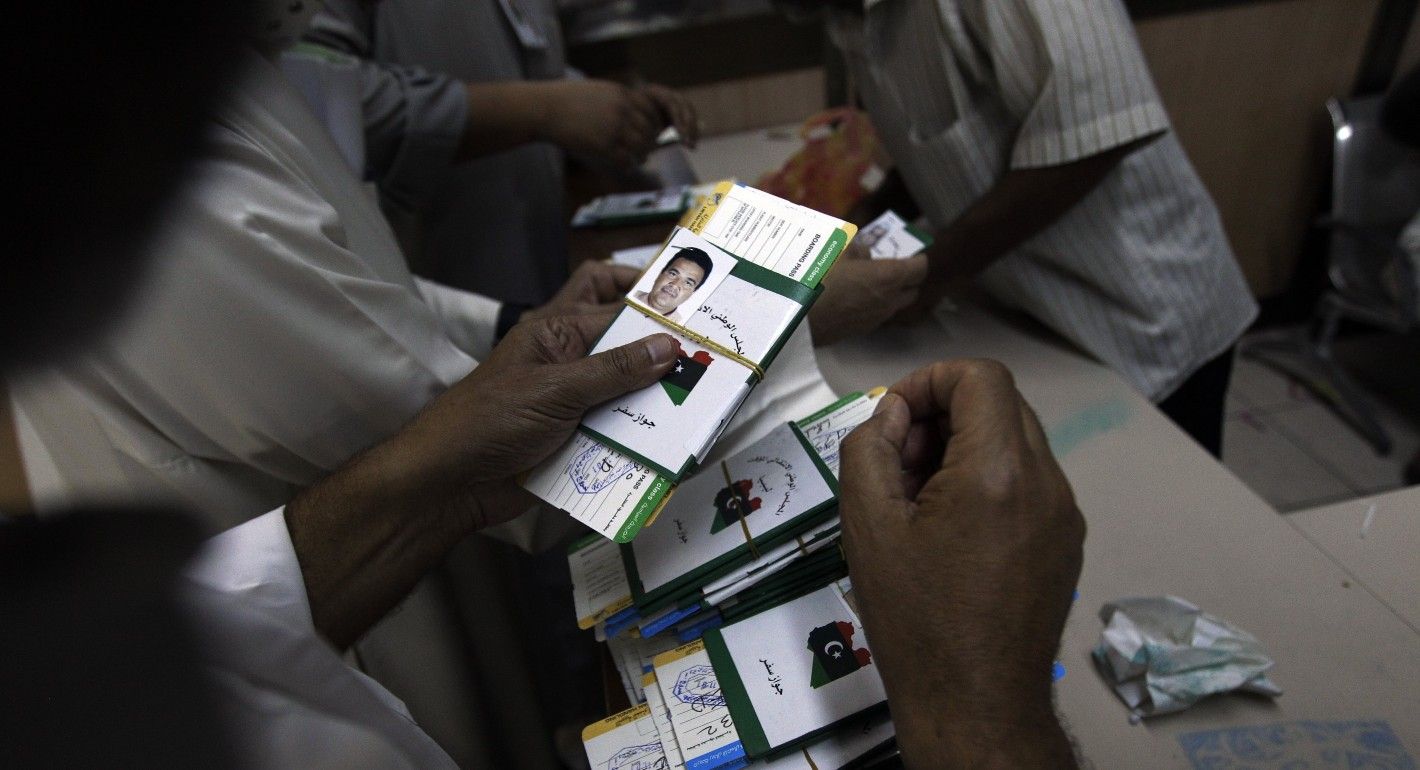
The integration of IDPs from eastern Libya is systematically impeded by discrimination related to their displacement status, whether they are in host communities in the western region or their areas of origin. This discrimination hinders their ability to obtain essential personal and official documents, which are crucial for their socio-economic well-being, and obstructs efforts to achieve durable solutions for their situation.
According to the IASC Framework on Durable Solutions for Internally Displaced Persons, access to personal and official documents is vital for displaced individuals to utilize public services, reclaim property, vote, and secure other rights necessary for achieving durable solutions.
One notable pattern of displacement-based discrimination is the difficulty IDPs encounter in accessing social security funds without the necessary governmental documentation. This issue significantly impacts the livelihood of thousands of families, especially where displaced women are the heads of the household.
Um al-Batoul, internally displaced from Benghazi since 2016, became the sole caregiver for her five children after her husband's death. When she sought social security benefits to support her family, she faced multiple challenges that impeded her from completing the required official procedures. One major obstacle was the refusal of the Benghazi Water and Sanitation Company to provide the 'last payment certificate' needed to qualify for these benefits.
Another major downside of IDPs' inability to obtain necessary documents is the increase in the number of stateless individuals who are deprived of their civil, economic, and social rights. One example is Abdelrazek Chebbi, Ibn Amin, who is an IDP from Benghazi. Following the 2019 conflict in Tripoli between the Libyan Arab Armed Forces (LAAF) and armed groups in the western region, Amin sent his wife to Benghazi for safety until the conflict subsided. While there, his wife gave birth to their son, Abdelrazek. After the conflict, Amin's wife and son returned to the western cities of Libya, but the civil registry in these cities refused to register Abdelrazek or complete his citizenship and national identity procedures, citing his birth in Benghazi. As a result, Abdelrazek is unable to access essential public services, including education, healthcare, and government grants for children.
Recently, several local initiatives have been launched to address the issue of access to administrative documents. In response to the public sector establishments in Eastern Libya withholding salaries from employees displaced to western Libya, various committees have been formed to help these IDPs navigate the challenges associated with their inability to provide proper labor documentation. Among these is the Eastern Province IDP Committee, founded in August 2021, which focuses specifically on resolving the issues faced by public sector employees displaced from the Eastern Province.
The committee was successfully able to transfer the employment files of approximately 2,500 IDPs and ensure salary payment to 650 IDPs who received transfer approvals. However, several institutions in eastern Libya have been unwilling to cooperate with the official authorities in the western region to facilitate the transfer of displaced employees' files despite the provisions of the Labor Relations Law (Law No. 12 of 2010). Additionally, the Minister of Education in the Government of National Unity has closed the office dedicated to resolving issues related to the files of displaced individuals in the education sector.
Faraj al-Darrat, a former member of the Eastern Province IDPs Committee, attributes part of the discrimination against IDPs to the failure of interim governments to enforce their laws and regulations. This lack of enforcement allows staff with biases against IDPs to create numerous obstacles in retrieving necessary documents.
According to the IASC Framework on Durable Solutions for IDPs, national authorities bear the primary responsibility for providing durable solutions to internally displaced persons (IDPs) and ensuring that their protection and assistance needs are effectively met.
Carnegie does not take institutional positions on public policy issues; the views represented herein are those of the author(s) and do not necessarily reflect the views of Carnegie, its staff, or its trustees.
Iraq’s foreign policy is being shaped by its own internal battles—fractured elites, competing militias, and a state struggling to speak with one voice. The article asks: How do these divisions affect Iraq’s ability to balance between the U.S. and Iran? Can Baghdad use its “good neighbor” approach to reduce regional tensions? And what will it take for Iraq to turn regional investments into real stability at home? It explores potential solutions, including strengthening state institutions, curbing rogue militias, improving governance, and using regional partnerships to address core economic and security weaknesses so Iraq can finally build a unified and sustainable foreign policy.
How can Saudi Arabia turn its booming e-commerce sector into a real engine of economic empowerment for women amid persistent gaps in capital access, digital training, and workplace inclusion? This piece explores the policy fixes, from data-center integration to gender-responsive regulation, that could unlock women’s full potential in the kingdom’s digital economy.
Hate speech has spread across Sudan and become a key factor in worsening the war between the army and the Rapid Support Forces. The article provides expert analysis and historical background to show how hateful rhetoric has fueled violence, justified atrocities, and weakened national unity, while also suggesting ways to counter it through justice, education, and promoting a culture of peace.
The August 2025 government decision to restrict weapons to the Lebanese state, starting with Palestinian arms in the camps, marked a major test of Lebanon’s ability to turn a long-standing slogan into practical policy. Yet the experiment quickly exposed political hesitation, social gaps, and factional divisions, raising the question of whether it can become a model for addressing more sensitive files such as Hezbollah’s weapons.
Kuwait’s government has repeatedly launched ambitious reforms under Kuwait Vision 2035, yet bureaucratic inefficiency, siloed institutions, and weak feedback mechanisms continue to stall progress. Adopting government analytics—real-time monitoring and evidence-based decision-making—can transform reform from repetitive announcements into measurable outcomes.