

Q&A
Christopher Boucek
{
  "authors": [
    "Christopher Boucek"
  ],
  "type": "legacyinthemedia",
  "centerAffiliationAll": "dc",
  "centers": [
    "Carnegie Endowment for International Peace",
    "Carnegie Europe",
    "Malcolm H. Kerr Carnegie Middle East Center"
  ],
  "collections": [],
  "englishNewsletterAll": "menaTransitions",
  "nonEnglishNewsletterAll": "",
  "primaryCenter": "Carnegie Endowment for International Peace",
  "programAffiliation": "MEP",
  "programs": [
    "Middle East"
  ],
  "projects": [],
  "regions": [
    "Middle East",
    "Yemen",
    "Western Europe",
    "Gulf",
    "Europe"
  ],
  "topics": [
    "Political Reform",
    "Democracy",
    "Security",
    "Military",
    "Foreign Policy"
  ]
}
Source: Getty
Most Europeans rank Yemen low on their list of priorities. Yet the country threatens their interests more than they recognize, and they can do more about it than they might think.
Source: E!Sharp May 10

In the years since, the United States has stepped up substantially its military and intelligence cooperation with the Yemeni government in an effort to combat terrorism, but the fragile Arab republic faces much bigger problems. Without more help from abroad, it will become a danger far beyond its borders.
Most Europeans rank Yemen low on their list of priorities.Yet the country threatens their interests more than they recognise, and they can do more about it than they might think.Yemen faces a staggering number of threats that endanger both its domestic stability and the security of the broader Middle East. And while Yemen has survived crises in the past, they have tended to be singular events. The problems from which it now suffers are unprecedented in range and scope.
International terrorism, religious and tribal conflict, burgeoning separatism, economic stagnation and transnational smuggling all confront Yemen’s government with more than it can handle. Furthermore, porous borders, a heavily armed population and a historical absence of much central control make it difficult to build effective national government.
Strategically located between Saudi Arabia and Somalia, Yemen is part of two different yet interconnected regions, the Arabian Peninsula and the Horn of Africa. Though the country has been excluded from the wealthy Gulf Cooperation Council, it is in many ways more resilient than its east African neighbours. More than three million barrels of oil pass Yemen’s coast every day, through treacherous waters where Islamist terrorists and Somali pirates have staged several successful maritime attacks, which disrupt international commerce and the flow of vital hydrocarbons.
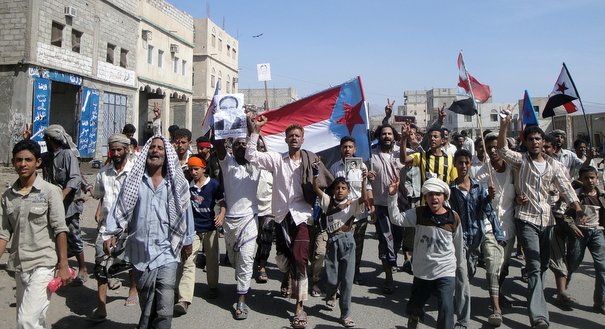
Islamist terrorists threaten Yemen’s domestic security in the form of a resurgent al-Qaeda organisation, in addition to an armed insurrection in the north and an increasingly active secessionist movement in the south.
Yet at the heart of Yemen’s problems is a looming economic crisis. The country is the poorest in the Arab world, its oil reserves are fast running out, and it has few viable options for a sustainable post-oil economy. Moreover, its limited water resources are being consumed much faster than they are being replenished. An impoverished and rapidly expanding population places unbearable pressure on the government, which can scarcely provide basic services. The faltering economy and poorly prepared workforce have pushed unemployment to 35 percent, on a par with the Great Depression in the United States. Even for those who find work, poverty remains severe. The country has an annual per capita income of under $900, and nearly half the population earns less than €1.50 per day.
A second major set of challenges Yemen confronts is demographic. Although the population growth rate has decreased slightly in recent years, it remains among the highest in the world, at just over 3.4 percent per year. As a result, more than two-thirds of the Yemeni people are under the age of 24. More than half of them are illiterate. In the next two decades,Yemeni and Western analysts expect the country’s population to nearly double to more than 40 million.
The difficult terrain and geographic dispersion of the population exacerbate the demographic challenges. Yemen’s 23 million people are spread throughout roughly 135,000 villages and settlements. Many Yemeni villages are remote, spread across mountainsides and desert valleys, with less than one-third of the population living in urban areas.
The central government has been unable to extend its presence or provide anything more than the most basic social services to its people. As a result, many settlements remain largely self-sufficient, providing their own healthcare centres schools, and other social services.
Infant mortality is a major concern, thanks in part to extremely limited pre- and post-natal care. Small programmes established by European donors have had some success in combating this problem, but Yemeni children continue to die from preventable childhood illnesses. Relatively modest European medical exchange programmes could change this at reasonable cost. This would help the government in Sana’a to show progress of a sort most Yemenis would find meaningful, enabling it to put down stronger roots and further isolate al-Qaeda.
Although several of Yemen’s problems have military ramifications, there are almost always non-military means of addressing them, and European countries are uniquely suited to do so. Though European and American officials have understandably focused on Yemen’s deteriorating security and counterterrorism situations, the ongoing failure to place military aid in the context of a broader political strategy has made it difficult to achieve long-term positive results. The Yemeni government has presided over a series of US-backed counterterrorism strikes, but has had few positive opportunities to demonstrate the advantages of cooperating with Washington.
In areas where it is neither feasible nor desirable for Yemen to partner with the United States – in public, at least – Western aid efforts can capitalise on the unique assets of European states. Many European militaries have excellent track records of training local police and security forces, and their assistance can help to show Yemenis that there is more to Western security cooperation than occasional air strikes.
To bolster its ability to combat terrorism,Yemen must build greater capacity in law enforcement and in its legal and judicial systems. Enacting counterterrorism legislation and terror finance laws would help, as would greater police training and programmes to professionalise the prison service.
Here, too, European governments can be instrumental, partnering with Washington to launch exchange programmes for judges, members of parliament, journalists, and Yemeni civil service workers – all of which would be inexpensive and immensely valuable.
The success of Western economies rests on the solid foundation of the rule of law, and the more exposure ordinary Yemenis have to cultures that enjoy effective legal systems, the easier it will be for the country to enact the reforms that will be necessary to build stronger governance.
Europeans and Americans can also provide substantial development assistance, education and technical cooperation to Yemen, including English language instruction, teacher training courses, and micro-finance enterprises.
Senior Yemeni officials acknowledge that the country’s economic challenges complicate and worsen its security concerns. Development plans, efforts to provide job placement to the unemployed, and public services are all adversely affected by the linkages between the economy and security. And domestic unrest and Islamist terrorism have done a great deal of damage to Yemen’s reputation as a foreign investment location.
The challenges confronting Yemen are not unique in the region, but they are uniquely threatening to the international community. If left unaddressed,Yemen’s problems could destabilise Saudi Arabia and other Gulf states, jeopardising the flow of oil and creating space for violent extremists to train and launch attacks against domestic and international targets.
Europeans and Americans must be realistic about the limitations of their interventions in Yemen, but they must also recognise that inaction is not an option.

Former Associate, Middle East Program
Boucek was an associate in the Carnegie Middle East Program where his research focused on security challenges in the Arabian Peninsula and Northern Africa.
Recent Work
Christopher Boucek

Christopher Boucek, Karim Sadjadpour
Carnegie does not take institutional positions on public policy issues; the views represented herein are those of the author(s) and do not necessarily reflect the views of Carnegie, its staff, or its trustees.
Donald Trump has repeatedly bashed NATO and European allies, threatening to annex Canada and Greenland and deploring their lack of enthusiasm for his war of choice in Iran. Is this latest round of abuse the final straw?

Rym Momtaz, ed.
Donald Trump’s repudiation of NATO goes against the Make America Great Again vision of a U.S.-centered foreign policy. If the goal is to preserve the alliance by boosting Europe’s commitments, leaning into France’s vision is the most America First way forward.
Rym Momtaz

The wars in Ukraine and the Middle East are existential threats to Europe as a peace project. Leaders and citizens alike must reaffirm their solidarity to face up to today’s multifaceted challenges.

Marc Pierini

Hungarians head to the polls on April 12 for an election of national and European consequence. Three different outcomes are on the cards, each with their own implications for the EU.

Zsuzsanna Szelényi
The U.S.-sponsored TRIPP deal is driving the Armenia-Azerbaijan peace process forward. But foreign and domestic hurdles remain before connectivity and economic interdependence can open up the South Caucasus.


Thomas de Waal, Areg Kochinyan, Zaur Shiriyev