

Commentary
Cornelius Adebahr
{
  "authors": [
    "Cornelius Adebahr"
  ],
  "type": "legacyinthemedia",
  "centerAffiliationAll": "",
  "centers": [
    "Carnegie Endowment for International Peace",
    "Carnegie Europe"
  ],
  "collections": [
    "Europe’s Eastern Neighborhood",
    "EU Integration and Enlargement"
  ],
  "englishNewsletterAll": "",
  "nonEnglishNewsletterAll": "",
  "primaryCenter": "Carnegie Europe",
  "programAffiliation": "",
  "programs": [],
  "projects": [],
  "regions": [
    "Europe",
    "Eastern Europe",
    "Western Europe"
  ],
  "topics": [
    "EU",
    "Economy",
    "Security",
    "Global Governance",
    "Foreign Policy"
  ]
}
Source: Getty
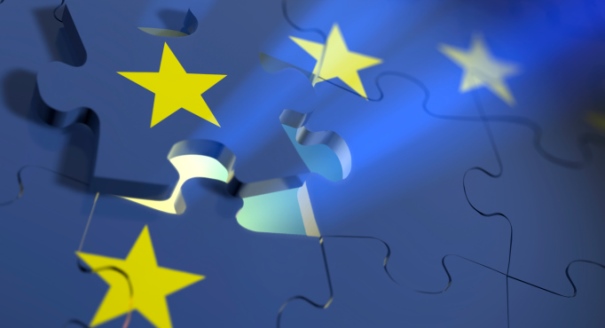
Countries in and outside of the EU should consider reforms as continuing regardless of any official ascension date.
Source: Global Policy
After the experience of (prematurely) promising candidate countries a specific accession year, the EU has understandably shied away from “giving a date”. Now, the new Juncker Commission has for the first time given a “no date”: When it announced that there would be no further enlargement during its five year term, it turned a factual statement into a political message. What was primarily directed at an EU audience – if not even at the President’s conservative party – has had a demoralizing effect in the region concerned: Not so much for the politicians there, some of whom have interpreted the statement as giving them a reform break, but mostly for pro-European citizens and civil society organizations, who fear that the most important lever of the reform advocacy has been neutralized.
Still, if – stating the obvious – no enlargement is to be had for the next five years, the question of when countries could realistically accede becomes even more important. The European Commission’s annual progress report is the main instrument for such an assessment, but it has failed to also be a useful communication tool. Its words are used and weighed differently in different quarters, governments have become used to pick from it what they like, and it is difficult to understand in its totality (the most recent “enlargement package” being 650 pages long). As a result, the publics cannot hold their national politicians accountable for the progress (not) made.
That is why a consortium of think tanks, both from accession countries and from EU member states, should publish a yearly estimate of when, at present pace, a country would likely enter the Union. The publication would coincide with the Commission’s package in the fall, thus translating the official assessment into an understandable document. If, say, this estimate were for accession in 2022 in a given year, a move forward or backward by the next year would be a clear indication of progress (or lack thereof). After all, accession itself is a moving target, not least because the EU that accession countries want to enter is likely to be a different one on the day of application than on the day of eventual entry.At least for the three countries currently negotiating their accession, Montenegro, Serbia, and Turkey, a fairly accurate estimate of what it takes – and how long it might last – to complete the enlargement chapters should be possible. For Albania and Bosnia-Herzegovina, the estimate should provide a date for the opening of negotiations, which then might last for another decade or so. Macedonia and Kosovo have to be dealt with separately, as their next formal step ultimately depends on an issue – the recognition of its official country name and of its independence, respectively – that only member states can solve. Any “moving date” provided for them would thus have to be highly conditional. However, this only serves to underline that EU enlargement does not exclusively depend on the candidate country’s progress, but that at times there is also stalemate on the side of member states.
The EU’s past obsession with not giving a date was a reaction to the strong desire of accession countries to have one so that they would know when painful reforms would end (or even could end them quite immediately). At the outset of a new Commission, two things are clear: Any hint that reforms are only for countries wanting to join the club is extremely dangerous, given the obvious – though at times unacknowledged – need for economic and political reforms in current member states. At the same time, a flexible, not fixed, date would be a clear sign that “enlargement” as such does not take a break, but that reforms have to continue in order to advance in or even begin negotiations. In addition, it would provide a new way to engage with an active civil society in acceding countries.

Former Nonresident Fellow, Carnegie Europe
Cornelius Adebahr was a nonresident fellow at Carnegie Europe. His research focuses on foreign and security policy, in particular regarding Iran and the Persian Gulf, on European and transatlantic affairs, and on citizens’ engagement.
Recent Work
Cornelius Adebahr

Cornelius Adebahr, Barbara Mittelhammer
Carnegie does not take institutional positions on public policy issues; the views represented herein are those of the author(s) and do not necessarily reflect the views of Carnegie, its staff, or its trustees.

As we close out another season of Strategic Europe, it is worth taking stock of the deep shifts underway.

Rym Momtaz

The hybrid warfare landscape is evolving rapidly, leaving policymakers without clear strategies. To better inform their work in addressing emerging challenges, governments must dig deeper into the underlying dynamics at play.


Raluca Csernatoni, Alicia Wanless
The EU had to compromise to adopt a twenty-first sanctions package against Russia, exposing growing cracks in the union’s resolve. Is this latest, weaker round worth it to keep pressure on Moscow?
Rym Momtaz, ed.

Trump is distracted and Ukraine wants Europe to step up. The continent’s leaders must find their voice and assert it in talks with Russia.

Alissa de Carbonnel

Mounting economic strain and battlefield losses will not necessarily make the Kremlin less dangerous. They could instead push Moscow toward a more aggressive hybrid campaign designed to test NATO’s Eastern flank, exploit allied hesitation, and fracture European resolve.

Maksym Beznosiuk