

Commentary
With its public finances in shambles, the far right polling at 35 percent ahead of the 2027 presidential election, and a growing protest movement, is France’s crisis a threat to the EU’s geopolitical awakening?
Rym Momtaz, ed.
{
  "authors": [
    "Paul Haenle",
    "Alexander Gabuev",
    "Chung Min Lee",
    "James L. Schoff",
    "Tong Zhao"
  ],
  "type": "questionAnswer",
  "centerAffiliationAll": "",
  "centers": [
    "Carnegie Endowment for International Peace",
    "Carnegie China"
  ],
  "collections": [
    "Inside Korea",
    "Carnegie China Commentaries"
  ],
  "englishNewsletterAll": "",
  "nonEnglishNewsletterAll": "",
  "primaryCenter": "Carnegie China",
  "programAffiliation": "",
  "programs": [],
  "projects": [],
  "regions": [
    "North America",
    "United States",
    "East Asia",
    "South Korea",
    "North Korea",
    "China",
    "Japan",
    "Caucasus",
    "Russia"
  ],
  "topics": [
    "Arms Control",
    "Nuclear Policy",
    "Security",
    "Foreign Policy"
  ]
}
Source: Getty
Whatever the outcome, the June 12 Trump-Kim summit will have major implications for the region’s security landscape.
After months of political gaming, back-channel meetings, and rhetoric, it is difficult to predict the outcome of the much-anticipated summit between Donald Trump and Kim Jong-un. However, whatever happens in Singapore, it is likely to shape the future of U.S.–North Korean engagement, the U.S-led alliance, and the region’s security landscape. The Carnegie–Tsinghua Center asked Carnegie’s scholars from around the globe to share their perspectives on what each invested nation wants from the historic meeting.
To request an interview, please contact Wanyi Du at wdu@ceip.org.

On the United States:
“The administration’s goal for the summit is to achieve complete, verifiable, and irreversible denuclearization of the Korean Peninsula in a rapid manner. Whether Trump is able to achieve such a goal, and in a timeline acceptable to the U.S. domestic audience and policymakers, remains the biggest question. The Trump administration seems to believe that Kim is coming to the table primarily due to a successful pressure campaign and threats of U.S. military force. However, the reason behind Kim’s shift to diplomacy remains unclear, as does the extent of the administration’s leverage. Even so, Trump feels that, since past negotiation attempts have failed, a high-level dialogue may be the best opportunity to make tangible progress on denuclearization. Trump wants to sit across the table from Kim, try to develop a personal relationship, and see if there is any potential for a deal. However, any agreement between the two leaders that results in concessions will have geopolitical implications for U.S. influence in the region, China–North Korea relations, and the support of U.S. allies.”
—Paul Haenle, director, Carnegie–Tsinghua Center for Global Policy
On North Korea:
“Kim is enthusiastic about the prospect of a summit with the U.S. president, as he views it as a huge opportunity for North Korea to gain international recognition as a de-facto nuclear power. Recent statements by the regime indicate that Kim believes he is coming to the summit from a strengthened position given his view that North Korea has already obtained a basic level of nuclear deterrence vis-à-vis the United States. However, he has shifted to diplomacy for a number of other reasons, including the effects of intense sanctions and pressure from the international community and the need to deliver economic development and prosperity to his people. Kim will try to use the summit to strike a deal with Trump that would provide sanctions relief and economic assistance and potentially a peace treaty, security assurances, and integration into the international system. However, it is difficult to see a scenario where Kim agrees to give up his nuclear weapons program—something he and his father and grandfather before him said is critical to the regime’s survival.”
—Paul Haenle, director, Carnegie–Tsinghua Center for Global Policy
On South Korea:
“The Moon administration’s main goal is to ensure that the “Olympic Thaw” that began in January is sustained and transformed into a tangible road map that ensures North Korea’s acceptance of CVID, propels the signing of a peace treaty formally ending the Korean War, and helps to normalize U.S.–North Korea relations. Creating a peace regime has been a central element of Moon’s foreign policy goals, but there could be unparalleled speed bumps along the way, including divergent views on denuclearization by North Korea, the United States, and South Korea; unintended security fallout for other key regional partners such as Japan; and accelerated U.S.–North Korea negotiations that do not take into account divergent political endgames and security opportunity costs. Dialogue is always better than conflict or entrenched crises, but dialogue based on great expectations can be even more dangerous in the long run.”
—Chung Min Lee, nonresident senior fellow, Asia Program, Carnegie Endowment for International Peace
On China:
“Except for a total failure, any summit result would be a net gain for China. A substantive agreement would probably include North Korean measures to substantially cut, if not completely dismantle, its nuclear capabilities and U.S. measures to dial down joint military drills with South Korea and restrain its future military deployment on the peninsula. That would all be good news for China. Even a less substantive and more symbolic agreement would help reduce military tensions and decrease the chances of a war on China’s doorstep. If a basic deal on North Korea’s nuclear program can be reached, then China will likely want to contribute—probably through an initial, quadrilateral negotiation process—to addressing the other big issue of how to replace the armistice treaty with a peace treaty.
Admittedly, Xi and Kim share some concerns, especially over the U.S.-led alliance in Northeast Asia and the deployment of U.S. advanced military assets in the region. That said, China has a strong political interest in a successful U.S.–North Korea summit. An improved U.S.-DPRK relationship would help create a regional environment that makes it easy for China (and other countries) to help North Korea develop its economy and gradually transform itself into a more normal and open country. And providing this assistance would, in turn, help keep North Korea close to China. Given the growing U.S.-China strategic rivalry, keeping Pyongyang closer to Beijing than to Washington may now be a geopolitical priority for China.”
—Tong Zhao, fellow, Carnegie–Tsinghua Center for Global Policy
On Japan:
“Japan would like to see the summit produce a credible process that can lead to complete, verifiable, and irreversible North Korean denuclearization (CVID) in a relatively short time frame, in exchange for a substantive diplomatic normalization process. But there is little hope in Tokyo that the Trump-Kim summit will lead to CVID. The Japanese government’s main goal, therefore, is to help avoid a bad outcome—one that would leave North Korea’s nuclear program largely in place but open the door to diplomatic and economic options that would strengthen the Kim regime, weaken the U.S.–South Korea alliance, and marginalize Japan’s influence on the peninsula. Abe wants Trump to keep North Korea isolated and weak until it makes a clear decision to denuclearize quickly and transparently.
Abe is also trying to ensure that Japan’s top political consideration with regard to North Korea—the return of Japanese citizens abducted by North Korea in the 1970s and 1980s—remains on the negotiating agenda if a denuclearization-normalization deal seems possible. Japan has reportedly confirmed with North Korean representatives that past bilateral agreements on normalizing ties (the 2002 Pyongyang Declaration) and resolving the abductee issue (the 2014 Stockholm Agreement) have not been abandoned, even though there are no visible signs of political action on either of these long-dormant agreements. North Korea is traditionally most receptive to Japanese engagement when its relations with South Korea and the United States are suffering, so a successful Trump-Kim summit could put Japan–North Korea engagement on hold.”
—James L. Schoff, senior fellow, Asia Program, Carnegie Endowment for International Peace
On Russia:
“Russia is pursuing two major goals simultaneously on the Korean Peninsula. The first is to do everything possible to help avoid military confrontation. Of all North Korea’s neighbors, Russia will be the least affected party in the case of war. But a war would still be a bad scenario since Vladivostok, a major city with nearly 1 million people, is just 200 kilometers from the Russia–North Korea border. The second goal is for Russia to stay relevant and be viewed as a great power. Although on the North Korea issue Russia has, to some extent, accepted Beijing’s position in the driver’s seat, it is closely coordinating with China and will aim to play a bigger role when it’s time to work through the United Nations Security Council. Ultimately, Moscow hopes that if sanctions are gradually lifted, Russia will be able to implement some economic projects there, including a railway link from South Korea to Russia via North Korea, a gas pipeline, and an electricity grid.”
—Alexander Gabuev, senior fellow and Russia Chair in the Asia-Pacific Program, Carnegie Moscow Center

Former Maurice R. Greenberg Director’s Chair, Carnegie China
Paul Haenle held the Maurice R. Greenberg Director’s Chair at the Carnegie Endowment for International Peace and is a visiting senior research fellow at the East Asian Institute, National University of Singapore. He served as the White House China director on the National Security Council staffs of former presidents George W. Bush and Barack Obama.

Director, Carnegie Russia Eurasia Center
Alexander Gabuev is director of the Carnegie Russia Eurasia Center. Gabuev’s research is focused on Russian foreign policy with particular focus on the impact of the war in Ukraine and the Sino-Russia relationship. Since joining Carnegie in 2015, Gabuev has contributed commentary and analysis to a wide range of publications, including the Financial Times, the New York Times, the Wall Street Journal, and the Economist.
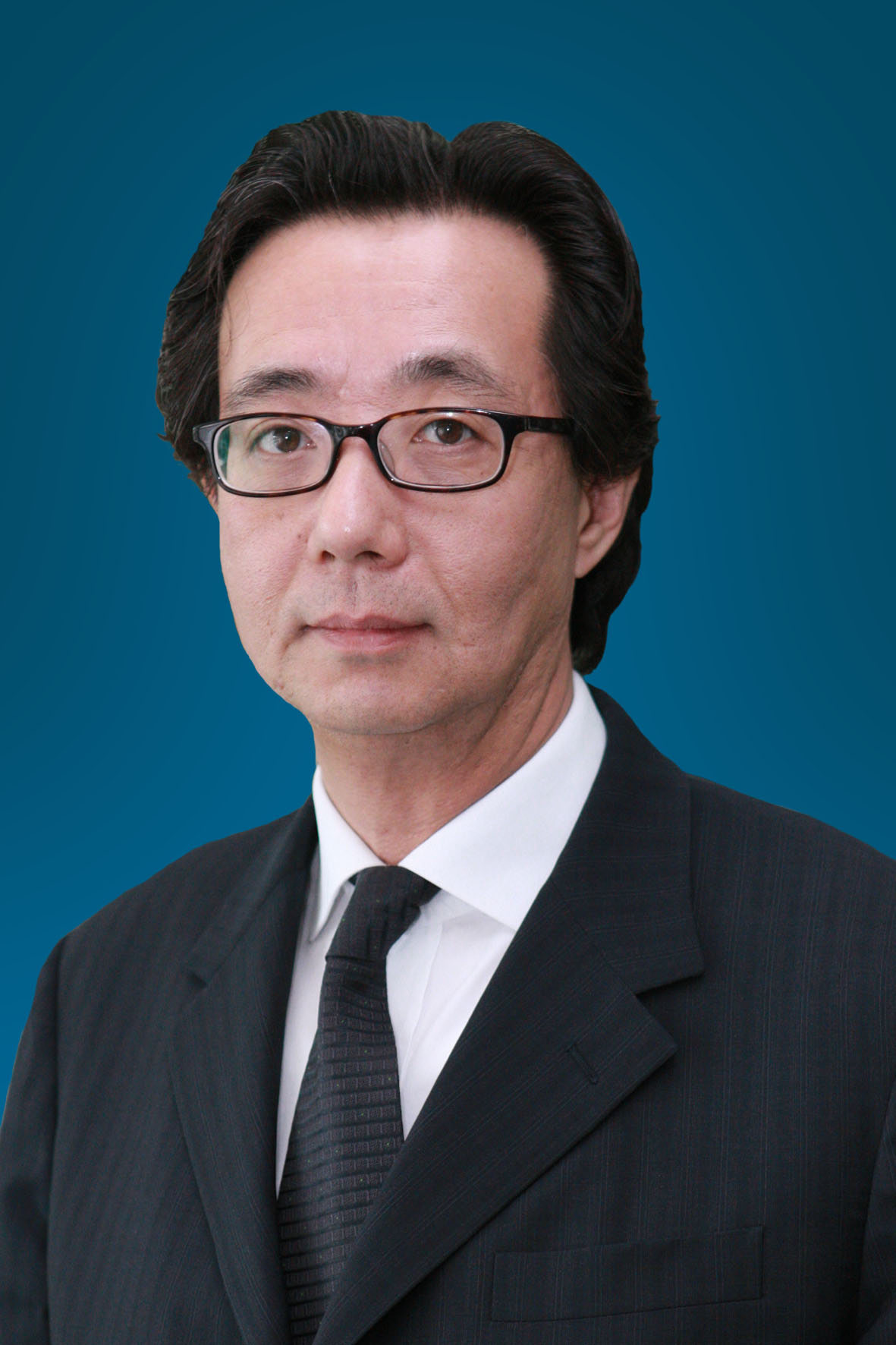
Senior Fellow, Asia Program
Chung Min Lee is a senior fellow in Carnegie’s Asia Program. He is an expert on Korean and Northeast Asian security, defense, intelligence, and crisis management.

Former Senior Fellow, Asia Program
James L. Schoff was a senior fellow in the Carnegie Asia Program. His research focuses on U.S.-Japan relations and regional engagement, Japanese technology innovation, and regional trade and security dynamics.

Senior Fellow with the Nuclear Policy Program and Carnegie China
Tong Zhao is a senior fellow with the Nuclear Policy Program and Carnegie China, Carnegie’s East Asia-based research center on contemporary China. Formerly based in Beijing, he now conducts research in Washington on strategic security issues.
Carnegie does not take institutional positions on public policy issues; the views represented herein are those of the author(s) and do not necessarily reflect the views of Carnegie, its staff, or its trustees.

With its public finances in shambles, the far right polling at 35 percent ahead of the 2027 presidential election, and a growing protest movement, is France’s crisis a threat to the EU’s geopolitical awakening?

Rym Momtaz, ed.

Ahead of a tough winter for Ukraine, Donald Trump’s swing back toward Russia bodes ill. But instead of panicking, Kyiv’s European allies are focusing on action.
Rym Momtaz

Funding Ukraine remains a priority for European leaders. As Russia’s war of aggression heads into another winter, two feasible options to mobilize support for Kyiv should be fast-tracked.


Vladyslav Rashkovan, Gregory P. Wilson

While the EU and European governments are embracing the much-lauded middle-power moment, this entails three difficult conundrums.

Richard Youngs

Europe is facing rising populism internally as well as external pressures from Russia, China, Turkey, and the United States.

Dimitar Bechev