

Commentary
Before the next wave of EU enlargement takes place, the union needs to grapple with thorny questions of how power is distributed among its members.
Emil Sondaj Hansen, Ditte Brasso Sørensen
{
  "authors": [
    "Shi Zhiqin"
  ],
  "type": "commentary",
  "blog": "Strategic Europe",
  "centerAffiliationAll": "",
  "centers": [
    "Carnegie Endowment for International Peace",
    "Carnegie Europe",
    "Carnegie China"
  ],
  "collections": [
    "China’s Foreign Relations"
  ],
  "englishNewsletterAll": "",
  "nonEnglishNewsletterAll": "",
  "primaryCenter": "Carnegie China",
  "programAffiliation": "",
  "programs": [],
  "projects": [],
  "regions": [
    "East Asia",
    "China",
    "Western Europe",
    "United Kingdom",
    "France",
    "Germany",
    "Europe",
    "Asia"
  ],
  "topics": [
    "Economy",
    "Trade",
    "EU",
    "Climate Change",
    "Foreign Policy"
  ]
}
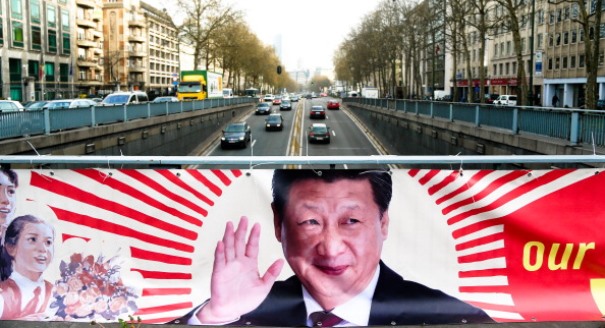
Source: Getty
As Chinese President Xi Jinping visits Brussels, it is important for both China and the EU to take the responsibility that their size demands for resolving global issues.
On March 31, Chinese President Xi Jinping visited Brussels for the first time since being elected to the presidency in 2012. Shi Zhiqin, a resident scholar at the Carnegie-Tsinghua Center for Global Policy, assesses how Beijing views EU-China relations and considers what the future might hold.
At the same time, China recognizes cases of European “political mismanagement” such as the eurozone crisis that present obstacles to integration and fuel Euroskepticism. The EU can only overcome such obstacles through fair and inclusive political and institutional solutions. The European Stability Mechanism, banking union, and fiscal federalism are all necessary instruments for a united and influential Europe.
In the meantime, China has offered a helping hand by promoting investment in the EU’s periphery in an effort to support the euro and stabilize the EU’s economy. Xi’s visit has secured multibillion-dollar trade agreements with France, Germany, and the Netherlands on a range of goods.
Chinese leaders and diplomats have spent great time and effort in an attempt to understand the EU’s decisionmaking mechanisms. In the past five years, Beijing has increasingly sought to negotiate substantive issues at the EU level by engaging directly with the Brussels-based institutions.
At the same time, China has also engaged with the member states—out of necessity rather than choice, as they still enjoy significant sovereignty. Contrary to some media reports, there is no Chinese strategy to “divide and rule,” for the simple reason that such behavior would undermine Sino-EU relations in the long term.
China has long argued for respect for national sovereignty, autonomy, and the peaceful resolution of disputes. In that sense, Beijing does not support coercive diplomacy against Russia and seeks a negotiated resolution of a crisis that has to a certain extent been facilitated by the intervention of many foreign actors in Ukrainian politics.
China also recognizes the historic significance of what is at stake. While EU integration is important for Ukraine, the West should also take into account Russia’s sensitivities about the birthplace of its civilization.
Of course, Russia should be careful not to respond disproportionately to the Ukraine crisis. As Russia is a nuclear power that plays a major role in providing resource stability, conflict with the West could destabilize the global economy at a time of fragile postcrisis recovery. China therefore wishes to see more dialogue and cooperation between the EU and Russia and hopes for a peaceful resolution to the Ukraine crisis.
Definitely. China’s engagement with the EU is built on a strong and unshakable partnership that could offer a broader template for great power relations.
The EU is China’s largest trading partner but also a “development partner.” Chinese leaders acknowledge this by looking to the EU as a model for urbanization and sustainable development. Aside from economics, the two sides have comprehensive people-to-people contacts and cooperate on peace and security issues. The EU has welcomed China’s contribution to antipiracy operations in the Horn of Africa and its support for EU foreign policy chief Catherine Ashton on negotiations on Iran’s nuclear program.
China and the EU also engage in judicial exchanges, and Beijing believes that the EU’s legal system offers a good model for its own legal reforms.
For the EU-China partnership to become deeper and stronger, a stable and prosperous eurozone is essential. A eurobond market would allow China to diversify its foreign exchange reserves away from U.S. treasury bills. Such a move, if accompanied by a more liberal Chinese currency regime, would limit America’s ability to run large budget deficits and maintain a high level of defense spending.
In the longer term, that would lead to less U.S. unilateralism, which would also benefit Europe. In his 2013 State of the Union speech, European Commission President José Manuel Barroso cited the United States as the source of the global economic crisis. If the euro made up a larger share of world commerce and central-bank transactions, the EU could become more assertive in demanding its own reforms to the global monetary system.
It is important for both China and the EU to use the momentum of Xi’s visit to neutralize misperceptions and take the responsibility that their size demands for resolving global issues. Of course, for such ambitious cooperation to take place, the EU must also resolve its internal political crisis. The Chinese remain fervent supporters of Europe’s “political fermentation” and hope to soon taste its exquisite “political wine.”
Shi Zhiqin
Former Resident Scholar, Carnegie-Tsinghua Center for Global Policy
Shi Zhiqin was a resident scholar at the Carnegie-Tsinghua Center until June 2020.
Carnegie does not take institutional positions on public policy issues; the views represented herein are those of the author(s) and do not necessarily reflect the views of Carnegie, its staff, or its trustees.

Before the next wave of EU enlargement takes place, the union needs to grapple with thorny questions of how power is distributed among its members.


Emil Sondaj Hansen, Ditte Brasso Sørensen

A summer of escalation in the Black Sea has hurt Ukraine economically and is exacerbating world food security. A truce is needed—as is a broader reframing of Europe’s Ukraine strategy.

Thomas de Waal

Are Germany’s economic, industrial, and political struggles becoming a liability for the EU’s ability to rise to the geopolitical moment?

Rym Momtaz, ed.

European Commission President Ursula von der Leyen is about to give her annual address on the state of the EU. Here’s what she won’t—but should—say.
Rym Momtaz

The aftermath of the Ceuta crisis shows Europe has drawn the wrong lessons. Rather than doubling down on failed migration policies, the EU needs to address the underlying roots of such episodes.

Richard Youngs