

Other
- +18
James M. Acton, Saskia Brechenmacher, Cecily Brewer, …
{
  "authors": [
    "Marc Pierini"
  ],
  "type": "commentary",
  "blog": "Strategic Europe",
  "centerAffiliationAll": "",
  "centers": [
    "Carnegie Endowment for International Peace",
    "Carnegie Europe"
  ],
  "collections": [],
  "englishNewsletterAll": "",
  "nonEnglishNewsletterAll": "",
  "primaryCenter": "Carnegie Europe",
  "programAffiliation": "",
  "programs": [],
  "projects": [],
  "regions": [
    "Middle East",
    "North Africa",
    "Sudan",
    "Libya",
    "Syria",
    "East Asia",
    "China",
    "Western Europe",
    "Europe",
    "Southern, Eastern, and Western Africa",
    "Asia"
  ],
  "topics": [
    "Climate Change",
    "Economy",
    "Trade",
    "Security",
    "EU",
    "Civil Society"
  ]
}
Source: Getty
From Chinese industrialization to maritime trade, from the perils of piracy to human trafficking, a voyage from the Far East to Europe reveals much about the modern world.
Having recently traveled from China to France on a giant container ship, I came to realize how globalization and conflicts affect us on a daily basis. I brought back four distinct impressions: on China, trade flows, piracy, and irregular migration.
It’s now trivial to say that China is the world’s factory. The country’s coastal regions are buzzing with activity and choking with industrial pollution. Their cities have long been transformed into vast production centers, and they are now being modernized with giant transport networks and twenty-first-century habitats.
For example, Shenzhen, a city next door to the special administrative region of Hong Kong, offers an amazing landscape of dozens of 30-story apartment towers packed together on the shoreline, literally yards from one another. The city boasts a leisure center complete with several amusement parks, a grounded ocean liner converted into a hotel, and countless fast food outlets.
Sea trade is a major source of income for Shenzen. The city’s container port—or rather, its many ports, which are by no means China’s biggest—dwarfs its counterparts in Barcelona, Malta, Valencia, or Marseille. Day and night, the harbor is buzzing with giant cranes, mammoth ships, feeder barges, and semitrailer trucks. The world’s factory is right under your eyes, and the transformation of sea trade in the last twenty years serves it well.
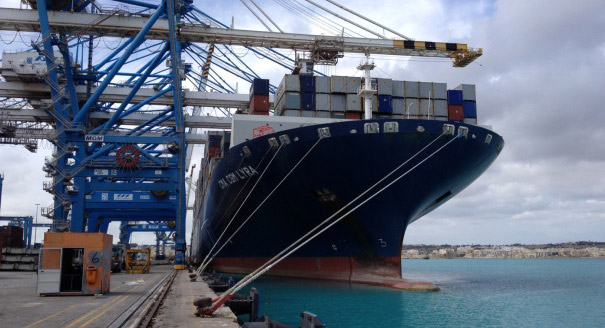
The ship I traveled on (pictured), one of the biggest in the world, sailed from Shenzhen with no less than 10,000 20-foot containers (capacity is measured in 20-foot equivalents, even if many containers are 40 or 45 feet long), with a total payload of around 140,000 tons. If one estimates that on a daily basis, some 100 such ships travel to and from China—and this is a very conservative estimate—then 140 million tons of merchandise are exchanged between Europe and the Far East every single day. That makes for a long procession on the high seas.
My ship was built in 2010 in South Korea, and the next generation of vessels is now being constructed in China. China is fast upgrading its industrial skills.
For a while, modern sea trade also provided a living for daring Somali pirates, modern-day bounty hunters equipped with satellite phones and sophisticated radars and connected to ships’ information systems. Thanks to a massive Western military operation in the Gulf of Aden, implemented with precision navigation techniques, and the establishment of a navy-patrolled Internationally Recommended Transit Corridor leading to the strait of Bab-el-Mandeb, there has been a sharp drop in piracy activities since 2012.
But the cost of the operation to Western navies is high, and the sustainability of the mission’s benefits is under review. For how long will the West be able to maintain such costs?
Another plague of modern times is found in the activities of human traffickers across the Mediterranean. That is nothing new: for more than a decade, well-equipped networks have been recruiting migrant candidates across West Africa and beyond. The political tragedies in Somalia, Sudan, and Syria have only added to the steady supply of exploitable migrants, sometimes used as workers, sometimes just sitting in refugee camps.
For a long time, boats sailing from Libya had a single target, the Italian island of Lampedusa. That was a prime choice, since traffickers knew that irregular migrants landing there would be promptly transferred to the Italian mainland.
More recently, Malta has also become a target, and the tiny island is now packed with irregular migrants who have nowhere to go—no “mainland” and no “country of origin” that they would be willing to declare their own. The strain on the Maltese economy is highly visible, especially in the south of the island. This is now an EU issue, but given Africa’s many tragedies, no end is in sight.

Senior Fellow, Carnegie Europe
Pierini is a senior fellow at Carnegie Europe, where his research focuses on developments in the Middle East and Turkey from a European perspective.
Recent Work


James M. Acton, Saskia Brechenmacher, Cecily Brewer, …
Marc Pierini
Carnegie does not take institutional positions on public policy issues; the views represented herein are those of the author(s) and do not necessarily reflect the views of Carnegie, its staff, or its trustees.
European reactions to the war in Iran have lost sight of wider political dynamics. The EU must position itself for the next phase of the crisis without giving up on its principles.

Richard Youngs
Europe isn’t as weak in the new geopolitics of power as many would believe. But to leverage its assets and claim a sphere of influence, Brussels must stop undercutting itself.

Dimitar Bechev

Europe’s reaction to the war in Iran has been disunited and meek, a far cry from its previously leading role in diplomacy with Tehran. To avoid being condemned to the sidelines while escalation continues, Brussels needs to stand up for international law.

Pierre Vimont
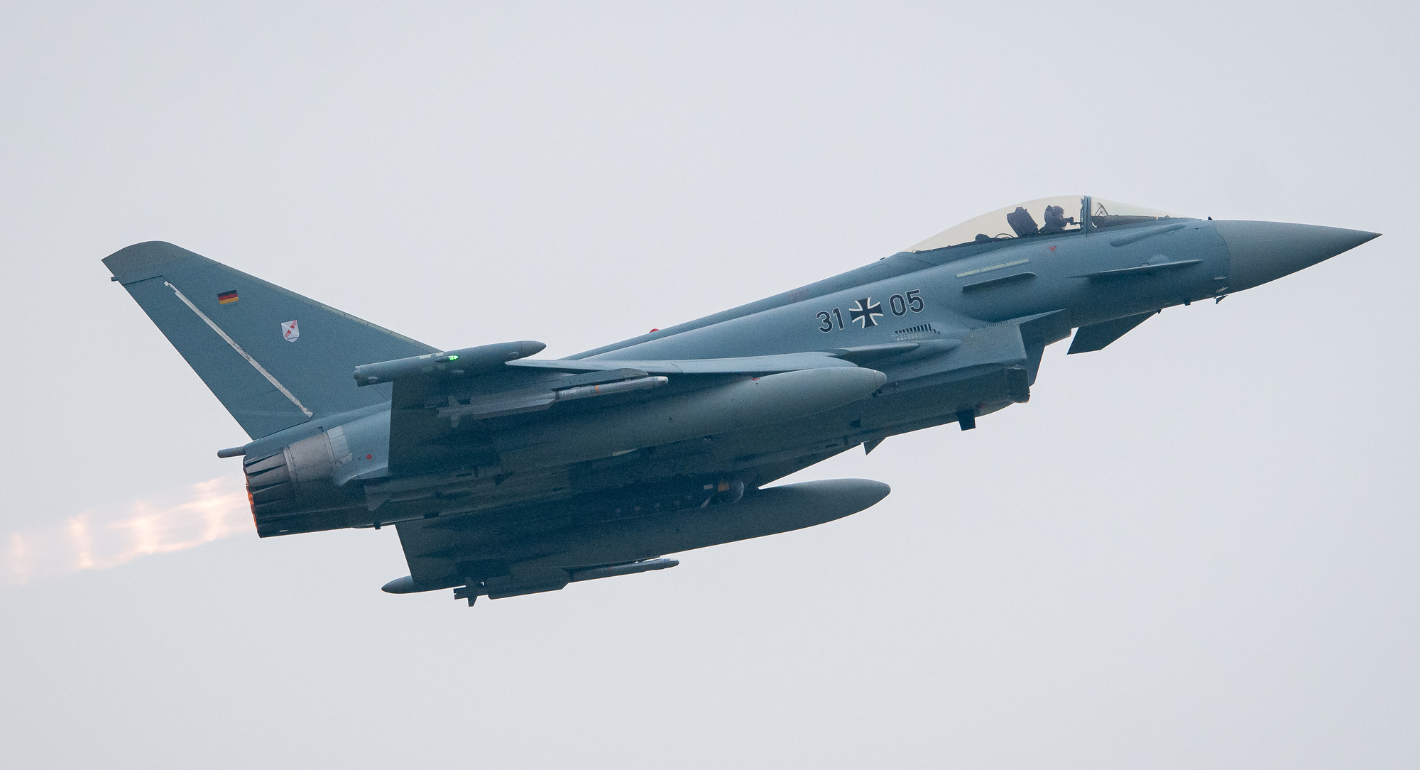
France and Germany’s failure to agree on the Future Combat Air System (FCAS) raises questions about European defense. Amid industrial rivalries and competing strategic cultures, what does the future of European military industrial projects look like?

Rym Momtaz, ed.
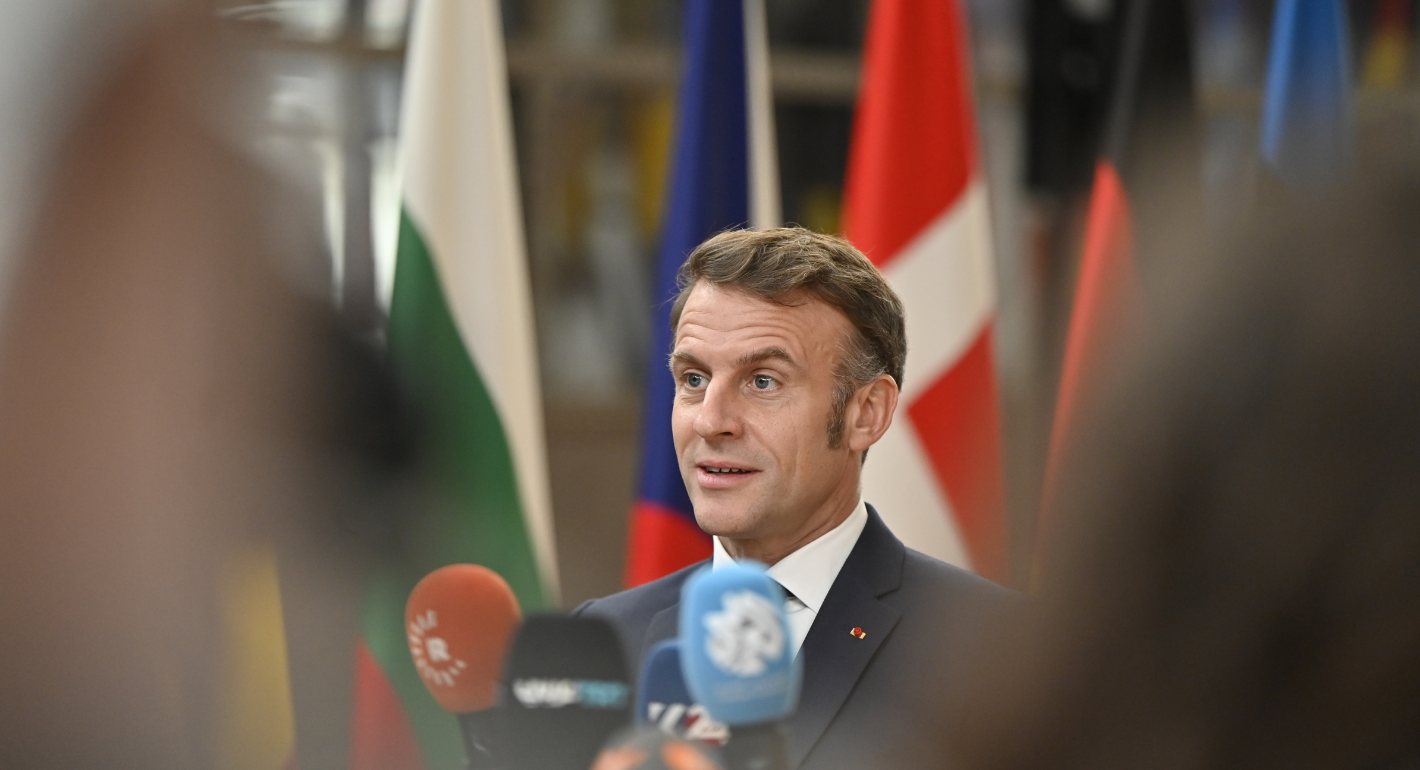
France has stopped clinging to notions of being a great power and is embracing the middle power moment. But Emmanuel Macron has his work cut out if he is to secure his country’s global standing before his term in office ends.
Rym Momtaz