

Commentary
Trump is distracted and Ukraine wants Europe to step up. The continent’s leaders must find their voice and assert it in talks with Russia.
Alissa de Carbonnel
{
  "authors": [
    "John Kornblum"
  ],
  "type": "commentary",
  "blog": "Strategic Europe",
  "centerAffiliationAll": "",
  "centers": [
    "Carnegie Endowment for International Peace",
    "Carnegie Europe"
  ],
  "collections": [],
  "englishNewsletterAll": "",
  "nonEnglishNewsletterAll": "",
  "primaryCenter": "Carnegie Europe",
  "programAffiliation": "",
  "programs": [],
  "projects": [],
  "regions": [
    "Eastern Europe",
    "Russia",
    "Ukraine",
    "Western Europe",
    "Germany",
    "Europe"
  ],
  "topics": [
    "Security",
    "EU",
    "Foreign Policy"
  ]
}
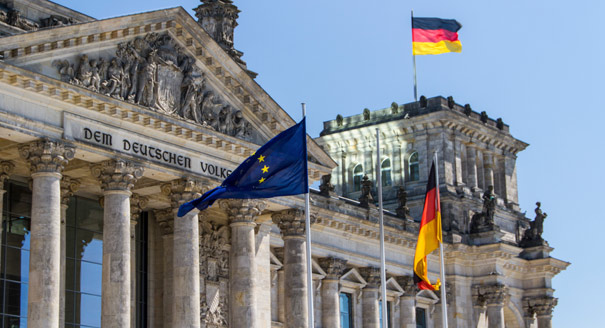
Source: Getty
As Germany’s global influence grows, there are calls for the country to accept more responsibility for international stability. Those demands will be disappointed.
1. Germany has traditionally shied from taking the lead in the West.
Germany was never the political dwarf it was made out to be. Over the first five postwar decades, German leaders have been skilled at leading the West to support their national goals. Slowly and without fanfare, Germany has been remaking Europe in its image. It has made its wishes more palatable by paying more than its share.
If others have misunderstood Germany’s role, that is in part because the country has succeeded in wrapping its ambitions in an image of selflessness. Germany has been as single-minded in pursuit of its goals as former French president Charles de Gaulle ever was with his, but German politicians have almost always left public leadership to others.
Germany emerged from its cocoon during the euro crisis that began in 2010. All of a sudden, it became clear that the euro had been designed primarily to further German interests.
But the “Germanization” of Europe had been going on for some time. Germany pushed so hard for access to nuclear weapons in the 1950s that the United States came up with an entirely new, and ultimately unworkable, proposal for a multilateral nuclear force to still German desires.
The Ostpolitik, or Eastern policy, of former chancellor Willy Brandt was pursued in the face of major skepticism by Western powers. Another chancellor, Helmut Kohl, devised a ten-point plan on German reunification that he shared with no one, not even his own foreign minister, before publishing it.
Plans for NATO enlargement were hatched in the defense ministry in Bonn and not in Washington. Chancellor Angela Merkel’s Energiewende, or energy transition, was previewed to no one before it was announced. And, despite its peaceful intentions, Germany remains the world’s third-largest arms exporter.
2. Germany must now shed its past reticence and help lead the West.
Germany’s international personality is unlikely to change. Over the years, Germany has developed an international style that suits its history, economic interests, and, above all, the political psychology of its population. Germany’s determined effort to seek accommodation with even notorious wrongdoers has at times added an air of irresponsibility to its image.
The difference today is that Germany’s strengths—its economic dominance, its central geographic position, and its export-oriented industries—often seem more relevant than the traditional diplomacy of the British, the French, or even the Americans. This growth in German influence leads to calls for Germany to accept more responsibility for international stability. Those calls will be disappointed.
3. Germany’s reduced military expenditure contributes to irresponsibility.
Not necessarily. Germany should carry more of the Western defense burden, but so should almost every other European member of NATO. Germany’s image of irresponsibility comes less from the size of its quite competent military forces than from its hesitation to join strong rhetorical, economic, or military reactions to international aggression.
Germany’s deep-seated desire to avoid conflict often appears weak or at best egotistical in the face of clear commitments by other partners. The UN votes on imposing a no-fly zone over Libya in 2011 or on upgrading Palestine to observer status in 2012—both cases in which Germany abstained—are classic examples. Equally instructive is the painful effort by Germany’s foreign minister to find positive elements of Russian behavior in the Ukraine crisis.
This restrained approach has brought Germany benefits. It is regularly voted the world’s most respected country. But none of this respect has helped ease the transition to leadership. A country that has worked for nearly seventy years to become “normal” like everyone else is now finding it difficult to fit in with the “normality” of others.
4. The solution to Germany’s leadership dilemma is closer European cooperation.
Don’t hold your breath. While Germany strongly supports the goal of a common European foreign and security policy, neither its concrete contribution nor its strategy have furthered the process. Others have shied from European solidarity as well, and it is doubtful whether any European framework could increase the EU’s role in the world.
But instead of taking the lead in defining an active European global engagement, Germany has increasingly focused on its own interests and view of the world. European partners shake their heads with disbelief as Germany’s leaders repeatedly justify their unilateralism with the twin traumas of history—war and hyperinflation. Even the unilateral action that led to the Energiewende was justified by the fact that the Fukushima nuclear disaster somehow reminded Germans of their terrible past.
5. Germany’s unwillingness to lead is the fault of the United States.
Yes and no. The United States has traditionally been the essential foundation for responsible German behavior. Strong American leadership has often helped Germany to act decisively in times of crisis. And America’s role has in fact declined in recent years. But even strong U.S. leadership has often failed to crack Germany’s determined reluctance to step forward.
Over the years, Germany has sunk into a state of “strategic haplessness” that often hinders its ability to understand the importance of confident approaches to security challenges. As a result, U.S. leadership is increasingly seen as a threat to the comfortable world Germany has built for itself.
Anger over U.S. support for Ukraine is a good example. The crisis is the result of European, not American, policies. The German public is by no means pro-Russian, but U.S. leadership in countering Russian President Vladimir Putin is still viewed by many as a threat both to peace and, above all, to German economic well-being.
What Europe and the United States both want from Germany is the one thing Germany’s leaders probably cannot deliver: that Germany “grow up” and act with the graciousness and self-confidence urgently needed from Europe’s most indispensable leader.
John Kornblum is senior counselor at Noerr LLP and former U.S. ambassador to Germany.
John Kornblum
Centre for Strategic and International Studies
Carnegie does not take institutional positions on public policy issues; the views represented herein are those of the author(s) and do not necessarily reflect the views of Carnegie, its staff, or its trustees.

Trump is distracted and Ukraine wants Europe to step up. The continent’s leaders must find their voice and assert it in talks with Russia.

Alissa de Carbonnel

Mounting economic strain and battlefield losses will not necessarily make the Kremlin less dangerous. They could instead push Moscow toward a more aggressive hybrid campaign designed to test NATO’s Eastern flank, exploit allied hesitation, and fracture European resolve.

Maksym Beznosiuk

Over the past ten years, NATO has held almost as many summits as it did during the entirety of the Cold War. Are they still useful, or is it time to stop holding annual meetings?

Rym Momtaz, ed.
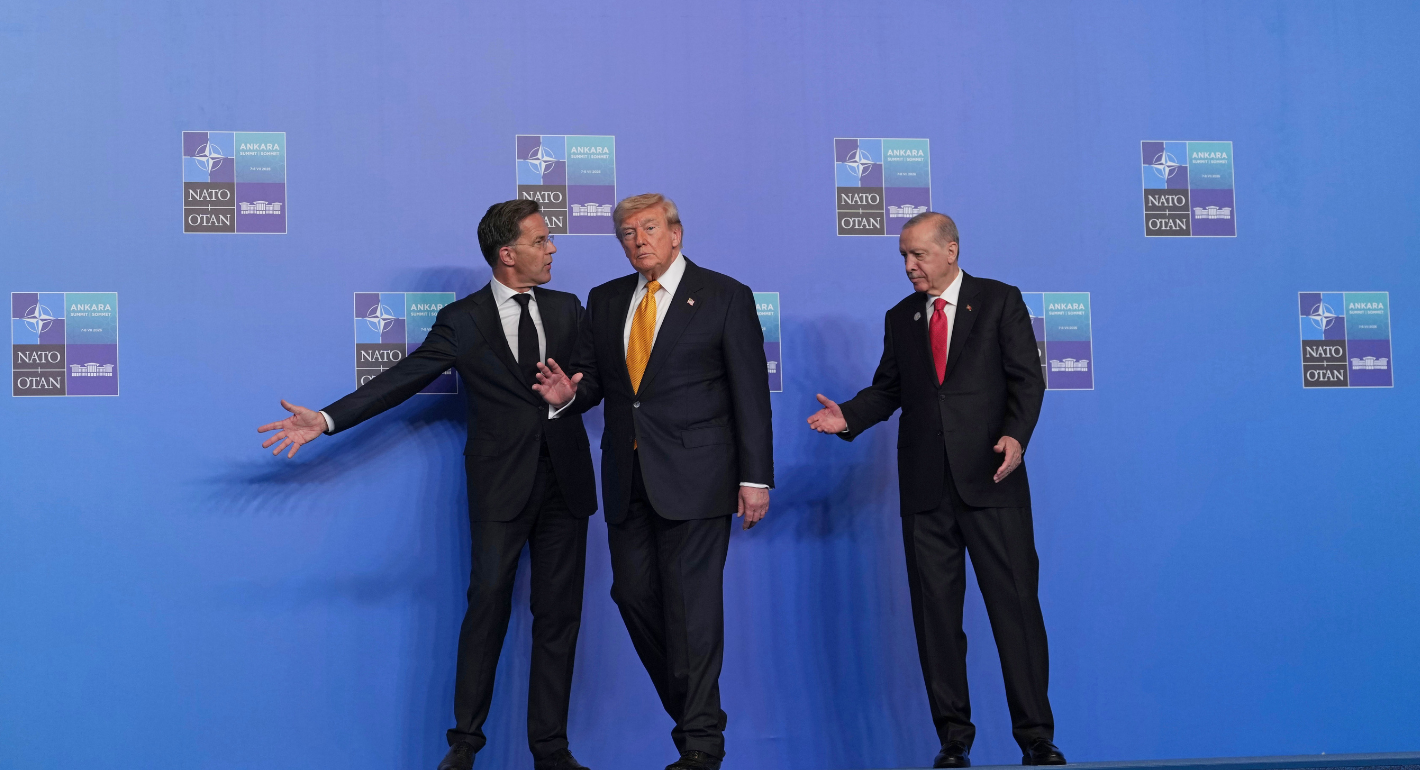
Nearly a year and a half after Europeans leaned into sucking up to Trump, the strategy has produced some benefits when it comes to Ukraine.
Rym Momtaz
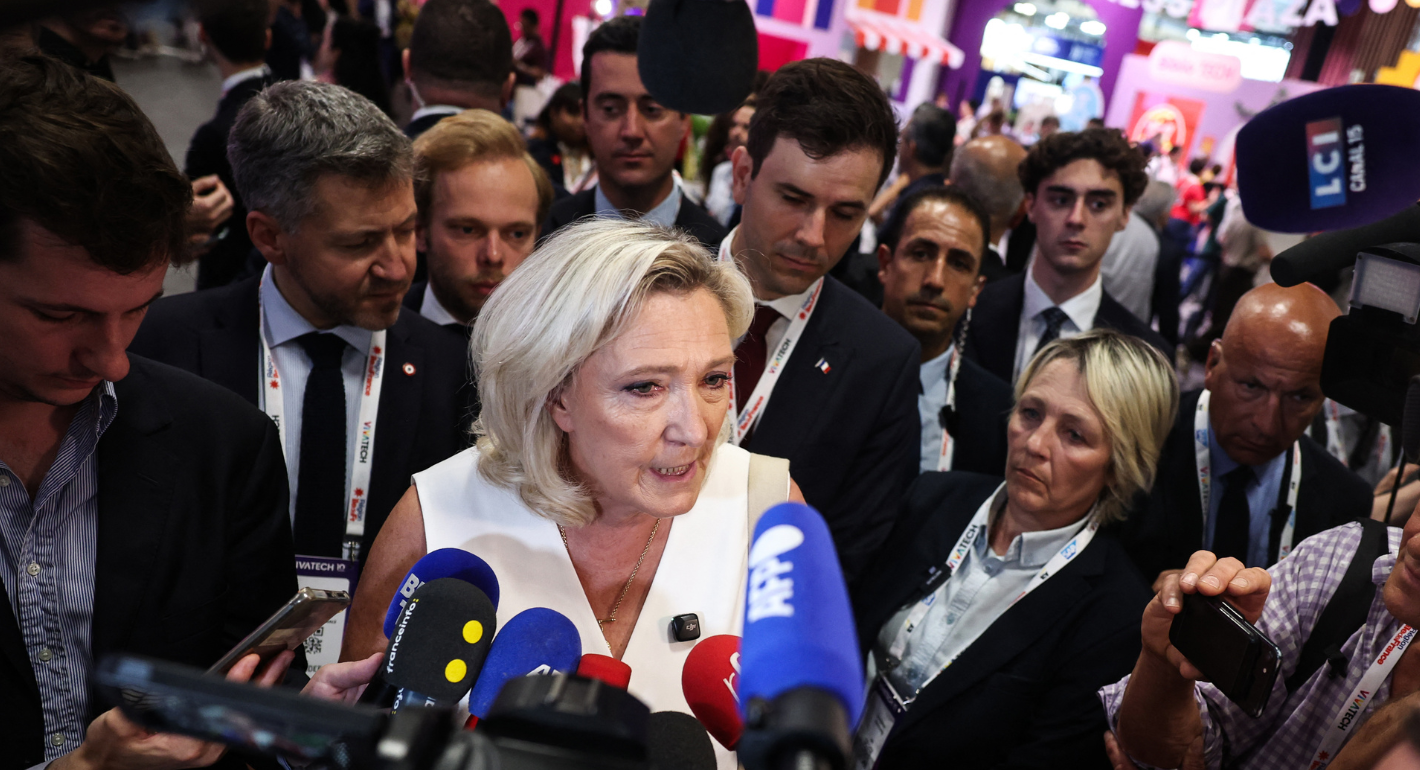
Far-right leader Marine Le Pen can—and will—run in France’s next presidential election. What does the outcome of her appeal against a 2025 embezzlement conviction mean for the country’s political future?

Catherine Fieschi