

Commentary
Judy Dempsey
{
  "authors": [
    "Judy Dempsey"
  ],
  "type": "commentary",
  "blog": "Strategic Europe",
  "centerAffiliationAll": "",
  "centers": [
    "Carnegie Endowment for International Peace",
    "Carnegie Europe"
  ],
  "collections": [],
  "englishNewsletterAll": "",
  "nonEnglishNewsletterAll": "",
  "primaryCenter": "Carnegie Europe",
  "programAffiliation": "",
  "programs": [],
  "projects": [],
  "regions": [
    "Europe",
    "Western Europe",
    "Germany"
  ],
  "topics": [
    "Foreign Policy",
    "EU",
    "Economy",
    "Climate Change"
  ]
}
Source: Getty
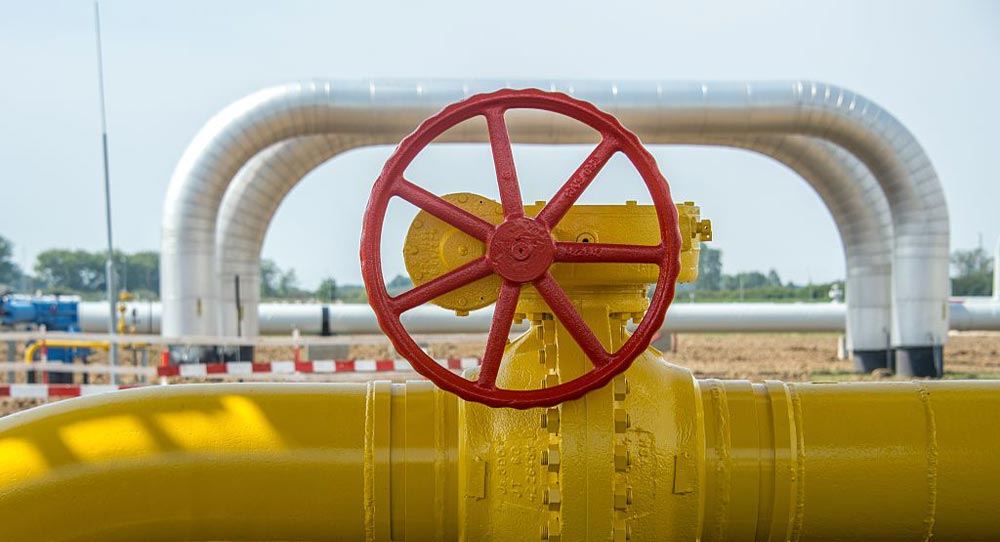
German Chancellor Angela Merkel’s refusal to abandon the controversial Nord Stream pipeline is puzzling for several reasons.
When Angela Merkel became German chancellor in November 2005, her Social Democratic predecessor, Gerhard Schröder, had just landed a big job at Gazprom, Russia’s state-owned energy giant. At the time, it seemed that Vladimir Putin, the Russian president, was rewarding his close friend for pushing through a big energy contract between Gazprom and what was then the Kremlin’s most important ally in the EU.
Behind the backs of Germany’s Eastern and Central European neighbors, Schröder, supported by leading Austrian, Dutch, French, and German energy companies, made a deal with Gazprom. They would build the Nord Stream pipeline under the Baltic Sea to bring Russian gas directly to Western Europe for the first time. For Gazprom, the deal meant no more hassles or expenses with transit countries, particularly Ukraine and Poland. For Germany, it meant increased energy dependence on Russia—whatever the political and strategic fallout.
A dozen years later, the consortium is building a second pipeline, Nord Stream 2. But this time round, opposition from many EU member states and the European Commission is increasing. Much of that criticism is directed at Germany, specifically Merkel. Yet when challenged over Nord Stream, Merkel has not wavered in her apparent conviction that the project is a purely commercial venture.
Members of her cabinet have taken the same line. When German Foreign Minister Sigmar Gabriel was economy minister, he told Putin there was no need to worry about the commission sticking its nose into the regulatory practices of Nord Stream. The project would remain “under the competence of the German authorities, if possible,” Gabriel told Putin in October 2015. “So if we can do this, then opportunities for external meddling will be limited. We will limit the possibility of political interference in this project.”
On June 15, after talks in Berlin with Estonian Prime Minister Juri Ratas, who opposes Nord Stream because it goes against everything the EU is meant to support (less dependence on Russian energy, more energy diversification, and the liberalization of the sector), Merkel repeated her mantra. “I think some legal questions need to be clarified in relation to Nord Stream 2,” she said. “Otherwise it is an economic project and I don’t think we need an extra mandate for it.”
To cap it all, not only German but also French and Austrian officials were uncharacteristically mute on June 26 during an informal meeting of EU energy ministers in Brussels. The majority wanted to give the commission the go-ahead to negotiate with Russia over Nord Stream 2. “We had 13 delegations intervening, with all of them being supportive of the Commission’s approach,” European Commission Vice President Maroš Šefčovič told Reuters. Ministers will decide after the summer break whether to give the commission a negotiating mandate.
Three things are striking about Berlin’s stance on Nord Stream 2. The first is that Merkel could have stopped the original project when she entered the Chancellery in 2005. Construction hadn’t even begun. When you ask members of her Christian Democratic Union why she didn’t stop it back then, they have one stock answer: Merkel didn’t want to rock her coalition, which included the Social Democrats. Yet she could have overturned Nord Stream during her second term, when she was in coalition with the liberal Free Democrats. Again, she did nothing. And now, as her third term comes to an end, Christian Democrats repeat the same message: Merkel doesn’t want to destabilize her coalition with the Social Democrats.
None of this washes. Nord Stream is not a commercial project. It is a highly political one. It goes against everything the EU is supposed to stand for when it comes to energy security. And at a time when the leaders of the EU institutions and member states talk about strengthening Europe’s resilience, surely that includes diversified energy supplies for both member states and the bloc as a whole.
The EU gets about one-third of its gas imports from Russia. As for Germany, despite the big push to shift to renewables after Merkel decided in 2011 to abandon nuclear power, Germany depends on Russia for 35 percent of its imported oil, 39 percent of its imported gas, and 29 percent of its imported coal.
Second, the trend in Germany is increasingly toward intergovernmental decisionmaking at the EU level, meaning that the commission ranks second to the member states in the European Council. This shift began under Schröder. He not only broke a long tradition pursued by German leaders, particularly former chancellor Helmut Kohl, of supporting a strong commission. He also showed that Germany was much more willing to articulate and defend its national interests. Depending on the issue, Merkel has continued the trend set by Schröder. This seems puzzling. The mood across Europe—or at least Western Europe—seems to be tilting toward more integration, which would challenge the role of the member states.
And third, Merkel’s stance on Nord Stream is at odds with her positions vis-à-vis Russia and the United States. It was she who led the EU to impose sanctions on Russia for its 2014 annexation of Crimea and invasion of parts of eastern Ukraine. It is difficult to square this leadership with her unqualified support of Nord Stream, particularly since the U.S. Senate recently criticized Nord Stream and called for it to be abandoned. In this regard, Merkel is not going to pander to U.S. interests.
Maybe, if she is reelected in Germany’s federal election in September, Merkel will bow to the European Commission. But not before.

Nonresident Senior Fellow, Carnegie Europe
Judy Dempsey is a nonresident senior fellow at Carnegie Europe
Recent Work
Judy Dempsey
Judy Dempsey
Carnegie does not take institutional positions on public policy issues; the views represented herein are those of the author(s) and do not necessarily reflect the views of Carnegie, its staff, or its trustees.

An overwhelming victory by a far-right-wing party in a small state in eastern Germany will have major repercussions for Chancellor Friedrich Merz’s coalition.
Judy Dempsey

Canadian Prime Minister Mark Carney has twice inspired praise for standing up to U.S. President Donald Trump: at the 2026 World Economic Forum in Davos and on Canada-U.S. trade negotiations. Is Carney showing a third way better than the EU has in dealing with the Trump administration?

Rym Momtaz, ed.

The EU’s responses to two recent incidents expose the gulf between European perceptions and capabilities. Unless the union can bridge that gap, it will never become a real geostrategic power.
Rym Momtaz

In supporting Europe’s far-right, MAGA and Russia both want the same thing: a weaker EU. Europe must defend itself without abandoning the openness these forces exploit.

Armida van Rij

As we close out another season of Strategic Europe, it is worth taking stock of the deep shifts underway.
Rym Momtaz