

Commentary
Rosa Balfour
{
  "authors": [
    "Rosa Balfour"
  ],
  "type": "commentary",
  "blog": "Strategic Europe",
  "centerAffiliationAll": "",
  "centers": [
    "Carnegie Endowment for International Peace",
    "Carnegie Europe"
  ],
  "collections": [
    "EU Integration and Enlargement",
    "Brexit and UK Politics"
  ],
  "englishNewsletterAll": "",
  "nonEnglishNewsletterAll": "",
  "primaryCenter": "Carnegie Europe",
  "programAffiliation": "",
  "programs": [],
  "projects": [],
  "regions": [
    "Europe",
    "Western Europe",
    "United Kingdom",
    "Russia",
    "Middle East",
    "Asia",
    "North America",
    "Türkiye",
    "Eastern Europe"
  ],
  "topics": [
    "Foreign Policy",
    "EU",
    "Security"
  ]
}
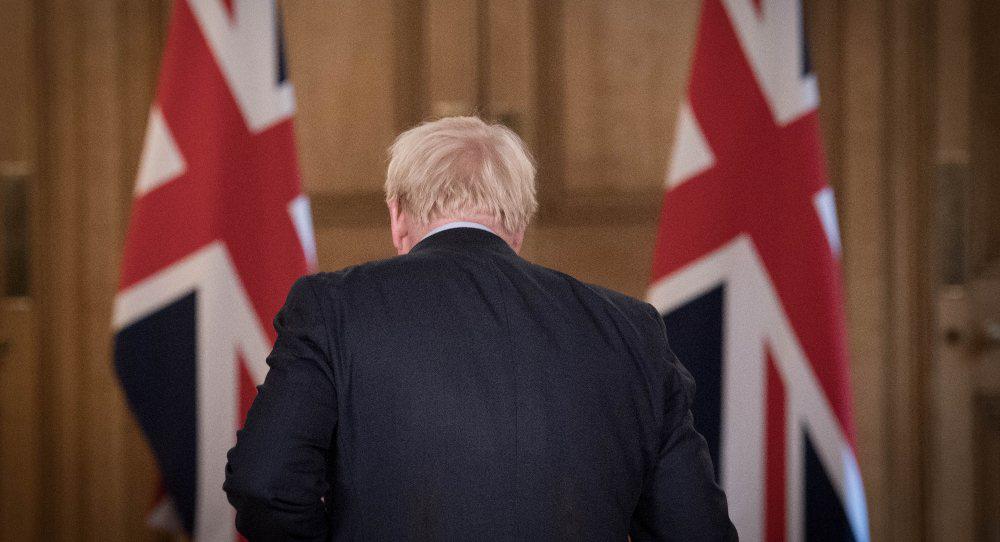
Source: Getty
The rapidly eroding trust between the UK and the EU casts a dark shadow over the future of European foreign policy cooperation. But as the eventful summer of 2020 has shown, that cooperation is much needed.
It is not clear whether the British government is posturing to extract concessions from Brussels on the deal sealing the country’s withdrawal from the EU, or whether it believes it can leave the EU without a deal.
What is clear is that trust between the two sides is rapidly eroding, casting a dark shadow over the future of cooperation between the two sides. That cooperation is in dire need at a time of great international turbulence.
An internal market bill put forward by the British government on September 9, 2020, suggests that 10 Downing Street may not stand by the terms of its withdrawal agreement with the EU, agreed in January, prompting European Commission President Ursula von der Leyen to remind the UK that it is “legally obliged” to respect its international commitments.It was never going to be easy to work with the UK on foreign policy, internal and external security, and defense policy, but the rationale for finding pragmatic solutions to cooperate on a host of foreign and security policy themes has generally been strong—from coordinating international sanctions and dealing with conflicts in Europe’s neighborhood and in Africa to working together on international migration and fighting the climate crisis together. In multilateral institutions, Britain and EU member states continue to stand mostly together and increasingly often alone.
Cooperation among the so-called big three—France, Germany, and the United Kingdom—has continued since Britain’s decision to leave the EU, especially with respect to Iran. Germany and France want to keep Britain roped in, and London does not want to be chained into EU institutional processes. In March 2019, French President Emmanuel Macron also proposed a European Council for Internal Security to keep Britain in Europe’s security framework.
But London’s appetite to work with other Europeans was conspicuously absent during the eventful summer of 2020. One cannot but wonder whether Europe’s response to the situation in Belarus and the poisoning of Alexei Navalny would have been stronger and more impactful with the UK’s weight (and had the United States been visible).
Where Paris and Berlin disagree on tactics and strategies in Libya and in the Greece-Turkey standoff in the Eastern Mediterranean, London could have tipped the balance toward forging a more common European position.
In the Western Balkans, where the UK is still an important presence, British diplomats could have whispered in a few ears across the Atlantic to prevent the emergence of two separate international initiatives dealing with the Serbia-Kosovo question—one by the EU, the other by the United States.
The UK could also have put pressure on the EU for a more forceful response to China’s encroachment on Hong Kong. And on defense, Britain is one of only two countries in Europe—with France—to have credible military capacity.
In general, the EU’s struggle to forge shared positions on foreign policy, from Russia to China, is macroscopically painful.
In the past, the UK was a policy shaper and player in today’s hotspots across the Middle East, the Eastern Mediterranean, and Eastern Europe and vis-à-vis Russia and Turkey. Now, together with the United States, it is conspicuously absent. But decades of British engagement in Europe’s neighborhood cannot be wished away overnight.
Even if the UK’s future direction of travel is toward a so-called Global Britain free of the chains of working with its old partners in the EU, the UK needs friends, allies, and partners to achieve its new goals.
Just by way of example, Britain’s preferences with respect to Russia will benefit from cooperation with both the United States and the EU—on sanctions and intelligence sharing, on fighting money laundering and organized crime, and on countering foreign interference in domestic politics.
The British government has launched a review process of its international engagement with the Integrated Review of foreign policy, defense, security, and international development. As part of this process, and with any debate on working with the EU becoming toxic, Britain will be looking to shed old ties and find new alliances to pursue its Global Britain goals.
But this requires trust and sharing some basic principles. The world, not just the EU and Ireland, is watching while its proposed new bill on the UK’s internal market will “break international law in a very specific and limited way” with respect to the withdrawal agreement’s protocol on Northern Ireland. This move could endanger peace in Northern Ireland, the negotiations with the EU, the holding of the United Kingdom, and likely Britain’s standing in the world.
London is eyeing a trade deal with the United States, but Nancy Pelosi, speaker of the U.S. House of Representatives, was quick to rule out any deal if the Good Friday Agreement is undermined.
On Europe’s part, the Brexit issue needs to be viewed more broadly and in the long term. The EU has demonstrated it is a tough and focused negotiator. It has been remarkably united in defending the Single Market and Ireland’s sovereignty and in undermining repeated attempts by the UK to divide its members.
But the focus of post-Brexit Europe also needs to be on the next friendship—not just the divorce—and beyond who is currently living in 10 Downing Street: UK Prime Minister Boris Johnson.
In an unstable and unruly world, the drive needs to be toward strengthening alliances between those seeking international stability and cooperation rather than competition and rivalry. To do so, the EU needs to be open to loose arrangements with partners and make itself attractive for such alliances.

Director, Carnegie Europe
Rosa Balfour is the director of Carnegie Europe. Her fields of expertise include European politics, institutions, and foreign and security policy.
Recent Work
Rosa Balfour


Rosa Balfour, Stefan Lehne, Elena Ventura
Carnegie does not take institutional positions on public policy issues; the views represented herein are those of the author(s) and do not necessarily reflect the views of Carnegie, its staff, or its trustees.
Following Ursula von der Leyen’s gaffe equating Turkey to Russia and China, relations with Ankara risk deteriorating even further. Without better, more consistent diplomatic messaging, how can the EU pretend to be a geopolitical power?

Sinan Ülgen
Closer EU-UK ties could help address urgent European concerns. But is the EU ready for rapprochement with the United Kingdom?

Rym Momtaz, ed.

Europe has been standing by while its Southern neighborhood is being redrawn by force. To establish a path to peace between Israel and Lebanon, it’s time for Europeans to get involved with hard power.
Rym Momtaz

In Ukraine, Gaza, and Iran, AI warfare has come to dominate, with barely any oversight or accountability. Europe must lead the charge on the responsible use of new military technologies.

Raluca Csernatoni

Montenegro and Albania are frontrunners for EU enlargement in the Western Balkans, but they can’t just sit back and wait. To meet their 2030 accession ambitions, they must make a strong positive case.


Dimitar Bechev, Iliriana Gjoni