

Commentary
Judy Dempsey
{
  "authors": [
    "Judy Dempsey"
  ],
  "type": "commentary",
  "blog": "Strategic Europe",
  "centerAffiliationAll": "",
  "centers": [
    "Carnegie Endowment for International Peace",
    "Carnegie Europe"
  ],
  "collections": [
    "Europe’s Eastern Neighborhood"
  ],
  "englishNewsletterAll": "",
  "nonEnglishNewsletterAll": "",
  "primaryCenter": "Carnegie Europe",
  "programAffiliation": "",
  "programs": [],
  "projects": [],
  "regions": [
    "Russia",
    "Europe",
    "Eastern Europe",
    "Western Europe"
  ],
  "topics": [
    "EU",
    "Migration",
    "Democracy",
    "Political Reform"
  ]
}
Source: Getty
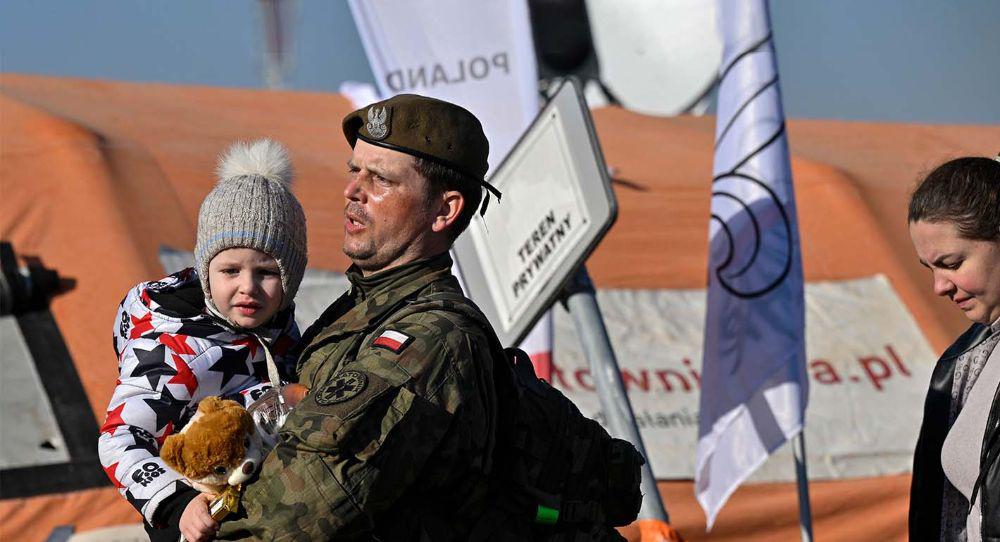
Ukrainians fleeing their homes in cities under Russian bombardment have been met with kindness and solidarity in Poland. To fully restore its image in the EU, Warsaw must show it respects the values Ukraine is fighting for.
They arrive in their thousands. Almost every hour. By train, by bus, by car. On the Polish side of the border with Ukraine, refugees fleeing the Russian bombardments of their cities are welcomed with immense generosity.
Polish civil society has stepped in to quickly fill the gap the governing Law and Justice has been slow to do. Poles of all ages and professions are providing help and safety to the 1.7 million Ukrainians seeking shelter in Poland.
People are sharing their homes, requisitioning buildings, setting up kitchens, arranging schools, language classes, and medical help for the huge number of children and women who are making Poland their new home.
This mass exodus of Ukrainians joins the one million or so of their compatriots who moved to the country over the past several years.
“We are completely overstretched,” said Barbara, who arranged to bring a group of orphans out of Kyiv and settle them near Warsaw. “We need much, much more support from the government. Now,” she told Strategic Europe. Monika, a teacher, said the civil society movements were totally overwhelmed. “We can’t do it by ourselves. We need the authorities to provide the infrastructure.” It is beginning to happen.
The outpouring of Polish support for the Ukrainians is also changing the country’s image. (Just recall how Poland didn’t want to take in any refugees fleeing the war in Syria).
Since 2015, when the conservative Law and Justice (PiS) was elected, the country went from being an important, big, strategic player in the EU to almost a second-class member.
PiS trampled on the judiciary, stripping it of its independence. It claimed—and continues to do so—that reforms were needed to make the courts and judges more efficient. Forget the fact that the Ministry of Justice has a direct say over the appointment and sacking of judges. The profession has become a political instrument of the government, at a high political and financial cost for Poland’s reputation in the EU.
The European Court of Justice (ECJ) ruled recently that the disbursement of Covid-related recovery funds could be made conditional on respect for the rule of law. The European Commission now has to decide if it is going to release €36 billion of these special funds earmarked for Poland.
European Commission President Ursula von der Leyen may prefer to delay implementing that decision given the humanitarian challenge facing Poland and the war in Ukraine. European Parliament members don’t want the two issues to be linked. Clearly, it is in Poland’s interest to have the money. And it is in Poland’s interest to repair the damage it has done to the rule of law and to its own standing inside the EU. The former would be a major step for Warsaw. Its influence in the bloc would jump.
It is an influence much needed.
This is because of Poland’s geostrategic and geographical position in Europe. In 2004, during the Orange Revolution when tens of thousands of Ukrainians took to the streets protesting the outcome of a bitterly contested presidential election, it was the then Polish president Aleksander Kwaśniewski and the EU’s foreign policy chief Javier Solana who tried to mediate to prevent bloodshed.
Also, during those years, Poland—working closely with Sweden—played a major role in shaping the EU’s policy toward its Eastern neighbors. Warsaw’s historical ties with the region, but also its understanding of the complexities of making the transition to democracy, gave Poland the opportunity to put Eastern Europe on Brussels’ radar screen.
Just as important at that time when Poland was governed by centrist Civic Platform was the country's strong support for the establishment of a strong European security and defense policy.
Warsaw recognized at the time that the United States was already making the strategic shift to Asia. Europe had to prepare in case U.S. commitment to NATO and with that its guarantor of Europe’s security wavered.
Donald Trump’s stint as U.S. president, in which he criticised in equal measure NATO and the EU, vindicated those views. But PiS combined its support for Trump with increasing Euroscepticism. That’s changing.
In the context of the war engulfing Ukraine, Poland, a leading NATO member, has become a special hub for transporting military equipment to the Ukrainian armed forces.
This role gives Warsaw an enhanced standing in NATO and the EU since neither organization is in a position to militarily interfere in Ukraine. This Polish role and Russia’s invasion of Ukraine will have repercussions for Europe’s defense capabilities.
During the informal meeting of EU leaders on March 10–11 in Versailles, there was an explicit recognition that Europe had to take its defense seriously. And the bloc could no longer play down the security needs of some of the member states.
The latter is a big change. The tough views of and warnings about Russia by Poland and the Baltic States were often disregarded by some EU member states. No longer.
Poland can now say “We told you so, but you didn’t want to listen to us.” Those defending the rule of law can also say that the principles and values of an independent judiciary that Ukrainians have been fighting for are the very ones that Poland now has to protect.

Nonresident Senior Fellow, Carnegie Europe
Judy Dempsey is a nonresident senior fellow at Carnegie Europe
Recent Work
Judy Dempsey
Judy Dempsey
Carnegie does not take institutional positions on public policy issues; the views represented herein are those of the author(s) and do not necessarily reflect the views of Carnegie, its staff, or its trustees.

Are Germany’s economic, industrial, and political struggles becoming a liability for the EU’s ability to rise to the geopolitical moment?

Rym Momtaz, ed.

European Commission President Ursula von der Leyen is about to give her annual address on the state of the EU. Here’s what she won’t—but should—say.
Rym Momtaz

The aftermath of the Ceuta crisis shows Europe has drawn the wrong lessons. Rather than doubling down on failed migration policies, the EU needs to address the underlying roots of such episodes.

Richard Youngs

An overwhelming victory by a far-right-wing party in a small state in eastern Germany will have major repercussions for Chancellor Friedrich Merz’s coalition.
Judy Dempsey

Canadian Prime Minister Mark Carney has twice inspired praise for standing up to U.S. President Donald Trump: at the 2026 World Economic Forum in Davos and on Canada-U.S. trade negotiations. Is Carney showing a third way better than the EU has in dealing with the Trump administration?
Rym Momtaz, ed.