

Article
Hans-Dieter Lucas, Adam Thomson, Pierre Vimont
{
  "authors": [
    "Pierre Vimont"
  ],
  "type": "commentary",
  "blog": "Strategic Europe",
  "centerAffiliationAll": "",
  "centers": [
    "Carnegie Endowment for International Peace",
    "Carnegie Europe"
  ],
  "collections": [
    "Europe’s Eastern Neighborhood",
    "EU Integration and Enlargement"
  ],
  "englishNewsletterAll": "",
  "nonEnglishNewsletterAll": "",
  "primaryCenter": "Carnegie Europe",
  "programAffiliation": "",
  "programs": [],
  "projects": [],
  "regions": [
    "Europe",
    "Eastern Europe",
    "Western Europe",
    "France",
    "Russia"
  ],
  "topics": [
    "Foreign Policy",
    "Security",
    "Economy",
    "Political Reform",
    "EU",
    "Climate Change"
  ]
}
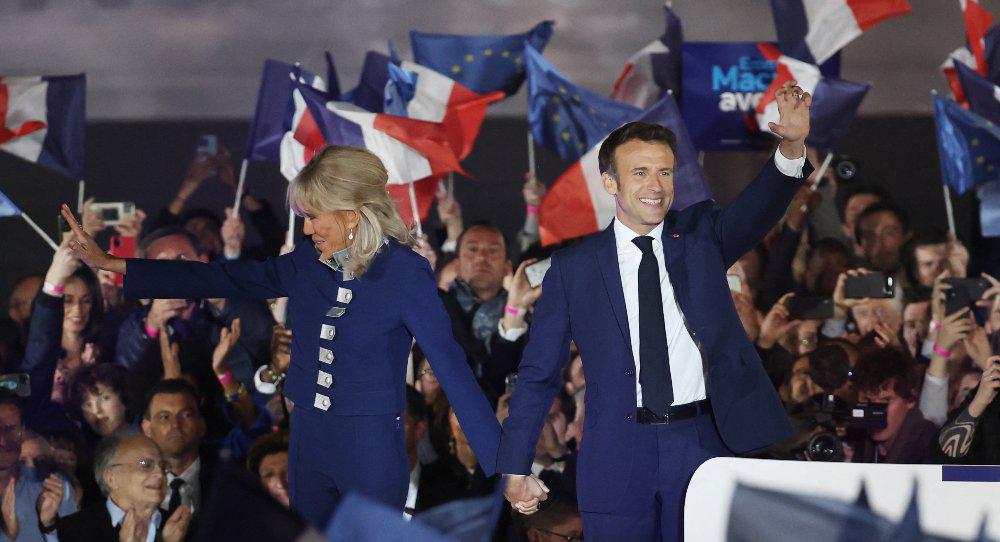
Source: Getty
Geopolitical realities have changed considerably since 2017, when Macron was first elected. In his second term as president, the Russo-Ukrainian war will inform French—and European—thinking.
When Emmanuel Macron was reelected in France with a comfortable majority on Sunday, April 24, there was a sigh of relief in all European capitals. And the road ahead may look wide open for the French president to carry out his well-known ambitions for Europe.
Yet Macron 2.0 will be facing a much more complex political landscape than the one he embraced in 2017, when first elected. The EU and, for that matter, the geopolitical realities of the world surrounding it have gone through a complete transformation. These underlying shifts may well complicate the ambitions of the French president as the challenges ahead, imposed notably by the Russia–Ukraine war, make the French vision of a future EU hard to swallow for many of its European partners.
After his first election five years ago, Macron had swiftly come up with a substantial European agenda embodied in his Sorbonne speech. The Sorbonne roadmap was considered at the time an overloaded working program. But it was nevertheless a harbinger of the many initiatives that shaped, in the following years, Macron’s vision of a European future, starting with his concept of European strategic autonomy.
Today, in the aftermath of his reelection, Emmanuel Macron will be constrained first of all by the need to conclude the work of the French rotating presidency of the Council of the EU, which ends in June. There is still unfinished business to be looked after and eventually transferred in good order to the next—Czech—presidency: the EU’s future relations with its West Balkan neighbors, the draft legislation on digital services, the energy transition plan (Fit for 55), and the outcome of the somewhat overstated Conference on the Future of Europe.
On top of these time-consuming files, the management of the ongoing crisis resulting from Russia’s invasion in Ukraine will require special attention, as the unity of purpose and speed of action demonstrated by the European nations in the first months of the conflict are starting to crack at the seams, notably on the issue of energy sanctions against Russia.
Ukraine is indeed the name of the game for Macron’s future initiatives. By its sudden outbreak, sheer violence, and overwhelming implications, the Russia–Ukraine conflict is dramatically transforming European thinking and way of action. And it is doing so in several ways.
First, the EU’s security policy for now—and as long as the war in Ukraine drags on—is largely hooked to NATO’s ongoing thinking, be it on its new Strategic Concept or its future forward defense posture. Because of its limited financial resources and military capabilities, the EU will be no match to NATO’s collective defense. The implementation of the recently adopted EU Strategic Compass could well bear the consequences of that dire reality.
Second, always a divisive issue amid member states, the enlargement challenge is brutally rekindled by Ukrainian prompt candidacy. The political and moral pressure to give way to Ukrainian President Volodymyr Zelensky’s call opens a debate inside the EU that has long stirred divisions. This debate will also determine the fate of the Eastern Partnership policy and future EU relations with Russia once the present conflict is over.
Additionally, the prospect of new memberships will reopen old wounds about the need for a more flexible EU governance with ideas around a two- or three-tier Europe or possible core groups of like-minded members.
Third, the current plans for the energy transition will also be impacted by the ongoing efforts of Europe to wean itself off Russian oil and gas. Several member states’ plans to swiftly move to non-fossil energy may need to be revised with a more realistic timeline in the absence of Russian gas as a transitional solution.
Finally, the ongoing adaptation of supply chains in many European industrial sectors in the aftermath of the COVID-19 pandemic—in addition to the economic fallout created by the Russia sanctions—is triggering a renewed discussion on the need for more financial flexibility and solidarity amid EU partners. This is definitely an old division line that could relaunch embarrassing controversies between Berlin and Paris.
Faced with these internal and external challenges, the French president will need to define his own vision of Europe’s future. He may want to take time to sharpen his ideas and gather some allies among EU leaders. Yet with the traditional conviction that France must retain a position of balance between the world’s global powers and that Europe should be on the same line, the quest for a genuine European sovereignty will remain at the heart of Emmanuel Macron’s endeavors. He will be confronting a more than ever resistant group of European nations that are concerned by the Russian threat at their immediate borders and their own belief that the future of EU security—not to mention continental stability—rests with a close transatlantic partnership.
President Macron’s new term of office is about to put him at the center of a much-needed discussion with his European partners. But it is a conversation where he will need forceful allies, starting with the new coalition in Berlin, and where the present Russian aggression against Ukraine is quickly transforming the traditional terms of the European debate.

Senior Fellow, Carnegie Europe
Pierre Vimont is a senior fellow at Carnegie Europe. His research focuses on the European Neighborhood Policy, transatlantic relations, and French foreign policy.
Recent Work


Hans-Dieter Lucas, Adam Thomson, Pierre Vimont
Pierre Vimont
Carnegie does not take institutional positions on public policy issues; the views represented herein are those of the author(s) and do not necessarily reflect the views of Carnegie, its staff, or its trustees.

While the EU and European governments are embracing the much-lauded middle-power moment, this entails three difficult conundrums.

Richard Youngs

Much has been said of the changes Brussels is trying to make to the EU enlargement process. Here’s why gradual integration might—or might not—be the answer.

Dimitar Bechev

The European Commissioner for Trade is headed to China. But after President Xi’s bridge-building visit to Washington, can a more isolated EU overcome Beijing’s stranglehold on critical raw materials? Who will blink first?

Rym Momtaz, ed.

The domestic impacts of how long it is taking to end the war in Ukraine have pushed the French electorate to the political extremes and compromised the country’s diplomatic capacity.
Rym Momtaz

Before the next wave of EU enlargement takes place, the union needs to grapple with thorny questions of how power is distributed among its members.


Emil Sondaj Hansen, Ditte Brasso Sørensen