

Commentary
Stefan Lehne
{
  "authors": [
    "Stefan Lehne"
  ],
  "type": "commentary",
  "blog": "Strategic Europe",
  "centerAffiliationAll": "",
  "centers": [
    "Carnegie Endowment for International Peace",
    "Carnegie Europe"
  ],
  "collections": [],
  "englishNewsletterAll": "",
  "nonEnglishNewsletterAll": "",
  "primaryCenter": "Carnegie Europe",
  "programAffiliation": "",
  "programs": [],
  "projects": [],
  "regions": [
    "Middle East",
    "Europe",
    "North America",
    "Eastern Europe",
    "Western Europe"
  ],
  "topics": [
    "Foreign Policy",
    "Security",
    "Democracy",
    "EU"
  ]
}
Source: Getty
The turmoil spreading across the globe makes it difficult to meaningfully respond to individual crises. The resulting expectation of impunity is emboldening aggressors.
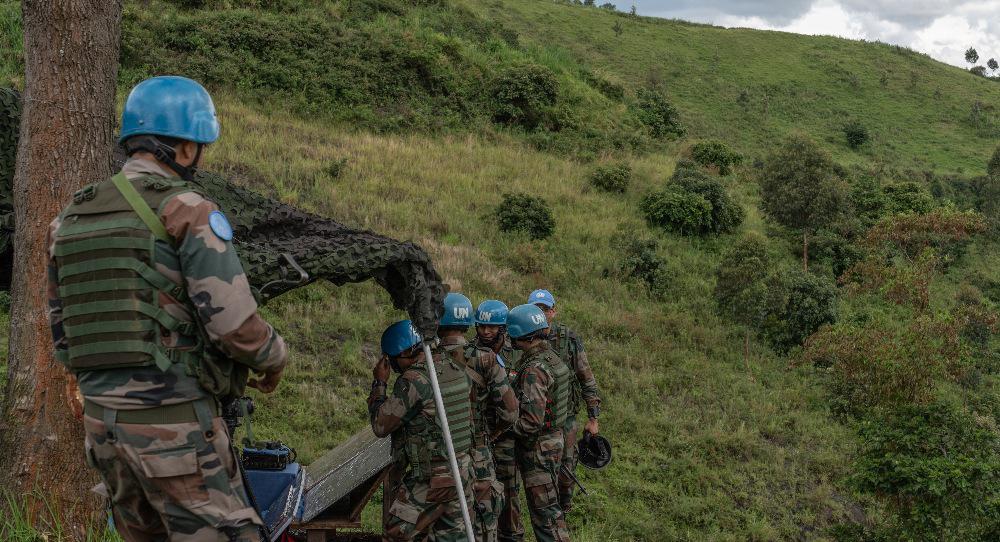
In the last months alone, a bloody civil war has broken out in Sudan; Azerbaijan has conquered the Armenian-populated Nagorno-Karabakh; a Serbian militia has tried to destabilize the north of Kosovo; military coups have proliferated in Africa; the Sahel zone is increasingly turning to anarchy; and Russia’s war of aggression against Ukraine continues unabated. The latest outbreak of violence, Hamas’s terrorist attack on southern Israel followed by Israeli retaliation on the Gaza strip, could still escalate into a devastating conflagration across the Middle East.
Until recently, the twenty-first century had been hailed as one of the most peaceful periods of human history. Why are we now witnessing such a cascade of violence? What has gone wrong?
One of the most important factors driving the decline of security is the ramping up of geopolitics across the globe. The hope for a world order based on democracy and rule of law, still alive at the beginning of the century, has now largely vanished. Divided internally and overextended externally, the United States has scaled back its leadership, though it is now belatedly attempting to make a comeback. Russia has embarked on a course aimed at rebuilding its empire. In China, the economic rise did not result in ideological convergence with the West but rather in the ambition to challenge the West’s supremacy and become the dominant power in the Indo-Pacific. And the highly contagious virus of power politics also infected medium-sized powers such as Turkey, Iran, Saudi Arabia, and Ethiopia leading to a series of regional hegemonic struggles.
At the same time, the antidotes to the use of violence developed by the international community over past decades became less effective. As their international backing has become patchy and weak, the United Nations, the International Criminal Court, and other global and regional arrangements for the peaceful resolution of disputes cannot counteract the inexorable dynamics of geopolitics.
Add to this the relative decline of the West. The G7—its main coordination platform—represented around 70 percent of the world’s GDP in 1989 but only 40 percent in 2023. Western countries’ diplomatic clout declined along with their economic weight. Economic sanctions—long the West’s favorite instrument—lose their effectiveness when many countries make good money by circumventing them. As the dominance of Europe and the United States faded away, massive resentment in the Global South toward the former hegemons came to the fore. The refusal of most developing countries to join the West in sanctioning Russia clearly reflects this. Today’s conflict in the Middle East will further deepen this divide, as Western solidarity with Israel contrasts starkly with widespread support for Palestinians in the Global South.
Fifteen years of democratic decline also weakened international security. According to Freedom House, about 38 percent of the global population currently live in countries that are “not free” compared to only 20 percent that live in “free” countries. Many studies have shown that authoritarian regimes are more prone to resorting to violence than democracies and recent experience bears this out.
Finally, more than ever before, violence is feeding upon itself. Social media, filled to the brim with hatred and disinformation compounds widespread tensions. However, paradoxically, the proliferation of crises also has a numbing effect. Our ability to process multiple parallel challenges is limited. New conflicts tend to push existing ones out of our collective consciousness. Who is still thinking about the horrors of civil war in Sudan or of the suffering of Armenians who lost their homes? With turmoil spreading across the globe, the capacity for meaningful responses to individual crises is limited. The resulting expectation of impunity is encouraging potential aggressors.
Does the current spiral of violence represent only a temporary setback or is the world sliding back into the ancient logic of aggression and conquest that we believed was behind us? Modern economies need a stable framework facilitating high levels of international cooperation. Most governments therefore still support an international system in which conflicts of interest are resolved through peaceful means. But many of these governments remain far too passive in the face of mounting security challenges.
Stakeholders of global stability need to constrain present and future aggressors more effectively. Proving that the use of force does not pay is by far the best way to reduce the risk of new violence. Nothing is therefore more urgent than preventing the conflict in the Middle East from spreading and strengthening support for Ukraine.
Governments also need to recommit to the instruments of international crisis management and sharpen them in order to respond better to future crises. U.S. President Joe Biden is right: “We are at an inflection point in history.” Are we relapsing into a world where power politics dominates and “might is right,” or can we secure a cooperative international system, where basic rules are respected—one which is capable of tackling the major transnational challenges of today.
The stakes couldn’t be higher.

Senior Fellow, Carnegie Europe
Stefan Lehne is a senior fellow at Carnegie Europe in Brussels, where his research focuses on the post–Lisbon Treaty development of the European Union’s foreign policy, with a specific focus on relations between the EU and member states.
Recent Work
Stefan Lehne
Stefan Lehne
Carnegie does not take institutional positions on public policy issues; the views represented herein are those of the author(s) and do not necessarily reflect the views of Carnegie, its staff, or its trustees.
Europe has an interest in supporting Armenian leader Nikol Pashinyan as he tries to make peace with neighbors and loosen ties with Russia. But it is depersonalized support in the long term, not quickfire flash, that will win the day.

Thomas de Waal
Following Ursula von der Leyen’s gaffe equating Turkey to Russia and China, relations with Ankara risk deteriorating even further. Without better, more consistent diplomatic messaging, how can the EU pretend to be a geopolitical power?

Sinan Ülgen
Closer EU-UK ties could help address urgent European concerns. But is the EU ready for rapprochement with the United Kingdom?

Rym Momtaz, ed.
Europe has been standing by while its Southern neighborhood is being redrawn by force. To establish a path to peace between Israel and Lebanon, it’s time for Europeans to get involved with hard power.
Rym Momtaz
In Ukraine, Gaza, and Iran, AI warfare has come to dominate, with barely any oversight or accountability. Europe must lead the charge on the responsible use of new military technologies.

Raluca Csernatoni