

Report
- +9
Richard Youngs, Erik Jones, Dan Baer, …
{
  "authors": [
    "Rosa Balfour"
  ],
  "type": "commentary",
  "blog": "Strategic Europe",
  "centerAffiliationAll": "",
  "centers": [
    "Carnegie Endowment for International Peace",
    "Carnegie Europe"
  ],
  "collections": [],
  "englishNewsletterAll": "",
  "nonEnglishNewsletterAll": "",
  "primaryCenter": "Carnegie Europe",
  "programAffiliation": "",
  "programs": [],
  "projects": [],
  "regions": [
    "Middle East",
    "Europe",
    "North America",
    "Western Europe"
  ],
  "topics": [
    "Foreign Policy",
    "Security",
    "Technology",
    "Democracy",
    "Climate Change",
    "EU",
    "Global Governance"
  ]
}
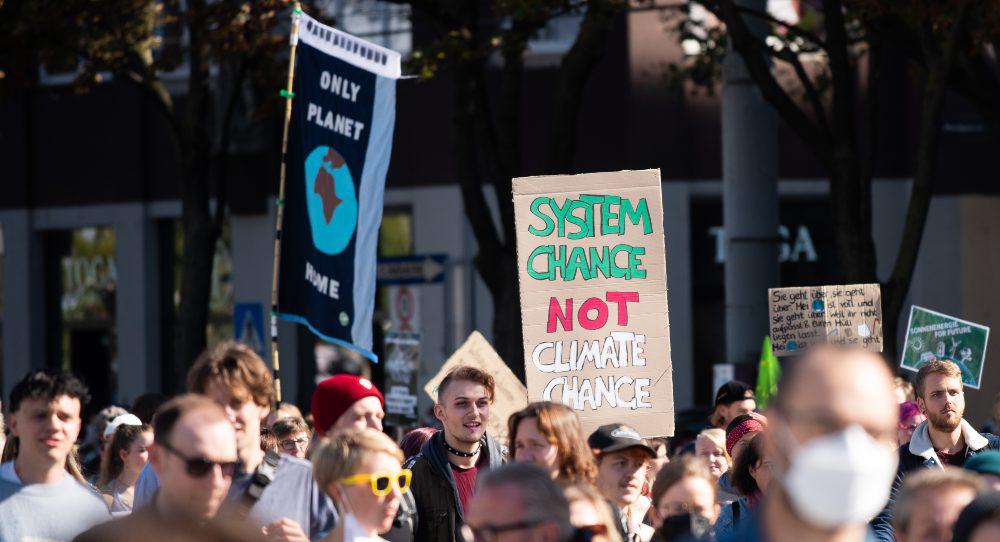
Source: Getty
Pundits and analysts are increasingly turning to a popularized version of realism to interpret the world. Yet this framing has serious shortcomings that obscure lucid analysis.
Every era has its narratives. With war, the dangers of global instability, and the hubristic contestation of the West’s hegemony, the contemporary language on the lips of international relations observers is all about the return of history and geopolitics. In Europe, the “geopolitical awakening” has prompted promises to make the European Commission “geopolitical,” to learn to speak the “language of power,” and to become less Kantian and more Hobbesbian.
Articles, commentaries, posts on social media are littered with references to geopolitics, Realpolitik, and power politics—interchangeably used—and often chastise the naivete of liberals who did not understand how the world works. Semantic confusion aside—geopolitics is not Realpolitik—and a somewhat caricatured description of the “liberal” 1990s, the wake-up call is certainly needed.
It is beyond doubt that any assumption that the world could be molded into what worked for seventy years in the West has shown its limits. An end to seeing the world “as we wish it to be” is of course imperative.
Between the two world wars, E.H. Carr’s The Twenty Years’ Crisis became the foundational book for the discipline of international relations and the realist school. Rooted in a profound dislike of the liberalism of former U.S. president Woodrow Wilson, Carr’s analysis identified several features of international crisis which are eerily prescient today: the end of the hegemony of one state, the rise of powerful and hubristic states outside the international order, and global economic turmoil.
The end of hegemony, the rise of multipolarity, and how it empowers actors motivated by nationally determined interests that may not take into account the global order as it was, is what realism can help explain—and the sophistication and matter-of-factness in the work of Carr and other classical realists would provide an essential methodology.
But as much as liberal hopes were blindsided by wishful thinking, realism too has its blind spots—and the popularized versions that interchangeably use the terms “geopolitics,” “power politics,” and “Realpolitik”—all in vogue today—obscure lucid analysis.
The general assumption is that by exploiting geopolitical opportunities, states, driven by power politics, are pursuing rationally defined interests rather than searching for some idealized, wishy-washy liberal goals. These actors usually are highly centralized states, which is why this framing is well-suited for understanding the foreign policy of authoritarian regimes.
Yet it leaves out any interpretation of systemic change, such as climate change and the technological revolution. Power politics might capture how actors may want to exploit or even weaponize the impacts of climate and technology, but it does not provide a path to understanding the nature of systemic change and its consequences. Geopolitics, which ultimately is quite a simple theory of international relations, is not apt for explaining systemic or structural change.
Hidden in the ideas of interest, rationality, and the centrality of states as the main actors on the international chessboard are further analytical weaknesses. States are not the only actors relevant to international relations: non-state actors, from terrorist groups to multinational corporations, from transnational civic activists to flows of capital are all increasingly shaping power alongside the endurance of the traditional state. Recognizing the role of non-state actors also requires a conceptualization of power that is not limited to that of states, but can be more diffuse, such as soft power or people power.
The focus on power politics does not provide frameworks for understanding the role of immaterial factors or political protest. The EU might have been naive in believing, back in 2013–14, that its policies toward Ukraine were not geopolitical (in the original meaning of the term, not the popularized versions common today). But that seems far less of a strategic miscalculation than Russian President Vladimir Putin’s denial of any agency to the Ukrainian revolutionaries, a belief which, in 2022, led him to think that Ukraine would capitulate after a few days of the military invasion.
Realism’s emphasis on power and rationality overlooks the role of ideas, worldviews, and beliefs. Even the motivations of actors well versed in power politics are shaped by their beliefs and ideas. Ideas are not just the window dressing of ideology but things people believe in and that drive action. Contrasting the world “as we wished it to be” with the world “as it is” is misleading because the world is also what we make of it. The popular responses to the war between Israel and Hamas are revealing the mobilizing power of ideas such as justice, the virulent strength of enduring Islamophobia and anti-Semitism, and the indignation against what is seen as hypocrisy. These responses may condition the foreign policy calculus of some governments.
What is being called a “global culture war” does not do justice to the multiple identities that shape the feelings of those affected by this war. Reducing them to binary polarization means misreading complexity.
Finally, Realpolitik has little to offer prescriptively. It reflects an adjustment to the worldview of authoritarian power and might, encouraging binary thinking and polarization through which it is hard to find policy prescriptions. While analysis needs to be rooted in empirically evidenced and rationally based research, politics is also the art of the possible.

Director, Carnegie Europe
Rosa Balfour is the director of Carnegie Europe. Her fields of expertise include European politics, institutions, and foreign and security policy.
Recent Work


Richard Youngs, Erik Jones, Dan Baer, …
Rosa Balfour
Carnegie does not take institutional positions on public policy issues; the views represented herein are those of the author(s) and do not necessarily reflect the views of Carnegie, its staff, or its trustees.

The EU can impose sanctions but struggles to enforce them without the United States. With Washington increasingly disinterested in backing European interests, the bloc must now fend for itself.


Nicu Popescu, Tiago Antunes

Russia is testing the waters of NATO’s mutual defense clause. What do strikes in Romanian territorial waters mean for the alliance’s posture toward Moscow?

Dimitar Bechev

With its public finances in shambles, the far right polling at 35 percent ahead of the 2027 presidential election, and a growing protest movement, is France’s crisis a threat to the EU’s geopolitical awakening?

Rym Momtaz, ed.

Ahead of a tough winter for Ukraine, Donald Trump’s swing back toward Russia bodes ill. But instead of panicking, Kyiv’s European allies are focusing on action.
Rym Momtaz

While the EU and European governments are embracing the much-lauded middle-power moment, this entails three difficult conundrums.
Richard Youngs