

{
  "authors": [
    "Djoomart Otorbaev",
    "Evan A. Feigenbaum",
    "Aida Aidarkulova",
    "Asel Doolotkeldieva",
    "Berikbol Dukeyev",
    "Mohammed Alsudairi",
    "Temur Umarov"
  ],
  "type": "event",
  "centerAffiliationAll": "dc",
  "centers": [
    "Carnegie Endowment for International Peace"
  ],
  "englishNewsletterAll": "asia",
  "nonEnglishNewsletterAll": "",
  "programAffiliation": "AP",
  "programs": [
    "Asia"
  ],
  "projects": [
    "China Local/Global"
  ],
  "regions": [
    "Central Asia",
    "Kazakhstan",
    "Kyrgyz Republic",
    "Uzbekistan",
    "Turkmenistan",
    "Tajikistan",
    "China"
  ],
  "topics": [
    "Trade",
    "Economy",
    "Technology"
  ]
}
How Local Agency Reshapes China’s Influence in Central Asia and Beyond
Tue, October 20th, 2026
12:30 AM - 3:00 AM (EDT)
Almaty, Kazakhstan and Online
As the birthplace of the Belt and Road Initiative, Central Asia has long been viewed as a testing ground for China’s overseas ambitions. A conventional narrative often portrays the region as a passive object of Beijing’s economic and political gravity. But what is happening on the ground in Kazakhstan, Kyrgyzstan, Tajikistan, Turkmenistan, and Uzbekistan reveals a more dynamic interaction, where local regulations, public sentiment, and state bargaining power can and do compel Chinese state-owned enterprises, private investors, and diplomats to adapt.
How unique is Central Asia’s experience with localization and Chinese adaptation, and what can the region learn from China’s local adaptation strategies elsewhere?
As a part of Carnegie’s China Local/Global initiative, join the Carnegie Endowment for International Peace and CAPS Unlock in Almaty, Kazakhstan for an event examining how local realities shape China’s overseas footprint. Placing Central Asia in direct conversation with Latin America, Southeast Asia, and the Middle East, this discussion will explore how Chinese strategies and Beijing’s toolkit is evolving across different geographies.
Carnegie does not take institutional positions on public policy issues; the views represented herein are those of the author(s) and do not necessarily reflect the views of Carnegie, its staff, or its trustees.
Event Speakers
Djoomart Otorbaev
Former Prime Minister, Kyrgyz Republic
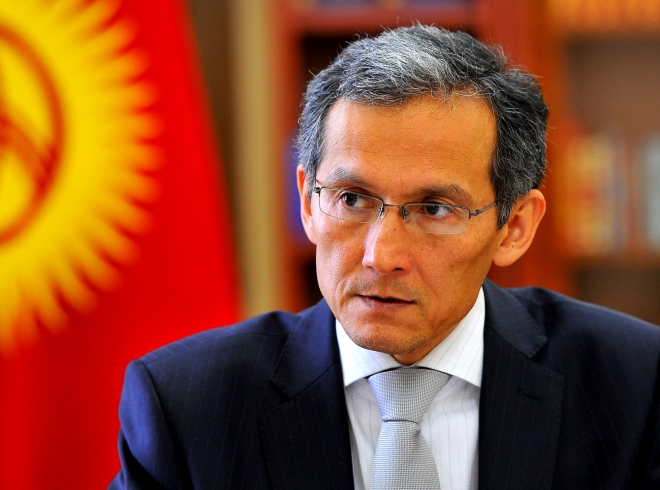
Djoomart Otorbaev served as prime minister of the Kyrgyz Republic (2014-2015). He currently serves as an inaugural member of the International Advisory Board of the Caixin Global Forum. He is the author of Central Asia’s Economic Rebirth in the Shadow of a New Great Game (2023, Routledge), which has been translated into Chinese - 新大博弈"背背下下中亚经济复兴 (October 2026, Beijing).
Vice President for Studies

Evan A. Feigenbaum is vice president for studies at the Carnegie Endowment for International Peace, where he oversees work at its offices in Washington, New Delhi, and Singapore on a dynamic region encompassing both East Asia and South Asia. He served twice as Deputy Assistant Secretary of State and advised two Secretaries of State and a former Treasury Secretary on Asia.
Aida Aidarkulova
Executive Director, CAPS Unlock

Aida Aidarkulova is the executive director of CAPS Unlock.
Asel Doolotkeldieva
Postdoctoral Fellow, University of Potsdam

Asel Doolotkeldieva is a postdoctoral fellow at the University of Potsdam and holds a PhD in Politics from the University of Exeter.
Berikbol Dukeyev
Postdoctoral Scholar, Nazarbayev University

Berikbol Dukeyev is a postdoctoral scholar at Nazarbayev University specializing in Central Asia. He holds a PhD from the Australian National University.
Mohammed Alsudairi
Lecturer, Australian National University

Mohammed Alsudairi is a Lecturer at the Centre for Arab and Islamic Studies, Australian National University.
Fellow, Carnegie Russia Eurasia Center
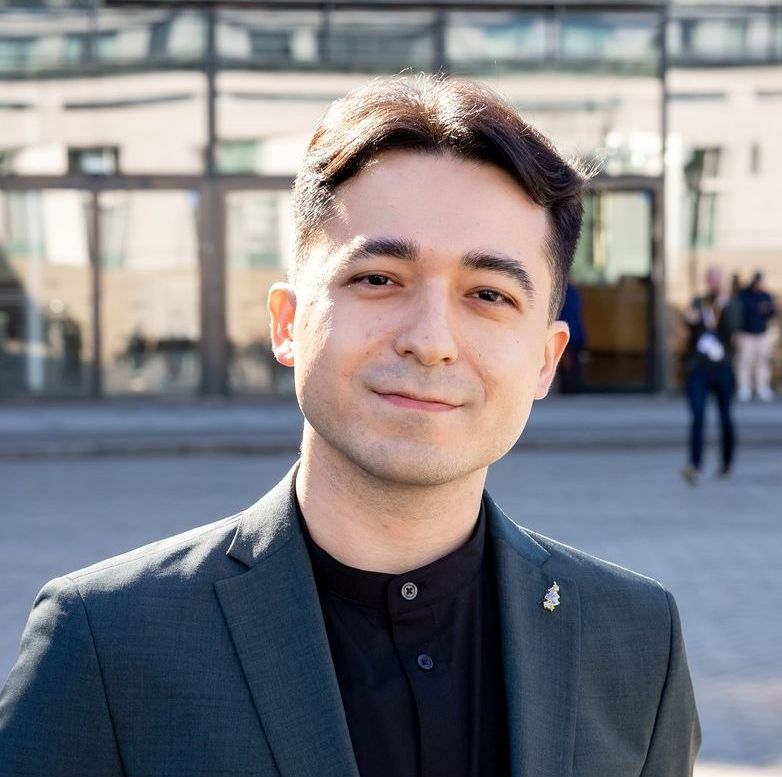
Temur Umarov is an expert on China and Central Asia, and a fellow at the Carnegie Russia Eurasia Center.