Over the summer, thousands of young Indians took to the streets to demand sweeping reforms of the higher education sector. This unexpected wave of Gen Z mobilization was catalyzed by the emergence of the Cockroach Janata Party, a satirical meme that blossomed into a national movement. Protests that began over the state of higher education soon tapped into something much larger: growing frustration among young Indians over jobs, economic opportunity, and their prospects for the future.
India’s jobs debate is often framed around a familiar set of concerns: too many people working in agriculture, too few manufacturing jobs, an economy that is too-services oriented, and stubbornly high unemployment among the young. Our guest on the show this week has views on these subjects that often cut against the conventional wisdom.
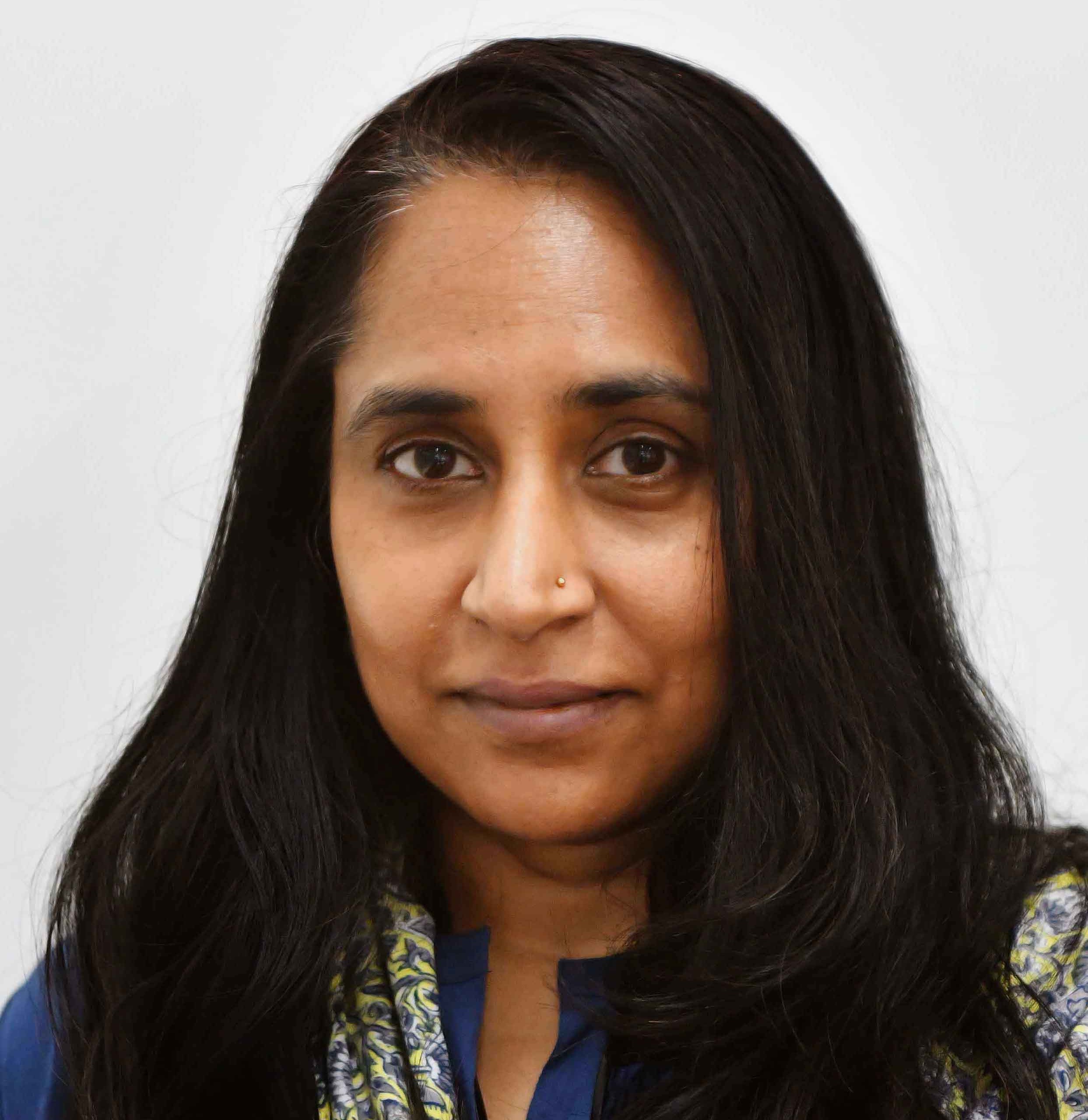
Vidya Mahambare is the Union Bank Chair Professor of Economics and Director at the Great Lakes Institute of Management in Chennai. She studies central banking and monetary policy, structural transformation, labor market dynamics and gender economics. She is also a prolific commentator and writes regularly for outlets like Mint, Business Standard, and The Print.
She joins Milan on the Season 16 premiere of Grand Tamasha to discuss the economic drivers of the Gen Z protests, the link between unemployment and education, and the futility of the manufacturing versus services debate. Plus, the two discuss the exodus of young people from the agricultural sector, the misleading headlines on female labor force participation, and India’s acute urban housing shortage.
Episode notes:
- Vidya Mahambare and Vivek Yadav, “Indian farms have been losing their workers—at a time they need the youth to improve farming,” Mint, July 20, 2026.
- Vidya Mahambare and Vivek Yadav, “Employed women in Uttar Pradesh—what explains such a large increase within a decade?” Mint, July 1, 2026.
- Vidya Mahambare and Asrar Alam, “Elusive jobs: how AI will demand even greater patience of India’s unemployed youth,” Mint May 11, 2026.
- Vidya Mahambare and Poonam Munjal, “Are young Indians under or overworked? Both are true but AI may change work hours as we go along,” Mint, April 14, 2026.
- Vidya Mahambare, “Urbanization pressure: India’s housing policy needs a rethink,” Mint, April 22, 2024.
- Vidya Mahambare et al., “The employment profile of India’s young adults,” Hindu Business Line, May 5, 2026.
- At 11:29 in the recording, the guest misspoke when she said: “By 2025, we want to have a 50% of higher education rate in India." She later clarified that she meant to say 2035, not 2025.
Transcript
Note: this is an AI-generated transcript and may contain errors
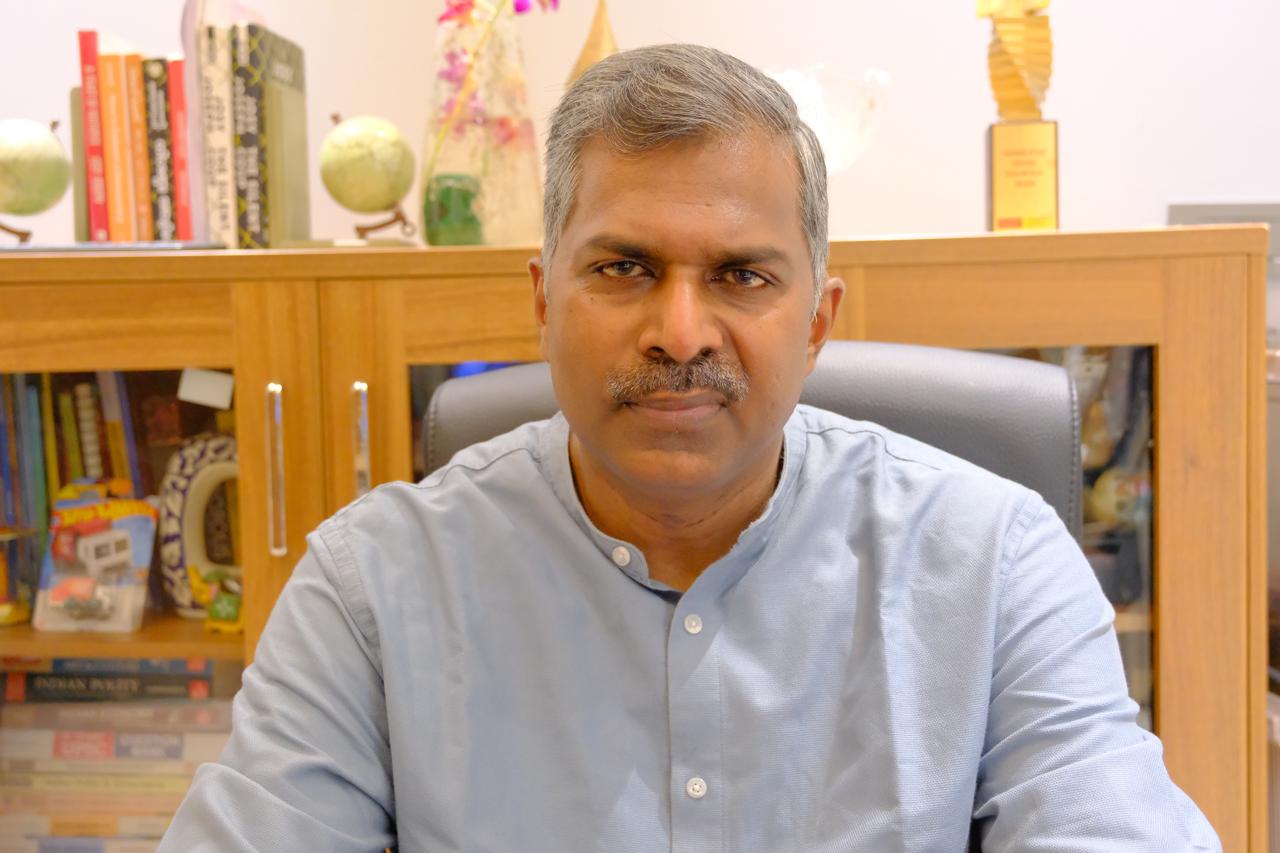
Milan Vaishnav Welcome to Grand Tamasha, a co-production of the Carnegie Endowment for International Peace and the Hindustan Times. I'm your host, Milan Vaishnav. Over the summer, thousands of young Indians took to the streets to demand sweeping reforms of the higher education sector. This unexpected wave of Gen Z mobilization was catalyzed by the emergence of the Cockroach Janta Party, a satirical meme that blossomed into a national movement. Protests that began over the state of higher education soon tapped into something much larger: growing frustration among young Indians over jobs, economic opportunity, and their prospects for the future. India's jobs debate is often framed around a familiar set of concerns: too many people working in agriculture, too few manufacturing jobs, an economy that is too services-oriented, and stubbornly high unemployment, especially among the young. My guest on the show this week has views on these subjects that often cut against the conventional wisdom. Vidya Mahambare is the Union Bank Chair, Professor of Economics and Director at the Great Lakes Institute of Management in Chennai. She studies central banking and monetary policy, structural transformation, labor markets and gender economics. She's a prolific commentator and writes regularly for outlets like Mint, Business Standard and The Print. To discuss India's jobs dilemma and many other subjects, I am pleased to welcome Vidya to the podcast for the very first time. Vidya, thank you so much for coming on and for making the time.
Vidya Mahambare Thank you so much, Milan, for having me. Pleased to be here.
Milan Vaishnav So, I think I want to start with the kind of issue or the event that I think is on everybody's mind, which is the recent protests, you know, concentrated in Delhi, but which spread elsewhere of the Cockroach Janta Party. These protests sort of tapped into an anxiety that I think we're seeing amongst many young Indians. You know, as an economist, somebody who has looked closely at the labor market, somebody who writes about structural transformation, as well as demographics, you know, what do you think or how would you summarize what these protests were really all about?
Vidya Mahambare Ok Milan, so the trigger may be, you know…whatever may be the trigger, but the protests are really about a problem which is now boiling over. It is an old problem. We have a large population, what we call young adults, in the age group of 20 to 29. So that is around 200 million young Indians. And just to put in perspective, that will be a combined population of say, you know, France, Germany, Italy put together. And they are increasingly educated and they either do not get the jobs that they desire for, or they get it too late, or get it at the wages lower than what they had hoped for. So, the combination of these factors imply that, and this is not new. So, when I started writing for Mint maybe way back, this is in 2010, I had written a piece which is called, “Getting the best out of our workers.” Even at that time the situation was same, the employment rate. So now if we coming to out of 200 million, how many of them actually have jobs or how are employed? Because this is the most productive you know you should have completed your education or about to complete the education and you will contribute now to the economy and to yourself and family. Only 47% of young Indians are employed and this is based on our work on the Time Use Survey 2024. I have worked with several co-authors of course over the years. So, only 47% are employed. Only there are about 8 states where more than half of young adults are in employment, and these are our usual suspects. So, these will be Tamil Nadu, Gujarat, Maharashtra, Karnataka. If you see large population, the large part of India's demographic dividend is and that is in north of India. So, if you take UP, if you think Bihar, then if you do Uttarakhand, in all these states less than 40% of people in the age group of 20 to 29 are employed. And this has happened now for several years. To add to that, first employment is less and only about 1 in 10 young adults are in formal enterprises. Now formal enterprises means either in the corporate sector or in the public sector. If we see rural India, vast majority, something like 85% still work. This is we are talking only about young people, you know 20s, 85% are still working in household enterprises, right. And as you know, over the years, employment is less, lot of people are waiting for jobs. Unemployment rate in this age group is over 20% in India. Among, if you see engineers, which are highly educated, that is even higher than that. So, that means we have pushed education and we can discuss about the quality of that education later on. But the fact is that once we give them degrees, anyone would want for a better job. You know, anyone wants to move from say factory floor to a people, services-oriented office kind of a work. That hasn't happened. Third, and women employment as we know in India is less. So, in this age group, we are talking only about young people, only about 20% of women are employed. Now, we won't go right now into the reasons for that, and they are very well documented many of those reasons. But what I want to say here is that in a family, if only one person is employed, that person needs to earn decent wage to support the family, right? So, if it is going to be young man, the young man requires good wages and good salary to be able to support. So, if that is not happening, then the frustration simply really builds up. So, these are the various things which have come together and now there'll be impact of AIs going forward, not of course all negative, absolutely not, but maybe initially it will be felt for the younger generation, some jobs will get replaced. And so, these are things which have come together for several years now, and then that frustration boils over, especially among increasingly educated youth who's not able to get the corresponding jobs.
Milan Vaishnav I mean, that's a beautiful explanation, I think, of multiple, the confluence of multiple things which are coming together. Let me ask you about one thing which you briefly mentioned and you recently unpacked in an opinion piece which we'll link to. You have said that, you know, when you look at the standard conventional unemployment rate in India, it misses something very important, which is the element of time. And I just want to quote from your piece where you said, “In 2025, about 11.6 million Indians in their 20s were unemployed, but 6.8 million,” so almost 7 million, “had been looking for work for more than one year. Another 78 million were not looking for a job at all.” I want to ask you, what does the duration of unemployment tell us that the headline numbers don't capture?
Vidya Mahambare In the headline number, whether someone is on the day when the survey is done, when someone is unemployed for one day, one week, one month, one year, two years, everyone is treated as same in that headline number. But the time cost of waiting has multiple dimensions. So first, we can clearly distinguish between whether it is a frictional unemployment or it is really a structural unemployment. They're a large proportion of youth whose waiting for more than a year, more than two years, clearly points toward more structural issues. Then you have financial cost. So, if these young people are unemployed, someone needs to support them. And often it is the family who is supporting them. Of course, in some states there are some transfers that happen, income transfers that happen. But mainly they happen for women in the households. But young men essentially have to be supported. And that means they also have psychological cost which comes with it. It's not easy because society is also judging you that so and so person only became an engineer, but he's still unemployed, right? So that was, now these things cannot be documented, and these things are never asked, but there is a huge psychological factor to it. And what do we mean by wait, you know, perhaps India is the only country where you have 20% plus youth unemployment, which magically disappears by the time they become late 20s. I would struggle to think any country where that would happen. Like if you see Indian data, there is almost no unemployment at all between any kind of like any men, educated, uneducated, men or women once they come to 30s. What happens? You wait, you wait, you wait and marriage still continues to be universal in India largely universal in India and there is again a very strong male breadwinner norm right, so a man has to have a job before the he can get married. And that means you wait for a good job but eventually you know you have to take up something. So, between young men then the unemployment is settled. So, you have settled for something and take up. Young women also, educated young women also unemployment rate is very similar to young men, but when they get married, essentially, they stop looking for work. So, man takes up whatever he can and woman just drops out. So, that is how you know unemployment goes to you know zero. Not zero, but like quite close to—very, very, low. So, this is the transition that happens with the time, but the associated cost, you know, trade-offs that are involved for the family and young people do not really get discussed about that much.
Milan Vaishnav You know, I think one of the things that complicates this conversation, or I mean really any conversation about India, is that it is a union of states, it is a federal country, and so, you know, you can look at a top line number, but then you constantly have to ask yourself, okay, what is the heterogeneity, what does the variation look like? And you know in your work, there is a very interesting state level puzzle, which I just want to draw you out on a little bit, which is that some of the highest unemployment rates, again amongst young adults, are in some of India’s most economically dynamic states right, so we’re talking about Tamil Nadu, Telangana, Andhra Pradesh and so on, not so much in poor states like UP and Bihar. How do we understand that? Why is it in some other states which have the fastest GDP growth that we've seen in recent decades that they also have the highest unemployment rates?
Vidya Mahambare So perhaps there is only one exception among the prosperous states, which is Gujarat. So Gujarats does have a very low unemployment rate among young adults, but possibly because Gujarat also has a, you know, to a large extent, household enterprises, right. So that perhaps is the reason why in Gujarat it is low, but in other prosperous states, so maybe if you think about Tamil Nadu, Kerala, Telangana, all southern states, as you said unemployment rate amongst young people is high. But, you know, that seems counterintuitive and why it should happen. But there are two, three reasons. One in prosperous states, education levels are higher and more people want to participate in the economy. So, more men, more women, are looking for jobs. So simply the labor force is larger. Second, these people want specific kind of job because they are educated. So, for example, in Tamil Nadu, national education policy. I think by 2025, we want to have a 50% of higher education rate in India (See Note). Now in states such as Tamil Nadu, we have already crossed that, right, more than 50% of young people are already higher education. So, once you get higher education, you want a certain kind of job. So, then you are waiting for that job, right. So, it is a waiting game. So, these are the reasons, for example, and then when you, as we said, when you wait for a job, you need to have, how to say, a privilege, it is the privileged thing that you can wait. So, that means your family needs to have enough support that they can give you. Now, these things are simply not possible in a relatively poorer states, right? So, in poorer states unemployment rate is low, it is not like any success in that. It is simply that maybe perhaps less people want to work, want to look for work, especially on the women, right? So, large heterogeneity in India comes from the differences in, you know, labor force participation of women across the states. So, in poorer states, less women look for work. Second, men simply cannot wait that long, right? So whatever job comes up, you have to take it much more quicker, right, because there is no family support essentially. So it's something like you think about if you are, you know, business economy or something we say is the business churn, the higher rate of bankruptcy is a good thing, you know, seems, you knows, a strange thing to say. But yes, we know it is a good thing. That shows the dynamism, right? So, in a similar thing. Simply higher unemployment rate here does not mean so these prosperous states are doing certain good things but of course this also means they are not able to create the kind of jobs that the youth wants or there are jobs which youth is not ready for right. So, there is not enough skill that the you know people have got even though have got the degrees.
Note: At 11:29 in the recording, the guest misspoke when she said: “By 2025, we want to have a 50% of higher education rate in India." She later clarified that she meant to say 2035, not 2025.
Milan Vaishnav Right. I mean, this is the takes us to kind of the association between the unemployment rate and education. And, you know, one of the things that you and other economists have found is that in India, unemployment rises rather than falls with the level of education. And I think it prompts many people to then ask the question, OK, is India producing too many credentials, too many people with undergraduate degrees and so on relative to the number of graduate level jobs? How do you think about that question?
Vidya Mahambare So, India is producing too many credentials of too low quality, you know, so this is the irony. So, we have the largest demographic dividend, largest contributor to global workforce, but we also cannot find enough people with relevant skills. So, that means what is happening, we push the education, but because… and India has a very, very high quality education, but that can that is, you know, only for maybe 1% 2% of young population, but the median level of education remains poor. Now, should we just criticize young people? I feel not. I'm not here to defend young people and you know, there are things which they can do to acquire skills. For example, when the data becomes cheaper and you have YouTube and you are, you know, n number of things rather than scrolling, of course, you can do some skill building, right? So they also need to make effort, but the fact remains that educational institutions which are accredited by governments, if they are the ones who are giving certification of the degree, then essentially if people do not have skills, how do they get the degrees? Then we should not be giving out those many degrees if they do not have skills. So that is why this mismatch has come. What labor market requires and what employers require. So, previously degree is a certification and there was some value for the degree. Now, you trusted that certification. If you have a degree, you will have a certain level of skill. But now employers seem to have lost faith in that certification, right? So, I am essentially going to take a person and again I have to train that person, and I again have to build a skill. So, it is simply that we have lost track of… we just focus on the quantity, the quantity of graduates. And, you know, in that process, we missed the quality import. That is what it is, it has happened, I think, over the years.
Milan Vaishnav You know, if you look at the success stories in the world, the East Asian countries and so on and so forth, I mean, obviously, they used manufacturing as a way of getting mass numbers of relatively low skilled workers, you know, millions of women and others, young people onto the factory floor, and that's how they solved the unemployment issue and also, of course, it then powered their economies and so on. There's this perennial debate which takes place in India between does the country need to emphasize manufacturing? Does the country need to focus on services? And I think your view is, but I'd love for you to elaborate, is that look, it's a bit of a false choice because clearly India needs to do both. I think one of the pushback that you often get though is that some people will tell you many young Indians who have spent time acquiring degrees, again, on the promise that the degree was going to lead to a kind of better life, they don't want traditional what we call blue collar, factory floor jobs. So how do policymakers make sense of these clashing tensions?
Vidya Mahambare So, if you allow me, let me take you back several years. So, we had the national manufacturing policy announced in India in 2011. And the goal of that national manufacturing policy was India wanted to raise manufacturing share in GDP from 15 percent to 25 percent and in that process generate 100 million jobs. That time in my previous organization, we studied that policy very carefully. We did all the possible scenarios that can pan out. And in 2012, we had released a report that whatever it is, we will not cross 17 percent of manufacturing to GDP by 2021-22. That was our goal. By 2021-2022, we wanted 25 percent. It simply cannot happen, you know, because the rate at which manufacturing will have to grow and even then, we had assumed quite high manufacturing growth. You will require a manufacturing growth which is much higher than even what China acquired in the decade and the things which require—so, for example in why did you know China praise manufacturing share in GDP? If you see any country, if you see India, how much do we spend on manufacturing goods as a share of our total consumption right? Perhaps we spend like you know 15 percent or so. 15 percent max 20 percent something of that sort. So domestically, only that much manufacturing can get consumed right and plus we will also import some manufacturing. So, if domestic demand for manufacturing is only around 15-20% and if you want to raise manufacturing share in GDP much larger, you have to capture large export market, without that it will not happen. So, second thing, manufacturing in India is very much concentrated only in four or five states that contribute around 60% of manufacturing, entire manufacturing production. Now, these are also prosperous states, most of them. Now, as you become prosperous, automatically your consumption is more towards services, right? So, services are non-tradables, local economy has to produce more services. So, that way also share in GDP of the state economy cannot rise like something like Tamil Nadu. It has fantastic manufacturing, right? And manufacturing is growing only. But further, so manufacturing grows 8%, GDP grows 8% your share remains same, right? So, that is not happening; our manufacturing is not contracting, it is growing. But In Tamil Nadu, if people want more services, you know, more tourism, more healthcare, more education, more transportation, more hotels and restaurants, that share only will rise with prosperity. That means now manufacturing, manufacturing, if it has to really flourish now in India, it has to move in the northern states, right? Because in southern states, as you said, young people are now educated. They do not want factory floor jobs. If at all, high-skilled manufacturing is possible. Like if you take something like electronics, right, you say I am working for Apple, then you can say I'm working for Apple and these factories are also, you know, air conditioned, AC factories. Now in certain climate that really, really matters. Once you have a degree and you can wait for a job, you do not want to go on a, you know, something like textile where it is very hot, very noisy, you have to do shift work and you have do at minimum wages, that's not going to happen. So, almost lot of their workforce come from north. They migrants from north, they come to the south. So rather than this, and so there is huge labor turnover because of that, right? So, manufacturing in India has to go north, but that is a separate question, why that is not happening? So, when I say that both things need to happen, manufacturing and services, what I mean was more or less high skilled manufacturing is possible still in the prosperous states. There will be demand for local labor for high-skilled manufacturing. Because that still gives you some status symbol. I'm working for a particular MNC or I'm working for say Tata or something like a brand name. I don't say I'm working in a textile factory. Right. And the work environment is also conducive. And on the services side, we know prosperity can do high-skilled services. Right. But the industrial policy now in India has to be such that manufacturing has to move up north. And those are the people because this demographic dividend and there is still the education levels are relatively less, women are available to work in manufacturing. In India, more than one third of manufacturing employment is from women, right. And lot of these women are in the northern states. So, if manufacturing, low skilled manufacturing can move there, then it is possible still. But there are several other things which we need to put in place for manufacturing ever to succeed in India.
[…]
Milan Vaishnav You know, there's been a lot of ink spilled in the commentariat, also in the think tank world and various conferences, seminars about, you know, what has come to be known as the China plus one moment, right? Which is, we're at a geopolitical moment, have been for some time, where firms are either looking to de-risk or de-leverage from China, which doesn't necessarily mean they're going to exit China, but they're looking for other opportunities as a form of an insurance. And India obviously is a one name in this conversation because of its size, because of its labor force, because of the vast geography and many other things, right? And yet, again, if you look at any measure of, industry as a share of GDP, manufacturing and so on, yes, there have been bright spots, there have some success stories at the state level, of course, Tamil Nadu is one. But the national picture, you know, isn't that impressive, and I think a lot of people come back to say, look, where we really need to create manufacturing and factory jobs is in Uttar Pradesh, Bihar, Jharkhand, Rajasthan, Madhya Pradesh and so on. So, in your mind, I'm sure there's a whole list of things that are inhibitors, but what would you sort of put at the top of the list as an economist as you step back and say, okay, India has not been able to convert the China plus one opportunity in these Hindi belt states for the following main two or three reasons?
Vidya Mahambare I think we can just see the contrast between why services succeeded in India and when manufacturing did not. So, services succeeded because if you take IT support, information technology, you require less land. You can just have one room and have millions of dollars of revenues. Manufacturing requires huge amounts of land. So, number one of course is land acquisition and, how quickly you can acquire that land and what cost you can acquire that and of course environmental licenses and all that the time that needs to spend in that. Also the policies will not change afterwards; you know, environmental policies and how much space i need to spend you know keep it away for you know whatever else. So, you would have policies also which we don't go back on so that is one part. Second, manufacturing requires lot more electricity, cost of electricity, it requires logistics much more than services, right? So how our entire supply chain is, if you see UP, it is a landlocked state for any kind of manufacturing exports, you need, you know, port there. So that means those states have to be much more efficient in everything else because you have higher transport cost, right? Those things need to happen. Then on top of that, you have something which is less talked about in India, which is how do you house a large industrial workforce? You know, China built huge industrial housing, right? So, I remember when in Tamil Nadu, Foxconn came, they wanted to, previously since firms are traditional model is what firm sets up, it is a small firm, over time it becomes bigger. So in India, most of the manufacturing companies were family-owned enterprises to begin with. As they became larger on their own land, they built these manufacturing hostels, right. Now situation is that new companies coming, MLC is coming, they directly want to hire some 15,000, 20,000 employees. They are not capable of, you know, first of all, recruiting so many people, so they need help there. More importantly, they do not want to take fixed cost of housing, right? Because housing is very expensive in India, including the land of it, right, which we haven't thought. So, for example, in the state, the government here essentially built the housing for Foxconn. They had never done that before. So, first time they have built like, you know, 15-20 thousand, so that question will come up anywhere. If you want manufacturing jobs which are in like thousands and thousands and thousands, then you need people to live somewhere, right. And that we have again; other thing manufacturing you know hostels almost always have been for single person. There is no family housing at all in manufacturing. So that means for migrants, it is very, very tough, like, you know, young woman comes here two, three, four years, she works, and she knows she has to leave or if the man also leaves only for a better job. So, housing issue is another issue, which we haven't talked about that much when it comes to manufacturing. So, these are three, of course, there are labor policy that has been well talked about: flexibility of labor that is much more in services than and so because of which we have like multiplicity of small, small units to avoid all these labor related laws that are there in manufacturing. We have tried to make it less stringent, but we still have the factory act and so on and so forth, which increases the cost for the manufacturing firms.
Milan Vaishnav You know, there is always, when we have these discussions, the kind of talk of, you know, the sort of promise of structural transformation, right? This kind of shift away from an agrarian economy into manufacturing and eventually into services. That's the kind of traditional evolution that we think of. Of course, it's not the evolution that India has experienced because services grew much faster than manufacturing. But one of the critiques that is often made of the structural transformation that's taking place in India, or maybe the lack of it, is that a large share of the workforce remains in agriculture and it's inefficient, it's unproductive, and millions of people need to leave farming and get into getting to industry. And in your recent work, you kind of turned that argument on its head. I mean, at least when it comes to young people, would you say, look, there's already been a youth exodus. The youth exodus has already left the agrarian sector short of workers. So, it's actually not a question of too many young people stuck in agriculture. They’ve already left. And so, first of all, I think that's a new fact to a lot of people who kind of think that this still remains to be done. And so have we made a mental error or conceptual error by repeatedly saying that look India has failed to move workers out of agriculture?
Vidya Mahambare Having done some recent work, I have come to sort of that conclusion in the sense, it is simply based on data and facts. If we see people in the age group of 20 to 29, currently only 13% of young adults in India are working in agriculture. You know, 20 years back, that number was 34%. From that 34%, it is down to 13%. So structural transformation among today's young has already taken place. And that means what? The median age of agricultural labor, now in Kerala is 53, in Tamil Nadu is 48, all India it is 40.
Milan Vaishnav Yeah, I was struck by that number that the median farm worker in India is 40.
Vidya Mahambare Right. And so, that means, and if we push, if we say that more people should go out, this will be what young people are, right. They are the ones essentially who will try to go out. That means the agriculture workforce is going to become even more, more older. And if we want to implement any sort of technology and AI assistance and anything that we want do on farms, any occupation requires young people. So that is true for agriculture as well. You know, agriculture also will require young people. And those who have left already, there is huge unemployment anyway, right. So, it is not that those who are left, all of them have got productive jobs now, right? We already discussed what is the situation for unemployment and how they settle for lower jobs. So, I think it is now less, even the women who have, you know, left agriculture and you know they have gone into dairy and so on and so forth more because they would not go into say manufacturing. So, I don't think there is need anymore to actively say that. A structural transformation hasn't happened, and more young people should move out of agriculture. It is more now a time to think how you discuss agriculture as an industry, as an occupation and how you help raise their incomes by looking at agriculture and how we transform agriculture. I think that should be the debate rather than talking that the structural transformation in employment has not happened because among the young it is nearly complete now.
Milan Vaishnav Well, I mean, I guess maybe that raises this obvious question, right, which is that if the median Indian farmer is around 40, one of the things that you've written is, look, it's not that, you know, we don't necessarily need more young people on farms, but we also don't have to push out the people who remain either. Instead, what India needs to focus on is how to improve their earnings, how to make farming viable, how to make the sector more productive. You know, we talk a lot about doubling farmers' incomes and so on and so forth and, you know, providing cash transfers, but at the end of the day, that hasn't been enough to affect this kind of modernization. You know, does the government have tools to actually accomplish that? Are there ways of approaching the agricultural sector that maybe haven't been tried yet to try and improve the earning capacity of farm workers?
Vidya Mahambare So I don't know whether I can suggest any new tools or new policies, but there are lots of policies which we haven't implemented well. So, for example, we know we need agro-processing. So, if we value add to this thing, that will increase the incomes of farmers. But we haven’t managed to expand our agro-processing industry that much. We haven't able to build even the cold storage chain you know for farmers so there is volatile. You know we still don't have irrigation in India fully sorted so that means production is very volatile and dependent still on you know rains. So, if there is excess output they want to store, the cold storage is not there. So, in excess output, prices just collapse and the incomes collapse. So in fact, farmers just throw out, we know they throw the farm produce [out]. So, we haven't sorted out, you know, the supply chain in cold storage. We haven't started now majority of Indian farmers are small for small farmers, small and medium farmers. So that means individually they cannot bargain well on price terms. So, whenever we try to do farm law reforms, in that we have written that we want to make farmers produce associations in large numbers so there can be bargaining power and so on. But that process is on, but we haven't given enough emphasis and we haven’t succeeded in that. Rather than, you know, agriculture insurance markets, you know, we want to, you know, when we give minimum support price or something, that is you're just saying that you're taking away any uncertainty about the pricing, right? But that is we know the price floor is not the best way to deal with this. So, we have to develop the, you know, why agriculture insurance market doesn't work well. I'm not at all saying that I am, you know, expert in these things. But these are the things which we should have done. But instead, I feel we have followed a policy which has sort of become detrimental because we know that our land needs to get consolidated because small farms cannot be sustainable, right? So, we need anywhere the larger farms are the one where your incomes can grow. But now we have the housing policy in India. Which is such that we are building homes on small plots of land in rural areas, right, under housing for all. So, I think we started in 2016. Perhaps by now we have built like 25 million, 30 million houses of something of that sort. We have spent billions of rupees in housing subsidy, but we are building housing stock in small because you give money to people to build a house if you have a plot of land. So once you build a house on that plot of land, you are never going to sell that land and move elsewhere. Like even if you move elsewhere, suppose even if you find a job elsewhere, it's very unlikely now you will sell that land, right? You have built a house now on that land. So instead, we have now done certain policies which are even, I feel, you know, are more problematic for the agriculture sector.
Milan Vaishnav You know, we touched on this in a couple different places, but I want to come back to this issue of women in the labor force, which is like a perennial subject. There's a lot of debate over what the number is, is it increasing, is it decreasing, and so on and so forth. You looked specifically at women's labor force participation in Uttar Pradesh, India's largest state, and you found that 16 million additional working-age women were employed in 2025 compared to 2017, which sounds like an impressive number. How do you interpret this increase?
Vidya Mahambare Yeah, so at the first instance, it seems a big success, a triumph that, you know, so many people have, women have joined the labor market and they are earning. But if you, so that's a real number, but if you look at deeply where these women have started working, the single largest contributor is self-employment among women and that is self-employment in animal-rearing or largely dairy. So, we know the demand for protein, milk and paneer and all the protein rich food in India has increased. So, perhaps most of these households already had cattle, so you do not need to have capital investment that much more. This has largely seemed to have happened around the COVID time and afterwards. So, they would be looking for incomes when the rest of the family income has gone down and you don't want to do much investment, much new investment. You have the animals already and then you essentially started selling what you previously would not have sold the milk that you have started selling now. So only the operational cost is what you have to take. So, the largest single contribution, so people, women employed in what is called animal husbandry has gone up from 2.3% to over 10% now in UP, so that is more than 4 times. And slightly, there is an increase of course in industry and services, but it is barely moved. So, most of the employment is still in the increase in employment is in the primary sector. So, I don't know whether we can really call it like a transformation as we measure employment, yes, they are employed, but should we really call improvement, I am not sure.
Milan Vaishnav I mean, I guess this is where it gets very complicated, right, because it's very hard to disentangle. I mean on the one hand, I think you could say with some degree of justification, you know, what the data really tell us when you dig deep enough is that this is a household coping strategy; that women essentially have to resort to low productivity self-employment because the lack of other opportunities and those constraints could be other supply constraints, demand constraints, what have you. But then other people could look at the data and say, well, actually, this is a success. What do you think about female empowerment or success when you think about the kind of how economic transformation starts. And so, some of these dynamics may not be very black and white, right? I mean, there could be positive and negative elements both simultaneously coexisting.
Vidya Mahambare Yes, indeed, means as I said, yes it is an improvement from this thing that the woman is not earning at all. Women is doing some activity and contributing to the household income. But we really do not know in this situation, whether otherwise also when women earn, there is how much really the control of whatever their earnings is, they have the control over their earnings, right. Especially in the household enterprises, so this is within the household, right, animal husbandry. Within the household enterprises, the control for women over their earnings tends to be lesser, right? Also, you're still working from home environment. So, working from home is good even in services, when the, you know, childcare and all at that time, but when you work from home, your networks are much smaller, right, your information flow is much smaller. So, when you work in industry and increasingly in services, similar to men, you have much access to much larger networks, much larger friendships, much large information flow that you are just cut off. And this is not about UP as such, this is in general about women who are working in India. That is, there are two channels which we found in another paper, which we had done, I think in 2022 or something. That is working women, working women in the sense all women work, women in paid work, higher proportion of women in a paid work justify domestic violence against themselves, right? And this also is puzzling. We would think a woman will have more household bargaining power, woman will more autonomy as woman starts earning and then why should this happen? So then, it turns out there are three channels when woman starts working how the empowerment can happen. One is positive that you have more bargaining power, more autonomy. You don't need to ask every time you go out and those sorts of things. But then there are two negative channels which is one is male backlash. Now, male backlash is very well documented in several countries, including in India. So simply, you know, the power center at home, the power authority, whatever, there is male that is that gets challenged, that gets threatened. So, there is some backlash. But more importantly, we also found women are also conditioned, right? Women are conditioned from the childhood to think that this is the perfect mother, this is a perfect wife. And if I'm not able to do all those things, which I'm supposed to do, then I feel guilty about it and hence I justify violence against me. And this is more so in North India. So when we say women employment, and we do not know in fact how many women get discouraged or drop out of the labor market because of these phenomena, because it simply becomes difficult for them to manage all these trade-offs. There are other things which has commute. So, there is another work which we did recently. So, we had a report which we released in March of this year, which was called “Young adults at work in India.” And among the several factors we looked at, one factor we looked at using time use survey is how much time goes in commuting. And for women, of course, the time trade-off is much larger than men. So, larger the time goes-in commuting or say in UP, even though education rates will be lesser, but in absolute number, women are also getting educated, you know, everywhere, so in absolute numbers in UP also large number of single women are now educated, but how do they migrate to work? They simply cannot migrate to work because your native place is somewhere else, you know, jobs whatever are there in service sectors are somewhere else. You do not have a place to stay. So, there are several these factors and maybe we can talk about, you know that also falls in the housing, like housing for manufacturing we discussed. But when, you know, young women want to move into service sector and single women, you know generally a man can migrate, a single man can migrate. But parents really worry, and rightly so, about safety of a single woman or a daughter, right, so they are not prepared to send daughters, even if they are educated, to urban areas unless there is safe housing. And they do not—I think UP will have very, very few means…I don't remember exactly but maybe five or eight or even lesser working women's hostel in urban areas, right? So, several of these challenges still need to look at carefully how we solve. Because otherwise, women are just going to get educated. Less than 5% of migration of women in India happens for employment, almost 85% of something is only after marriage. In fact, women migrate more than men, but almost entirely it is for marriage, very less for employment. So, your education then essentially ends up being a vehicle for getting married into a similarly educated family, improving that prospects.
Milan Vaishnav So I think maybe we should end on housing, because I think that is something that you've talked about, and I don't think it gets enough attention, and you just, I think, very nicely kind of set the stage. In some of your writing, you have argued that one overlooked part of the employment dilemma in India is housing. And you have this scenario or situation in which India is subsidizing home construction in rural parts. But many of the best jobs are concentrated in cities and industrial clusters, right? So I'm wondering, you know, as you survey the scene, how much does that kind of spatial mismatch, how much does that inhibit the amount of labor mobility that we're seeing?
Vidya Mahambare Yeah, so under the housing for all scheme, which we started in 2016, we started first in rural areas and then it got extended to urban areas. We have built millions of houses now, as we said. And those houses we have built and places which are the native places for, you know, families. Now, in those areas, you cannot even rent a place, right. So even if one family wants to move elsewhere, the house as an asset you cannot take with you, right? So, it is fixed at one place. And that means even if one person needs to migrate and generally which is a man migrates, man comes to the urban area, family continues to live in the rural area. I'm going to use a strong term like by this policy also we are encouraging essentially family separation. Because in urban areas, you do not have family housing which is affordable, right? But you are subsidizing for the same family to build a house in rural area. And you cannot rent that out either, that means the family ends up staying there. Man comes to urban area, man is living in very bad housing situation with several other men in one place. So, there is no way that they are going to get the, can get their families. So there's always circular migration that happens for men, they go back for festivals and you know that kind of a thing. So, we are building housing stock somewhere else, and the jobs are somewhere else. Now, if I remember in the original housing policy draft, there was this talk about, you know, rental vouchers and things like that, okay, that has never, we could never, been put in place. Now, when we give rental voucher, of course, the demand for urban housing will increase. Simultaneously, we have to increase supply of urban housing as you know, of course, if you increase only the demand for urban housing the prices will increase a lot. And there we have other work which shows that the affordable housing at the Indian cities, for example Mumbai, the kind of floor space the builders get to build the housing is very controlled. Like one of the most controlled in the world, I think. So that way housing supply in urban areas cannot increase. So supply cannot increase so you don't want to increase demand. That means you are building housing stock somewhere else. So, I think we have a lot of housing subsidy has gone elsewhere. So, similarly, as we just discussed, you know, if the spatial mismatch is there for educated young women, like why should young women who has got a degree should work in manufacturing? If a young man with a degree wants to work in services, young woman with a degree also want to work services, right? And so that means she will want to come to the city or urban or a town, whichever. But if there are no, for example, Tamil Nadu now since 2023, they have a chain of working women's hostels which they revamped. And I myself have visited 5 hostels, 5 out of 6 hostels in Chennai. They almost run on full capacity all the time, right? Because all these young women who are in interior Tamil Nadu and they come, not even only Tamil Nadus, there are women staying from 12 states in Chennai in these hostels. So, they come here and there they find women in service, service industries, working in different industries, not in like one manufacturing company, right. Different industries. So, they get locked their enrichment in terms of information and all is much more networks are much more, but these are still very few. So, we have not sorted out the housing properly at all there is a, you know, total mismatch where we are building the stock of housing and where the jobs are.
Milan Vaishnav My guest on the show this week is the economist Vidya Mahambare, she's the Union Bank Chair Professor of Economics and Director of the Great Lakes Institute of Management in Chennai. She writes on many subjects that are very pertinent to this particular political and economic moment in India, structural transformation, the labor market, gender economics. Vidya, I think you gave us so many layers of what's happening, and I think, you know, at a time when these protests this summer have kind of occupied the headlines, I think you see a lot of kind of ready-made insta-pundits, right? But it's great to talk to somebody who's actually thought deeply about these issues for so many years. Thank you so much for sharing your thoughts with us.
Vidya Mahambare Thank you so much, Milan. Thank you.