

Research
- +10
Rosa Balfour, Frances Z. Brown, Yasmine Farouk, …
{
  "authors": [
    "Moisés Naím"
  ],
  "type": "legacyinthemedia",
  "centerAffiliationAll": "",
  "centers": [
    "Carnegie Endowment for International Peace"
  ],
  "collections": [],
  "englishNewsletterAll": "",
  "nonEnglishNewsletterAll": "",
  "primaryCenter": "Carnegie Endowment for International Peace",
  "programAffiliation": "",
  "programs": [],
  "projects": [],
  "regions": [],
  "topics": [
    "Security",
    "Foreign Policy"
  ]
}
REQUIRED IMAGE
Source: Carnegie
Why the World Loves to Hate America
By Moisés Naím
Originally appeared in the Financial Times, December 7, 2001
For all the post-September 11 focus on Islamic anti-Americanism, the world's reaction has in fact exposed the variety, complexity and ubiquity of antipathy towards the US. In Argentina, Hebe de Bonafini, an internationally known human rights activist and president of the Association of the Mothers of Plaza de Mayo (mothers of Argentines who "disappeared" during the dictatorships), has said: "When the attack happened I felt happiness." In France, the editor of Le Monde Diplomatique offered his summary of the world's reaction: "What's happening to [Americans] is too bad but they had it coming."
Although few America-haters resort to terror, their simmering rage not only incubates violence; it also provides the moral support that can transform a crime against humanity into the opening salvo of a political, religious, cultural and economic struggle. Thus there is a need to understand it better.
Anti-Americanism's most frequent expressions usually reflect a mish-mash of grievances. But one can identify five types: politico-economic, historical, religious, cultural and psychological.
Politico-economic anti-Americanism represents a reaction to current US foreign policies: support for Israel or for repressive governments in the Middle East; the US's role in the Balkans; its embargo on Iraq and Cuba; the lack of support for the Kyoto protocol on climate change or for the establishment of the international criminal court. US economic policies also draw fire, whether for limits on imports from poor countries or for the use of the International Monetary Fund and World Bank to advance US interests.
Historical anti-Americanism has its roots in past US behaviour. In a column titled "The Last September 11", Ariel Dorfman, a Chilean novelist, reminds his readers that on September 11 1973 the democratically elected government of Salvador Allende, the Socialist president, was overthrown in a military coup backed by the US. "Both in Chile in 1973 and in the States today, terror descended from the sky to destroy the symbols of national identity, the palace of the presidents in Santiago, the icons of financial and military power in New York and Washington." Similar sentiments are common in many other countries.
Religious anti-Americanism is most virulently expressed by Islamic fundamentalists. In the words of Ayatollah Khomeini, Iran's late spiritual leader, "[Americans] are the great Satan, the wounded snake." But religious anti-Americanism is by no means exclusively Muslim. Roman Catholic liberation theologists, Greek Orthodox prelates, fundamentalist Jewish rabbis and US televangelists also condemn American society's "corrupting immorality".
Cultural anti-Americanism is stirred by the ability of the American way of life to influence and often displace local cultures. Satellites that beam US television overseas and commercial brands that attract billions of consumers also stoke anxiety and anger about cultural invasion. The list of American realities that jar the sensibilities of citizens in other countries is long: women's rights, sexual permissiveness, drug use, gun ownership, the death penalty, intrusive marketing, fast food, tolerance for economic inequality, racism and high incarceration rates.
Psychological anti-Americanism is fuelled by jealousy, resentment, ambivalence and crushed expectations. The seductive allure of American capitalism, freedoms, products and culture often co-exists with ambivalence about them as being economically or politically unattainable.
In the early 1990s, millions around the world believed that it was just a matter of time before economic liberalisation, political reforms and globalisation propelled their standard of living closer to that enjoyed by Americans. Ten years later, Americans are richer while people in most transition economies and emerging markets still struggle, their frustration heightened by cheap, almost universal access to images and information about how much better Americans live. As the Greek writer Takis Michas notes, while anti-Americanism used to be driven mostly by what America did, now it is also motivated by what America is.
What to do? Combating the various types of hatred should be viewed as a vital component not just of fighting terrorism but also of creating a more stable world. US foreign policies need to be screened against this overarching interest.
The five types of hostility towards the US are not equally difficult to overcome. Religious anti-Americanism may be insurmountable but some of the negative sentiments rooted in politico-economic causes may be more easily allayed. Think, for example, about the effect that US reluctance to pay its United Nations dues had on global opinion. Is the ill will generated by such actions worth it?
Inconsistent policies, double standards and policy volatility also feed anti-Americanism. The US government's principled defence of the property rights of pharmaceuticals companies holding the patents for drugs used to treat HIV-Aids in Africa was quickly revised when it became necessary to treat anthrax in the US. Americans isolate the Cuban Communist dictator while engaging the North Korean one.
Too frequently, policies that are trumpeted by successive administrations as deeply rooted in American values are sacrificed at the altar of short-term expediency or are contradicted by other policies. Given the unpredictability of the international environment and the way US democracy, politics and institutions work, the system will always produce policies that are fickle or contradictory. Nonetheless, reducing the volatility and inconsistency of US foreign policies is possible and should be seen as an important goal in terms of advancing US national interests.
US policymakers should also recognise that, tempting as it may be for the US to act alone in world affairs, unilateral actions usually bear a price in stoking anti-American feelings. For years that cost was seen as negligible. Even today anti-Americanism is often dismissed as an unavoidable by-product of superpowerdom or as mere hypocrisy. As one former US diplomat puts it: "Lots of those folks who burn the US flag in front of our embassies are back applying for visas a few days later."
That is true but, as we now know, not all of those who burn US flags also want visas. Some really want to burn the US and are willing to die in the process. These suicidal anti-Americans will never be persuaded to change their minds. But other critics might; still others might even be converted into friends. It seems worth trying.
The writer is editor of Foreign Policy magazine. www.foreignpolicy.com

Distinguished Fellow
Moisés Naím is a distinguished fellow at the Carnegie Endowment for International Peace, a best-selling author, and an internationally syndicated columnist.
Recent Work



Rosa Balfour, Frances Z. Brown, Yasmine Farouk, …
Moisés Naím
Carnegie does not take institutional positions on public policy issues; the views represented herein are those of the author(s) and do not necessarily reflect the views of Carnegie, its staff, or its trustees.
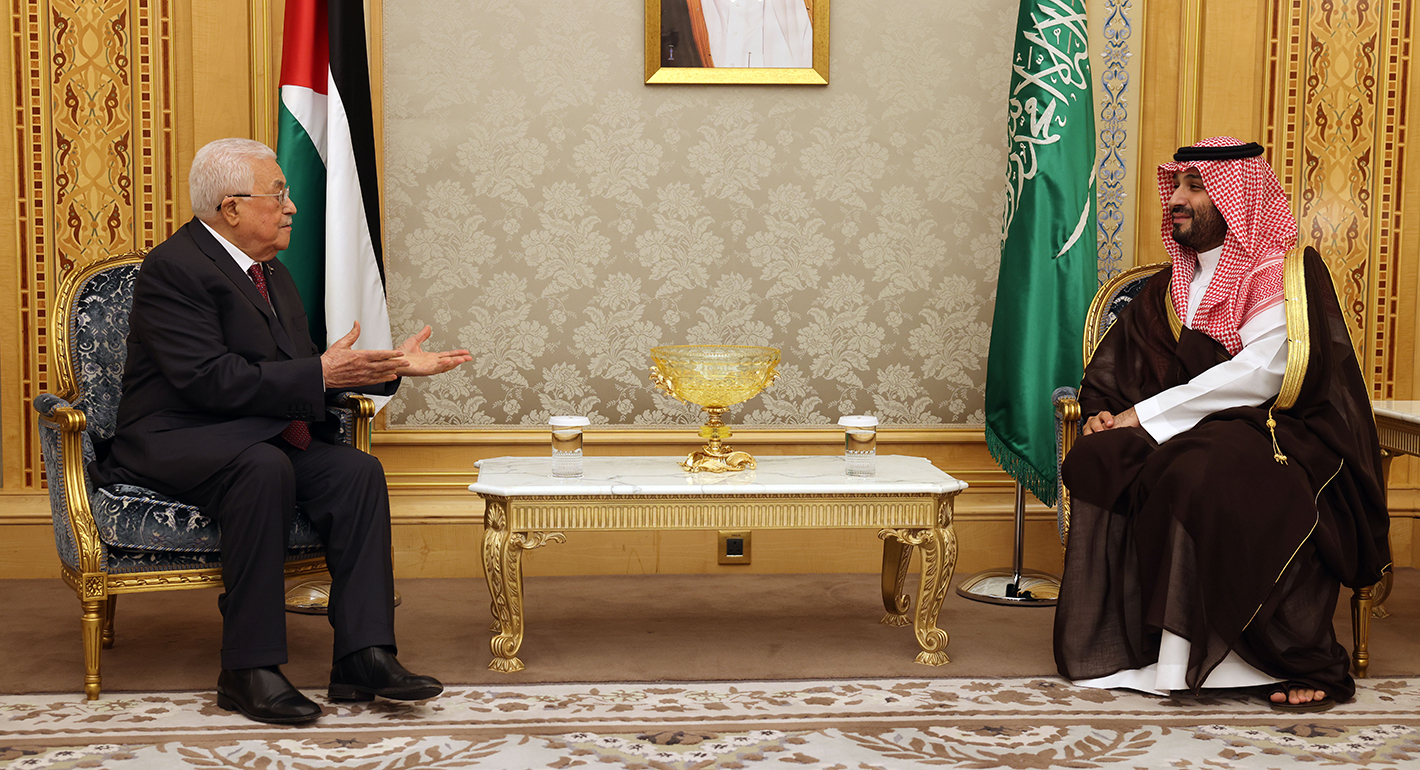
The U.S. midterm elections signal the opening of a narrow window for bold Saudi diplomacy on Palestine.

Andrew Leber, Zaha Hassan

The EU can impose sanctions but struggles to enforce them without the United States. With Washington increasingly disinterested in backing European interests, the bloc must now fend for itself.


Nicu Popescu, Tiago Antunes

Global and rising powers will need to engage with Africa’s priorities and agency in order to secure the continent’s increasingly attractive partnerships.

Fonteh Akum

Rubio’s recent visit brought welcome attention, but more capital requires governance changes that may be a hard sell for regional governments.

Jennifer B. Murtazashvili

America’s foreign-policy objectives have grown more demanding while Americans have demanded greater focus on their own affairs.

Stephen Wertheim