

Q&A
- +2
Judy Dempsey, Alexander Gabuev, Rose Gottemoeller, …
{
  "authors": [
    "Rose Gottemoeller"
  ],
  "type": "legacyinthemedia",
  "centerAffiliationAll": "dc",
  "centers": [
    "Carnegie Endowment for International Peace"
  ],
  "collections": [],
  "englishNewsletterAll": "ctw",
  "nonEnglishNewsletterAll": "",
  "primaryCenter": "Carnegie Endowment for International Peace",
  "programAffiliation": "russia",
  "programs": [
    "Russia and Eurasia",
    "Nuclear Policy"
  ],
  "projects": [],
  "regions": [],
  "topics": [
    "Military",
    "Foreign Policy",
    "Nuclear Policy"
  ]
}
REQUIRED IMAGE
Source: Carnegie
Reprinted with permission from The Washington Post, April 2, 2002
Twenty years have passed since we had a good fight over nuclear weapons, so in a way, the furor that has greeted the U.S. Nuclear Posture Review ought to be welcomed. The last time we got into a debate over "usable" nuclear weapons was in the age of the neutron bomb -- the late 1970s and early '80s -- and it was a useful argument to have.
Neutron bombs were touted as being especially efficient for the urban battlefields of Europe: They would leave buildings intact but kill the people inside, easing the way for tank movements through the streets -- no rubble to contend with. And their radiation effect was less than a standard nuclear weapon, handy for subsequent military operations, occupation and cleanup.
But the notion of a perfect bomb for urban warfare went down badly in the cities of Europe, and neutron weapons were never deployed. The debate they prompted, however, forced Americans and Europeans alike, from politicians to citizens to military men, to confront the realities of nuclear war-fighting. It was an early step along the road to where we are today, when virtually no day-to-day capability for using nuclear weapons on the battlefield exists among the ground, naval and air forces of the NATO alliance. Instead, the United States and its allies have focused on deploying conventional weapons that are more mobile and more accurate -- and on using them to deadly effect.
There are good reasons for that, some of which are in the high realm of deterrence policy. We were always concerned, for example, that crossing the nuclear threshold would put us straight onto an escalation ladder that would lead to ever-wider nuclear use.
Other reasons emerged, too. The more military men contemplated what would be required to fight in a nuclear environment the less they liked what they saw. Nuclear use would slow operations, not speed them up, and the logistics would be nightmarish. Just having enough field showers to ensure that every NATO soldier could be decontaminated on a timely basis was an enormous task. Once the Soviet threat to Europe began to ease, therefore, so did attention to nuclear war-fighting. It just wasn't practical.
Fast-forward to today. Usable nuclear weapons are reemerging -- but not for the urban battlefields of Europe. The new battlefield is the inchoate world of the terrorist. The Bush administration argues that we have to be prepared to go after terrorist weapons of mass destruction wherever they are hidden, destroying them without a shadow of a doubt. In the old language of the Cold War, we need surgical strikes to ensure that such weapons will not escape to be used against us in the future.
Enter small, earth-penetrating nuclear weapons, which the Nuclear Posture Review has placed on a fast track for research. These weapons, according to their proponents, can be used to strike biological or chemical weapon production sites -- even those buried deep in caves -- and to incinerate every ounce of harmful agent. They will be low-yield and high-accuracy, the arguments go, so radiation contamination and collateral damage will be kept to a minimum.
The question needs to be examined: Should the United States pursue a nuclear bomb as the weapon of choice on the counterterrorism battlefield, or should such a weapon be maintained only as a deterrent and weapon of last resort?
The technical arguments should be debated and backed up by scientific analysis. The moral issues also need to be discussed. The neutron bomb idea came up against a vocal and well-focused opposition: the European city dwellers who might be affected. Do those currently pushing nuclear earth penetrators entertain at least the subconscious view that Osama bin Laden and his fellows will not be nearly so articulate and organized?
For the moment, let us just consider whether a small, usable nuclear weapon will help or hinder our military operations. If we use a nuclear bomb to destroy a biological weapons facility deep in a cave, will we not want to know whether it has indeed been totally annihilated? Just as we have searched the caves after every battle in Afghanistan, will we not want to send our troops in to search for survivors and mop up? These troops will have to operate in a radioactive environment, and will be highly encumbered by radiation protection gear. So, just as in the European theater, nuclear weapons are likely to slow and complicate our military operations, not make them easier.
Certainly it's a worthy goal to seek to eliminate any facilities terrorists might have for making or maintaining weapons of mass destruction. But do we really need nuclear weapons to accomplish that goal? The United States has made enormous strides in the development of highly accurate conventional weapons; we are the envy of the world in that regard. In recent years conventional weapons have become effective enough to go after even hardened ballistic missile silos. Surely they could be used against buried biological or chemical weapons facilities.
By contrast, using a nuclear weapon -- even one that was "clean," low-yield and small -- would impose costs on our military operations. Beyond the technical uncertainties and moral questions, the practical problems of nuclear war-fighting have continued unabated. Surely we need not go down that road again.

Nonresident Senior Fellow, Nuclear Policy Program
Rose Gottemoeller is a nonresident senior fellow in Carnegie’s Nuclear Policy Program. She also serves as lecturer at Stanford University’s Freeman Spogli Institute for International Studies and is a research fellow at the Hoover Institution. Ambassador Gottemoeller served as the deputy secretary general of NATO from 2016 to 2019.
Recent Work


Judy Dempsey, Alexander Gabuev, Rose Gottemoeller, …
Carnegie does not take institutional positions on public policy issues; the views represented herein are those of the author(s) and do not necessarily reflect the views of Carnegie, its staff, or its trustees.
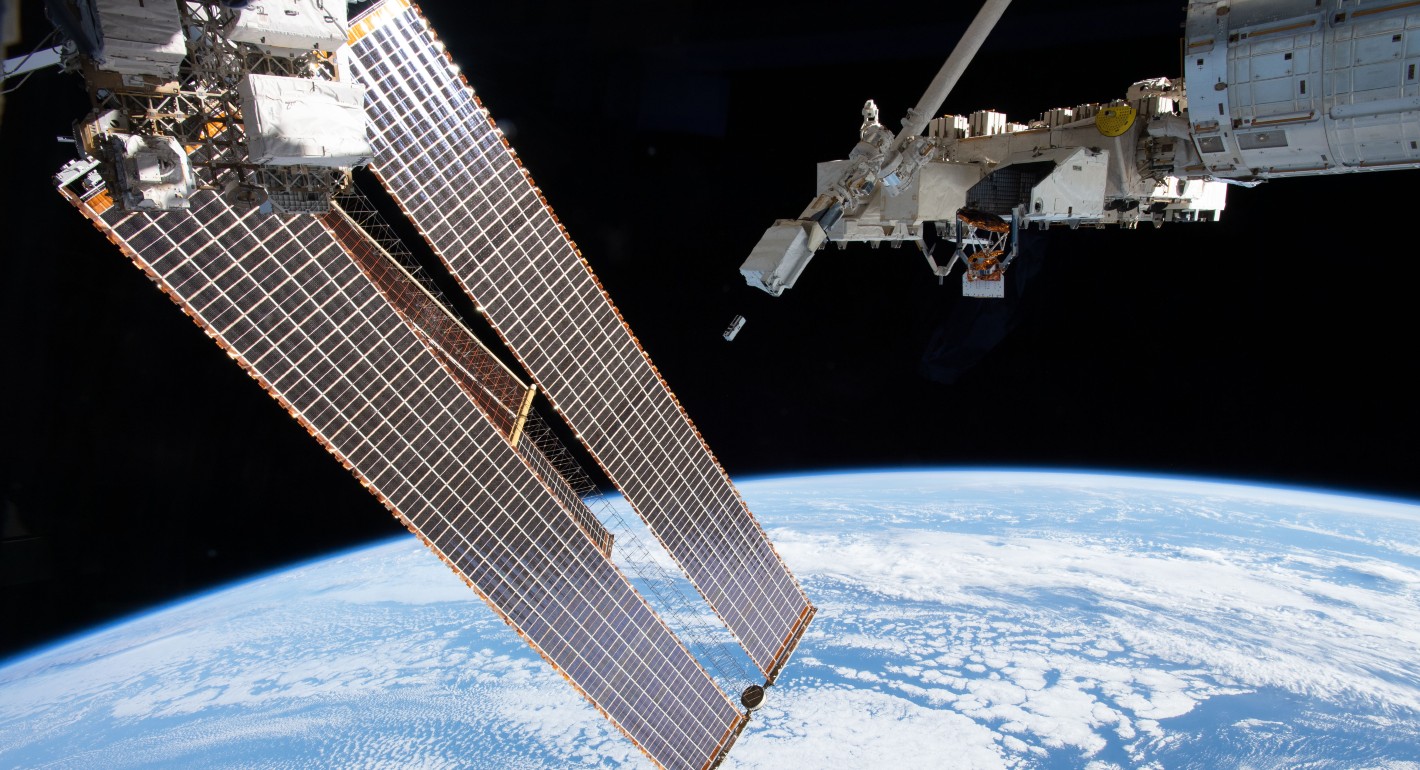
The acknowledgment has sparked fears of a new arms race with China and Russia.

Chris O’Meara

Smaller powers cannot go it alone, but Canadian history shows that integration with the United States will not always be benign.
Paul Samson

The European Commissioner for Trade is headed to China. But after President Xi’s bridge-building visit to Washington, can a more isolated EU overcome Beijing’s stranglehold on critical raw materials? Who will blink first?

Rym Momtaz, ed.
The summit may be remembered as a fatal blunder, when Washington, Beijing, and the AI industry collectively chose ceremony over action.

Jeffrey Prescott

European NATO countries are wrestling with the possibility of U.S. disengagement from the alliance. With the continent’s security increasingly uncertain, governments must restore the credibility of their collective defense.



Hans-Dieter Lucas, Adam Thomson, Pierre Vimont