

Report
Mr. Husain Haqqani, Ashley J. Tellis
{
  "authors": [
    "Husain Haqqani"
  ],
  "type": "legacyinthemedia",
  "centerAffiliationAll": "dc",
  "centers": [
    "Carnegie Endowment for International Peace"
  ],
  "collections": [],
  "englishNewsletterAll": "ctw",
  "nonEnglishNewsletterAll": "",
  "primaryCenter": "Carnegie Endowment for International Peace",
  "programAffiliation": "russia",
  "programs": [
    "Russia and Eurasia"
  ],
  "projects": [],
  "regions": [
    "Pakistan"
  ],
  "topics": [
    "Political Reform"
  ]
}
REQUIRED IMAGE
Source: Carnegie
In Pakistan, the army is just another party
Husain Haqqani, Visiting Scholar
Reprinted with permission from the The Indian Express, November 12, 2003.
Soldiers of any country are justified in expecting support from compatriots in return for volunteering to lay down their lives in times of war. Pakistanis too have supported their army through most of the country’s checkered history. But of late the army’s status as a sacred cow has come under fire.
General Pervez Musharraf has reacted angrily to this questioning of the army role. Alliance for Restoration of Democracy (ARD) leader Javed Hashmi has been whisked away from the precincts of parliament over ‘‘anti-army’’ statements.
Hashmi started his career in national politics as a minister in the military regime of General Zia ul Haq. Now he stands accused of sedition and trying to sow discord among the armed forces!
Like Asif Zardari, who has spent seven years in prison without being definitively convicted, Hashmi could end up as a victim of the military establishment’s self-righteousness.
General Musharraf and his colleagues must ask themselves why even past civilian allies of the military are unable to support this national institution today. When an army becomes involved in domestic politics, it forfeits its special status as the nation’s defender. It is reduced to just another contender for power.
It is difficult for politicians and journalists who represent public opinion to support the induction of military officers in every sphere. A general commanding a division or corps may be deserving of civilian support. But how can anyone endorse the appointment of generals as vice-chancellors of universities, heads of public sector corporations, diplomats, criminal investigators?
The practice of rewarding military officers with plots of land also arouses resentment among civilians who are denied such perquisites. The argument that this practice dates back to the British Raj sways no one. Did not General Musharraf do away with the time-worn system of civil administration on grounds that it was a colonial creation that needed reform?
Why must colonial practices be retained only when they suit senior military officers?
Just around the time Hashmi was arrested, another case hit the headlines — the persecution of a simple constable in Lahore who had made the mistake of questioning the family of a two-star general travelling in a car with tinted windows.
Constable Nazir simply did his duty by pointing out tinted glasses were against the law. The power of the men and guns under the GOC, Lahore were lined against him.
An Islamabad journalist was kidnapped and beaten up when he had an altercation with a general heading the cricket board. There was also the case, reported by a national daily on May 8, 2003, under the headline ‘‘Multan: Martial law Imposed on a cantonment shop’’.
According to the report, Constable Liaquat Ali had intercepted two men on a motorcycle breaking the law and had demanded their licence and registration documents. Instead, the two made a phone call, which resulted in the arrival of the Military Police.
The motorcyclists, it seems, included Lieutenant Ali Raj, who refused to submit to the authority of a lowly civilian constable.
When statements of eyewitnesses were recorded, the owner of a fabric shop refused to tailor his statement to the wishes of the lieutenant. He was charged under the Maintenance of Public Order ordinance. Military Police was stationed outside his shop with the sign ‘‘Out of bounds for all ranks’’.
Earlier this year, the NWFP government appointed a new civilian director general of health. But the outgoing DG, Brigadier Habibur Rehman, refused to relinquish his charge. The brigadier argued he could not leave his civilian post as the GHQ had sent him on a three-year secondment from the army and that period had not ended yet.
Such incidents cannot endear the army to the people. If the army wants to be respected as an institution, it should limit itself to its assigned function. Otherwise it must be prepared for institutional criticism by civilians.
The responsibility for the army’s mistakes should be institutionally accepted, be they in the form of a lieutenant’s arrogance or the refusal to by a major general’s family to obey the law.
Just as the PPP and PML are held accountable for the actions of past and present leaders, the army must collectively answer for sins of omission and commission under Field Marshal Ayub Khan, General Yahya Khan, General Zia and General Musharraf.
The building of an industrial empire by Captain Gohar Ayub Khan while his father was president; the debauchery engaged in by General Yahya and his close associates just before the fall of East Pakistan; the unleashing of the jihadi genie by General Zia; the manipulation of the democratic process by General Aslam Beg after General Zia’s death; the channelling of Mehran Bank funds to anti-PPP politicians during the 1990 election; the dirty war in Karachi against the MQM; the army’s refusal to protect the Supreme Court while it was under attack in 1998; and the shenanigans of the present regime, including the manipulated election, can hardly be described as actions relating to the country’s defence.
The defence of Pakistan is certainly sacred. But to suggest that defence officers’ housing societies too be considered sacred is too much.
(The author is visiting scholar at the Carnegie Endowment for International
Peace in Washington, DC. He served as adviser to prime ministers Benazir Bhutto
and Nawaz Sharif and as Pakistan’s ambassador to Sri Lanka.)
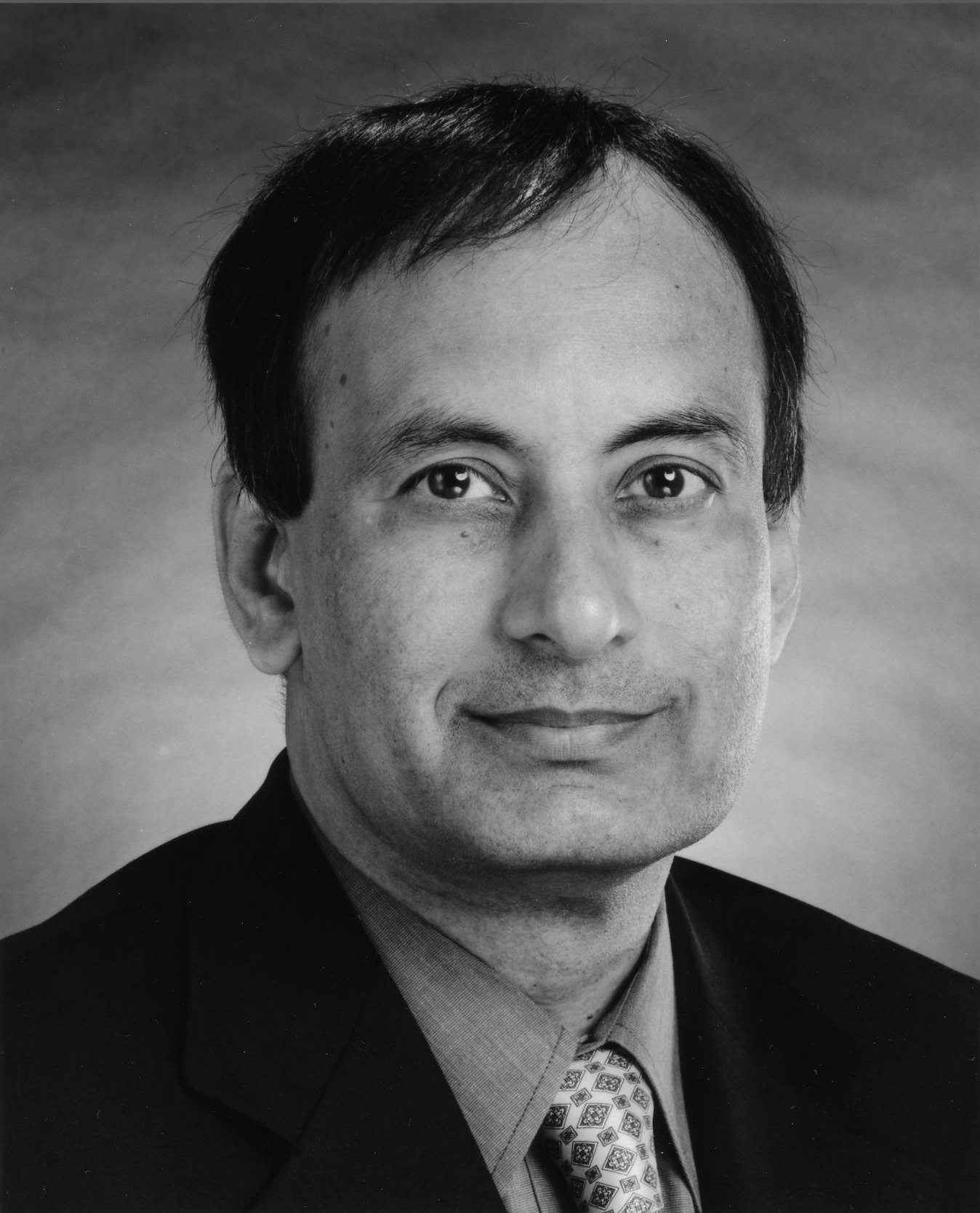
Former Visiting Scholar
Recent Work
Mr. Husain Haqqani, Ashley J. Tellis
Mr. Husain Haqqani
Carnegie does not take institutional positions on public policy issues; the views represented herein are those of the author(s) and do not necessarily reflect the views of Carnegie, its staff, or its trustees.

Before the next wave of EU enlargement takes place, the union needs to grapple with thorny questions of how power is distributed among its members.


Emil Sondaj Hansen, Ditte Brasso Sørensen

The European far right might fail to steer EU policy in the direction Russia wants, but they will create enough chaos inside Europe to benefit the Kremlin.

Dimitar Bechev

If the Russian-speaking community in Latvia cannot articulate their interests without being seen as disloyal, they could end up embracing a pro-Kremlin agenda.

Sergejs Potapkins

Russia’s ruling party would have benefited from Putin appearing as its distant patron, but as an active frontman imposing his views on the public, he has done nothing but harm both the party’s election campaign and the ruling system overall.

Andrey Pertsev

In the tenth year of his presidency, President Mirziyoyev’s system is becoming even more personalized than that of his predecessor Karimov.

Galiya Ibragimova