• Research
  • Emissary
  • About
  • Experts
Carnegie Global logoCarnegie lettermark logo
DemocracyIran
  • Donate
{
  "authors": [],
  "type": "pressRelease",
  "centerAffiliationAll": "dc",
  "centers": [
    "Carnegie Endowment for International Peace"
  ],
  "collections": [],
  "englishNewsletterAll": "ctw",
  "nonEnglishNewsletterAll": "",
  "primaryCenter": "Carnegie Endowment for International Peace",
  "programAffiliation": "NPP",
  "programs": [
    "Nuclear Policy"
  ],
  "projects": [],
  "regions": [],
  "topics": [
    "Nuclear Policy"
  ]
}
REQUIRED IMAGE

REQUIRED IMAGE

Press Release

Press Release: Key World Powers Receive Near Failing Grade in Nonproliferation Report Card

Link Copied
Published on Jun 21, 2007
Program mobile hero image

Program

Nuclear Policy

The Nuclear Policy Program aims to reduce the risk of nuclear war. Our experts diagnose acute risks stemming from technical and geopolitical developments, generate pragmatic solutions, and use our global network to advance risk-reduction policies. Our work covers deterrence, disarmament, arms control, nonproliferation, and nuclear energy.

Learn More

FOR IMMEDIATE RELEASE: June 21, 2007

- NEWS RELEASE -


WASHINGTON, June 21--The Carnegie Endowment for International Peace released a report card today on the nuclear nonproliferation policies of key world powers—and the overall score is a D+. 

“Since 2005, governments have devoted too little attention, leadership, and resources to taking the steps necessary to prevent the spread and use of nuclear weapons,” said George Perkovich, vice president for studies—Global Security and Development, at the Carnegie Endowment, announcing the release of Toward Universal Compliance: A 2007 Report Card.  “The solutions to most proliferation problems are not hard to identify, what’s lacking is the determination by key leaders to learn and apply them.” 

The study evaluated the nonproliferation progress of the United States, Russia, France, the United Kingdom, China, India, Pakistan, and Israel, as well as key non-nuclear states, from 2005 through mid-2007.  The authors note that the actions of the United States strongly affected the poor results as it is the most powerful actor in the international system. 

“By rejecting the give and take of diplomacy and the legitimacy of other people’s need for security—including the demand for greater equity in the international system—the United States lost power to achieve what it wants other than through brute force, whose limits became clear in Iraq,” concludes the report.

Yet the United States alone cannot implement the policies needed to achieve a better result—it needs the active cooperation of the international community.  Responsibility for the dismal performance assessed in the report is therefore widely shared.

A 2007 Report Card is a special follow-up to Universal Compliance: A Strategy for Nuclear Security, a blueprint for rethinking the international nuclear nonproliferation regime by dealing with states and terrorists, nuclear weapons, and missile materials through a twenty step, priority action agenda.

The D+ grade is an average of grades assigned for each of six criteria laid out in the 2005 edition of Universal Compliance upon which the governments were evaluated.  They are:

  • Make nonproliferation irreversible—Grade: D
  • Devalue the political and military currency of nuclear weapons—Grade: F
  • Secure all nuclear materials—Grade: C-
  • Stop the illegal transfers of nuclear technology, materials and know-how—Grade: C-
  • Commit to conflict resolution—Grade: C+
  • Persuade India, Israel, and Pakistan to accept the same nonproliferation obligations accepted by the weapon state signatories (to the NPT)—Grade: D-

The Report Card will be distributed publicly at the 2007 Carnegie International Nonproliferation Conference on June 25 and 26.  The conference is the premier event in the nonproliferation field, attracting over 800 U.S. and foreign government officials, policy and technical experts, academics, and journalists from around the world.


Notes:

  1. To read Toward Universal Compliance: A 2007 Report Card, go to www.carnegieendowment.org/files/report_card.pdf  
    To read the full, updated Universal Compliance: A Strategy for Nuclear Security , go to
    www.carnegieendowment.org/files/univ_comp_rpt07_final1.pdf
  2. Toward Universal Compliance: A 2007 Report Card  was written by George Perkovich, with Jessica T. Mathews, Rose Gottemoeller, Deepti Choubey, and Sharon Squassoni.  Universal Compliance: A Strategy for Nuclear Security was written by George Perkovich, Jessica T. Mathews, Joseph Cirincione, Rose Gottemoeller, and Jon Wolfsthal.
  3. To request an interview with authors, or for more information about the Carnegie International Nonproliferation Conference, please contact Trent Perrotto, Communications Manager, 202-939-2372, tperrotto@ceip.org
  4. George Perkovich is the vice president for studies—Global Security and Development at the Carnegie Endowment.
  5. Jessica T. Mathews is the president of the Carnegie Endowment.
  6. Rose Gottemoeller is the director of the Carnegie Moscow Center.
  7. Deepti Choubey is the deputy director of the Nonproliferation Program at the Carnegie Endowment.
  8. Sharon Squassoni is a senior associate at the Carnegie Endowment.
  9. The Carnegie Endowment for International Peace is a private, nonprofit organization dedicated to advancing cooperation between nations and promoting active international engagement by the United States. Founded in 1910, its work is nonpartisan and dedicated to achieving practical results.  The Endowment has added operations in Beijing, Beirut, and Brussels to join its longstanding offices in Washington and Moscow as part of its transformation into the first global think tank.

### 

Nuclear Policy

Carnegie does not take institutional positions on public policy issues; the views represented herein are those of the author(s) and do not necessarily reflect the views of Carnegie, its staff, or its trustees.
More Work from Carnegie Endowment for International Peace

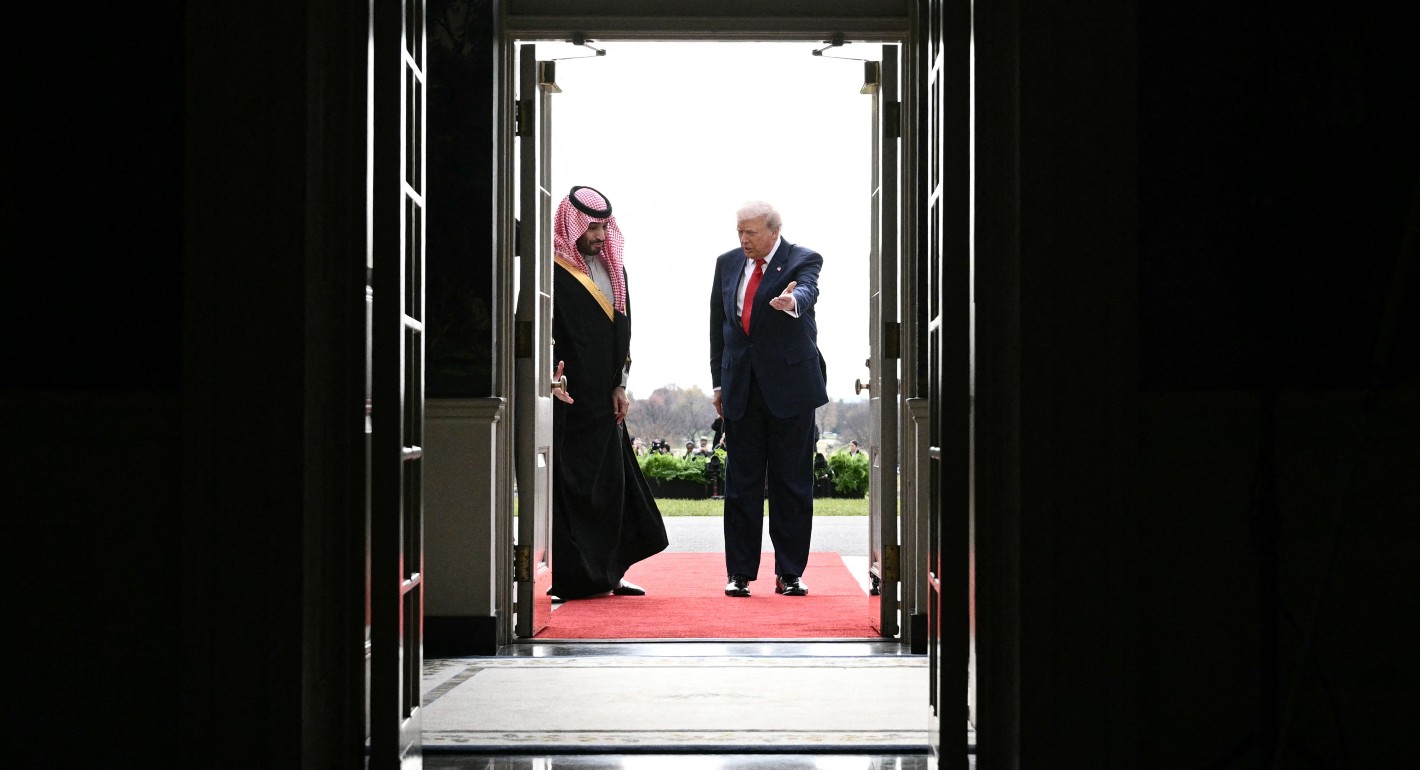
  • Trump and MBS walking through a doorway
    Commentary
    Emissary
    What We Know About the U.S.-Saudi Nuclear Deal

    Despite the agreement’s uncertainty, it’s still a significant development in regional and nuclear policy.

      • Andrew Leber
      • Jane Darby Menton

      Andrew Leber, Jane Darby Menton

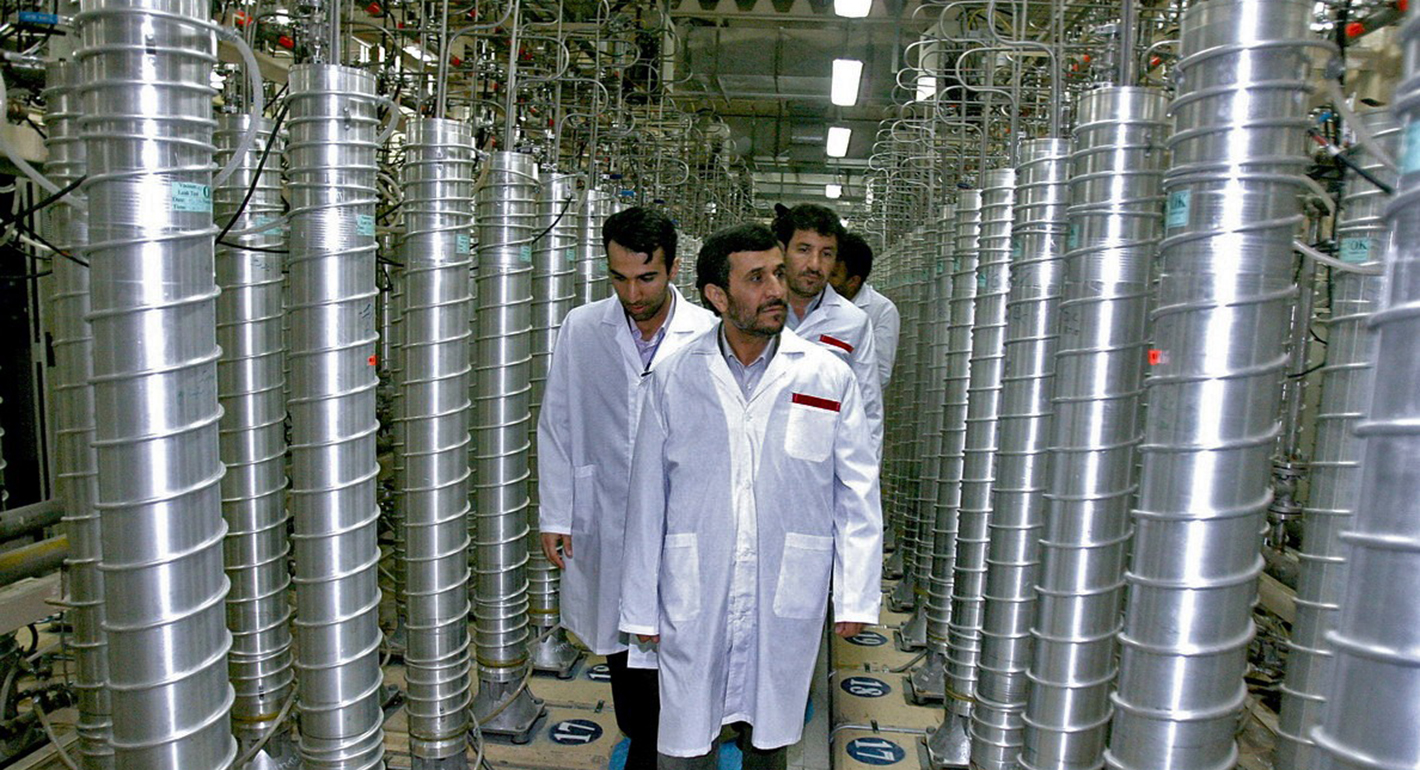
  • Iranian President Mahmoud Ahmadinejad (C) visits the Natanz uranium enrichment facilities April 8, 2008
    Paper
    Demystifying the Nuclear Threshold

    The nuclear weapons threshold is increasingly important for proliferation strategy and policy. Policymakers should better understand the implications of the threshold phenomenon in the current international security environment and plausible strategies to deal with the growing challenge that it presents.

      Ariel (Eli) Levite, Toby Dalton

  • 1990s USS Pennsylvania United States Navy Nuclear Powered Ohio-Class Ballistic Missile Submarine Cruising On Ocean Surface
    Paper
    Nuclear Weapons and the Future of American Power

    It seems likely that, no matter what, the power of the U.S. nuclear arsenal will face erosion, not least in the credibility of its commitments to defend allies and the political durability of those alliances.

      James M. Acton, Ankit Panda

  • Commentary
    President Lee Jae Myung: A Year in Power

    President Lee marked his first year in office after one of the most tumultuous periods in South Korean politics. Though Lee has enjoyed a high approval rating, a large majority in the National Assembly, and foreign policy victories, Lee and his party’s political fortunes depend on generating economic growth, learning the right lessons from the recent local elections, and managing contentious factional strife within his political base.

      Chung Min Lee

  • Three people standing outside a fancy building
    Commentary
    Emissary
    The Latest Iran Deal Ignores the Lessons of the Past

    By burying disagreements in imprecision, the new deal risks same fate as its predecessors.

      James M. Acton

Get more news and analysis from
Carnegie Endowment for International Peace
Carnegie global logo, stacked
1779 Massachusetts Avenue NWWashington, DC, 20036-2103Phone: 202 483 7600
  • Research
  • Emissary
  • About
  • Experts
  • Donate
  • Programs
  • Events
  • Blogs
  • Podcasts
  • Contact
  • Annual Reports
  • Careers
  • Privacy
  • For Media
  • Government Resources
Get more news and analysis from
Carnegie Endowment for International Peace
© 2026 Carnegie Endowment for International Peace. All rights reserved.