

In The Media
Lilia Shevtsova
{
  "authors": [
    "Lilia Shevtsova"
  ],
  "type": "legacyinthemedia",
  "centerAffiliationAll": "",
  "centers": [
    "Carnegie Endowment for International Peace",
    "Carnegie Russia Eurasia Center"
  ],
  "collections": [],
  "englishNewsletterAll": "",
  "nonEnglishNewsletterAll": "",
  "primaryCenter": "Carnegie Russia Eurasia Center",
  "programAffiliation": "",
  "programs": [],
  "projects": [],
  "regions": [
    "Caucasus",
    "Russia",
    "North America",
    "United States"
  ],
  "topics": [
    "Foreign Policy",
    "Political Reform",
    "Security"
  ]
}
Source: Getty
The Russian political elite has long dreamed of finding a national idea capable of rallying the people. Former Soviet leader Mikhail Gorbachev tried to consolidate the country with his idea of socialism "with a human face." Former President Boris Yeltsin roused the people around anti-communism. Putin's motto is: "Russia is back!"
Source: The Moscow Times

And President Vladimir Putin came to power under the unofficial slogan: "Let's put an end to the Yeltsin-era chaos." Now the elite is pushing a new national idea to rally the nation. It can be stated as follows: "We will protect the country from external enemies and establish a new global order to replace the one that so humiliated Russia in the 1990s." To put it more simply, Putin's motto is: "Russia is back!"
The closer we come to the end of Putin's second term, the more the Kremlin needs to find an idea that would preserve everything it has achieved during the past eight years. Searching for enemies and casting the West in the role of the principal foe has turned out to be the most successful method for rallying the people. Russia has adopted an aggressive foreign policy rhetoric; Putin's fiery Munich speech is a classic example. Anti-Western sentiment has become the new national idea, and national revival has taken the form of revisionism.
The arguments supporting the new national idea are plain and simple: "The West is interfering in our domestic affairs and attempting to weaken Russia. By promoting democracy, the West is really advancing its own interests."
It seems that even pro-Western analysts are trying to convince themselves and the world that Russia should play by its own rules, and that the responsibility for the crisis in Russian-Western relations lies with Western capitals. Some of them even believe that NATO expansion, U.S. President George W. Bush's export of democracy and Washington's plan to install elements of anti-missile batteries in Europe is the main -- and perhaps even only -- reason for the failure of Russian democracy. Yesterday's moderates and pragmatists today have joined with professional anti-Western political analysts -- such as Vyacheslav Nikonov and Alexei Pushkov, the host of a popular analytical television program -- in singing the same song. Being pro-Western in Russia today is not only unpopular, but also dangerous because it necessarily means being anti-Russian.
What is behind the new national idea? Anti-Western ideology has become an important factor that legitimizes the highly centralized state. The Kremlin has to offer some kind of explanation for the concentration of authority in so few hands, the elimination of political pluralism, the expansion of the state's role in the economy and the redistribution of property. The search for enemies and the cultivation of a "siege mentality" have always been used to justify "iron-hand" regimes in Russia. To be sure, the Kremlin also has created smaller enemies, such as Georgia, Ukraine, and the Baltic states. In addition, liberals and certain unpopular oligarchs serve as convenient adversaries. But a great power should not be shooting at sparrows with a cannon or focusing so much attention on "small fries," as one Russian analyst said. The West, and especially the United States, has proven to be the most convincing enemy.
But the crisis in Russian-Western relations is not purely based on a fundamental lack of shared values and principles. After all, communist China has much less in common with the West than Russia does, but U.S.-Chinese relations are quite friendly, and, in the economic sphere, they resemble a strong mutually beneficial partnership (notwithstanding the numerous difficulties). China, in seeking out its own prosperity, has chosen to pursue a policy of rapprochement, successfully making use of the West for its own modernization. Russia's ruling elite has taken a different path, trying to establish its global role by distancing itself from the West.
Russia's elite uses the anti-Western national idea because it believes it is giving the people an attractive ideology. But, at the same time, Moscow wants to pursue a partnership with the West for the sake of its own development and global integration.
The attitude toward the West has become a litmus test of loyalty to the authorities and the system. Verbal attacks have become synonymous with patriotism. As a result, the numerous so-called "liberal Westernizers" of the 1990s dwindled down to a tiny group. Only the most desperate, such as Garry Kasparov, still attempt to voice their liberal sympathies. Everyone else understands that it is not advisable to show too much reverence for the West. That would be considered as unpatriotic behavior.
Let's consider the most popular cliches of the new national idea:
• "Russia has recovered from the humiliation of the 1990s."
But why must this be achieved by spoiling relations with the West? Germany and Japan overcame their postwar humiliation by transforming themselves into great economic powers and by integrating into the global economy and adopting liberal-democratic values.
• "Russia has the right to pursue an independent policy."
If Russia takes this desire to its extreme, it would have to withdraw its membership in and application for all Western clubs and international organizations that place limits on its sovereignty, such as the Group of Eight, the Council of Europe and the World Trade Organization.
• "Russia is an energy superpower and Europe's dependence on its energy will increase."
This dependence cuts both ways. One of the most humiliating forms of dependence is an exporter's dependence on the importer, and the Kremlin has yet to fully understand this.
• "Russia wants to be integrated into the West on its own terms."
This is music to the patriots' ears, but they don't explain how they can be equal partners when Russia is building its society on anti-Western principles.
It must be admitted that the proponents of the anti-Western ideology succeeded at their goal of preserving the interests of the ruling class. This is a case when the West, which does not entirely understand events in Russia and does not have a strategy for dealing with a "revisionist" Kremlin, has allowed itself to be used as a "negative" factor in Moscow's drive to mobilize the people behind an aggressive national ideology.
The anti-Western ideologues are joined by the pragmatists -- the pundits who until recently had independent political positions but today support the new national idea. They advise the West by saying: "Accept Russia as it is and base your policy on mutual interests, not on values." Perhaps they sincerely believe that realpolitik will lead to future rapprochement between Russia and the West and will help build Russian democracy.
But then why has Western realpolitik resulted only in a crisis in its relations with Russia? Don't these "realists" understand that they are encouraging the West to build relations with Russia according to the same model that the West pursues with China?! If this is indeed the case, then Russia must leave the G-8 and the Council of Europe, whose membership is conditioned upon adherence to democratic principles and institutions.
Russia's ruling elite has let the genie out of the bottle and it will be very difficult to put it back again, especially because there is no resistance to anti-Westernism even in intellectual circles.
Fortunately, the majority of people have managed to avoid getting caught up in the anti-Western hysteria. Polls show that 70 percent of Russians still consider Europe to be a partner. But there are definite consequences to the Kremlin's heavy anti-Western propaganda. The elite, which has built a political and foreign policy program based on anti-Western ideas, cannot easily switch back to the opposite position. That is the legacy Putin leaves behind -- a legacy built by everyone who today shouts with such enthusiasm, "Russia is back!"
It's true -- Russia is back. But it has only returned to the past.
Lilia Shevtsova is a senior associate at the Carnegie Moscow Center.
This article first appeared in The Moscow Times August 7, 2007.
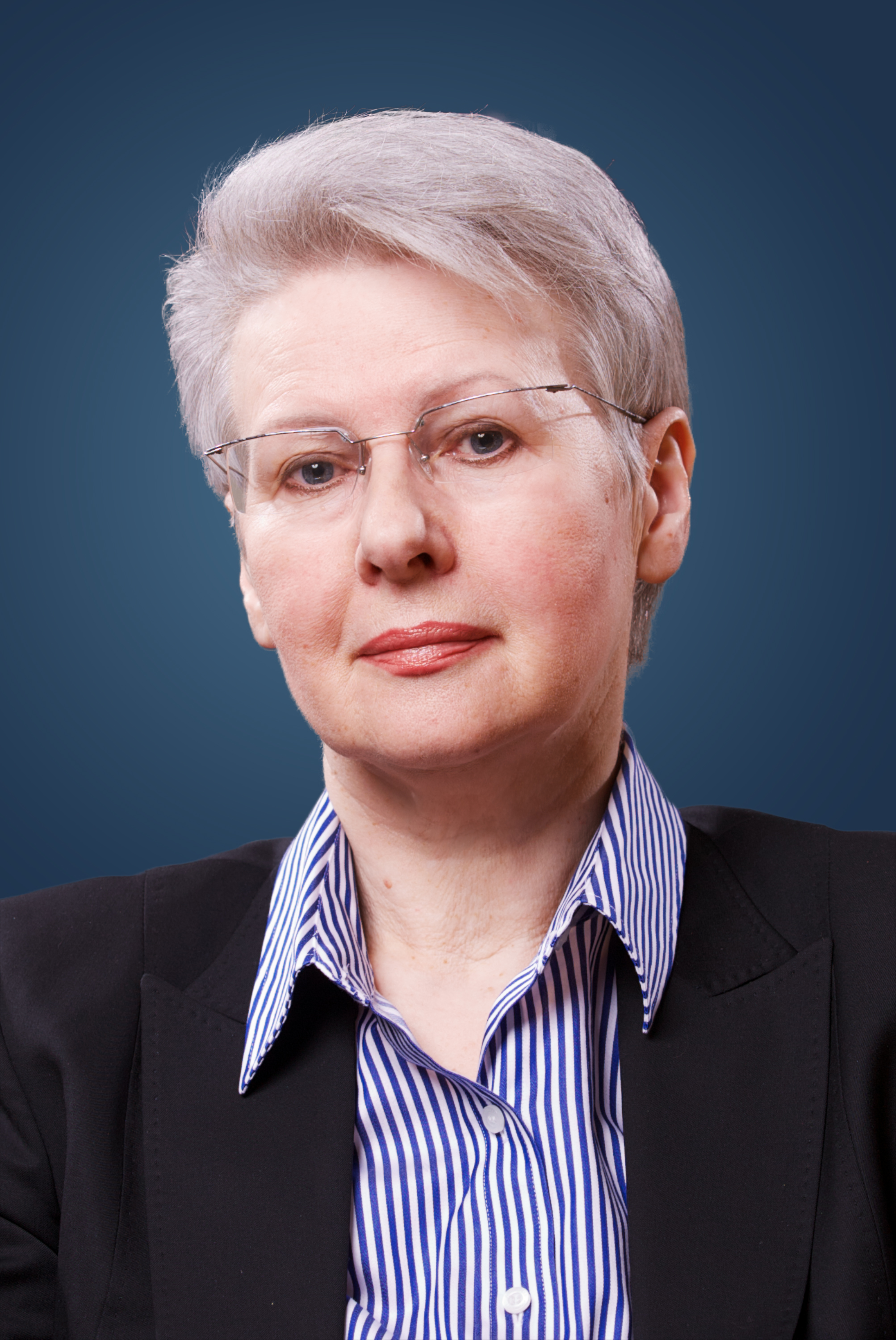
Former Senior Associate, Russian Domestic Politics and Political Institutions Program, Moscow Center
Shevtsova chaired the Russian Domestic Politics and Political Institutions Program at the Carnegie Moscow Center, dividing her time between Carnegie’s offices in Washington, DC, and Moscow. She had been with Carnegie since 1995.
Recent Work
Lilia Shevtsova
Lilia Shevtsova
Carnegie does not take institutional positions on public policy issues; the views represented herein are those of the author(s) and do not necessarily reflect the views of Carnegie, its staff, or its trustees.
Tokayev’s predecessor, Nursultan Nazarbayev, outlined arrangements for a power transition too soon and in too much detail, ultimately losing control over the process. Tokayev is determined not to meet the same fate.

Temur Umarov

Mounting economic strain and battlefield losses will not necessarily make the Kremlin less dangerous. They could instead push Moscow toward a more aggressive hybrid campaign designed to test NATO’s Eastern flank, exploit allied hesitation, and fracture European resolve.

Maksym Beznosiuk
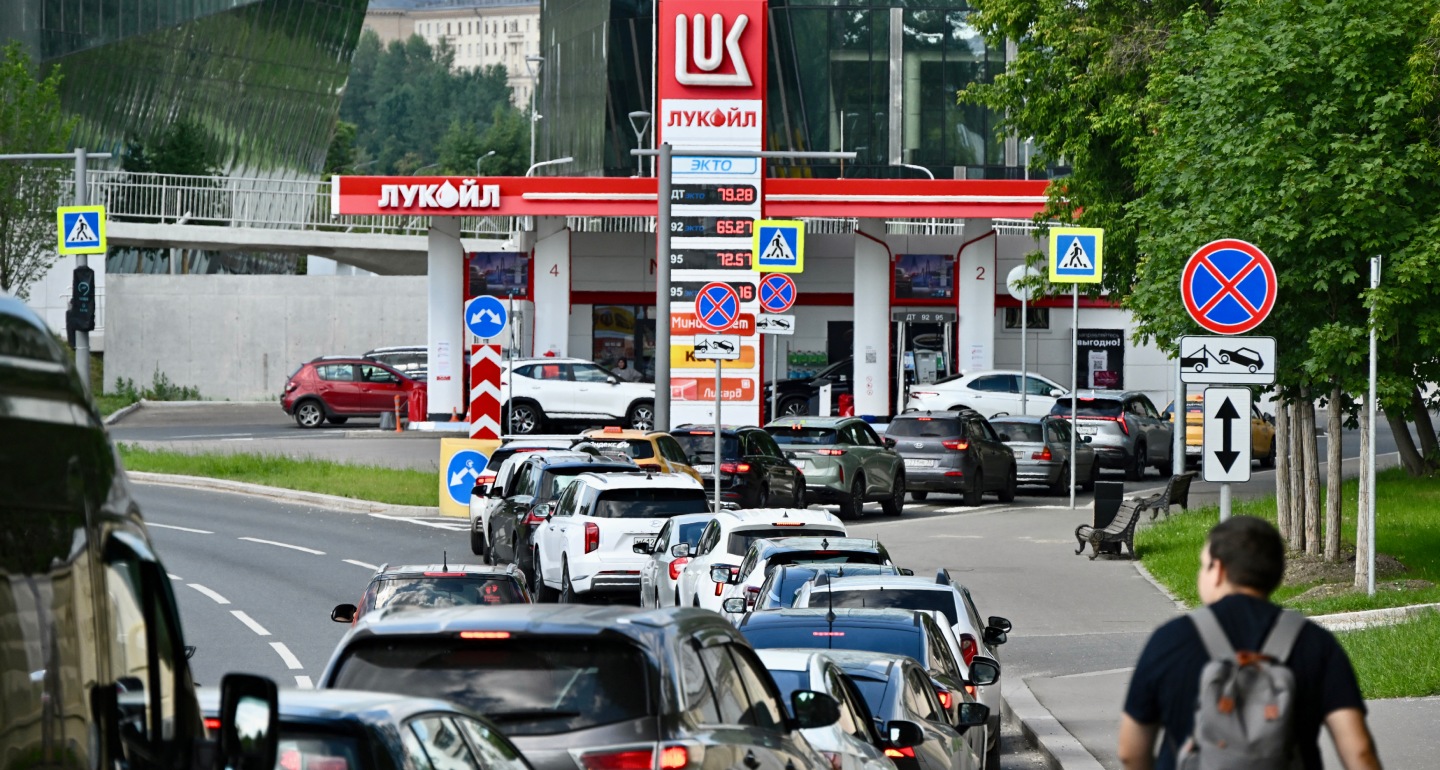
Official discussions about mini oil refineries are unlikely to come to anything—but the mere fact they’re happening reveals the regime is failing to deliver a functioning economy.

Sergey Vakulenko

By failing to address Palestinian representation, the current process is bound to lead to just another temporary arrangement.

Nathan J. Brown
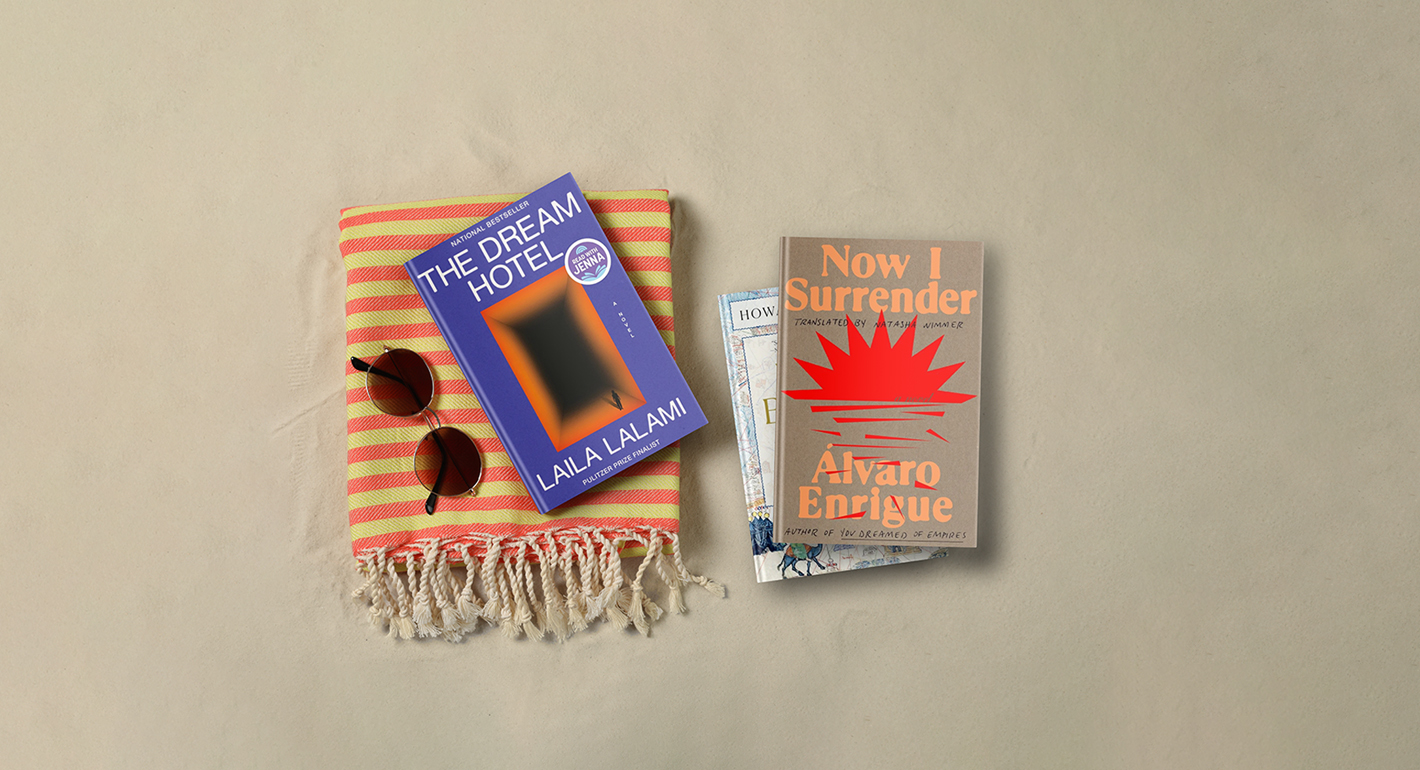
Carnegie experts recommend the books that kept them turning pages—and learning along the way.

Sophia Besch, Eric Ciaramella, Steve Feldstein, …