• Research
  • Emissary
  • About
  • Experts
Carnegie Global logoCarnegie lettermark logo
DemocracyIran
  • Donate
{
  "authors": [
    "Karim Sadjadpour"
  ],
  "type": "legacyinthemedia",
  "centerAffiliationAll": "dc",
  "centers": [
    "Carnegie Endowment for International Peace"
  ],
  "collections": [],
  "englishNewsletterAll": "menaTransitions",
  "nonEnglishNewsletterAll": "",
  "primaryCenter": "Carnegie Endowment for International Peace",
  "programAffiliation": "MEP",
  "programs": [
    "Middle East"
  ],
  "projects": [],
  "regions": [
    "Middle East",
    "Iran"
  ],
  "topics": [
    "Foreign Policy"
  ]
}
Source: Getty

In The Media

Ahmadinejad Rails Against 'Arrogant' U.N.

Link Copied
By Karim Sadjadpour
Published on Sep 28, 2007
Program mobile hero image

Program

Middle East

The Middle East Program in Washington combines in-depth regional knowledge with incisive comparative analysis to provide deeply informed recommendations. With expertise in the Gulf, North Africa, Iran, and Israel/Palestine, we examine crosscutting themes of political, economic, and social change in both English and Arabic.

Learn More

Source: NewsHour with Jim Lehrer

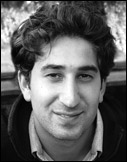
Saying the issue of his country's nuclear program was now "closed," Iranian President Mahmoud Ahmadinejad derided the United Nations for allowing world powers to bully others. It was the latest in a string of controversial comments from the leader during his U.S. visit. Carnegie's Karim Sadjadpour comments on NewsHour with Jim Lehrer.

Click here for video, audio, and transcript.

About the Author

Karim Sadjadpour

Senior Fellow, Middle East Program

Karim Sadjadpour is a senior fellow at the Carnegie Endowment for International Peace, where he focuses on Iran and U.S. foreign policy toward the Middle East.

    Recent Work

  • Q&A
    What’s Keeping the Iranian Regime in Power—for Now

      Aaron David Miller, Karim Sadjadpour, Robin Wright

  • Q&A
    How Washington and Tehran Are Assessing Their Next Steps

      Aaron David Miller, David Petraeus, Karim Sadjadpour

Karim Sadjadpour
Senior Fellow, Middle East Program
Karim Sadjadpour
Foreign PolicyMiddle EastIran

Carnegie does not take institutional positions on public policy issues; the views represented herein are those of the author(s) and do not necessarily reflect the views of Carnegie, its staff, or its trustees.
More Work from Carnegie Endowment for International Peace

  • Commentary
    Sada
    Digital Dissent in Morocco: A Sociological Analysis of the Generation Z Movement

    From anime heroes to online gaming communities, Morocco’s Gen Z is building a new protest culture. What does this digital imagination reveal about youth politics, and how should institutions respond?

      Abdelilah Farah

  • Commentary
    Strategic Europe
    Taking the Pulse: Is it NATO’s Job to Support Trump’s War of Choice?

    Donald Trump has demanded that European allies send ships to the Strait of Hormuz while his war of choice in Iran rages on. He has constantly berated NATO while the alliance’s secretary-general has emphatically supported him.

      • Rym Momtaz

      Rym Momtaz, ed.

  • India and a Changing Global Order: Foreign Policy in the Trump 2.0 Era
    Research
    India and a Changing Global Order: Foreign Policy in the Trump 2.0 Era

    Trump 2.0 has unsettled India’s external environment—but has not overturned its foreign policy strategy, which continues to rely on diversification, hedging, and calibrated partnerships across a fractured order.

      • Sameer Lalwani
      • +6

      Milan Vaishnav, ed., Sameer Lalwani, Tanvi Madan, …

  • Commentary
    Carnegie Politika
    Lukashenko’s Bromance With Trump Has a Sell-By Date

    Lukashenko is willing to make big sacrifices for an invitation to Mar-a-Lago or the White House. He also knows that the clock is ticking: he must squeeze as much out of the Trump administration as he can before congressional elections in November leave Trump hamstrung or distracted.

      Artyom Shraibman

  • Indian Prime Minister Narendra Modi, wearing an orange cap, and the Chief Minister of Uttar Pradesh, Yogi Adityanath, dressed in saffron robes, are greeting supporters of the Bharatiya Janata Party (BJP) during a roadshow ahead of the Indian General Elections in Ghaziabad, Uttar Pradesh, India, on April 6, 2024.Trump raises hands behind a lecternCarney speaking on stage
    Collection
    The Middle Power Moment?

    The world has entered an era of upheaval—a period of heightened geopolitical rivalry, deepening political polarization, quickening technological change, glaring economic inequality, accelerating environmental crises, and eroding respect for international law. This moment of disruption and fluidity is also one of opportunity, however. It provides openings for middle powers, both established and emerging, to exercise unaccustomed agency and influence the future of global order.

    Carnegie scholars are analyzing middle power responses to this moment of upheaval and assessing whether—and under what conditions—these states can contribute to practical problem solving. They are asking critical, concrete questions: What countries, precisely, are we talking about when we refer to middle powers? In what issue areas do their priorities converge and diverge, including across North-South divides? In what domains can middle powers pack a punch, rather than produce a whimper? Are they willing to shoulder actual burdens and responsibility? Finally, how can middle powers assert themselves globally, without running afoul of or threatening their relations with the United States or China?

Get more news and analysis from
Carnegie Endowment for International Peace
Carnegie global logo, stacked
1779 Massachusetts Avenue NWWashington, DC, 20036-2103Phone: 202 483 7600Fax: 202 483 1840
  • Research
  • Emissary
  • About
  • Experts
  • Donate
  • Programs
  • Events
  • Blogs
  • Podcasts
  • Contact
  • Annual Reports
  • Careers
  • Privacy
  • For Media
  • Government Resources
Get more news and analysis from
Carnegie Endowment for International Peace
© 2026 Carnegie Endowment for International Peace. All rights reserved.