

In The Media
Josh Kurlantzick
{
  "authors": [
    "Josh Kurlantzick"
  ],
  "type": "legacyinthemedia",
  "centerAffiliationAll": "dc",
  "centers": [
    "Carnegie Endowment for International Peace"
  ],
  "collections": [],
  "englishNewsletterAll": "asia",
  "nonEnglishNewsletterAll": "",
  "primaryCenter": "Carnegie Endowment for International Peace",
  "programAffiliation": "AP",
  "programs": [
    "Asia"
  ],
  "projects": [],
  "regions": [
    "East Asia",
    "China"
  ],
  "topics": [
    "Security",
    "Military"
  ]
}
Source: Getty
It is not China's military that threatens America right now; the U.S. military remains vastly technologically superior to the People's Liberation Army. Rather, it is China's growing long-term defense relationships with other nations that should worry Washington.
Source: The Los Angeles Times

The Bush administration's lack of interest in the Shanghai Cooperation Organization -- which is in fact a regional security group linking Russia, Central Asia and China -- is not terribly surprising. Since 9/11, President Bush, who won the White House in part by vowing to take a tough line against China, has concentrated on the Muslim world. To win global support for the war on terrorism, his administration has stopped calling Beijing a "strategic competitor," as he did before 9/11. On a recent visit to China, the U.S. chief of naval operations, Adm. Michael G. Mullen, announced that he was "reassured" about China's military power, adding, "I'm very encouraged about their commitment to continuing to improve this relationship" with America.
But even as the administration praises China, Beijing is subtly working to increase its global influence. In the long run, China could become the first major power since the former Soviet Union to threaten U.S. international influence.
China is modernizing its military, especially its obsolete air force and navy. It boosted defense spending by nearly 20% last year, and it has developed more-sophisticated medium-range missiles and fighters that could prevent U.S. aircraft carriers from defending Taiwan, as they did in 1995 and 1996.
Yet it is not China's military that threatens America right now; the U.S. military remains vastly technologically superior to the People's Liberation Army. Rather, it is China's growing long-term defense relationships with other nations that should worry Washington.
A decade ago, China's relationship with Russia suffered from a Cold War hangover, but today the two nations hold frequent joint military exercises. China also holds similar exercises with Kyrgyzstan, a Central Asian state on China's western border, with U.S. ally Thailand and with other nations.
It also has begun training foreign military officers. A course at China's National Defense University was specifically designed for the visiting officers. As these officer elites become more comfortable with China, they may reorient their militaries toward the People's Republic (just as programs for visiting officers in the U.S. have helped cement foreign military links to the Pentagon). In fact, a reorientation to China may already be happening.
In the Philippines, some military officers who once instinctively looked to the U.S. for training now go to China. Should the Philippines ever be drawn into a conflict between the U.S. and China -- the northern part of the Philippines lies relatively near Taiwan, and the country historically has had an informal defense relationship with the island -- its growing military links with Beijing might persuade it to not choose sides. In fact, China already has pressured Singapore, a nation with close ties to the U.S., to not take sides in any future conflict over Taiwan.
China's softer tools of economic and diplomatic influence also challenge U.S. power, particularly at a time when America's global reputation has plummeted. Over the last decade, Beijing has worked hard to cultivate foreign publics, not just foreign leaders, by developing sophisticated assistance programs that have made China the largest donor or lender to countries such as Cambodia and Angola.
Beijing also has turned on the diplomatic charm. Such top leaders as President Hu Jintao and Premier Wen Jiabao spend vastly more time abroad than did their predecessors -- or U.S. leaders -- and China has upgraded its diplomatic corps, producing a new generation of English-speaking, media-savvy envoys.
Beijing already is using its soft power to limit America's role in the region. In 2005, after wooing the Uzbek government through state visits and growing economic assistance, Beijing quietly helped push the Uzbeks to turn against Washington after the U.S. criticized Uzbekistan for a brutal crackdown on activists. That year, Uzbekistan revoked U.S. access to its military bases.
China has other new means of leverage over the U.S. Having amassed more than $1 trillion in reserves partly through its persistent trade surpluses with America, Beijing theoretically could undermine the U.S. economy by selling massive amounts of U.S. treasuries, which would deflate the dollar. But because a weakened U.S. economy would slow China's growth as well, it's highly unlikely that China would take this step. Instead, Beijing is amassing a $200-billion state-controlled investment fund to buy assets around the globe, including in the U.S. Already, China has bought a stake in Blackstone, a major U.S. private equity group.
Washington remains unprepared to determine which types of Chinese investment here are appropriate because Congress, after years of moving too slowly, only just passed laws on monitoring foreign investment in the U.S. The absence of clear guidelines has left Washington ambivalent about investments that do not involve technology critical to our national security -- such as the one in Blackstone -- but which might prove damaging. As Chinese companies become bigger global players, Washington will be forced to confront this issue more frequently.
China's domestic economic strategies potentially threaten the U.S. as well. For instance, Beijing is currently nurturing about 50 "national champion" companies, providing them with soft loans and other assistance from China's state-linked banks. Because these subsidies allow them to operate on smaller profit margins, some of these companies, like petroleum giant CNOOC Ltd., may increasingly challenge the dominance of U.S. oil and gas firms in Africa, Venezuela and the Middle East.
Despite these threats, the U.S.-China relationship is not headed for a Cold War-like standoff. China is heavily dependent on U.S. investment, just as the U.S. is reliant on China's consumption of greenbacks, a symbiosis that has made China, in the words of Comedy Central's Stephen Colbert, a "frenemy" -- a friend and an enemy all at once.
Confronting a "frenemy" will be tougher than fighting an enemy, because Washington must simultaneously cooperate and compete with Beijing. To do that successfully, the U.S. must treat China with the same respect it had for the Soviet Union, assigning at least one person in each U.S. embassy to closely follow Chinese economic and military activities in that nation, and investing far more resources in training the next generation of American China specialists. Preparation leads to confidence, helping U.S. diplomats and politicians understand how China does -- and doesn't -- threaten America. And with more knowledge on hand, surely Washington won't ignore Peace Mission 2008.

Former Visiting Scholar, China Program
A special correspondent for The New Republic, a columnist for Time, and a senior correspondent for The American Prospect, Kurlantzick assesses China’s relationship with the developing world, including Southeast Asia, Africa, and Latin America.
Recent Work
Josh Kurlantzick

China’s political future will be shaped between now and next October. As the Communist Party enters its intense “campaign season” to prepare for a major political transition in 2027, reading Beijing's actions and responses may become more difficult as domestic politics weigh on its behavior more than usual.

Damien Ma
Japan’s long-term security policy is driven by concerns about China, and there is little appetite for (or interest in) pursuing a confrontation with Moscow.

James D.J. Brown
Russia is testing the waters of NATO’s mutual defense clause. What do strikes in Romanian territorial waters mean for the alliance’s posture toward Moscow?

Dimitar Bechev
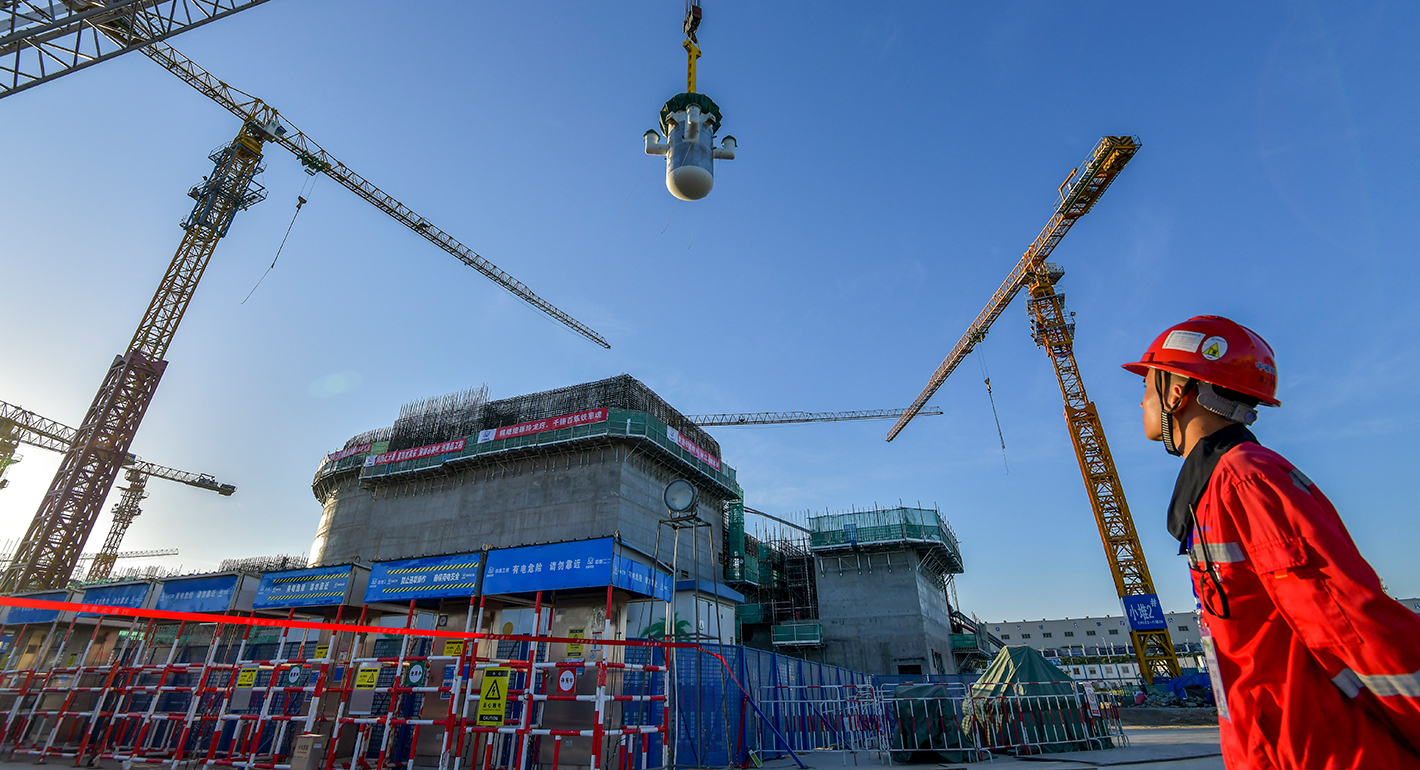
China has showcased its engineering prowess with small modular reactor demonstration projects. But turning these technological achievements into commercial success will be a greater challenge.

Tong Zhao
Why Pakistan, Saudi Arabia, and Turkey are joining forces on regional security.

Alper Coşkun, Amr Hamzawy