

Research
- +10
Rosa Balfour, Frances Z. Brown, Yasmine Farouk, …
{
  "authors": [
    "Moisés Naím"
  ],
  "type": "legacyinthemedia",
  "centerAffiliationAll": "",
  "centers": [
    "Carnegie Endowment for International Peace",
    "Carnegie Europe"
  ],
  "collections": [],
  "englishNewsletterAll": "",
  "nonEnglishNewsletterAll": "",
  "primaryCenter": "Carnegie Endowment for International Peace",
  "programAffiliation": "",
  "programs": [],
  "projects": [],
  "regions": [
    "North America",
    "United States",
    "South America"
  ],
  "topics": [
    "Foreign Policy"
  ]
}
Source: Getty
About a year ago Fidel Castro started blogging. Every week or so he posted his “Reflections of the Commander in Chief”. While not strictly a blog, in his internet musings “El Comandante” does what bloggers do: he comments on the news, chastises enemies (Bush, Aznar), extols friends (Hugo!) or rambles on subjects he cares about (sport and politics).
Source: The Times Online

On Tuesday his most recent post, which as usual was also published in Granma, Cuba's leading newspaper, was a bit different: “I will neither aspire to nor will I accept, I repeat, I will neither aspire to nor will I accept the positions of President of the State Council and Commander in Chief”, Castro wrote. Not many bloggers make history with their early morning postings. Moreover, in this history-making post El Comandante did reassure his readers that while he was relinquishing power they should not worry: he was keeping his blog. He would just change its name to “Reflections of El Compañero Fidel”.
Bloggers know that one of the risks is inadvertently to expose too much about themselves. And Fidel was not immune: he too revealed a lot in his postings, often through omission. Indeed, his postings are as informative for what they skip as for what they include.
In Fidel's blog, for example, Raúl Castro was never mentioned. It was only last Tuesday, after months of voluminous blogging, that Fidel felt the need to refer to Raúl, who happened to be his younger brother, the acting president, head of the armed forces and his rumoured successor. Even then Fidel only mentions his brother to emphasise that when he had to hand over power to him: “Raúl... who is also the head of the armed forces thanks to his own merits [my emphasis] as well as other party and state leaders had been reluctant to see me go from my positions, despite my frail health.”
Raúl's invisibility in Fidel's blog is a manifestation of the secretive power struggle to define Cuba's future. Inevitably, several factions are jockeying for dominance in the post-Fidel era. The two main ones are “the Chinese” and “the purists”. The first favours a Chinese-inspired model with an economy open to foreign trade and investment, tightly controlled politics and the military playing a large role running state-owned businesses.
The purists instead maintain that Cuba is now in a position to attain Fidel Castro's socialist dream: a centralised economy with political power firmly concentrated in the State and the party. They argue that Hugo Chávez's oil-fuelled generosity and ideological commitment makes this approach economically viable.
The Chinese faction is led by Raúl Castro, a pragmatic military man more interested in logistics than ideology. The leader of the purists is the Foreign Minister, Felipe Pérez Roque, Fidel Castro's former aide. Pérez Roque also counts on Hugo Chávez. After all, the 110,000 barrels of oil that Chávez ships to Cuba every day must count for something in terms of political influence in an otherwise bankrupt economy.
It is impossible to predict the path that Cuba will follow. The most likely scenario is a messy hybrid that continues with much of the current policies and politics but where different approaches are periodically tested, embraced or discarded. But in addition, interesting insights about Cuba's likely evolution can also be gleaned by looking at the experience of other nations making the transition to a post-communist model.
One sobering lesson is that, in the transition to a democratic market economy, protracted failure is more common than rapid success. More nations are stuck in a disappointing transition than those, such as the Czech Republic, that have progressed quite fast after communism. Another lesson is that the more internationally isolated, centralised, and personalised a former communist regime is, the more traumatic and unsuccessful its transition will be. Ceausescu's Romania is having a more troubled transition than Estonia, for example.
Thirdly, dismantling a communist state is far easier and faster than building a functional replacement for it. Think Yugoslavia. Fourthly, as Russia shows, the brutal, criminal ways of a powerful communist party with a tight grip on public institutions are usually supplanted by the brutal, criminal ways of powerful private business conglomerates with a tight grip on public institutions. Finally, introducing a market economy without a strong and effective State capable of regulating it gives resourceful entrepreneurs more incentive to emulate Al Capone than Bill Gates. Think Bulgaria.
It is therefore safe to assume that if the post-Castro regime suddenly implodes, Cuba will end up looking more like Albania than the Bahamas. Instead of a massive flow of foreign investment into Cuba, America will get a massive inflow of refugees escaping a chaotic nation that no longer can or will stop them from fleeing abroad. Domestic politics will be unstable and nasty, with the Cuban exile community from America adding to their complexity.
If Cubans don't get their transition right and the power struggle leads to unstable politics and poor economics becoming the norm, Cuba may end up becoming the epicentre of the Caribbean drug trade, the source of a huge flood of refugees to the United States, a corruption haven and a black hole for substantial sums of American money spent on refugees and security.
This dire scenario is neither inevitable nor imminent. But it is also not impossible if the internal politics spiral out of control, fuelled by appetites, rivalries, Chávez's meddling and the stubborn commitment of the US to a failed embargo. If that happens, at least we will get interesting updates by scouring Fidel's blog. Especially for what he will avoid mentioning.
Moisés Naím is editor-in-chief of Foreign Policy magazine.

Distinguished Fellow
Moisés Naím is a distinguished fellow at the Carnegie Endowment for International Peace, a best-selling author, and an internationally syndicated columnist.
Recent Work



Rosa Balfour, Frances Z. Brown, Yasmine Farouk, …
Moisés Naím
Carnegie does not take institutional positions on public policy issues; the views represented herein are those of the author(s) and do not necessarily reflect the views of Carnegie, its staff, or its trustees.

The books, podcasts, and films that explain the world it made.

Andrew Leber
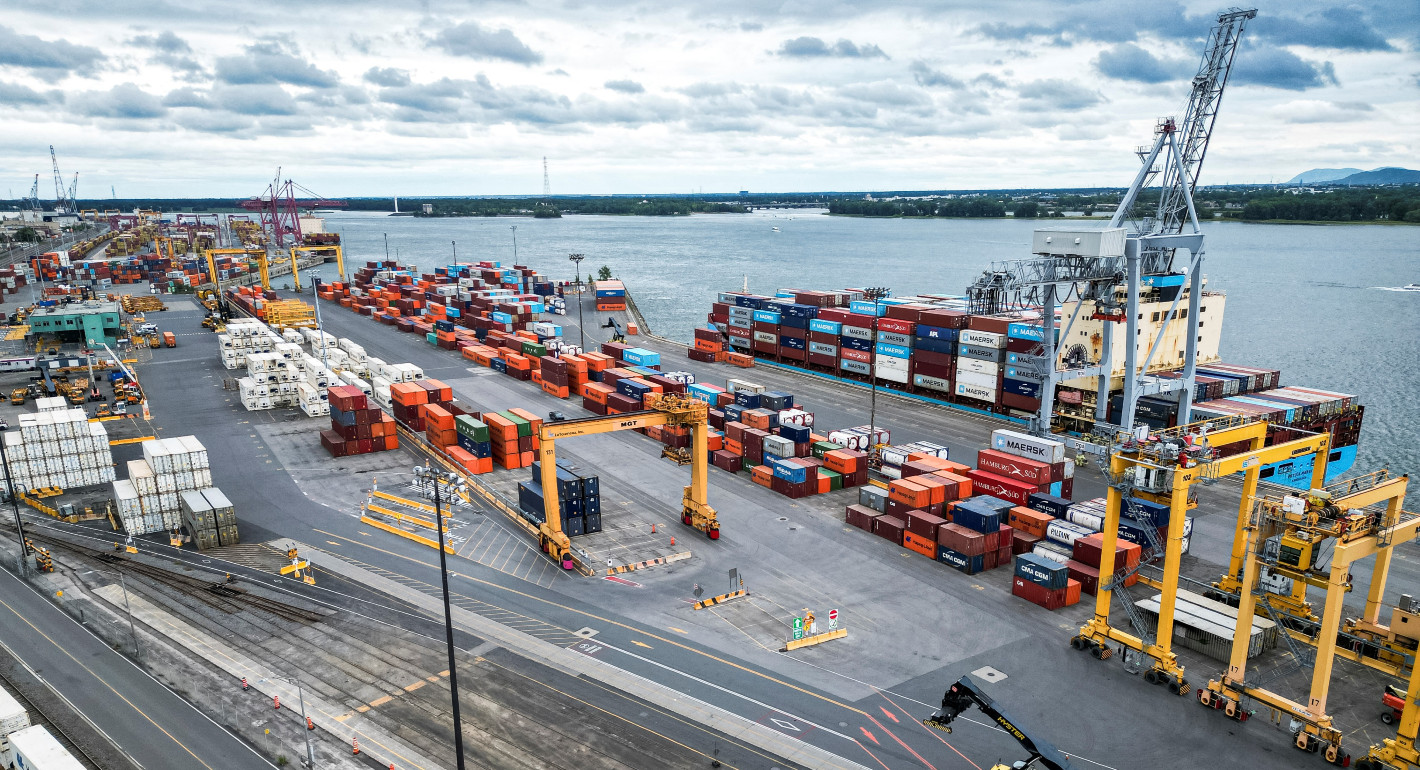
U.S. trading partners in Asia are closely watching the dispute for signs of how it may affect their own interests.
Barbara Weisel

The aftermath of the Ceuta crisis shows Europe has drawn the wrong lessons. Rather than doubling down on failed migration policies, the EU needs to address the underlying roots of such episodes.

Richard Youngs
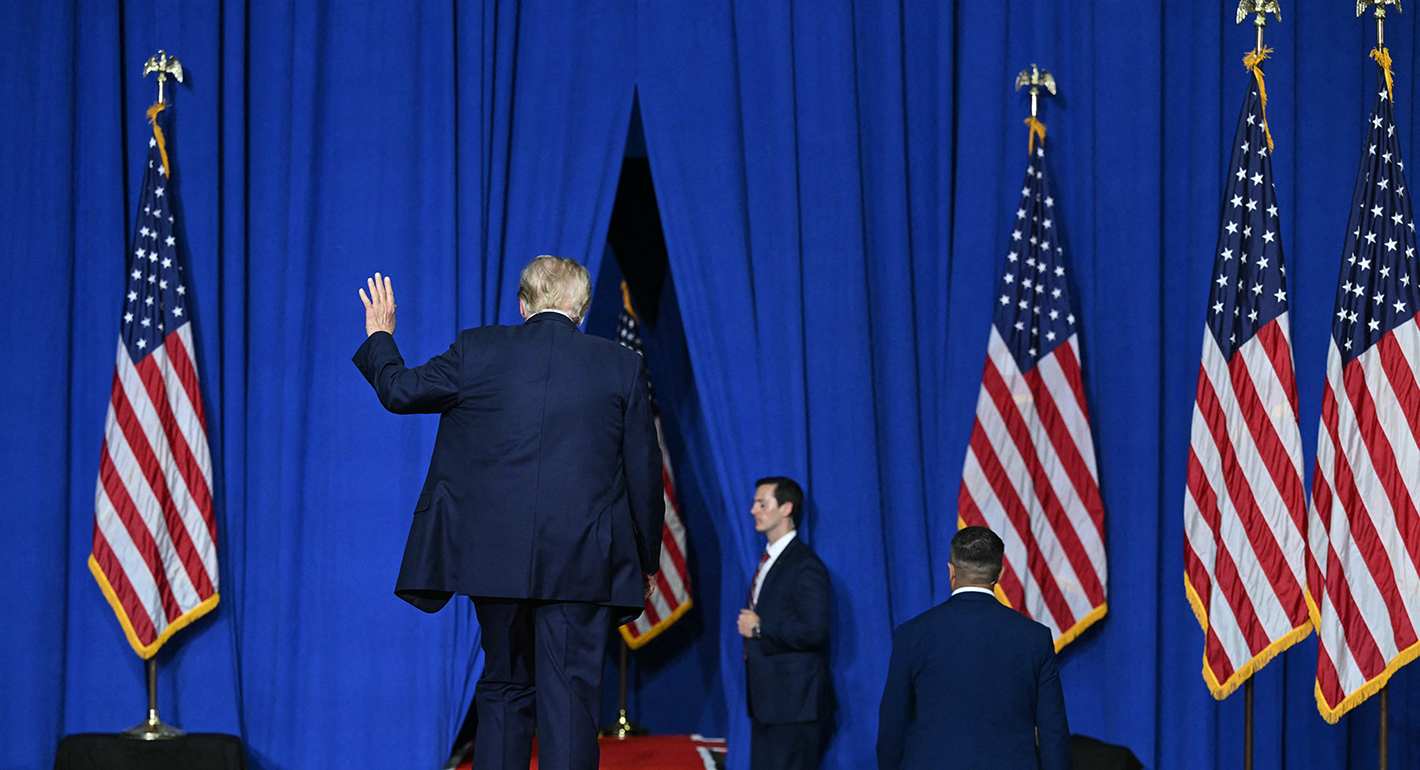
By abandoning past U.S. pro-democracy policies and adopting several lines of pro-autocratic action, the Trump administration has fundamentally repositioned the United States vis-à-vis democracy in the world.

Thomas Carothers
Chinese strategists are once again debating whether American power is declining and whether U.S. hegemony is experiencing irreversible decay.
Wu Xinbo