
• Research
  • Emissary
  • About
  • Experts
Carnegie Global logoCarnegie lettermark logo
DemocracyIran
  • Donate
{
  "authors": [
    "Nikolay Petrov"
  ],
  "type": "legacyinthemedia",
  "centerAffiliationAll": "",
  "centers": [
    "Carnegie Endowment for International Peace",
    "Carnegie Russia Eurasia Center"
  ],
  "collections": [],
  "englishNewsletterAll": "",
  "nonEnglishNewsletterAll": "",
  "primaryCenter": "Carnegie Russia Eurasia Center",
  "programAffiliation": "",
  "programs": [],
  "projects": [],
  "regions": [
    "Caucasus",
    "Russia"
  ],
  "topics": [
    "Political Reform"
  ]
}
REQUIRED IMAGE

REQUIRED IMAGE

In The Media
Carnegie Russia Eurasia Center

A Regional Shift in Moscow

This is a first for Russia: We have a president-elect even while his predecessor continues to discharge his duties. Also new: President Vladimir Putin, unlike predecessor Boris Yeltsin, has no plans to fade into political obscurity.
Link Copied
By Nikolay Petrov
Published on Apr 16, 2008

Source: The Moscow Times

This is a first for Russia: We have a president-elect even while his predecessor continues to discharge his duties. Also new: President Vladimir Putin, unlike predecessor Boris Yeltsin, has no plans to fade into political obscurity.

It will be especially interesting to watch how two somewhat opposite processes unfold: How will Putin pass the reigns to President-elect Dmitry Medvedev while simultaneously transferring some presidential authority to the prime minister's post?

The country's regions play a critical role in this high-stakes game. Whoever controls the regions effectively controls the country.

Recall that Putin opened his first term in 2000 by appointing envoys to the regions. He drew many from the ranks of the regional branches of the Federal Security Service. Putin was familiar with these people from his previous job as FSB chief and knew he could trust them. Medvedev cannot repeat the feat: He does not have an analogous power structure to draw from to place his own people in those key positions.

Observers have already noted that Medvedev did not take part in the latest round of gubernatorial appointments, though it was in March, after his election. Medvedev also made no significant statements during his campaign regarding Moscow's relationship with the regions -- a question crucial importance to a future Kremlin leader.

There is already a new law allowing the president to grant governors federal employee status. This would subordinate a region's federal ministries and departments to the governor. The law makes the governor simultaneously answerable to both the president and the prime minister -- a new configuration of the vertical of power. This could provide the prime minister with significantly more authority vis-a-vis regional elites than an earlier proposal, where the prime minister would have submitted gubernatorial nominees for final presidential approval.

How are nominees currently selected? Formally, the system calls for presidential envoys to the federal districts to select candidates and consult on their suitability. They are then to pass their recommendations to the presidential administration, with the president making the final decision.

In practice, however, representatives of the business and political elites in each region lobby the Kremlin directly on behalf of their clients. As a result, the presidential envoy is often the last to find out who the new governor will be.

Attempts were also made to incorporate governors into the federal power structure under Yevgeny Primakov, one of Boris Yeltsin's prime ministers. The idea at the time was probably to increase the government's authority by bringing some of the most influential governors on board. In something of a similar measure, governors have been required to report on the situation in their regions before enlarged government sessions over the past two years. This both allows for greater control over the governors and facilitates interaction between the federal and regional branches.

The State Council, chaired by the president, and a commission for coordinating the work of federal and regional agencies, chaired by the prime minister, are two other existing examples of this kind of oversight.

At present, the regional branches of the presidential administration monitor the activities of the governors. Corresponding structures in the government that were already weak have been made still weaker due to reorganization of the Regional Development Ministry. It's anyone's guess whether the current system of regional control will remain with the presidential administration or shift to the government's jurisdiction with Putin as prime minister. If it does shift -- partially or altogether -- it will likely remain under the prime minister's control and not, for example, under the authority of the Regional Development Ministry.

There could be some unintended side effects to concentrating power in this way, including the possibility of touching off a struggle between the presidential administration and that of the prime minister for influence in the regions, as well as the rooting out of the last vestiges of the federal system.

In the first case, this competition could be beneficial and might lead to a greater institutionalization of a system of checks and balances than exists today. In the second case, the removal of federalism's last remnants would be negative.

The only consolation would be that any system that goes too far is bound to become ineffective and is doomed to fail. Russia's further development -- and the demands of everyday life itself -- will require the restoration of some federalist element in the government.

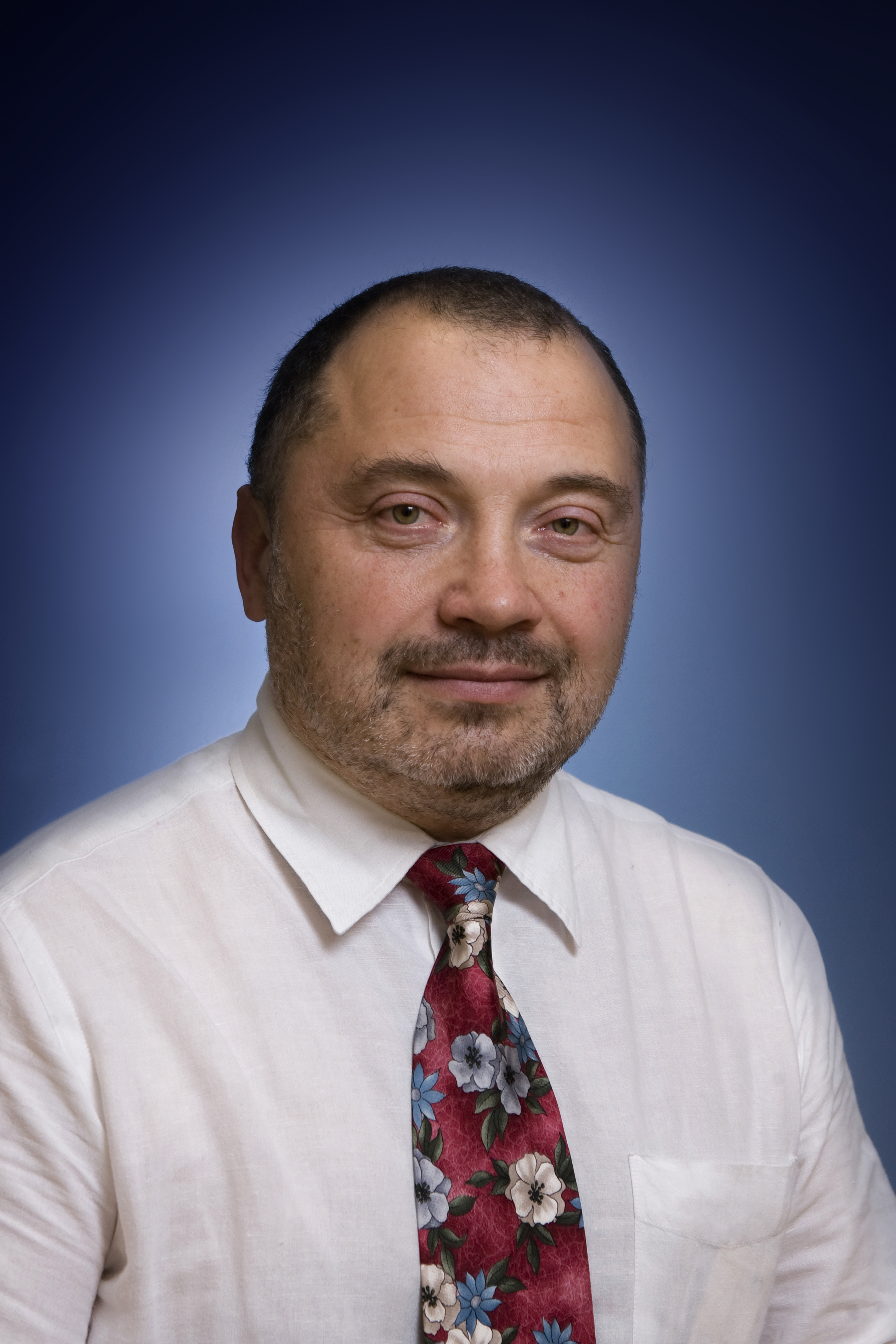
Nikolai Petrov is a scholar in residence at the Carnegie Moscow Center.

About the Author

Nikolay Petrov

Former Scholar-in-Residence, Society and Regions Program, Moscow Center

Nikolay Petrov was the chair of the Carnegie Moscow Center’s Society and Regions Program. Until 2006, he also worked at the Institute of Geography at the Russian Academy of Sciences, where he started to work in 1982.

    Recent Work

  • Commentary
    Moscow Elections: Winners and Losers

      Nikolay Petrov

  • Commentary
    September 8 Election As a New Phase of the Society and Authorities' Coevolution

      Nikolay Petrov

Nikolay Petrov
Former Scholar-in-Residence, Society and Regions Program, Moscow Center
Nikolay Petrov
Political ReformCaucasusRussia

Carnegie does not take institutional positions on public policy issues; the views represented herein are those of the author(s) and do not necessarily reflect the views of Carnegie, its staff, or its trustees.
More Work from Carnegie Endowment for International Peace

  • Commentary
    Carnegie Politika
    Is Frustration With Armenia’s Pashinyan Enough to Bring the Pro-Russia Opposition to Power?

    It’s true that many Armenians would vote for anyone just to be rid of Pashinyan, whom they blame for the loss of Nagorno-Karabakh, but the pro-Russia opposition is unlikely to be able to channel that frustration into an electoral victory.

      Mikayel Zolyan

  • Commentary
    Carnegie Politika
    Will Hungary’s New Leader Really Change EU Policy on Russia and Ukraine?

    Orbán created an image for himself as virtually the only opponent of aid to Ukraine in the entire EU. But in reality, he was simply willing to use his veto to absorb all the backlash, allowing other opponents to remain in the shadows.

      Maksim Samorukov

  • Commentary
    Strategic Europe
    How to Join the EU in Three Easy Steps

    Montenegro and Albania are frontrunners for EU enlargement in the Western Balkans, but they can’t just sit back and wait. To meet their 2030 accession ambitions, they must make a strong positive case.

      Dimitar Bechev, Iliriana Gjoni

  • Commentary
    Carnegie Politika
    Is There a Place for Russia in the New Race Back to the Moon?

    Despite having the resources and expertise, the Russian space industry missed the opportunity to offer the United States or China a mutually rewarding partnership in the lunar race.

      Georgy Trishkin

  •  A machine gun of a Houthi soldier mounted on a police vehicle next to a billboard depicting the U.S. president Donald Trump and Mohammed Bin Salman, the Crown Prince and Prime Minister of Saudi Arabia, during a protest staged to show support to Iran against the U.S.-Israel war on March 27, 2026 in Sana'a, Yemen.
    Article
    Amid Iran War, Gulf Countries Slow the Pace of Reforms

    The return of war as the organizing factor in Middle Eastern politics has predictable consequences: governments are prioritizing regime stability and becoming averse to political and social reform.

      • Sarah Yerkes

      Sarah Yerkes, Amr Hamzawy

Get more news and analysis from
Carnegie Endowment for International Peace
Carnegie global logo, stacked
1779 Massachusetts Avenue NWWashington, DC, 20036-2103Phone: 202 483 7600Fax: 202 483 1840
  • Research
  • Emissary
  • About
  • Experts
  • Donate
  • Programs
  • Events
  • Blogs
  • Podcasts
  • Contact
  • Annual Reports
  • Careers
  • Privacy
  • For Media
  • Government Resources
Get more news and analysis from
Carnegie Endowment for International Peace
© 2026 Carnegie Endowment for International Peace. All rights reserved.









