

Commentary
Uri Dadush
{
  "authors": [
    "Uri Dadush"
  ],
  "type": "other",
  "centerAffiliationAll": "",
  "centers": [
    "Carnegie Endowment for International Peace"
  ],
  "collections": [],
  "englishNewsletterAll": "",
  "nonEnglishNewsletterAll": "",
  "primaryCenter": "Carnegie Endowment for International Peace",
  "programAffiliation": "",
  "programs": [],
  "projects": [],
  "regions": [
    "North America",
    "United States",
    "East Asia",
    "China",
    "Western Europe"
  ],
  "topics": [
    "Economy",
    "Trade"
  ]
}
Source: Getty
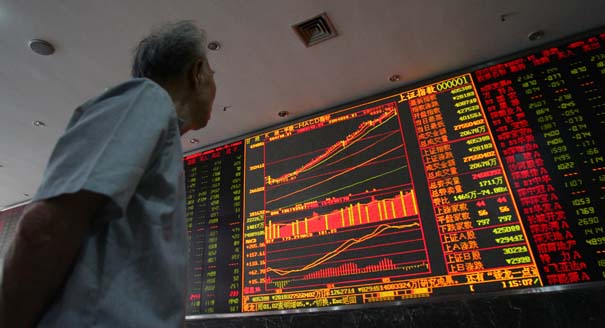
Aggressive action is needed to address the global financial crisis, but bailouts could—if not orchestrated carefully—provoke a devastating global trade war. Leaders at the G20 meeting on April 2 must devise a coordinated and transparent plan to re-ignite growth and avoid a resurgence of protectionism.
Aggressive action is needed to address the global financial crisis, but bailing out banks and domestic industries are measures that could—if not orchestrated carefully—provoke a devastating global trade war. International leaders at the G20 meeting on April 2 must devise a coordinated and transparent plan to re-ignite growth and avoid a resurgence of protectionism.
In a new policy outlook, Uri Dadush notes that protectionism is already on the rise: 70 percent of trade measures enacted since November 2008 restrict trade. Pressure to protect could become overwhelming as the crisis deepens, with huge potential losses.
Policy recommendations for the G20 meeting:
Long-term recommendations:
Dadush concludes:
“Though the impact of trade-restricting measures enacted so far is small, the risk of a devastating resurgence of protectionism is real. A trade war today would generate even greater losses than it did in its last surge during the Great Depression, when tariffs were much higher at the outset than they are today and countries were less integrated through complex international production chains.”

Former Senior Associate, International Economics Program
Dadush was a senior associate at the Carnegie Endowment for International Peace. He focuses on trends in the global economy and is currently tracking developments in the eurozone crisis.
Recent Work
Uri Dadush
Uri Dadush
Carnegie does not take institutional positions on public policy issues; the views represented herein are those of the author(s) and do not necessarily reflect the views of Carnegie, its staff, or its trustees.
The real test may come after the leaders leave the room.



Sheena Chestnut Greitens, Oriana Skylar Mastro, Yukon Huang, …

The new U.S.–Denmark–Greenland agreement will help Washington exert political, economic, and financial dominance under the guise of security. Yet, it acknowledged Copenhagen’s and Nuuk’s sovereignty on the island.

Marc Pierini

The nuclear relationship between China and the United States is increasingly shaped by widening perception gaps rather than deliberate strategic design.

Tong Zhao
Washington needs to recognize that influence in the Western Hemisphere comes from presence, delivery, and reliability. It also must recognize that while the United States remains the key external actor, it no longer operates in a permissive environment and cannot presume deference from regional players who have other options, namely China.
Juan S. Gonzalez

Minsk clearly expected the dialogue with Washington to yield more results, in particular the lifting of EU sanctions and permission to export potash.

Artyom Shraibman