

Commentary
For every ruble allocated to social policy, health, and education in 2027, double that amount is earmarked for the army, the police, and the security services.
Alexandra Prokopenko
{
  "authors": [
    "Minxin Pei",
    "Ali Wyne"
  ],
  "type": "legacyinthemedia",
  "centerAffiliationAll": "dc",
  "centers": [
    "Carnegie Endowment for International Peace"
  ],
  "collections": [],
  "englishNewsletterAll": "asia",
  "nonEnglishNewsletterAll": "",
  "primaryCenter": "Carnegie Endowment for International Peace",
  "programAffiliation": "AP",
  "programs": [
    "Asia"
  ],
  "projects": [],
  "regions": [
    "East Asia",
    "China"
  ],
  "topics": [
    "Political Reform",
    "Economy"
  ]
}
Source: Getty
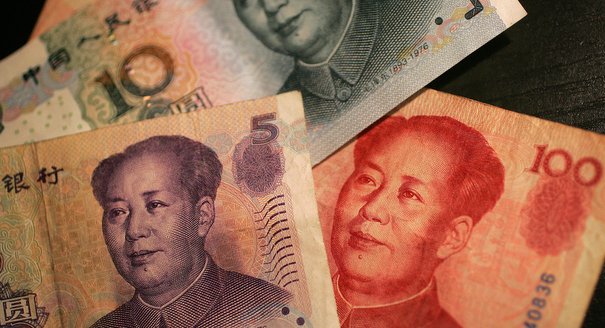
To rekindle growth, Beijing needs more than just an economic stimulus; it must give its people a voice so that they are free to consume.
Source: Financial Times

Although this challenge has acquired greater urgency today, it is not new. Chinese policymakers and Beijing’s biggest trading partners have been warning about the massive imbalance between the country’s levels of exports and domestic consumption.
In 2007, China’s current account surplus, a key indicator of this imbalance, was $372bn (€275bn, £250bn), the world’s largest in absolute terms. With global trade in its worst slump since the second world war, Beijing is now paying for policies that have consistently accorded higher priority to exports than household consumption.
The Chinese government has long recognised the risks of such imbalances and has pledged to reduce them through reforms. But despite Beijing’s rhetoric, China’s rate of household consumption has been falling, not rising. In 1985, household consumption was 51 per cent of gross domestic product; in 2007, it was 35 per cent, the lowest proportion ever for China and for a major country in peacetime.
Why has the government been un-able to stimulate household consumption? Conventional wisdom blames “precautionary savings” – Chinese households save an ever-increasing proportion of their income to pay for healthcare, retirement and higher education because China’s social safety net is inadequate, and its social services are under-provisioned. Although this observation correctly identifies the problem, its explanation is insufficient. One ought to examine what role China’s closed political system plays.
In other words, is there a connection between freedom and consumption? Reviewing data on political freedom, civil liberties and household consumption for the years 1985 to 2005, we find two intriguing clues.
First, China is among a small group of countries that has become less free (as measured by Freedom House’s Freedom Index) and experienced a significant drop in their rates of household consumption (defined here as a decline of 20 per cent or more). The others are Venezuela, Kuwait, Lebanon, Bhutan, Swaziland, Iran, Uzbekistan and Saudi Arabia – not exactly the countries that China should strive to emulate.
Second, although the overall relationship between freedom and consumption is complex, countries that have become freer in the past two decades are more likely to have registered an increase in their consumption rates. Kenya, Rwanda, South Africa, Bulgaria, Hungary, Poland, Romania and Indonesia are some notable examples.
When we confine our focus to those countries for which the data are statistically significant, we find that 71 per cent of the countries that experienced an increase in their consumption rates became freer. Those that experienced larger gains (10 per cent or more) were twice as likely to have become freer.
We offer two possible explanations for these observations. First, political stability appears to be a critical condition for rising household consumption. The advent of democracy may increase stability by facilitating the resolution of longstanding conflicts, making individuals more confident consumers. Most of the countries that saw their consumption rates rise are stable developing countries, whereas the majority of those that experienced the reverse are unstable developing countries.
A second key distinguishing factor is the provision of social safety nets. Of the 20 statistically significant countries that became both freer and managed to raise their consumption rates, most are developing economies that underwent simultaneous transitions to democracy and market economics, and built social safety nets to meet the demands of their newly empowered citizens.
To the extent that its deficient social safety net depresses household consumption, the root cause of China’s problem is political, not economic. The lack of democracy in China not only results in a poor human rights record but also disenfranchises the groups that would otherwise pressure ruling elites to provide the necessary social services.
To rekindle growth, Beijing needs more than just an economic stimulus; it must give its people a voice so that they are free to consume.

Former Adjunct Senior Associate, Asia Program
Pei is Tom and Margot Pritzker ‘72 Professor of Government and the director of the Keck Center for International and Strategic Studies at Claremont McKenna College.
Ali Wyne
Former Junior Fellow, China Program
Carnegie does not take institutional positions on public policy issues; the views represented herein are those of the author(s) and do not necessarily reflect the views of Carnegie, its staff, or its trustees.

For every ruble allocated to social policy, health, and education in 2027, double that amount is earmarked for the army, the police, and the security services.

Alexandra Prokopenko

The acknowledgment has sparked fears of a new arms race with China and Russia.

Chris O’Meara

The European Commissioner for Trade is headed to China. But after President Xi’s bridge-building visit to Washington, can a more isolated EU overcome Beijing’s stranglehold on critical raw materials? Who will blink first?

Rym Momtaz, ed.
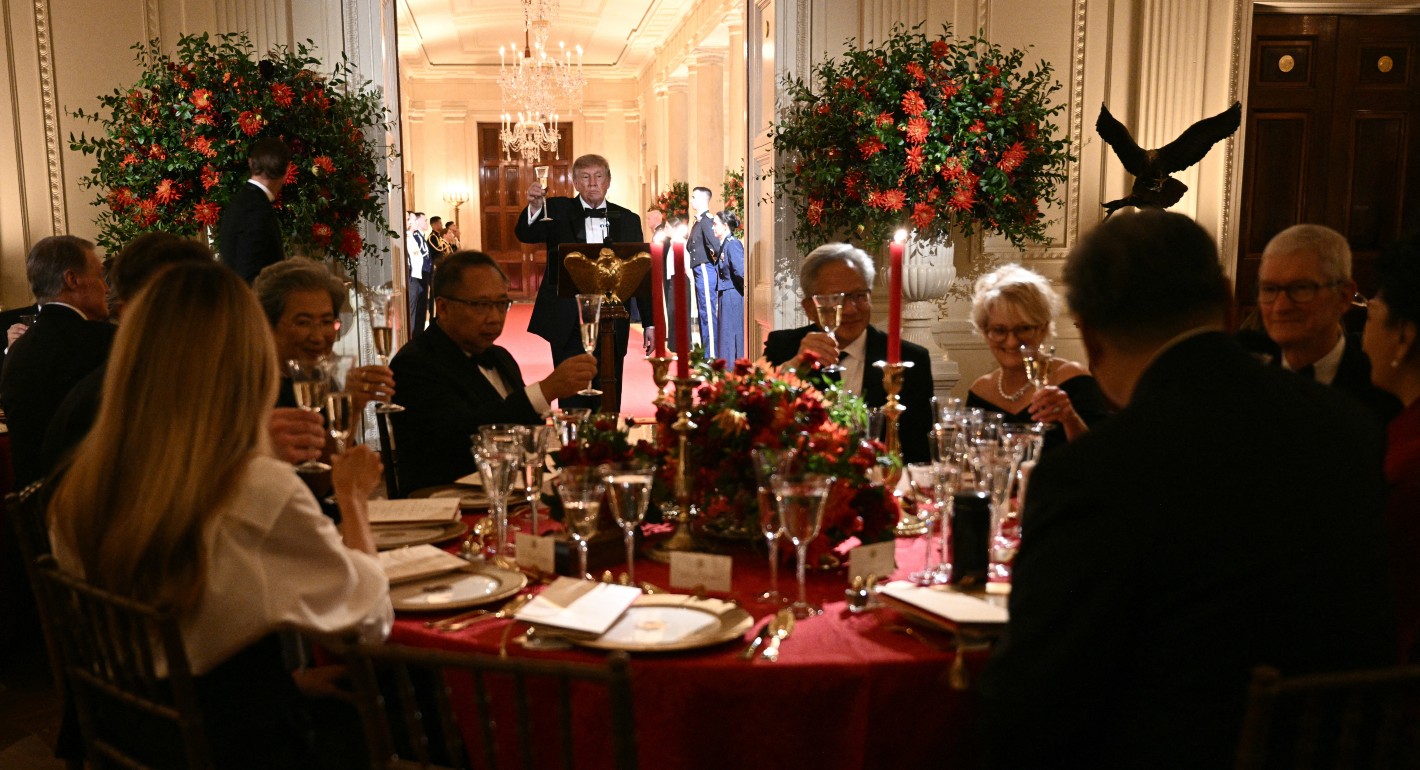
The summit may be remembered as a fatal blunder, when Washington, Beijing, and the AI industry collectively chose ceremony over action.

Jeffrey Prescott

The domestic impacts of how long it is taking to end the war in Ukraine have pushed the French electorate to the political extremes and compromised the country’s diplomatic capacity.
Rym Momtaz