• Research
  • Emissary
  • About
  • Experts
Carnegie Global logoCarnegie lettermark logo
DemocracyIran
  • Donate
{
  "authors": [],
  "type": "pressRelease",
  "centerAffiliationAll": "dc",
  "centers": [
    "Carnegie Endowment for International Peace"
  ],
  "collections": [],
  "englishNewsletterAll": "menaTransitions",
  "nonEnglishNewsletterAll": "",
  "primaryCenter": "Carnegie Endowment for International Peace",
  "programAffiliation": "MEP",
  "programs": [
    "Middle East"
  ],
  "projects": [],
  "regions": [
    "Middle East"
  ],
  "topics": [
    "Economy"
  ]
}
REQUIRED IMAGE

REQUIRED IMAGE

Press Release

Reformed Wealth Funds Could Help Economic Recovery

Sovereign wealth funds could contribute to global economic recovery by reinvigorating international investment, if they first responded to the reservations of recipient governments by increasing transparency and improving public image.

Link Copied
Published on Apr 10, 2009
Program mobile hero image

Program

Middle East

The Middle East Program in Washington combines in-depth regional knowledge with incisive comparative analysis to provide deeply informed recommendations. With expertise in the Gulf, North Africa, Iran, and Israel/Palestine, we examine crosscutting themes of political, economic, and social change in both English and Arabic.

Learn More

BEIRUT, Apr 3—Sovereign wealth funds (SWFs) could contribute to global economic recovery by reinvigorating international investment, if they first responded to the reservations of recipient governments by increasing transparency and improving their public image. Ahead of the April 5-6 meeting of the International Working Group of Sovereign Wealth Funds (IWG), Sven Behrendt offers a twelve-point blueprint for implementing and expanding upon the Santiago Principles.

The 12-point blueprint:

  1. Establish deadlines for implementing the Santiago Principles.
  2. Create a peer-review mechanism to monitor implementation of reforms.
  3. Publicly disclose any non-financial factors considered when making investments.
  4. Coordinate investments in projects that further the common good, like sustainable development.
  5. Engage recipient governments in a dialogue to address their misgivings about SWFs.
  6. Reach out to the public in recipient countries to avert a populist backlash against SWFs.
  7. Develop policy recommendations for the G20 as it seeks to stabilize world markets.
  8. Establish an advisory group of policymakers and investment professionals to provide insight into governance, investment strategies, risk management, and public relations.
  9. Increase public knowledge about SWFs through cooperation with researchers and analysts.
  10. Broaden IWG membership to include all government-owned investment funds.
  11. Clarify and publicize the IWG’s goals, strategies, and structure.
  12. Appoint a professional IWG secretariat to coordinate oversight and outreach.

Behrendt concludes:

“Given global market volatility, SWFs have been less active in past months. The public debate about their impact on the national interest of recipient economies has calmed down. However, the IWG should take a medium- to long-term perspective and proactively pursue its reform agenda to be prepared when the global economy picks up and SWFs seek global opportunities again.”

###


NOTES

  • Click here for a direct link to the PDF
  • Sven Behrendt is a visiting scholar at the Carnegie Middle East Center. He is an expert in global policy issues, international negotiations, corporate strategy, and diplomacy. Prior to his appointment at Carnegie, he served in various management positions at the World Economic Forum and the Bertelsmann Group on Policy Research. He is a regular commentator on television and in the press on corporate strategy and globalization.
  • The Carnegie Middle East Center based in Beirut, Lebanon, aims to better inform the process of political change in the Middle East.
  • The Carnegie Middle East Program provides analysis and recommendations in both English and Arabic that are deeply informed by knowledge and views from the region.
  • Carnegie's Arab Reform Bulletin has been transformed into a full-featured website that offers greatly enhanced search functionality, the option for readers to comment on articles, and frequent news updates.
  • Press Contact: Trent Perrotto, 202/939-2372, tperrotto@ceip.org
     
EconomyMiddle East

Carnegie does not take institutional positions on public policy issues; the views represented herein are those of the author(s) and do not necessarily reflect the views of Carnegie, its staff, or its trustees.

More Work from Carnegie Endowment for International Peace

  • Commentary
    Strategic Europe
    Europe and the Arab Gulf Must Come Together

    The war in Iran proves the United States is now a destabilizing actor for Europe and the Arab Gulf. From protect their economies and energy supplies to safeguarding their territorial integrity, both regions have much to gain from forming a new kind of partnership together.

      • Rym Momtaz

      Rym Momtaz

  • US President Donald Trump presides over the inaugural meeting of the âBoard of Peace,❠a newly established body focused on efforts for Gaza, at the US Institute of Peace in Washington, DC, United States, on February 19, 2026.
    Article
    The Board of Peace and Funding for Gaza Reconstruction: On Whose Account?

    Stakeholders must demand major restructuring of the Board of Peace and robust oversight and transparency before engaging with it. Until then, rights-respecting existing platforms and mechanisms for multilateral peacemaking should be supported.

      Zaha Hassan, Charles H. Johnson

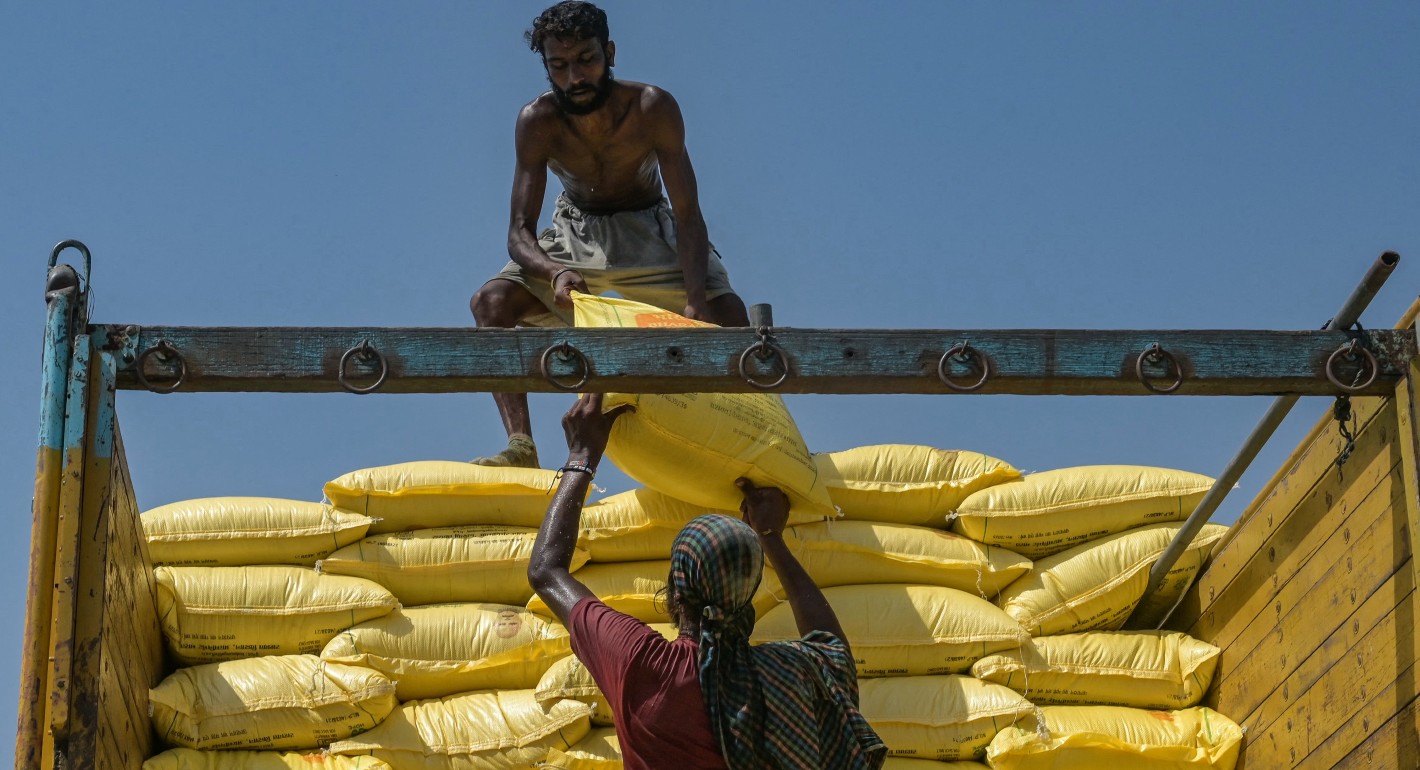
  • One man tossing a sack to another to stack on a truck
    Commentary
    Emissary
    The Other Global Crisis Stemming From the Strait of Hormuz’s Blockage

    Even if the Iran war stops, restarting production and transport for fertilizers and their components could take weeks—at a crucial moment for planting.

      • Noah  Gordon ​​​​

      Noah Gordon, Lucy Corthell

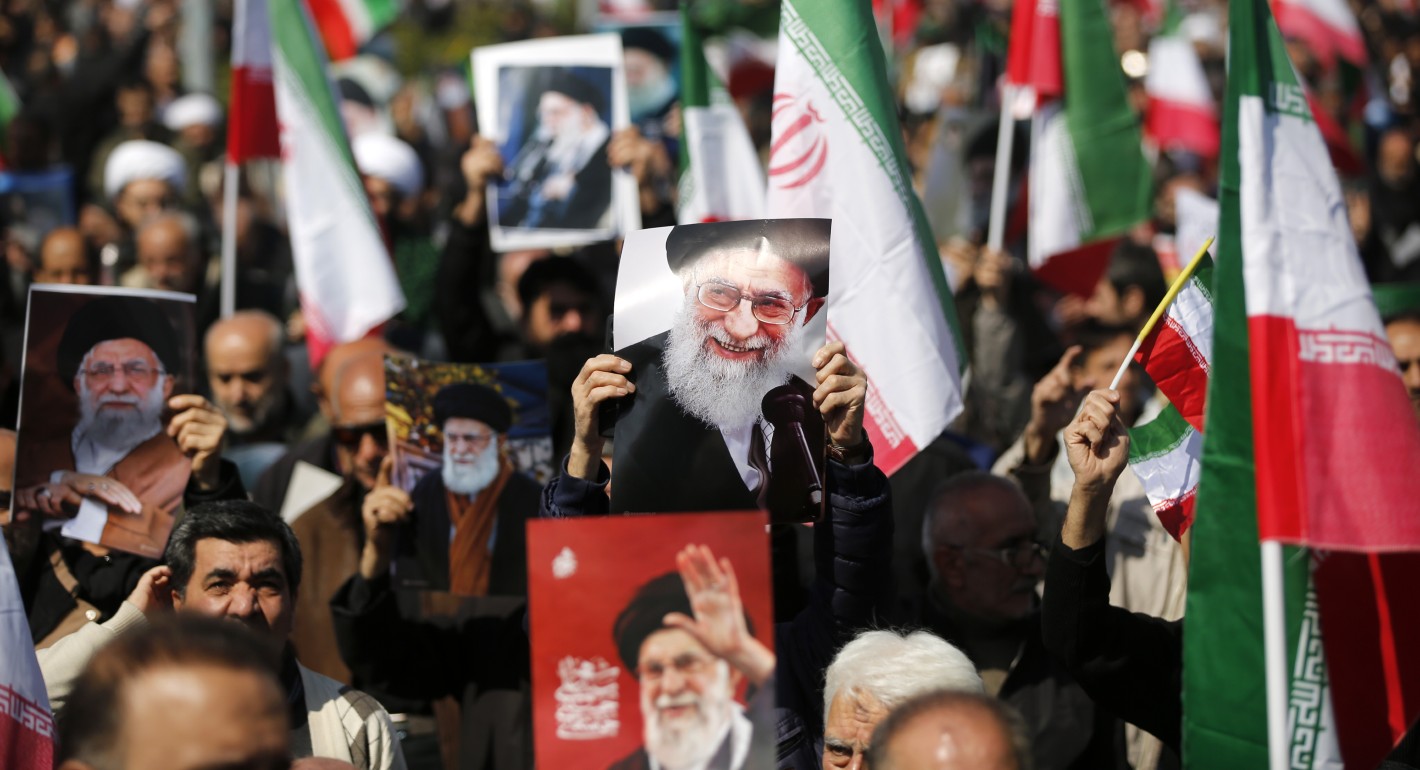
  • Crowds holding Iranian flags and photos of the late Khamenei
    Commentary
    Emissary
    Who Will Be Iran’s Next Supreme Leader?

    If the succession process can be carried out as Khamenei intended, it will likely bring a hardliner into power.

      • Eric Lob

      Eric Lob

  • people watching smoke rising at sunrise from rooftops
    Commentary
    Emissary
    Bombing Campaigns Do Not Bring About Democracy. Nor Does Regime Change Without a Plan.

    Just look at Iraq in 1991.

      Marwan Muasher

Get more news and analysis from
Carnegie Endowment for International Peace
Carnegie global logo, stacked
1779 Massachusetts Avenue NWWashington, DC, 20036-2103Phone: 202 483 7600Fax: 202 483 1840
  • Research
  • Emissary
  • About
  • Experts
  • Donate
  • Programs
  • Events
  • Blogs
  • Podcasts
  • Contact
  • Annual Reports
  • Careers
  • Privacy
  • For Media
  • Government Resources
Get more news and analysis from
Carnegie Endowment for International Peace
© 2026 Carnegie Endowment for International Peace. All rights reserved.