

Commentary
The Bureau of Industry and Security needs to adjust its focus and practices to maintain its position as the U.S. government’s primary champion of international technological competition.
Geoffrey Irving
{
  "authors": [
    "Minxin Pei",
    "Ali Wyne"
  ],
  "type": "legacyinthemedia",
  "centerAffiliationAll": "dc",
  "centers": [
    "Carnegie Endowment for International Peace",
    "Carnegie China"
  ],
  "collections": [],
  "englishNewsletterAll": "asia",
  "nonEnglishNewsletterAll": "",
  "primaryCenter": "Carnegie China",
  "programAffiliation": "AP",
  "programs": [
    "Asia",
    "Middle East"
  ],
  "projects": [],
  "regions": [
    "Middle East",
    "Iran"
  ],
  "topics": [
    "Political Reform",
    "Democracy",
    "Foreign Policy"
  ]
}
Source: Getty
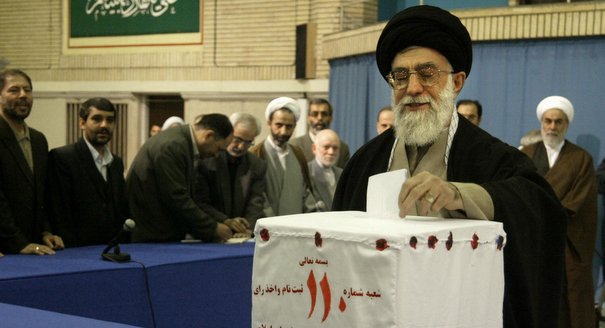
Reviewing past cases of rigged elections in authoritarian and transition countries can illuminate the prospects for Iran's opposition.
Source: International Herald Tribune

Based on our review of 16 cases of rigged elections in authoritarian or transition countries in the last 40 years, we find that autocratic rulers who attempted to steal presidential, parliamentary, or general elections had roughly an equal chance of keeping their grip on power, succumbing to a quick and decisive defeat, or getting mired in a costly political stalemate.
Autocrats have an excellent chance of surviving crises provoked by disputed elections if the ruling elites are united and if they have the support of military and security forces.
President Robert Mugabe resorted to violence to crush opposition demonstrators following Zimbabwe’s disputed presidential election in 2002. The ruling elites in Ethiopia ordered the police to fire on demonstrators after the opposition challenged the outcome of the country’s general election in 2005. In 1989, the Panamanian strongman Manuel Noriega rigged the country’s general election. He would have succeeded in clinging to power had President George H.W. Bush not sent in the U.S. military to depose him.
But when the ruling elites are divided and the military and security forces refuse to back them, autocrats normally fall from power within days or weeks. In the Philippines, President Ferdinand Marcos was declared the victor of a rigged election on Feb. 7, 1986, but a large segment of his military joined a unified civilian opposition in calling for his ouster, forcing Marcos into exile 18 days later. In Serbia, the opposition drove President Slobodan Milosevic from power on Oct. 7, 2000, less than two weeks after he tried to steal the presidential election. Again, his fate was sealed when the Serbian military refused to prop up his regime.
In the “color revolutions” — Georgia in 2003, Ukraine in 2004, and Kyrgyzstan in 2005 — it took only slightly longer (from one to two months) for the incumbents (or the incumbent’s preferred candidate, in the case of Ukraine) who attempted to steal the elections to be unseated. In each of those three cases, the country’s supreme court played a key role in de-legitimizing the autocrats and empowering the opposition.
Political stalemate (which usually favored the candidates who were declared winners in the disputed elections) prevailed in almost 40 percent of the cases that we examined. However, unresolved election disputes have often triggered long-term internal conflicts.
Nigeria held presidential elections in June 1993, but the military annulled the results, a decision that unleashed protests, military crackdowns and ethnic violence for nearly six years. In a somewhat different situation, the opposition parties in Haiti boycotted the 2000 presidential election, ensuring Jean-Bertrand Aristide’s landslide victory. Violence devastated the country until Aristide was ousted in early 2004.
The protests following Mongolia’s 2008 legislative election produced a coalition government, but only after hundreds of protesters had been killed, injured or imprisoned. The chaos after Kenya’s 2007 election ended similarly, but not until some 1,000 people had been killed.
Although disputed elections have historically produced three different outcomes, the international community normally has little direct leverage in influencing them, short of outright military intervention (as in Panama in 1989).
The reasons are clear. Autocrats who get caught up in election crises have little to lose and are determined to remain in power. They are seldom swayed by outside appeals for restraint or compromise. Given the rapidity with which such crises develop, outsiders are poorly positioned to provide substantive assistance to the opposition.
At the moment, at least part of Iran’s ruling elites appear to have lined up behind Ahmadinejad, thus increasing the odds of a violent crackdown on protesters. But if that falls short of completely crushing the opposition, Tiananmen-style, history suggests that Iran’s opposition forces may still be able to right a wrong.
They have already demonstrated impressive skills in organizing large rallies and using new information technologies to mobilize Iran’s middle class. Such organizational capacity, plus political stamina, will serve the opposition well in exploiting the ensuing political stalemate and gradually eroding support for Ahmadinejad within the Iranian regime.

Former Adjunct Senior Associate, Asia Program
Pei is Tom and Margot Pritzker ‘72 Professor of Government and the director of the Keck Center for International and Strategic Studies at Claremont McKenna College.
Ali Wyne
Former Junior Fellow, China Program
Carnegie does not take institutional positions on public policy issues; the views represented herein are those of the author(s) and do not necessarily reflect the views of Carnegie, its staff, or its trustees.
The Bureau of Industry and Security needs to adjust its focus and practices to maintain its position as the U.S. government’s primary champion of international technological competition.
Geoffrey Irving
Despite myriad challenges and occasional stumbles, the new Hungarian government is moving ahead with energy and conviction to uproot years of illiberalism and corruption and rebuild Hungarian democracy.

Thomas Carothers

European Commission President Ursula von der Leyen is about to give her annual address on the state of the EU. Here’s what she won’t—but should—say.

Rym Momtaz
Understanding the climatic pain points is necessary for policymakers hoping to minimize the war’s negative environmental consequences.



Alejandro Martin Rodriguez, Joy Arkeh, Sarah Yerkes

Huawei pushed hard to enter the Egyptian data centers market, until the Americans made a better offer.

Angie Omar