

Research
- +6
Yasmine Farouk, Nathan J. Brown, Maysaa Shuja Al-Deen, …
{
  "authors": [
    "Intissar Fakir"
  ],
  "type": "legacyinthemedia",
  "centerAffiliationAll": "dc",
  "centers": [
    "Carnegie Endowment for International Peace"
  ],
  "collections": [],
  "englishNewsletterAll": "menaTransitions",
  "nonEnglishNewsletterAll": "",
  "primaryCenter": "Carnegie Endowment for International Peace",
  "programAffiliation": "MEP",
  "programs": [
    "Middle East"
  ],
  "projects": [],
  "regions": [
    "North Africa",
    "Morocco"
  ],
  "topics": [
    "Political Reform",
    "Foreign Policy"
  ]
}
Source: Getty
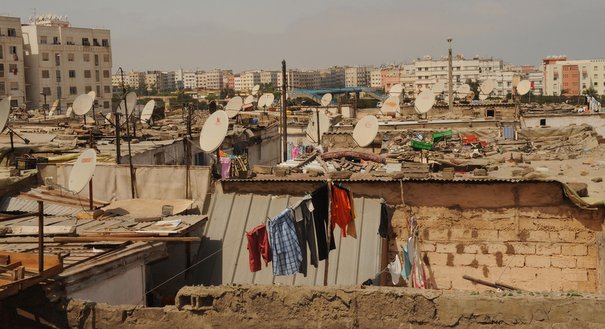
Morocco's monarchy has yielded little, if any, political freedom. It must not hide behind the erroneous claim that democracy and security are mutually exclusive.
Source: the Guardian

Morocco excels at deflecting western criticism, insisting that liberal reforms would empower violent Islamic radicals who threaten the state. The claim takes in even those who should know better. "Under pressure from Islamic radicalism," Stephen Erlanger and Souad Mekhennet wrote recently in the New York Times, "King Mohammed VI has slowed the pace of change." The latest cover of the Washington Diplomat sports a profile of Aziz Mekouar, Morocco's ambassador to the US, heralding the monarchy's successes in squaring tradition with modernity.
Strangely, the reporters never ask about their fellow journalists in Morocco. According to Reporters Without Borders, since Mohammed came to the throne, Moroccan journalists have been sentenced to a total of 25 years in prison and $2.8m in fines, endured undocumented physical assaults, had their licences revoked and seen their equipment confiscated on charges of defaming the monarchy or jeopardising state security.
Last March, the managing editor and publishing director of the daily Arabic newspaper al-Jarida al-Oula were fined $24,190 and sentenced to two months in jail on charges of "defaming and insulting the judiciary" for covering a scandal involving a member of the ruling family. In another case last year, the same paper was ordered to halt publication of testimony on repression under the rule of the late King Hassan II.
In early August, the palace banned the country's most independent magazine, Telquel, for conducting a survey with French daily Le Monde on the king's first decade in power. The results were overwhelmingly positive, but the Ministry of Communications nonetheless declared that the monarchy should not be subject to debate, and the issue never appeared.
Ironically, the radicalism that plagues Morocco is a product of the palace itself.
Reporters, editors and commentators are still thrown in jail for any offence, perceived or real. And as at Telquel, many of those the regime targets do not even sympathise with Islamist agendas.
Ironically, the radicalism that plagues Morocco is a product of the palace itself. Throughout the 1980s and 90s, Mohammed's father, Hassan II, embarked on an initiative to Islamise Morocco. Seeking both to solidify his image as Commander of the Faithful and to weaken the secular left-leaning opposition forces that had gained support in the 60s and 70s, Hassan led a relentless effort to remake education and popular culture, infusing school curriculums with radical Salafi teachings.
The monarchy sought to divert attention from the sad reality of daily life by associating all secular thinking with colonialism and western domination – a powerful charge for a country that lived under French rule for nearly five decades – engaging the population in a search for lost identity. More imagined than real, the new identity focused on the religious character of the state: a Sunni, Salafi Morocco.
These efforts have succeeded, and all too well. As is the case in Saudi Arabia, the monarchy now faces an Islamist threat it is increasingly unable or unwilling to contain. The precise extent of the threat has never been clear, but Islamism is undeniably on the rise. While Al-Qaida in the Islamic Maghreb (AQIM) has inflicted less damage in Morocco than it has in Algeria and Mauritania, it remains a palpable threat.
But there are critical differences between AQIM and nonviolent local Moroccan Islamist movements seeking a legitimate say in the politics of their own countries. Across the Middle East, terrorism remains a convenient excuse for leaders to maintain control of civil institutions, while ignoring – and even compounding – problems that will ultimately be much more threatening to them.
Despite what the autocrats say, democracy and security are not mutually exclusive in North Africa. On the contrary, to control the spread of extremism, the government will need to pursue liberal reforms to give people a voice.
In the next few months, Morocco will pretend to enact much-anticipated judicial reforms. As with the monarchy's other promises, including a relaxation of restrictions on the media, implementation of anti-corruption measures and separation of government powers, these initiatives will amount mostly to cosmetic changes. In truth, the judiciary is unlikely ever to be independent from the monarchy.
And the monarchy has yielded little, if any, political freedom. In the local elections in June, the (supposed) opposition Party for Modernity and Authenticity won an overwhelming majority of votes, and a critical stake in the country's municipal councils. But party leader Fouad al-Himma is a favourite and schoolmate of the king. He and his party will never pose a serious challenge to the government.
Despite what the autocrats say, democracy and security are not mutually exclusive in North Africa. On the contrary, to control the spread of extremism, the government will need to pursue liberal reforms to give people a voice.
As he welcomes Middle Eastern leaders to the White House in the coming months, President Obama will find no easy answers to these problems. But he can depart from past policy by choosing his words carefully, and refusing to praise countries like Morocco as shining examples of political reform even as they commit grievous injustices.
Former Fellow, Middle East Program, Editor in Chief, Sada
Intissar Fakir was a fellow and editor in chief of Sada in Carnegie’s Middle East Program.
Recent Work



Yasmine Farouk, Nathan J. Brown, Maysaa Shuja Al-Deen, …
Intissar Fakir
Carnegie does not take institutional positions on public policy issues; the views represented herein are those of the author(s) and do not necessarily reflect the views of Carnegie, its staff, or its trustees.

Ahead of a tough winter for Ukraine, Donald Trump’s swing back toward Russia bodes ill. But instead of panicking, Kyiv’s European allies are focusing on action.

Rym Momtaz

Without a ceasefire with Ukraine on attacking each other’s energy infrastructure—to which the Kremlin is unlikely to agree—the diesel agreement between Putin and Trump is largely for show, rather than representing a genuine increase in the volumes of Russian diesel on the global market.

Sergey Vakulenko

Funding Ukraine remains a priority for European leaders. As Russia’s war of aggression heads into another winter, two feasible options to mobilize support for Kyiv should be fast-tracked.


Vladyslav Rashkovan, Gregory P. Wilson

While the EU and European governments are embracing the much-lauded middle-power moment, this entails three difficult conundrums.

Richard Youngs
The middle power moment will not be defined by sovereign states alone, and California stands out for its potential contributions to international cooperation.


Ian Klaus, Stewart Patrick