• Research
  • Emissary
  • About
  • Experts
Carnegie Global logoCarnegie lettermark logo
DemocracyIran
  • Donate
{
  "authors": [
    "Gregory L. Schulte"
  ],
  "type": "other",
  "centerAffiliationAll": "dc",
  "centers": [
    "Carnegie Endowment for International Peace"
  ],
  "collections": [
    "Korean Peninsula"
  ],
  "englishNewsletterAll": "ctw",
  "nonEnglishNewsletterAll": "",
  "primaryCenter": "Carnegie Endowment for International Peace",
  "programAffiliation": "NPP",
  "programs": [
    "Nuclear Policy"
  ],
  "projects": [],
  "regions": [
    "Middle East",
    "Syria",
    "East Asia",
    "North Korea"
  ],
  "topics": [
    "Nuclear Policy",
    "Nuclear Energy"
  ]
}
Source: Getty

Other

Uncovering Syria's Covert Reactor

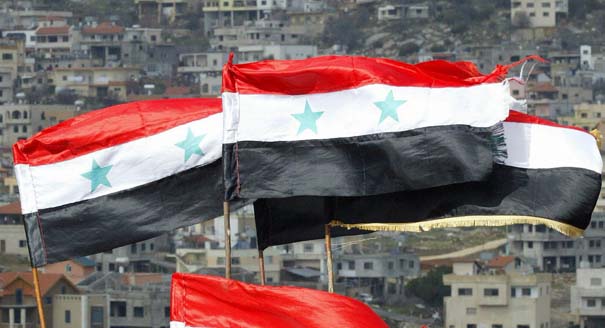
The current stalemate of the IAEA's investigation of undeclared nuclear activities in Syria is the responsibility of the Syrian government, which buried the remains of its covert nuclear reactor in 2008 and now seeks to bury the IAEA investigation.

Link Copied
By Gregory L. Schulte
Published on Jan 5, 2010
Program mobile hero image

Program

Nuclear Policy

The Nuclear Policy Program aims to reduce the risk of nuclear war. Our experts diagnose acute risks stemming from technical and geopolitical developments, generate pragmatic solutions, and use our global network to advance risk-reduction policies. Our work covers deterrence, disarmament, arms control, nonproliferation, and nuclear energy.

Learn More

Summary

In June 2009, one year after the first and only inspector visit in Syria, the IAEA director general reported that the information provided by the country "does not adequately support its assertions about the nature of the site." In August, he reported that the IAEA's investigation was "severely impeded" by Syria's non-cooperation.

  • The IAEA must complete its investigation in order to verify the absence of other undeclared activities in Syria, and the country's regime must be dissuaded from renewing such nuclear pursuits.
     
  • This case is as much about North Korean proliferation as it is about Syrian violations. Exposing North Korean cooperation with Syria could help to disclose and disrupt North Korea's global network.
     
  • The IAEA Board of Governors should address the Syrian investigation and North Korean proliferation activities at its next meeting in March 2010, and the issues should also be taken up at the NPT Review Conference in May, and the Six-Party Talks on North Korea.
     
  • Newly-appointed IAEA Director General Yukiya Amano should pursue a special inspection of Syria. The IAEA Board should be ready to back him, including through a report to the UN Security Council if the country’s non-cooperation continues.
     
  • The European Union should condition future economic relations with Syria on its cooperation with the IAEA to demonstrate that non-compliance has real consequences.

About the Author
Ambassador Gregory L. Schulte was the U.S. permanent representative to the International Atomic Energy Agency from July 2005 to June 2009. He is now a senior visiting fellow at the Center for the Study of Weapons of Mass Destruction at the National Defense University. This article reflects his personal views and not those of NDU or the U.S. government.

About the Author

Gregory L. Schulte

Gregory L. Schulte
Nuclear PolicyNuclear EnergyMiddle EastSyriaEast AsiaNorth Korea

Carnegie does not take institutional positions on public policy issues; the views represented herein are those of the author(s) and do not necessarily reflect the views of Carnegie, its staff, or its trustees.

More Work from Carnegie Endowment for International Peace

  • Trump with arms out, surrounded by mics
    Commentary
    Emissary
    The Problem With the Idea That Netanyahu Made Trump Attack Iran

    Going to war was the U.S. president’s decision, for which he alone is responsible.

      Daniel C. Kurtzer, Aaron David Miller

  • Implementing the Biden Administration’s China Strategy
    Report
    Implementing the Biden Administration’s China Strategy

    At the heart of Biden’s approach to China was the consolidation of a framework for strategic competition with an eye toward coexistence.

      • Senkai Hsia

      Christopher S. Chivvis, Senkai Hsia

  • Trump and Netanyahu speaking
    Commentary
    Emissary
    The Diverging U.S. and Israeli Goals in Iran Are Making the Endgame Even Murkier

    The cracks between Trump and Netanyahu have become more pronounced, particularly over energy and leadership targets.

      • Eric Lob

      Eric Lob

  • Seoul traffic at night
    Commentary
    Emissary
    How the Hormuz Closure Is Testing the Korean President’s Progressive Agenda

    The crisis is not just a story of energy vulnerability. It’s also a complex, high-stakes political challenge.

      Darcie Draudt-Véjares

  • Commentary
    Strategic Europe
    Russia’s Imperial Retreat Is Europe’s Strategic Opportunity

    The war in Ukraine is costing Russia its leverage overseas. Across the South Caucasus and Middle East, this presents an opportunity for Europe to pick up the pieces and claim its own sphere of influence.

      William Dixon, Maksym Beznosiuk

Get more news and analysis from
Carnegie Endowment for International Peace
Carnegie global logo, stacked
1779 Massachusetts Avenue NWWashington, DC, 20036-2103Phone: 202 483 7600Fax: 202 483 1840
  • Research
  • Emissary
  • About
  • Experts
  • Donate
  • Programs
  • Events
  • Blogs
  • Podcasts
  • Contact
  • Annual Reports
  • Careers
  • Privacy
  • For Media
  • Government Resources
Get more news and analysis from
Carnegie Endowment for International Peace
© 2026 Carnegie Endowment for International Peace. All rights reserved.