• Research
  • Emissary
  • About
  • Experts
Carnegie Global logoCarnegie lettermark logo
DemocracyIran
  • Donate
{
  "authors": [
    "David Burwell"
  ],
  "type": "legacyinthemedia",
  "centerAffiliationAll": "dc",
  "centers": [
    "Carnegie Endowment for International Peace",
    "Carnegie Russia Eurasia Center"
  ],
  "collections": [],
  "englishNewsletterAll": "ctw",
  "nonEnglishNewsletterAll": "",
  "primaryCenter": "Carnegie Endowment for International Peace",
  "programAffiliation": "russia",
  "programs": [
    "Russia and Eurasia",
    "Sustainability, Climate, and Geopolitics"
  ],
  "projects": [],
  "regions": [
    "Caucasus",
    "Russia",
    "North America"
  ],
  "topics": [
    "Climate Change"
  ]
}
Source: Getty

In The Media

Russia's Climate Change Record

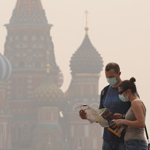
Russia has acted to address climate change, but implementation remains problematic. The ongoing drought and forest fires are a wake-up call to the realities of climate change for both Russia’s public and its government officials.

Link Copied
By David Burwell
Published on Aug 4, 2010
Program mobile hero image

Program

Russia and Eurasia

The Russia and Eurasia Program continues Carnegie’s long tradition of independent research on major political, societal, and security trends in and U.S. policy toward a region that has been upended by Russia’s war against Ukraine.  Leaders regularly turn to our work for clear-eyed, relevant analyses on the region to inform their policy decisions.

Learn More
Program mobile hero image

Program

Sustainability, Climate, and Geopolitics

The Sustainability, Climate, and Geopolitics Program explores how climate change and the responses to it are changing international politics, global governance, and world security. Our work covers topics from the geopolitical implications of decarbonization and environmental breakdown to the challenge of building out clean energy supply chains, alternative protein options, and other challenges of a warming planet.

Learn More

Source: PRI's The World

As the world’s most carbon-intensive economy, Russia faces ecological issues and potential social disruptions as a result of climate change. Under the leadership of President Medvedev, Russia has taken some proactive steps toward addressing climate change. However, it still has a way to go in reversing bureaucratic resistance and changing public opinion, both of which are necessary for successful implementation of climate change policies. The ongoing drought and forest fires will open the eyes of the Russian public and government officials to the realities of climate change and the need for action, contended David Burwell.

“I think this is a wake-up call ... that action is needed," Burwell stated. "This may give the bureaucracy some incentive to move ahead and actually adopt and pursue the targets laid down by President Medvedev. They’re going to have to …modernize and diversify their economy. And if they do that, you can see that they are taking this new evidence and these events seriously.”
 

About the Author

David Burwell

Former Nonresident Senior Fellow, Energy and Climate Program

Burwell focused on the intersection between energy, transportation, and climate issues, as well as policies and practice reforms to reduce global dependence on fossil fuels.

    Recent Work

  • Paper
    The Politics of Plenty: Balancing Climate and Energy Security

      David Burwell

  • In The Media
    Beijing: The City of Long Distances

      David Burwell

David Burwell
Former Nonresident Senior Fellow, Energy and Climate Program
Climate ChangeCaucasusRussiaNorth America

Carnegie does not take institutional positions on public policy issues; the views represented herein are those of the author(s) and do not necessarily reflect the views of Carnegie, its staff, or its trustees.

More Work from Carnegie Endowment for International Peace

  • Commentary
    Carnegie Politika
    After Ilia II: What Will a New Patriarch Mean for Georgia?

    The front-runner to succeed Ilia II, Metropolitan Shio, is prone to harsh anti-Western rhetoric and frequent criticism of “liberal ideologies” that he claims threaten the Georgian state. This raises fears that under his leadership the Georgian Orthodox Church will lose its unifying role and become an instrument of ultraconservative ideology.

      Bashir Kitachaev

  • Mullin with his hand raised, taking an oath
    Commentary
    Emissary
    Can Mullin Revive FEMA?

    Restoring competence and trust to the anemic, neglected disaster recovery agency is a matter of national security.

      • Sarah Labowitz
      • Debbra Goh

      Sarah Labowitz, Debbra Goh

  • Worker pushing machinery toward a car frame
    Commentary
    Emissary
    Europe’s New Industrial Policy Can Learn From U.S. Mistakes

    Although the IAA often differs from the IRA, European policymakers can still take note of the U.S. act’s shortcomings.

      Milo McBride

  • Commentary
    Carnegie Politika
    What the Russian Energy Sector Stands to Gain From War in the Middle East

    The future trajectory of the U.S.-Iran war remains uncertain, but its impact on global energy trade flows and ties will be far-reaching. Moscow is likely to become a key beneficiary of these changes; the crisis in the Gulf also strengthens Russia’s hand in its relationships with China and India, where advantages might prove more durable.

      • Sergey Vakulenko

      Sergey Vakulenko

  • Commentary
    Carnegie Politika
    Beyond Oil: Hormuz Closure Puts Russia in the Lead in the Fertilizer Market

    The Kremlin expects to not only profit from rising fertilizer prices but also exact revenge for the collapse of the 2023 grain deal.

      Alexandra Prokopenko

Get more news and analysis from
Carnegie Endowment for International Peace
Carnegie global logo, stacked
1779 Massachusetts Avenue NWWashington, DC, 20036-2103Phone: 202 483 7600Fax: 202 483 1840
  • Research
  • Emissary
  • About
  • Experts
  • Donate
  • Programs
  • Events
  • Blogs
  • Podcasts
  • Contact
  • Annual Reports
  • Careers
  • Privacy
  • For Media
  • Government Resources
Get more news and analysis from
Carnegie Endowment for International Peace
© 2026 Carnegie Endowment for International Peace. All rights reserved.