

Commentary
A summer of escalation in the Black Sea has hurt Ukraine economically and is exacerbating world food security. A truce is needed—as is a broader reframing of Europe’s Ukraine strategy.
Thomas de Waal
{
  "authors": [
    "Igor Ivanov"
  ],
  "type": "legacyinthemedia",
  "centerAffiliationAll": "",
  "centers": [
    "Carnegie Endowment for International Peace",
    "Carnegie Russia Eurasia Center"
  ],
  "collections": [],
  "englishNewsletterAll": "",
  "nonEnglishNewsletterAll": "",
  "primaryCenter": "Carnegie Endowment for International Peace",
  "programAffiliation": "",
  "programs": [],
  "projects": [
    "Euro-Atlantic Security Initiative – EASI"
  ],
  "regions": [
    "North America",
    "United States",
    "Caucasus",
    "Russia",
    "Eastern Europe",
    "Western Europe"
  ],
  "topics": [
    "Security",
    "Military",
    "Foreign Policy",
    "Nuclear Policy"
  ]
}
Source: Getty
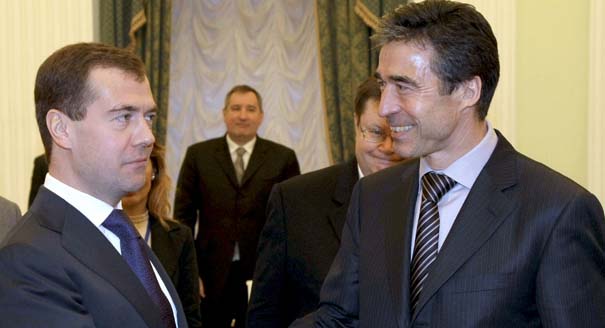
While obstacles remain, the conditions are looking good for launching the negotiation process between Russia, the United States, and Europe on the creation of a joint missile defense system for the entire Euro-Atlantic region.
Source: Kommersant

Q: EASI has set the global goal of developing the intellectual foundation for a comprehensive Euro-Atlantic security system for the twenty-first century. Why have you and your colleagues decided to limit yourselves to the missile defense issue now?
A: We are not limiting ourselves to missile defense. But it is a convenient issue to start with. When you start tackling a complex issue, you first have to identify the things that are obstructing progress, and the things that could give impetus to finding solutions. The missile defense issue has long been one of the biggest irritants in Russia’s relations with the United States and NATO, but it could also play the opposite role.
Q: Do you think the West is ready to listen to your arguments?
A: The current U.S. administration and the NATO leadership are taking a more balanced line on missile defense than their predecessors. NATO Secretary General Anders Fogh Rasmussen, in particular, has spoken of the importance of developing a missile defense system that would not only protect the Euro-Atlantic community but also unite it. This opens the way to holding serious talks between Russia, the United States, and European countries, which is something our country has long called for.
Q: How soon can we expect to see some real results?
A: We all know that this will not be a simple affair. Years of mistrust, different approaches towards threat analysis, and a lack of political will are all weighing heavily on the prospects for cooperation, not to mention the technical problems involved. And so it would be really quite some time before we could hope to see a fully integrated missile defense system with joint command and control. But at the same time, conditions are looking good now for launching the negotiation process. This requires political will, but we saw that Russian President Dmitry Medvedev and U.S. President Barack Obama showed this political will, as the New START Treaty became a reality within just a matter of months.
Q: But the missile defense issue goes beyond the limits of Russian-U.S. relations...
A: Yes, of course, it has long since become a global issue and has a direct impact on strategic stability in the world and also affects the national security interests of a large number of countries. This is what makes it such a sensitive issue, and this is why the very act of beginning talks between Russia, the United States, and Europe on a future joint missile defense system, all the more so if we make progress, but even the launch of the process, would have a positive impact on relations between Russia, the United States and NATO. This would essentially usher in a new era in global strategic partnership.
The Euro-Atlantic Security Initiative (EASI) is an independent international commission launched in December 2009 by the Carnegie Endowment for International Peace. Its unique goal is to lay the intellectual foundation for an inclusive Euro-Atlantic security system for the twenty-first century, to devise an institutional design and a means of approach for fitting the United States, Europe, Russia, and the neighboring states of Ukraine, Georgia, Azerbaijan, Armenia, Moldova, and Belarus into a common security framework and for creating an effective common economic space. The Commission is led by three co-chairs: former Russian foreign minister, Igor Ivanov, former German deputy foreign minister and ambassador to the United States, Wolfgang Ischinger, and former United States senator and chair of the Armed Services Committee, Sam Nunn.
Igor Ivanov
Igor Ivanov is president of the Russian International Affairs Council and a former foreign minister (1998–2004).
Carnegie does not take institutional positions on public policy issues; the views represented herein are those of the author(s) and do not necessarily reflect the views of Carnegie, its staff, or its trustees.

A summer of escalation in the Black Sea has hurt Ukraine economically and is exacerbating world food security. A truce is needed—as is a broader reframing of Europe’s Ukraine strategy.

Thomas de Waal

As the U.S. stumbles in its war with Iran, we are likely to see an acceleration of its disengagement from the region.

Michael Young
Why governance of rapidly evolving technology will be distributed and complex.


Stewart Patrick, Scott Singer
It should address the shortcomings of previous crisis communication efforts and adapt to the demands of frontier AI.

Lucy Luo

If the Russian-speaking community in Latvia cannot articulate their interests without being seen as disloyal, they could end up embracing a pro-Kremlin agenda.

Sergejs Potapkins