

Commentary
Yukon Huang, Isaac B. Kardon, Matt Sheehan
{
  "authors": [
    "Yukon Huang"
  ],
  "type": "legacyinthemedia",
  "centerAffiliationAll": "dc",
  "centers": [
    "Carnegie Endowment for International Peace"
  ],
  "collections": [],
  "englishNewsletterAll": "asia",
  "nonEnglishNewsletterAll": "",
  "primaryCenter": "Carnegie Endowment for International Peace",
  "programAffiliation": "AP",
  "programs": [
    "Asia"
  ],
  "projects": [],
  "regions": [
    "East Asia",
    "China"
  ],
  "topics": [
    "Economy",
    "Trade"
  ]
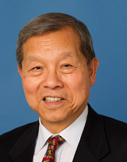
}
Source: Getty
If China is forced to substantially revalue its currency, it is likely to enact policies for maintaining its export competitiveness that could hurt Western economies.
Source: Bloomberg News

Trade flows in East Asia have changed dramatically over the past 20 years. Yukon Huang explained that while East Asian economies used to produce an export good from start to finish within one country, countries are now producing components that are then shipped to China and assembled for export. As a result, Huang noted, “the U.S.-China trade imbalance is really a U.S. deficit with all of East Asia and not just China.” Any attempts at currency reform thus would need to adopt a multilateral approach.
According to Huang, China’s exports are comprised of both low-technology and high-technology goods, but 80 to 90 percent of the components in China’s high-tech exports are produced elsewhere. Thus, many of China’s export jobs are in labor-intensive production and product assembly. If the renminbi were to rise in value, such jobs would likely migrate to South Asia or Latin America rather than back to the United States.
If China’s currency is forced to revalue by 20 to 25 percent, Huang explained that China is likely to adjust to maintain the competitiveness of its exports in two ways. First, it will shift production of low-technology goods to its inner provinces where wages are lower. Secondly, it will redirect investment toward high-technology exports, which will actually increase competition with companies in the United States and Europe. In these ways, Huang argued, RMB revaluation could actually hurt the West.

Senior Fellow, Asia Program
Huang is a senior fellow in the Carnegie Asia Program where his research focuses on China’s economy and its regional and global impact.
Recent Work


Yukon Huang, Isaac B. Kardon, Matt Sheehan
Yukon Huang, Genevieve Slosberg
AI capabilities are moving fast. Most institutions—including governments—can’t keep up.


Anton Leicht, Scott Singer

The Bureau of Industry and Security needs to adjust its focus and practices to maintain its position as the U.S. government’s primary champion of international technological competition.

Geoffrey Irving

Depleted financial reserves and a shrinking tax base mean it is no longer possible to simultaneously deliver high defense spending, price stability, and economic growth.

Alexandra Prokopenko

Huawei pushed hard to enter the Egyptian data centers market, until the Americans made a better offer.

Angie Omar

U.S. trading partners in Asia are closely watching the dispute for signs of how it may affect their own interests.

Barbara Weisel