

Article
- +1
Toby Dalton, Mark Hibbs, Nicole Grajewski, …
{
  "authors": [
    "Mark Hibbs"
  ],
  "type": "legacyinthemedia",
  "centerAffiliationAll": "dc",
  "centers": [
    "Carnegie Endowment for International Peace"
  ],
  "collections": [
    "U.S. Nuclear Policy",
    "Korean Peninsula"
  ],
  "englishNewsletterAll": "ctw",
  "nonEnglishNewsletterAll": "",
  "primaryCenter": "Carnegie Endowment for International Peace",
  "programAffiliation": "NPP",
  "programs": [
    "Nuclear Policy"
  ],
  "projects": [],
  "regions": [
    "North America",
    "United States",
    "East Asia",
    "South Korea",
    "North Korea"
  ],
  "topics": [
    "Nuclear Policy",
    "Nuclear Energy"
  ]
}
Source: Getty
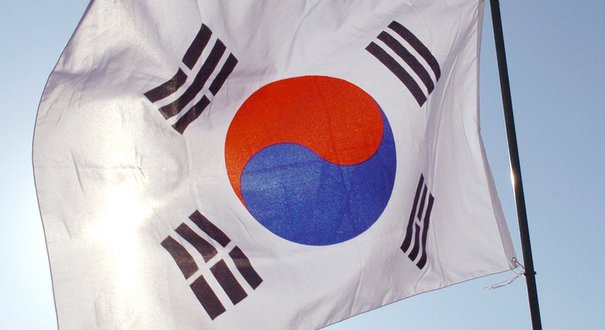
With the U.S.-South Korea bilateral nuclear cooperation agreement set to expire in 2014, it will be difficult for the United States to refuse Seoul's push to renegotiate without damaging the broader U.S.-South Korean relationship.
Source: World Politics Review

Mark Hibbs: On the basis of a bilateral nuclear cooperation agreement from 1974, South Korea has built 14 of its 20 nuclear-power reactors with the help of U.S. industry and government agencies. The agreement permitted U.S. firms to supply technology, equipment and fuel for these plants, which were constructed by South Korean firms under license from U.S. companies, most importantly Westinghouse.
The bilateral agreement underpins ongoing U.S.-Korean nuclear commerce. It also permits South Korean labs and agencies to do nuclear research with U.S. counterparts. Some of this research in the nuclear fuel-cycle area has been interrupted by the United States on grounds that it is too sensitive.
Hibbs: South Korean firms intend to continue reactor-building with U.S. partners, both in Korea and abroad, but if the current agreement is not replaced with a new one in 2014, this cooperation would halt. But, as was previously the case for Japan, since South Korea's original nuclear cooperation agreement with the United States was concluded, Seoul has mastered nuclear-plant design, equipment manufacture, and construction, and wants this development reflected in new diplomatic and commercial arrangements.
Separately, South Korea wants the United States to allow it to extract and reuse uranium and plutonium from its spent nuclear fuel. Under the terms of the current agreement, the United States has stood in the way of this on longstanding nonproliferation-policy grounds and because the United States fears an escalation of tension with North Korea. In 1992, both Koreas agreed to refrain from reprocessing spent fuel or enriching uranium. Some South Koreans argue that this agreement was nullified when North Korea tested nuclear weapons and began enriching uranium. The United States disagrees.
Hibbs: South Korea is a firm U.S. ally. It will be very difficult for the United States to deny South Korea's bid for what it calls "peaceful nuclear sovereignty" without damaging the overall bilateral relationship and incurring South Korean resentment that Washington's ultimate trump card was its military and political leverage over the small country. South Korea argues that the United States has afforded more generous terms to the European Union and, especially, Japan.
Also, in 2008, South Korea and other nuclear-supplier states-party to the Nuclear Non-Proliferation Treaty accommodated a U.S. request and lifted nuclear trade sanctions against India, a country outside the NPT with nuclear weapons. This permitted a U.S.-India nuclear cooperation agreement, which allows India to reprocess its U.S.-origin spent fuel, to enter into force.
In 2004, it was revealed that South Korean scientists had engaged in experiments to enrich uranium that were not reported to the International Atomic Energy Agency. In 2008, the IAEA concluded that all nuclear activities in South Korea were for peaceful use. This appears to underscore South Korea's claims that it is an advanced, developed country and a responsible nuclear state with too much to lose in its relationships with others, including the United States, should it try to develop nuclear weapons.

Nonresident Senior Fellow, Nuclear Policy Program
Hibbs is a Germany-based nonresident senior fellow in Carnegie’s Nuclear Policy Program. His areas of expertise are nuclear verification and safeguards, multilateral nuclear trade policy, international nuclear cooperation, and nonproliferation arrangements.
Recent Work


Toby Dalton, Mark Hibbs, Nicole Grajewski, …
Mark Hibbs
Carnegie does not take institutional positions on public policy issues; the views represented herein are those of the author(s) and do not necessarily reflect the views of Carnegie, its staff, or its trustees.

Trump has promised Belarus a massive potash deal. But Minsk is seeking something greater: restored Western transit and greater room for maneuver from Russia.

Balázs Jarábik

The real test may come after the leaders leave the room.



Sheena Chestnut Greitens, Oriana Skylar Mastro, Yukon Huang, …

The new U.S.–Denmark–Greenland agreement will help Washington exert political, economic, and financial dominance under the guise of security. Yet, it acknowledged Copenhagen’s and Nuuk’s sovereignty on the island.

Marc Pierini

The nuclear relationship between China and the United States is increasingly shaped by widening perception gaps rather than deliberate strategic design.

Tong Zhao
Washington needs to recognize that influence in the Western Hemisphere comes from presence, delivery, and reliability. It also must recognize that while the United States remains the key external actor, it no longer operates in a permissive environment and cannot presume deference from regional players who have other options, namely China.
Juan S. Gonzalez