

Research
- +10
Rosa Balfour, Frances Z. Brown, Yasmine Farouk, …
{
  "authors": [
    "Moisés Naím"
  ],
  "type": "legacyinthemedia",
  "centerAffiliationAll": "",
  "centers": [
    "Carnegie Endowment for International Peace"
  ],
  "collections": [],
  "englishNewsletterAll": "",
  "nonEnglishNewsletterAll": "",
  "primaryCenter": "Carnegie Endowment for International Peace",
  "programAffiliation": "",
  "programs": [],
  "projects": [],
  "regions": [
    "North America"
  ],
  "topics": [
    "Economy"
  ]
}
Source: Getty
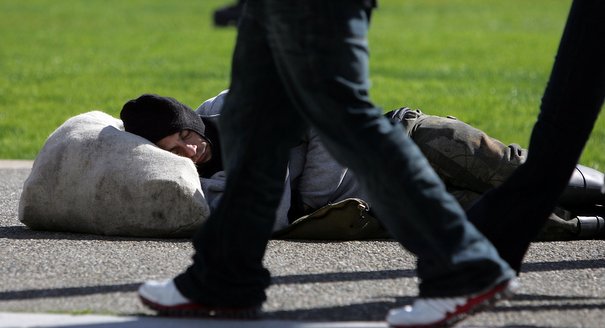
A better understanding of the spending habits of the world’s poorest individuals would enable governments to create better policies to aid their most impoverished citizens.
Source: El Pais

When examining who they are and how they made their fortunes, it appears that in most of the poor countries that are rich in billionaires, closeness to the government is a more secure way to make the Forbes list than serving consumers well and offering them competitive prices. The critical success factor for many of these billionaires was the state, not the market.
I examined the Forbes list while I was reading a book about how people who earn a dollar a day spend their money—that is, the poorest 13 percent of humanity. It was the most interesting essay on this subject that I have read in a long time. It is called Poor Economics by Abhijit Banerjee and Esther Duflo, two professors at the Massachusetts Institute of Technology. The book—which will be published in April in English—is accessible to any reader. It is full of surprises, and it is going to change the way in which we think about poverty and what to do about it.
The authors are allergic to broad generalizations (“we need to boost foreign aid to poor countries” or “foreign aid is counterproductive”). They are also skeptical of claims not supported by verifiable data and are obsessive about obtaining information directly from the protagonists of the book: the people who make (and must live on) a dollar a day. Banerjee and Duflo resort to statistics, observations, interviews, and controlled experiments that test commonly held assumptions about the behavior of the poor or the best ways to help them. The central message of Poor Economics is that government policies often fail because they are based on erroneous assumptions about the poor, their circumstances, and their behavior.
The book is full of results that contradict the common wisdom. The authors’ field studies show, for example, that those who live on a dollar a day are not starving. If they were hungry, they would spend all of their money on food. But this is not so. The data Banerjee and Duflo collected in eighteen countries reveals that food represents between 36 percent and 79 percent of consumption by the poor who live in the countryside, and between 53 percent and 74 percent of those who live in the cities. And for every 1 percent of increase in their income, only 0.67 percent is consumed in food. And this increase in income does not go toward buying more calories, but calories that taste better: “The poor spend 7 percent of their total budget on sugar as a source of calories which is more expensive than grains and has no nutritional value.”
Why did Oucha Mbarbk, a Moroccan who lives in extreme poverty, make extraordinary efforts to buy a television, a satellite dish, and a DVD player? Why is it not true that having more children further impoverishes the poor? And why do the poor need to borrow (at an interest rate of 42 percent annually) to be able to save? Why do the poorest children go to school but do not become more educated?
Every year, 9 million children die before their fifth birthday and, of these, one in every five dies of diarrhea. These are the children of those who live on a dollar a day. Many of these deaths could be avoided with simple, inexpensive oral rehydration solutions, whose basic ingredients are salt and sugar. Yet this doesn’t happen. In India, one-third of the young children who die never receive oral rehydration.
This book not only asks crucial questions, but it also offers answers and practical solutions without falling into one-liners and panaceas that fit on a bumper sticker. Their conclusion is that the behavior of the poor responds to incentives and depends on the information they have (which is often inadequate or wrong) and their very rational management of the enormous risks they face.
No; they are no different from the rest of us. But so far we have treated them as if they were. Read this book and not only will you see the poor differently, but also the Forbes billionaires.

Distinguished Fellow
Moisés Naím is a distinguished fellow at the Carnegie Endowment for International Peace, a best-selling author, and an internationally syndicated columnist.
Recent Work



Rosa Balfour, Frances Z. Brown, Yasmine Farouk, …
Moisés Naím
Carnegie does not take institutional positions on public policy issues; the views represented herein are those of the author(s) and do not necessarily reflect the views of Carnegie, its staff, or its trustees.

The domestic impacts of how long it is taking to end the war in Ukraine have pushed the French electorate to the political extremes and compromised the country’s diplomatic capacity.

Rym Momtaz

The Plaza Accord was not an externally imposed punishment of Japan but part of a broader restructuring that Japanese economists and policymakers themselves recognized was necessary. Its effects were undermined, however, when Tokyo responded to the resulting slowdown with policies that exacerbated investment, credit expansion, and the very imbalances the adjustment was intended to resolve.

Michael Pettis

A summer of escalation in the Black Sea has hurt Ukraine economically and is exacerbating world food security. A truce is needed—as is a broader reframing of Europe’s Ukraine strategy.

Thomas de Waal
The Bureau of Industry and Security needs to adjust its focus and practices to maintain its position as the U.S. government’s primary champion of international technological competition.
Geoffrey Irving

Depleted financial reserves and a shrinking tax base mean it is no longer possible to simultaneously deliver high defense spending, price stability, and economic growth.

Alexandra Prokopenko