In order for the Algerian economy to experience sustained long-term growth, the government must break its excessive dependence on global market prices for oil and gas and create a suitable legal environment that encourages entrepreneurship and economic diversification.
Postponing Economic Therapy is Playing with FireIn recent weeks, Algeria’s government has taken a series of steps to improve the economy and reduce public anger over its poor political and economic performance. The government amended the 2011 budget law, approving a 25% increase in public spending.
The country also launched a new round of negotiations with the European Union aimed at postponing Algeria’s obligation to lift customs barriers on European imports. Policymakers also took various measures to improve the country’s business environment and stimulate private investment.
Although these moves may suppress the potential risk of short-term popular unrest, they fail to address the structural flaws in Algeria’s economy. Its excessive dependence on global oil and gas prices, along with the absence of any credible strategy for economic diversification, present clear mid- to long-term challenges.
This failure to use available resources today to develop competitive economic activities outside the fuel sector is exposing Algeria to serious dangers in the future. If the price of oil suddenly drops below $100 — which is plausible — it will be impossible to maintain the current pace of government spending without tapping the country’s sovereign wealth fund, known as the Revenue Regulation Fund, and then resorting to foreign loans.
On the other hand, sharply reducing government spending to limit the budget deficit could fuel popular anger and throw the country into a cycle of social unrest. Even if fuel prices stay high, however, Algeria’s oil and gas reserves could be depleted within 20 years. Algeria’s leaders must therefore start now to seriously plan for a post-fuel economy.
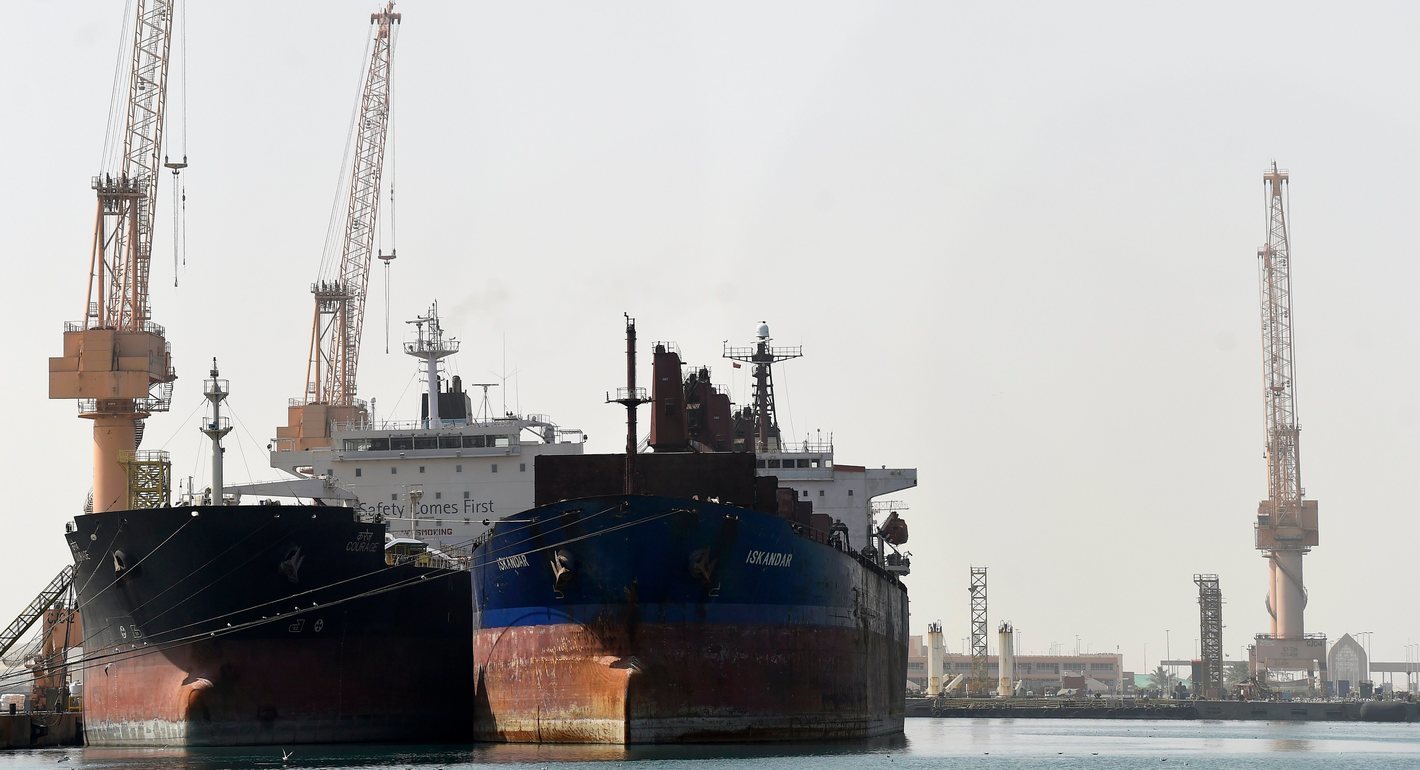
At the end of last year, the fuel sector accounted for a third of the country’s $160 billion gross domestic product (GDP), 98% of its $64 billion exports, and more than 70% of public budget revenues. This trend is likely to persist in coming years.
In the meantime, government spending is excessively increasing — with the amended budget law, total government expenditure has increased from $95 billion to approximately $120 billion. The additional spending focuses on subsidizing basic consumer commodities such as wheat, sugar, and milk; funding public housing projects for the middle class and poor; increasing civil servants’ wages; and creating 60,000 new public jobs.
Meanwhile, public spending to train job seekers and support small and medium-size enterprises saw much smaller increases. This allocation of public money reveals the dominance of the quick-fix approach in policymaking and the absence of a strategic vision to build a strong, diversified, and private sector-led economy.
Along with this public spending injection, Algerian authorities have launched a round of negotiations with the EU to delay the implementation of the previously agreed-upon free-trade compact from 2017 to 2020. The authorities expressed their fear of trade openness and the threat posed to local companies, which require more time to build their capabilities in order to face free-trade challenges from European competitors. In the most recent rounds of talks on this issue, the EU did not approve this request; the next rounds are scheduled for early September.
If Algeria suffers from competition with the EU countries’ industrial products, structural flaws in Algeria’s economy would be at fault. Public enterprises are characterized by poor productivity and a reliance on state aid to offset deficits. The majority of small and medium-size private enterprises suffer from entry barriers, limited access to bank funding, and a legal environment unfriendly to competition. Although Algeria is a market of 35 million consumers, its poor business environment and the instability of its laws and regulations on investment weaken the country’s attractiveness to foreign investors. As a result, these investors are deterred from launching industrial and services projects that could strengthen Algeria’s economy and improve its competitiveness.
Furthermore, Algerian products fail to benefit from the free access offered by the country’s trade agreement with the EU, as they don’t generally comply with the quality specifications and standards applied to EU imports. Recent data released by the minister of industry and small and medium-size enterprises reveal that in 2010 fewer than 50 exporting firms existed in Algeria, compared with 280 firms in the early 1980s.
According to the World Bank’s most recent “Doing Business” annual report, Algeria ranks 136th of 183 states and has made no tangible improvement over the last five years. Government measures such as reducing interest rates for investment loans, simplifying international trade transactions and rescheduling debt for companies suffering from financial difficulties have had only limited effect. Widespread corruption, complex administrative procedures and weak oversight of public projects turned out to be detrimental to private-sector development.
To date, Algeria’s oil and gas export revenues have enabled its government to buy social peace by allowing it to subsidize basic commodities, increase employee wages and drive the economy by pumping huge sums of money into infrastructure and housing projects.
However, consecutive governments have failed to break the economy’s excessive dependence on global market prices for oil and gas, and they have failed to create a suitable legal environment that encourages entrepreneurship, private investment and economic diversification, all of which are necessary for Algeria’s long-term economic growth.
Carnegie does not take institutional positions on public policy issues; the views represented herein are those of the author(s) and do not necessarily reflect the views of Carnegie, its staff, or its trustees.
More Work from Carnegie Endowment for International Peace
In a volatile Middle East, the Omani port of Duqm offers stability, neutrality, and opportunity. Could this hidden port become the ultimate safe harbor for global trade?