

Research
- +10
Rosa Balfour, Frances Z. Brown, Yasmine Farouk, …
{
  "authors": [
    "Moisés Naím"
  ],
  "type": "legacyinthemedia",
  "centerAffiliationAll": "",
  "centers": [
    "Carnegie Endowment for International Peace"
  ],
  "collections": [],
  "englishNewsletterAll": "",
  "nonEnglishNewsletterAll": "",
  "primaryCenter": "Carnegie Endowment for International Peace",
  "programAffiliation": "",
  "programs": [],
  "projects": [],
  "regions": [
    "North America",
    "South America"
  ],
  "topics": [
    "Political Reform",
    "Democracy"
  ]
}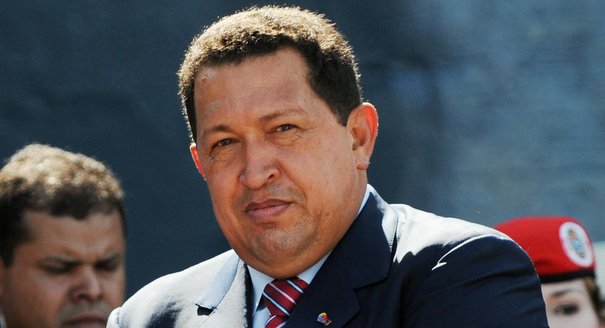
Source: Getty
Though Hugo Chavez has ambitions to remain in power in Venezuela for the next twenty years, his battle with cancer has sparked a political conflict over who will succeed him if he dies or becomes incapacitated.
Source: Washington Post

Chavez is not only the longest-serving head of state now in power in the Western Hemisphere — 12 years and running — but he is also omnipresent in Venezuela. He speaks almost daily on television, often for hours, and his face and phrases are splashed on posters, banners and murals in every large city and along the nation’s highways. It is impossible not to see him, hear him, read him. Looking ahead, Chavez has made clear that he will be a candidate in the 2012 presidential election and that victory is inevitable. “El Comandante ” has referred to 2031 as his time horizon for holding on to power — and he is quick to clarify that his tenure could well go beyond that.
But now, cancer may be interfering with those plans. While details of his illness remain secret, Chavez has acknowledged that he has cancer, that he has had two operations and that he has received chemotherapy treatment in Cuba. And while he returned to Venezuela last weekend and announced that he is cancer free, he warned that the risk remains because “cells come and go in a constant battle.”
His illness has sparked the fiercest political conflict in Venezuela since he came to power. But it is not between his supporters and the opposition — it is among the factions of his followers vying to succeed him if he dies or becomes incapacitated. Chavez has not groomed a successor or built institutions that can manage a transition. He has concentrated all power in his hands, providing a focus for the opposition and leaving no space for any other leader.
So, who might lead a post-Chavez Venezuela? Without him, internecine strife would be inevitable, especially among pro-Chavez factions, which are as varied as they are divided. Some are heavily armed, and none seems to lack funding.
The most important among them is the military, which Chavez has carefully managed in order to ensure loyalty. One of the officers he most favors is Henry Rangel Silva; late last year, Chavez promoted him to “general in chief.”Rangel has declared that the military would not tolerate an opposition government, even if it won the 2012 elections. In 2008, the U.S. Treasury Departmentaccused him of “materially assisting . . . narcotics trafficking activities.”
Venezuela is routinely singled out by international authorities as a major hub for the trafficking of drugs, weapons and people and for money laundering. It would be virtually impossible to conduct such operations without the complicity of top military officers. It is therefore likely that one of the factions seeking to influence a Chavez succession would feature officers connected to global crime organizations — and who need a government that looks the other way.
Another faction would be formed by officers with strong ties to the Cuban military and intelligence services. For Cuban leaders, Venezuela constitutes an indispensable lifeline. It provides the bankrupt island $5 billion per year in aid, including deeply discounted oil shipments that cover 60 percent of the island’s energy needs. Having the military-traffickers alliance in charge may jeopardize the arrangement.
The military is not the only well-armed actor. As a precaution against a repeat of a short-lived 2002 coup against him by his military officers, and to ensure that no group accumulates excessive power, Chavez has fragmented the military while creating well-trained and equipped militias, paramilitary groups and other shadowy organizations that can intervene should the succession fight escalate into violent clashes in the country’s densely populated cities.
Another pro-Chavez faction bound to play a role in a possible succession is the “Bolivarian Bourgeoisie,” or, as they’re known in Venezuela, los boliburgueses. These are Russian-style oligarchs who have used their links to the government and the military to accumulate unfathomable wealth during the oil boom of the Chavez presidency. Some occupy top positions in government, while others are elected officials or members of the national assembly. And some are businessmen, those indispensable middlemen for any transactions in which the government is involved — whether the purchase is of expensive weapons from Belarus, poultry from Brazil or tractors from Iran.
The most influential players have ties to multiple factions. Diosdado Cabello, for example, is a former military officer who participated in Chavez’s failed 1992 military uprising. He has been a governor, minister and vice president in the Chavez era and is now a leader of the government party, the PSUV. He is influential with the armed forces, government agencies and many Chavez loyalists. Cabello would have enormous clout in any post-Chavez scenario. He is also regarded as someone who can curb the influence of the ideological zealots around the president — yet another faction, made up of PSUV leaders and other government officials — who believe that Chavez has not gone far or fast enough.
And what role would Chavez’s opponents play in a transition? These include the growing segment of Venezuela’s civil society that opposes him — especially the student movement and a new breed of young leaders — and, of course, the United States. In both cases, their influence would probably be limited: The former lacks guns, thugs or money; the latter is too busy dealing with crises elsewhere.
Finally, the struggle for power in a post-Chavez Venezuela would include his family, especially his elder brother Adan, a former physics professor who became education minister, ambassador to Cuba and governor of the state of Barinas. Since his illness, the president has grown closer to his brother and has publicly stressed his importance. And while in Cuba with the president recently, Adan Chavez bluntly stated that their supporters must be ready to use force to stay in power: “It would be inexcusable to limit ourselves to only the electoral and not see other forms of struggle, including the armed struggle,” he said.
Of course, it is premature to write Hugo Chavez off. Should his recovery proceed, he may continue to play his dominant role, or he could still run the nation while delegating day-to-day decisions to trusted lieutenants. In fact Chavez has already traded in his slogan “Fatherland, socialism or death!” for “We shall live and win.” Living and winning are the new priorities.
He has also introduced a revealing exhortation: “Unity! Unity! Unity!” It is hard to imagine that Chavez is calling for unity among all Venezuelans. This plea is directed at his supporters — those whose unity he desperately must preserve to extend his run atop the nation with the world’s largest oil reserves.

Distinguished Fellow
Moisés Naím is a distinguished fellow at the Carnegie Endowment for International Peace, a best-selling author, and an internationally syndicated columnist.
Recent Work



Rosa Balfour, Frances Z. Brown, Yasmine Farouk, …
Moisés Naím
Carnegie does not take institutional positions on public policy issues; the views represented herein are those of the author(s) and do not necessarily reflect the views of Carnegie, its staff, or its trustees.

Radical-right parties are expected to do well in upcoming elections in four of the EU's biggest member states. If successful, they could prevent the union from addressing key challenges ahead.

Stefan Lehne
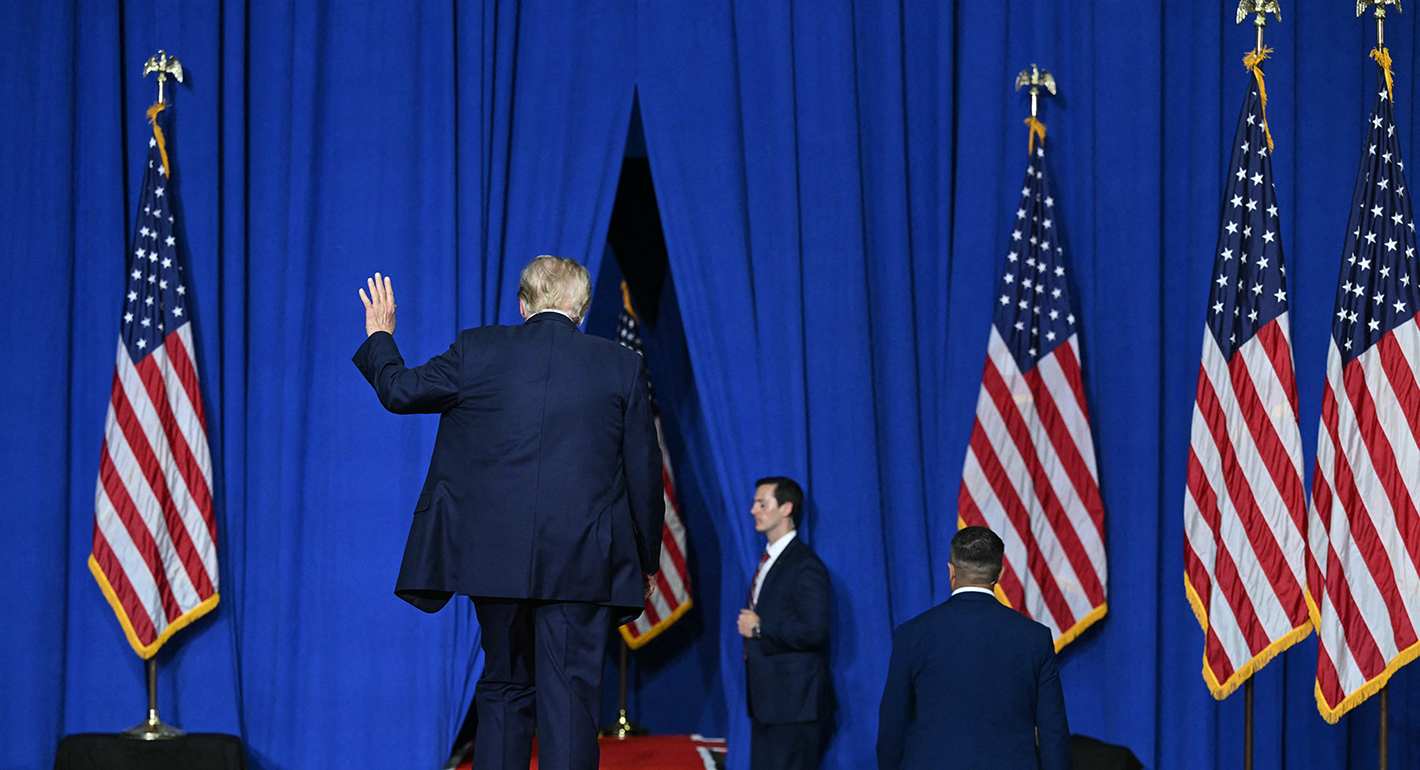
By abandoning past U.S. pro-democracy policies and adopting several lines of pro-autocratic action, the Trump administration has fundamentally repositioned the United States vis-à-vis democracy in the world.

Thomas Carothers

In the tenth year of his presidency, President Mirziyoyev’s system is becoming even more personalized than that of his predecessor Karimov.

Galiya Ibragimova

To remain effective, organizations need to master new media and legitimacy markers to make a once-in-a-century shift.
Renée DiResta, Rachel Kleinfeld, Margot Treadwell

An overwhelming victory by a far-right-wing party in a small state in eastern Germany will have major repercussions for Chancellor Friedrich Merz’s coalition.

Judy Dempsey