• Research
  • Emissary
  • About
  • Experts
Carnegie Global logoCarnegie lettermark logo
DemocracyIran
  • Donate
{
  "authors": [],
  "type": "other",
  "centerAffiliationAll": "",
  "centers": [
    "Carnegie Endowment for International Peace"
  ],
  "collections": [],
  "englishNewsletterAll": "",
  "nonEnglishNewsletterAll": "",
  "primaryCenter": "Carnegie Endowment for International Peace",
  "programAffiliation": "",
  "programs": [],
  "projects": [],
  "regions": [
    "North Africa",
    "Egypt"
  ],
  "topics": []
}
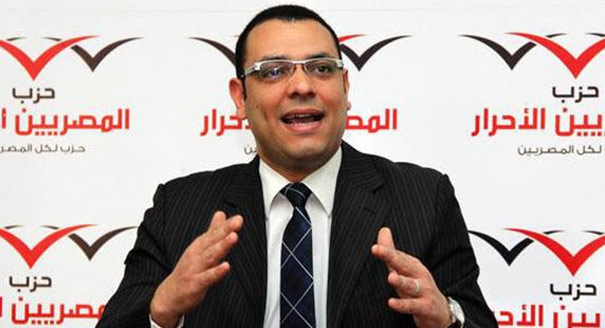
Source: Getty

Other

Free Egyptians Party

A backgrounder on the Free Egyptians Party.

Link Copied
Published on Sep 21, 2011

This resource was published on 09/21/2011 and is not updated to reflect changing circumstances.

The Free Egyptians Party is fast emerging as a major player. With 100,000 registered members, it is probably second only to the Freedom and Justice Party in terms of its organization and potential. The Free Egyptians Party is the linchpin of the Egypt Bloc.

Major Party Figures

Naguib Sawiris: Founder
Ahmed Said: Member of party’s executive committee
Hani Sary al-Din: Member of party’s executive committee
Basel Adel: Member of party’s executive committee

Background

Launched in April 2011 by Egyptian telecommunications mogul Naguib Sawiris, former chairman of Orascom Telecom Holding, the party can draw on large financial resources and management expertise. Sawiris, a Copt, has made it clear that the party is for all Egyptians, not just Copts, and the response suggests people believe him. The party is firmly pro-business and pro-trade, and focuses on economic development based upon a free economy, strong state institutions, and the rule of law. It accepts Islam as the state religion but advocates religious freedom in a civil state and stresses equality of all citizens regardless of creed. In terms of its platform, it is the most liberal of the Egypt Bloc members.

Platform

Political Issues

  • Supporting separation of religious and state affairs in a civil, non-religious state
  • Affirming full equality of all citizens regardless of differences in religion, sex, wealth, race, region, color, and culture
  • Supporting democracy, freedom of speech, expression, thought and conscience, and the right of citizens to organize freely and to express their opinions peacefully
  • Believing in the role of women in society and the need to enable them to participate in all areas and public offices
  • Providing the rule of law and judicial independence

Socioeconomic Issues

  • Supporting a market economy to achieve prosperity.
  • Restructuring the tax system to favor economic development
  • Supporting responsible levels of government spending
  • Supporting competitive bidding for government contracts
  • Providing a minimum wage and the expansion of micro-credit programs
  • Implementing tax credits for Zakat and tithe to reward social cooperation
  • Eradicating poverty to improve the standard of living of 70 percent of Egyptians

Foreign Policy Issues

  • Defending the national interests of Egypt at all times
  • Supporting a fair and just resolution to the Palestinian-Israeli conflict which involves a two-state solution with a Palestinian state on 1967 borders and Jerusalem as its capital and an Israeli withdrawal from Arab territories in Syria and south Lebanon
  • Respecting the Camp David Accords international agreement between Egypt and Israel
  • Reforming the system of the Arab League, in order for it to become a true reflection of the hopes and aspirations of Arab peoples and a mechanism to ensure peace, security and stability in the region
  • Working to free the Middle East from all Weapons of Mass Destruction
  • Developing stronger ties with both Turkey and Iran
  • Increasing cooperation with both Sudan and South Sudan and the rest of the Nile Basin countries for mutual security and development
  • Rebalancing Egyptian-American based upon mutual respect, balance and parity
  • Strengthening trade ties with the United States
  • Strengthening economic relations and trade with Russia and China
North AfricaEgypt

Carnegie does not take institutional positions on public policy issues; the views represented herein are those of the author(s) and do not necessarily reflect the views of Carnegie, its staff, or its trustees.

More Work from Carnegie Endowment for International Peace

  • Teenagers hold a large banner reading "stop pollution in Gabes, stop pollution everywhere, save Gabes'' in English and Arabic
    Article
    Civil Society Restrictions in North Africa: The Impact on Climate-Focused Civil Society Organizations

    For climate-focused civil society in countries like Morocco, Algeria, and Tunisia to be most effective, organizations should work together to develop networks that extend their reach beyond their local area and connect across borders to share best practices and amplify each other’s work.

      • Sarah Yerkes

      Sarah Yerkes

  • Commentary
    Diwan
    When Football Is More Than Football

    The recent African Cup of Nations tournament in Morocco touched on issues that largely transcended the sport.

      Issam Kayssi, Yasmine Zarhloule

  • Research
    Russia in Africa: Examining Moscow’s Influence and Its Limits

    As Moscow looks for opportunities to build inroads on the continent, governments in West and Southern Africa are identifying new ways to promote their goals—and facing new risks.

      • Nate Reynolds
      • +1

      Nate Reynolds, ed., Frances Z. Brown, ed., Frederic Wehrey, ed., …

  • Photo of Duma Boko in a gray suit waving at a crowd.
    Article
    Africa’s Democratic Kaleidoscope: Trends to Watch in 2026

    Supporters of democracy within and outside the continent should track these four patterns in the coming year.

      Saskia Brechenmacher, Frances Z. Brown

  • Commentary
    Strategic Europe
    Taking the Pulse: What Issue Is Europe Ignoring at Its Peril in 2026?

    2026 has started in crisis, as the actions of unpredictable leaders shape an increasingly volatile global environment. To shift from crisis response to strategic foresight, what under-the-radar issues should the EU prepare for in the coming year?

      Thomas de Waal

Get more news and analysis from
Carnegie Endowment for International Peace
Carnegie global logo, stacked
1779 Massachusetts Avenue NWWashington, DC, 20036-2103Phone: 202 483 7600Fax: 202 483 1840
  • Research
  • Emissary
  • About
  • Experts
  • Donate
  • Programs
  • Events
  • Blogs
  • Podcasts
  • Contact
  • Annual Reports
  • Careers
  • Privacy
  • For Media
  • Government Resources
Get more news and analysis from
Carnegie Endowment for International Peace
© 2026 Carnegie Endowment for International Peace. All rights reserved.