

Paper
Matthew Rojansky
{
  "authors": [
    "Matthew Rojansky"
  ],
  "type": "legacyinthemedia",
  "centerAffiliationAll": "dc",
  "centers": [
    "Carnegie Endowment for International Peace"
  ],
  "collections": [],
  "englishNewsletterAll": "ctw",
  "nonEnglishNewsletterAll": "",
  "primaryCenter": "Carnegie Endowment for International Peace",
  "programAffiliation": "russia",
  "programs": [
    "Russia and Eurasia"
  ],
  "projects": [],
  "regions": [
    "Caucasus",
    "Russia"
  ],
  "topics": [
    "Political Reform",
    "Democracy",
    "Economy",
    "Foreign Policy"
  ]
}
Source: Getty
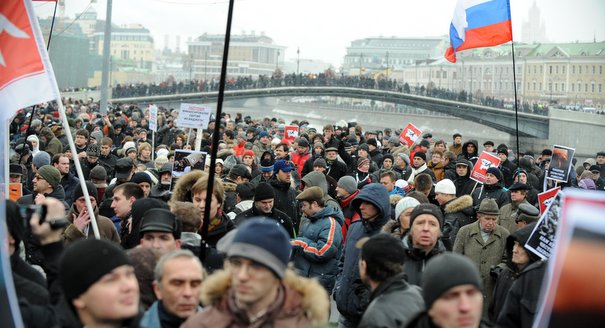
Washington must more effectively engage Russia’s post-Soviet generation, who are well equipped to succeed in today’s global economy and poised to change and redefine Russian society.
Source: National Interest

This generation of young Russians, whose formative experiences took place long after the end of the Soviet Union, has now entered professional and political life. Many are the children of Soviet citizens who came of age during Khrushchev's 1960's "thaw," coveted American blue jeans and rock music, and rallied in the streets as the Soviet system collapsed.
The West still fails to fully understand Russia's post-Soviet generation, with negative consequences for political, economic and security relations. This poses a risk to the survival of the U.S.-Russia reset. It is time to close this gap in understanding and engage the new generation of Russians.
Young Russians, like many of their peers around the world, are more plugged in to global trends, more interconnected within and between their local communities, and more vulnerable to negative events abroad than any previous generation. They use the Internet nearly as frequently as their American counterparts, often over the fastest networks with the latest mobile devices. As a result, the pace of change in how young Russians see the world, including the United States, is constantly accelerating.
Unlike their parents and grandparents, young Russians have not been brought up on a diet of official ideology. They are not eager to prove the inferiority of American-style free-market capitalism—in fact few of them even question it. Most are comfortably certain that Russia is and should always be a part of the global market economy.
To help sustain that interest, Washington should refrain from unfairly attacking Russia. Criticism of the government's mixed record on human rights and rule of law is legitimate, but when the loudest voices from Washington are consistently those attacking Russia for everything from jailing dissidents to coddling Iran, it is too easy for young Russians to write off the American government as out of touch or blinded by ideology.
Additionally, Russia's newest workers, entrepreneurs and professionals place a unique emphasis on the importance of stability. After all, they and their families suffered through an economic contraction in the 1990s more devastating than the Great Depression, and they have witnessed the powerlessness of ordinary citizens and state institutions to stop corruption and plundering.
To most young Russians, America is still a model of personal, political and economic freedom. But as the foundations of a U.S. economic model built on borrowing and spending become increasingly vulnerable, young Russians have started to question whether American-style freedoms inevitably bring instability and suffering. They are similarly concerned by the extremes of the American political process. The United States must solve these problems not only because they are damaging to its own prosperity and security but also because doing so will help restore confidence among those in Russia and throughout the world who still look for American leadership.
Finally, young Russians do not crave Russian power for its own sake, to spread world revolution, or to expand the frontiers of empire, but they do aspire to live in a strong country that can protect their interests in the world. For this reason, they are uncomfortable with American power, especially the kind that seeks to negate the influence and interests of others.
Still, America has wide appeal among young Russians, as a destination for vacation, study abroad or business opportunity. And American products—from iPhones to Ford cars—are as popular as blue jeans once were on the streets of Moscow. Washington can build on this "soft power" by making sure to use all kinds of American power more responsibly across the board.
As an insurance policy for better ties with today's young Russians, Washington should invest in institutions, including online social networks, to promote engagement across a wide swath of the societies—between state and local governments, religious groups, students and professionals. The two governments have made notable progress recently in lowering barriers to travel and investment, but the process for obtaining a visa is still onerous. With thousands of young Russians eager to visit, study and do business in America, there should be an agreement on visa-free travel as soon as possible.
Americans are not alone in failing to understand and embrace the first fully post-Soviet generation of Russians. Russia's own government and big businesses are obviously still dominated by a single cohort that came to power with Putin, and the ruling party still seeks to control youth political activism through ham-fisted tactics reminiscent of the Communist Union of Youth and Soviet-era "international festivals of youth."
Notwithstanding their present political disenfranchisement, post-Soviet Russians will not be a "lost generation." They are well equipped to succeed in today's global economy and to navigate the complexities of Russian society as they themselves continue to change and redefine it. Washington needs to better understand and more effectively engage this new generation if it is to secure a mutually beneficial relationship with Russia, not only under a new Putin presidency but also in the uncertain future beyond.

Former Deputy Director, Russia and Eurasia Program
Rojansky, formerly executive director of the Partnership for a Secure America, is an expert on U.S. and Russian national security and nuclear-weapon policies.
Recent Work
Matthew Rojansky
Matthew Rojansky
Carnegie does not take institutional positions on public policy issues; the views represented herein are those of the author(s) and do not necessarily reflect the views of Carnegie, its staff, or its trustees.
The war in Ukraine is costing Russia its leverage overseas. Across the South Caucasus and Middle East, this presents an opportunity for Europe to pick up the pieces and claim its own sphere of influence.

William Dixon, Maksym Beznosiuk

Amid increased polarization and the influence of disinformation, radical-right parties are once again gaining traction across Europe. With landmark elections on the horizon in several countries, are the EU’s geostrategic vision and fundamental values under existential threat?

Catherine Fieschi, Cas Mudde
Kazakhstan’s new constitution is an embodiment of the ruling elite’s fears and a self-serving attempt to preserve the status quo while they still can.

Serik Beysembaev

It’s disingenuous to criticize a film for simplifying Russia’s complexities when Russia is waging a brutally simple war of aggression against its neighbor.

Alexander Baunov
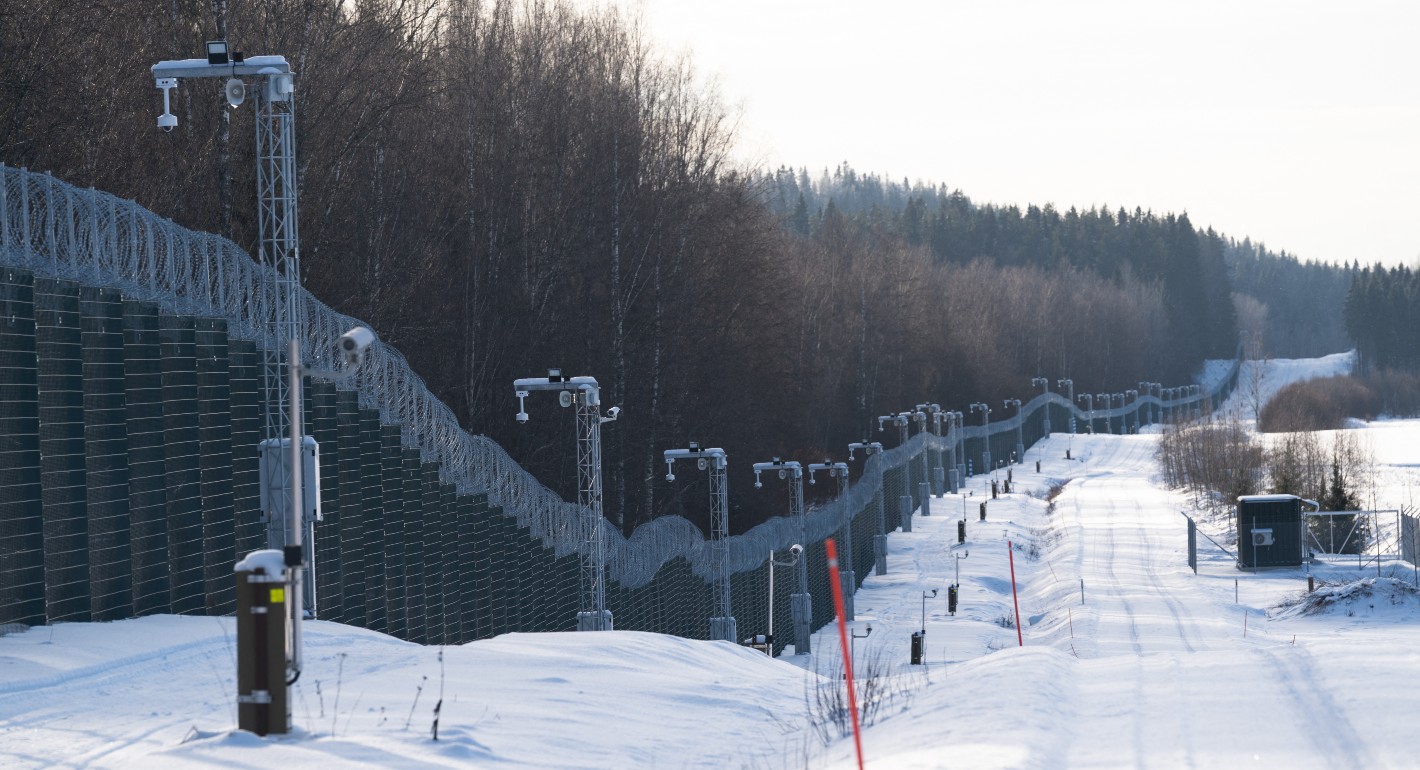
No matter how its war against Ukraine ends, Russia will emerge less secure, more aggrieved, and posing a greater threat to Europe than it did when it started this war.
Eugene Rumer