

Research
- +10
Rosa Balfour, Frances Z. Brown, Yasmine Farouk, …
{
  "authors": [
    "Moisés Naím"
  ],
  "type": "legacyinthemedia",
  "centerAffiliationAll": "",
  "centers": [
    "Carnegie Endowment for International Peace"
  ],
  "collections": [],
  "englishNewsletterAll": "",
  "nonEnglishNewsletterAll": "",
  "primaryCenter": "Carnegie Endowment for International Peace",
  "programAffiliation": "",
  "programs": [],
  "projects": [],
  "regions": [
    "United States",
    "North America"
  ],
  "topics": [
    "Economy",
    "Climate Change",
    "Security"
  ]
}
Source: Getty
Today’s emergencies should not distract policy makers from thinking about the long-term challenges that will define the world—for the better or the worse—in the coming century.
Source: El Pais

These are, then, 10 questions about the future, which I present in no particular order of importance, and, in several cases, are clearly linked.
1. Will we be able to limit the increase in global temperature to 3ºC, or will it rise a further 8ºC or more? If the increase reaches or passes 8ºC, the planet and its inhabitants will be facing unprecedented challenges.
2. Will there be 16 billion inhabitants or will there be just six billion of us living on planet Earth? This is the range of possibilities that the United Nations estimates with respect to the size of the global population in 2100, depending on fertility indices and other factors.
3. How many countries will have nuclear weapons by 2100? None? Twenty-five? This is the number of countries that experts reckon could have atomic bombs in the coming decades if they continue to develop their nuclear programs in this direction and if the rest of the world lets them. Today there are nine "nuclear weapons" countries.
4. What will be the model of government in the future: democracies as in Europe, the United States, India and Brazil, or authoritarian regimes such as those in China and Russia?
5. Will the rapid expansion of the middle class that we have seen over the last decade in the poorest and most-populated countries continue? Or will deep inequality be the norm?
6. Will Islam become the source of tension and conflict, or will it renovate, transforming itself into a force for peace and development?
7. Will the internet and cyberspace evolve as benign forces or will they be a source of new threats?
8. One of the characteristics of the 20th century was the creation of many new nations. Will state-failure be the defining characteristic of the 21st century?
9. Will globalization continue, driven by technologies that shorten distances and communication costs, and by public policies that encourage international integration? Or on the contrary, will social unrest produced by globalization feed nationalism and protectionism, blocking the movement of people, products, money, and ideas?
10. Will economic, political, military and social power be more or less concentrated?
It is obvious that this list of factors that will define the future is incomplete. Many are missing, and we can all think of other challenges we will face. But these 10 should probably be included on any list. At the very least they should serve to begin an indispensible conversation; one that is more urgent than we might like to think.

Distinguished Fellow
Moisés Naím is a distinguished fellow at the Carnegie Endowment for International Peace, a best-selling author, and an internationally syndicated columnist.
Recent Work



Rosa Balfour, Frances Z. Brown, Yasmine Farouk, …
Moisés Naím
Carnegie does not take institutional positions on public policy issues; the views represented herein are those of the author(s) and do not necessarily reflect the views of Carnegie, its staff, or its trustees.

The EU can impose sanctions but struggles to enforce them without the United States. With Washington increasingly disinterested in backing European interests, the bloc must now fend for itself.


Nicu Popescu, Tiago Antunes
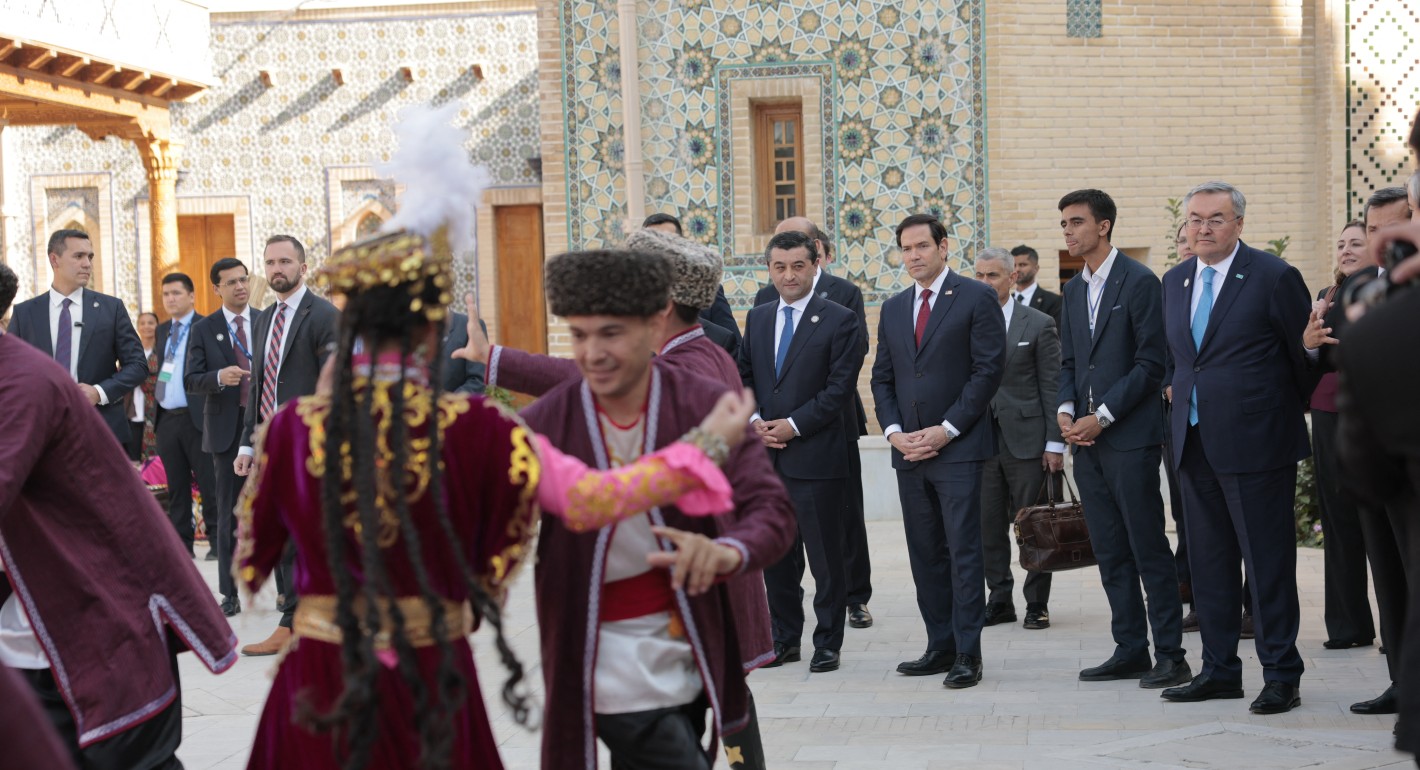
Rubio’s recent visit brought welcome attention, but more capital requires governance changes that may be a hard sell for regional governments.

Jennifer B. Murtazashvili

America’s foreign-policy objectives have grown more demanding while Americans have demanded greater focus on their own affairs.

Stephen Wertheim

Japan’s long-term security policy is driven by concerns about China, and there is little appetite for (or interest in) pursuing a confrontation with Moscow.

James D.J. Brown

Russia is testing the waters of NATO’s mutual defense clause. What do strikes in Romanian territorial waters mean for the alliance’s posture toward Moscow?

Dimitar Bechev