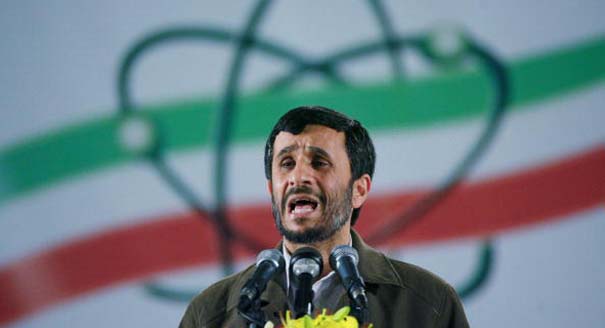
While it remains unclear whether Iran’s President Mahmoud Ahmadinejad is sincere in his proposal to cease production of highly enriched nuclear fuel and import it instead, it is clearly in the West’s best interests to accept the offer.
U.S. Should Call Iran's BluffIt's time to call Mahmoud Ahmadinejad's bluff.
Over the last few weeks, the Iranian president has stated on a number of occasions that his country will cease domestic efforts to manufacture fuel for one of its nuclear reactors if it is able to purchase the fuel from abroad. The United States should accept this proposal — publicly, immediately and unconditionally.
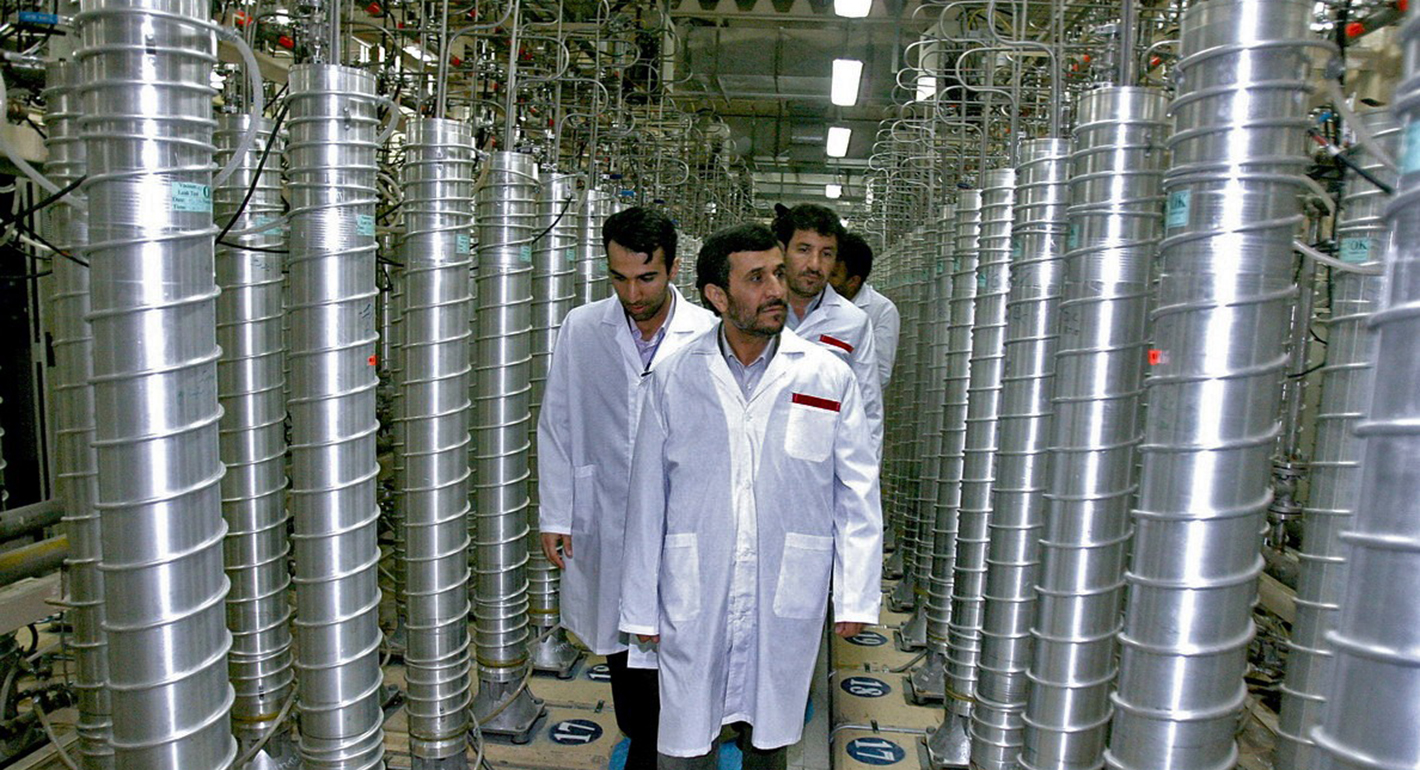
Iran's enrichment program has been the focus of international concern for almost a decade. Its first efforts were geared toward enriching uranium to 5% — suitable for use in a power reactor. But, in February 2010, in an ominous development, it started to feed some of this material back into its centrifuges to produce uranium enriched to 20%.
Iran's ostensible purpose for enriching uranium to this higher level was to produce fuel for the Tehran Research Reactor, which uses more highly enriched fuel than a normal power reactor to produce radioactive materials for some cancer treatments. This explanation is, however, hardly plausible. Iran can enrich uranium to 20%, but it lacks the technology to convert this material into reactor fuel (previously it bought fuel from abroad, most recently from Argentina). It is much more likely that Iran is stockpiling 20% enriched uranium to give itself the option of rapidly converting it, at some later date, into the 80% or 90% enriched material needed for a nuclear weapon.
In October 2009, after Iran had announced its intention to produce 20% enriched uranium, the U.S. tried to forestall Tehran. At talks in Geneva, U.S. negotiators offered a swap: They would ensure Iran was provided with reactor fuel if, in return, it gave up slightly more than a ton of enriched uranium. Ahmadinejad accepted the deal but was forced to back down after being savaged domestically.
Nonetheless, the fuel swap proposal was not a waste of time. By making the offer, the Obama administration proved that it was willing to work constructively toward finding a negotiated solution, and that the real barriers to progress lay in Tehran. This demonstration of good faith was instrumental in securing Chinese and Russian support for a U.N. sanctions resolution against Iran in June 2010.
Ahmadinejad's new offer — to cease enriching uranium to 20% if Iran can purchase fuel from abroad — is not as good as the original fuel swap proposal, not least because he has not offered to give up any uranium in return. And, indeed, U.S. officials have played down the offer, publicly and privately, questioning Ahmadinejad's sincerity. Though such skepticism is entirely understandable, it is actually in the United States' interest to accept, whether or not Iran is ultimately willing to follow through.
If implemented, this new deal could change Iranian plans to move the production of 20% enriched uranium to a new facility near Qom, which is buried in a mountain, and triple the rate of production. Stopping this development — and indeed all production of 20% enriched uranium — is well worth the price of supplying Iran with a small quantity of reactor fuel (which would, of course, remain under International Atomic Energy Agency safeguards to prevent misuse).
Moreover, the deal is verifiable. International Atomic Energy Agency inspectors keep Iran's centrifuge sites — Natanz and Qom — under extremely close supervision. Not only do they take their own measurements of the uranium Iran is producing, they also examine the microscopic particles that unavoidably leak from the centrifuges to make sure that Iran hasn't been secretly enriching to a higher level between their visits. The international community would learn very quickly if Iran broke its side of the bargain.
In reality, Ahmadinejad may well be bluffing, and even if he is not, he probably lacks the ability to forge a domestic consensus around accepting the proposal. His most likely response would, therefore, be no. But the refusal or inability to agree to his own suggestion would be diplomatically damaging for Iran. It would strengthen the U.S. push for a new round of Security Council sanctions, just as it did when Iran walked away from the 2009 fuel swap proposal.
The fuel Iran needs would take about a year to produce. Consequently, France (the one Western nation that has the capability to produce the fuel) should start manufacturing it right away, before Ahmadinejad has a chance to respond to acceptance of the deal. This would demonstrate the West's seriousness and help deny Iran the one plausible ground there is for refusal. Moreover, even if the fuel is not used on this occasion, it would be useful to have it ready — so the U.S. would be in a position to capitalize immediately on any future diplomatic opening.
Carnegie does not take institutional positions on public policy issues; the views represented herein are those of the author(s) and do not necessarily reflect the views of Carnegie, its staff, or its trustees.
More Work from Carnegie Endowment for International Peace
Despite Morocco’s hopes that its film industry would reap rewards, the blockbuster’s success will be tainted by controversy surrounding filming in occupied Western Sahara.
The nuclear weapons threshold is increasingly important for proliferation strategy and policy. Policymakers should better understand the implications of the threshold phenomenon in the current international security environment and plausible strategies to deal with the growing challenge that it presents.